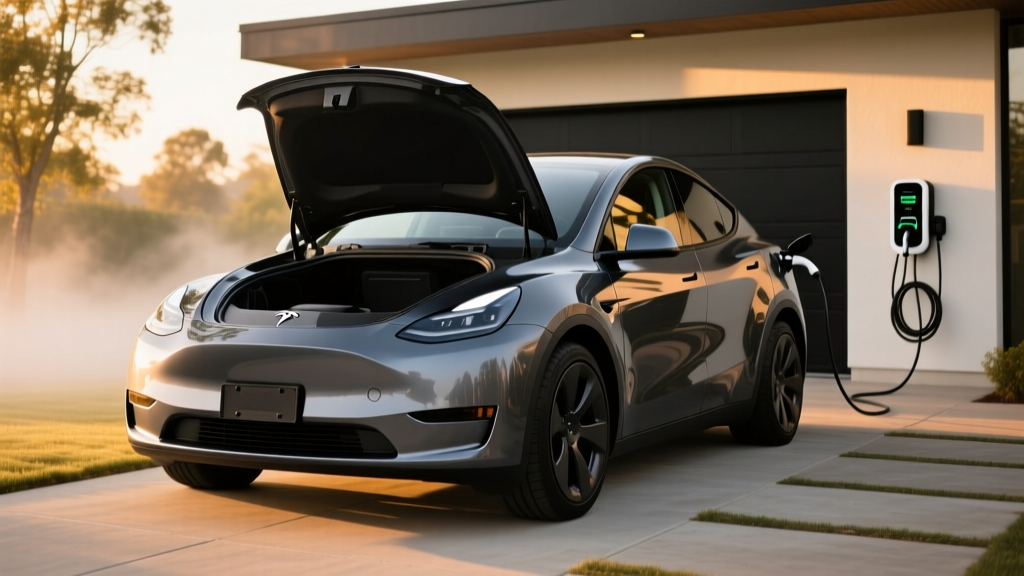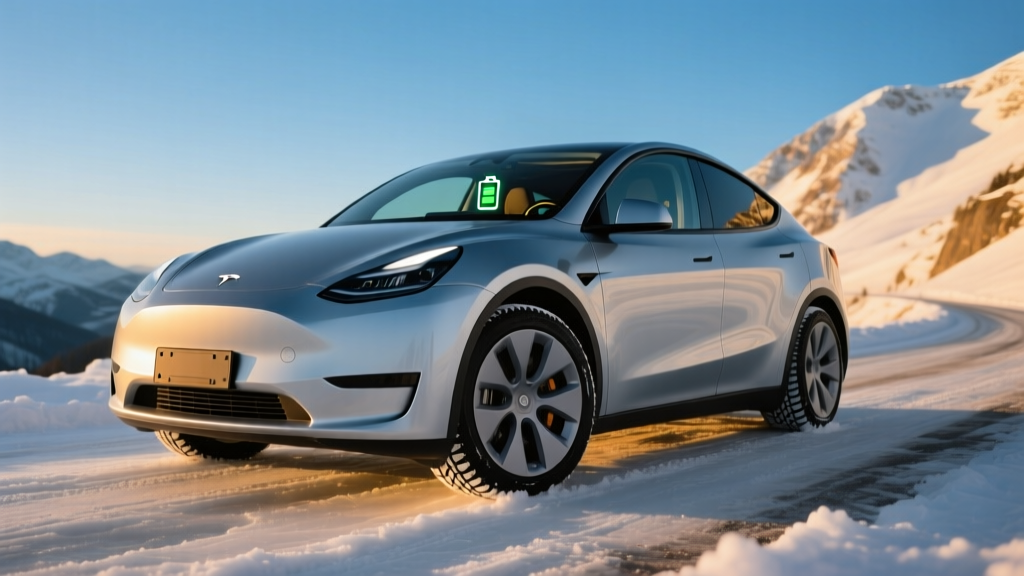
The Tesla Model Y remains one of the best-selling electric vehicles in the United States, and for good reason: strong EPA range, access to the Supercharger network, and practical crossover utility. But when temperatures drop below 45°F, the stock all-season tires on most Model Y trims lose significant grip on cold, wet, and icy pavement. For EV owners in snow-belt states or anyone facing regular sub-freezing commutes, dedicated winter tires for Tesla Model Y aren't a luxury — they're a safety upgrade that also changes your efficiency equation.
This guide covers the best winter tire options for the 2025–2026 Model Y lineup, quantifies the real-world range penalty you can expect, and explains how cold weather affects your battery, charging speed, and regenerative braking. We'll also revisit the Model Y's core specs so you can plan your winter driving with precision.
Why Winter Tires Matter on a Heavy, High-Torque EV
Electric vehicles carry two disadvantages in winter compared to their gas counterparts: extra weight from the battery pack and instant torque delivery. A Long Range Model Y tips the scales at roughly 4,400 lbs, and dual-motor variants deliver that thrust to all four wheels simultaneously. On dry pavement, that's exhilarating. On a frosty on-ramp at 35°F, all-season rubber compounds stiffen and lose adhesion precisely when you need it most.
Winter tire compounds stay pliable down to approximately -40°F, maintaining contact-patch grip through sipe patterns designed to bite into packed snow and slush. Independent testing by organizations like Tire Rack consistently shows winter tires reducing braking distances on ice by 30–40% compared to all-season tires — a margin that translates directly to collision avoidance.
2026 Tesla Model Y Core Specs at a Glance
Before choosing rubber, let's anchor the vehicle's baseline numbers. Tesla refreshed the Model Y (internally called "Juniper") for the 2025 model year, and those specs carry into 2026 with minor updates.
| Spec | Long Range AWD | Performance AWD |
|---|---|---|
| EPA Range | 320 miles | 285 miles |
| Battery (usable) | ~75 kWh, NMC | ~75 kWh, NMC |
| Drivetrain | Dual Motor AWD | Dual Motor AWD |
| Horsepower | 384 hp | 456 hp |
| 0–60 mph | 4.8 sec | 3.5 sec |
| Max DC Fast Charge | 250 kW peak | 250 kW peak |
| 10–80% DC Time | ~25 min | ~25 min |
| Level 2 Home Charge | 11.5 kW (~44 mi/hr) | 11.5 kW (~44 mi/hr) |
| MPGe (combined) | 111 MPGe | 102 MPGe |
| Efficiency | 28 kWh/100 mi | 31 kWh/100 mi |
| Cargo (rear seats up) | 30.2 cu ft | 30.2 cu ft |
| Cargo (rear seats folded) | 72.1 cu ft | 72.1 cu ft |
| Base MSRP | $44,990 | $51,490 |
| Battery Warranty | 8 yr / 120,000 mi | 8 yr / 120,000 mi |
Source: fueleconomy.gov and Tesla.com, 2026 model year.
Real-World Range: What Winter Actually Does to Your Model Y
EPA sticker: 320 miles (Long Range AWD)
Real-world highway (70 mph, 65°F): ~270–290 miles
Real-world winter (30°F, mixed driving): ~220–250 miles
Worst case (10°F, highway, cabin heat): ~190–210 miles
Lithium-ion batteries suffer increased internal resistance in cold temperatures, reducing the energy you can extract. Simultaneously, running the cabin heater, seat warmers, and battery preconditioning draws additional power. According to AAA's EV range study, the average electric vehicle loses roughly 30% of its range at 20°F with climate control on — and the Model Y tracks close to that average.
Winter tires compound the effect. The softer compound and more aggressive tread pattern increase rolling resistance by roughly 3–5% compared to all-season tires. On a 320-mile EPA-rated Long Range Model Y, expect to lose an additional 10–15 miles of range purely from the tire swap. Combined with cold-weather battery losses, your practical winter range sits around 220–250 miles in typical 30°F conditions.
Charging in Cold Weather: Speeds, Preconditioning & the Curve
The Model Y's NMC battery accepts up to 250 kW at a V3 Supercharger under ideal conditions, reaching 10–80% in roughly 25 minutes. But cold batteries charge slowly — sometimes drastically so.
| Charging Type | Max Rate | 10–80% Time | Miles per Hour Added |
|---|---|---|---|
| Level 1 (120V outlet) | 1.4 kW | N/A (overnight) | ~3–4 mi/hr |
| Level 2 (240V, 48A Wall Connector) | 11.5 kW | ~7–8 hours | ~44 mi/hr |
| DC Fast (V3 Supercharger, warm battery) | 250 kW peak | ~25 min | ~700+ mi/hr (peak) |
| DC Fast (cold battery, no precondition) | 50–90 kW | 45–60+ min | Variable |
The single most important winter charging tip: always precondition your battery before arriving at a Supercharger. Navigate to the charger using the car's built-in navigation, and the Model Y will automatically warm the battery pack en route. Without preconditioning, a cold-soaked pack (sitting overnight at 15°F, for example) may limit DC charging to under 90 kW for the first 10–15 minutes, effectively doubling your stop time.
At home, Level 2 charging is largely unaffected by cold, since the charge rate is low enough that battery warming happens passively. A 48-amp Tesla Wall Connector on a 60-amp circuit delivers 11.5 kW — sufficient to fully replenish the ~75 kWh pack overnight.
Best Winter Tires for Tesla Model Y: Our Top Picks
The 2025–2026 Model Y Long Range and Performance use 255/45R19 (standard) or 255/40R20 (optional) tire sizes. Below are the winter tires we recommend based on snow traction, wet braking, rolling-resistance impact, and noise — the last being important in an EV with no engine masking road sound.
1. Michelin X-Ice Snow (Best Overall)
Michelin's X-Ice Snow consistently tops independent winter-tire tests. Its silica-infused compound stays flexible below zero, and the directional tread evacuates slush efficiently. Crucially for EV owners, Michelin engineered the X-Ice Snow with a relatively low rolling-resistance coefficient among winter tires, minimizing range loss. Expect roughly 3–4% range reduction versus the stock Continental ProContact all-seasons. Noise levels are subdued — a priority in the Model Y's quiet cabin.
2. Bridgestone Blizzak WS90 (Best Deep-Snow Grip)
If you regularly drive unplowed county roads or mountain passes, the Blizzak WS90's multicell compound and aggressive biting edges provide class-leading traction in deep snow. The trade-off: slightly higher rolling resistance (closer to 5% range penalty) and a tread life that tends to wear faster on warm, dry pavement. Plan to swap back to all-seasons by early April.
3. Nokian Hakkapeliitta R5 (Best for Extreme Cold)
Nokian invented the winter tire, and the Hakkapeliitta R5 is their flagship non-studded option. Tested in Finnish Lapland conditions, it excels below 0°F where other compounds begin to stiffen. The R5 also carries one of the lowest rolling-resistance ratings in the winter-tire segment. Availability in 19" and 20" Model Y sizes can be limited — order early in the fall.
4. Continental VikingContact 7 (Best Value)
Continental's VikingContact 7 delivers 90% of the Michelin's performance at roughly 15–20% lower cost per tire. Its rapeseed-oil-infused compound is an eco-friendly touch. Wet and icy braking numbers are strong, though deep-snow traction trails the Blizzak slightly. A smart pick for suburban commuters who face plowed roads with occasional icy patches.
Winter Tire Cost, Setup & Practical Tips
Budget $600–$900 for a set of four winter tires in Model Y sizes (19" or 20"). We strongly recommend mounting them on a dedicated set of wheels — a second set of 19" aftermarket wheels runs $400–$700. This avoids the $25–$40 per-tire remounting fee twice a year and prevents cosmetic damage to your OEM wheels from tire-machine clamps.
Additional winter EV ownership tips:
- Use seat and steering-wheel heaters first. They draw far less energy (~100–200W) than the cabin heat pump (~2,000–4,000W). Set the cabin temp 2–3 degrees lower and let contact heaters do the work.
- Precondition while plugged in. Schedule departure times in the Tesla app so the battery and cabin warm using grid power, not battery energy.
- Expect reduced regen braking. A cold battery can't accept full regenerative braking power. The Model Y will blend in friction brakes automatically, but the transition can feel abrupt until the pack warms. Drive the first 10–15 minutes with extra following distance.
- Keep charge above 30% in deep cold. A low state of charge combined with extreme cold increases the risk of the battery management system limiting power output.
Pricing, Tax Credits & Total Winter Setup Cost
| Trim | Base MSRP | Est. As-Tested | §30D Credit Eligibility |
|---|---|---|---|
| Long Range AWD | $44,990 | $47,000–$52,000 | Up to $7,500* |
| Performance AWD | $51,490 | $54,000–$58,000 | Up to $7,500* |
*The IRS §30D federal tax credit provides up to $7,500 for qualifying new EVs. Eligibility depends on:
- MSRP cap: SUVs/vans/pickups must be under $80,000 — Model Y qualifies.
- Buyer income cap: Modified AGI ≤ $150,000 (single), $225,000 (head of household), $300,000 (joint).
- Battery sourcing: Critical minerals and battery components must meet phased-in North American sourcing percentages. Tesla's US-built Model Y has historically met these thresholds, but verify at point of sale — rules tighten annually.
- Point-of-sale transfer: You can apply the credit as a down-payment reduction at the dealer rather than waiting for tax filing.
Consult a tax professional for your specific situation. State incentives vary — check AFDC's state incentive database for local rebates.
Pros and Cons: Model Y in Winter
- Dual-motor AWD provides excellent traction in snow with winter tires
- Heat pump is standard — more efficient cabin heating than resistive systems
- Supercharger network reliability is best-in-class for road trips
- Low center of gravity (battery floor) resists rollover on icy curves
- Over-the-air updates continuously improve cold-weather battery management
- 30% range loss in deep cold is significant for road-trip planning
- Stock all-season tires are inadequate for sustained winter conditions
- Regen braking reduction on cold batteries requires driver adaptation
- Large glass roof radiates heat — cabin can feel drafty in extreme cold
- No spare tire — rely on tire sealant kit or roadside assistance
Who Should Buy a Model Y — and Who Should Look Elsewhere?
The Model Y is ideal for: Families needing crossover cargo space (72 cu ft with seats folded), commuters with home Level 2 charging, and road-trippers who value Supercharger access. The Long Range AWD trim is the sweet spot: 320 miles EPA, reasonable price, and dual-motor traction for winter.
Consider alternatives if: You regularly tow (the Model Y is rated for 3,500 lbs, but range drops sharply under load), you lack home charging and live in a charging-desert region, or you need third-row seating (the optional Model Y third row is extremely cramped and rare).
Key competitors include the Hyundai Ioniq 5 (better DC charging architecture at 800V, less cargo space), the Ford Mustang Mach-E (sportier handling, smaller Supercharger-equivalent network), and the Chevrolet Equinox EV (lower price point, less performance).
Frequently Asked Questions
Do I really need winter tires on my Tesla Model Y, or are all-seasons enough?
If temperatures in your area regularly drop below 45°F and you encounter snow or ice, dedicated winter tires are a meaningful safety upgrade. All-season tires harden in cold temperatures and lose grip. Winter tires reduce braking distances on ice by 30–40% in controlled testing. AWD helps you accelerate in snow, but it does not help you stop or corner — that's where tire compound matters.
How much range will I lose with winter tires on the Model Y?
Expect roughly 3–5% range loss from the tires alone, plus 20–30% from cold-weather battery effects and cabin heating. A Long Range Model Y rated at 320 miles EPA will realistically deliver 220–250 miles in typical 30°F winter conditions with winter tires installed.
Can I use studded winter tires on a Tesla Model Y?
Studded tires are legal in some states during winter months but prohibited in others. They offer superior ice traction but are louder and damage dry pavement. For most Model Y owners, modern studless winter tires (X-Ice Snow, Blizzak WS90) provide excellent ice grip without the noise penalty — important in a quiet EV cabin.
Does the Model Y qualify for the $7,500 federal tax credit in 2026?
The Model Y qualifies for up to $7,500 under IRS §30D, provided you meet income caps ($150K single / $300K joint) and the vehicle meets battery-sourcing requirements. Tesla's US-built Model Y has historically met sourcing thresholds, but rules tighten each year. Verify eligibility at the point of sale and consult a tax professional.
Should I buy a separate set of wheels for winter tires?
Yes. A dedicated winter wheel-and-tire set avoids biannual remounting fees ($100–$160/year), reduces wear on your OEM wheels, and lets you downsize to 19" wheels with taller sidewalls for better pothole and snow-bank absorption. Many owners choose 19" Gemini or aftermarket flow-formed wheels for winter duty.
Does regenerative braking work differently in winter?
Yes. A cold battery cannot accept the full regenerative braking current, so the Model Y reduces regen strength until the pack warms. You'll notice the car coasting more when you lift off the accelerator in the first 10–15 minutes of a cold-weather drive. Tesla's software blends friction brakes automatically, but plan for longer stopping distances and allow extra following distance.