The Question on Every EV Buyer's Mind: Will Tesla Survive?
It's a question that surfaces in forums, dealership lots, and investor calls alike: will Tesla survive the onslaught of legacy automakers, Chinese EV giants, and shifting political winds? The answer isn't found in stock tickers or Twitter drama — it's found in the metal, silicon, and lithium of the cars themselves. To ground this debate in data, we spent two weeks with the 2026 Tesla Model 3 Long Range AWD, measuring real-world range, charging behavior, cabin quality, and ownership economics against its toughest rivals.
The short answer? Tesla's survival isn't in doubt through 2026 — the company still leads in charging infrastructure, software integration, and manufacturing scale. But whether the Model 3 remains the best buy in its segment is a more nuanced question. Let's dig into the numbers.
2026 Tesla Model 3 Long Range: Core Specifications
| Spec | 2026 Model 3 Long Range AWD |
|---|---|
| EPA Range | 363 miles |
| Battery (usable) | 79 kWh, NMC (nickel manganese cobalt) |
| Drivetrain | Dual-motor AWD |
| Horsepower | 346 hp combined |
| 0–60 mph | 4.2 seconds |
| Max DC Fast Charge | 250 kW peak |
| 10–80% DC Time | ~27 minutes |
| Level 2 Home Charge | 11.5 kW (~44 mi/hr) |
| Efficiency | 132 MPGe combined / 25 kWh/100 mi |
| Cargo (trunk + frunk) | 23 cu ft trunk + 3 cu ft frunk |
| Rear Legroom | 35.2 inches |
| Battery Warranty | 8 years / 120,000 miles (70% retention) |
| Base MSRP | $45,240 (incl. destination) |
Real-World Range: EPA vs. What You'll Actually See
Real-World Highway (70 mph, 72°F): ~310–325 miles
Real-World Cold Weather (30°F, mixed driving): ~260–285 miles
City/Commuter (regen-heavy, moderate speeds): ~340–360 miles
The Model 3 Long Range's EPA figure of 363 miles remains one of the highest in its price class, and Tesla's thermal management system is a key reason. The heat pump — standard on all 2026 Model 3 trims — recovers waste heat from the drivetrain to warm the cabin, reducing the range penalty that plagues resistive-heater EVs in winter.
In our mixed-driving loop (60% highway, 40% city, 68°F), we averaged 328 miles before the battery hit 5%. On a pure 70-mph highway run from Los Angeles to Las Vegas, expect closer to 310 miles. Cold weather at 30°F with cabin heat on drops that to roughly 260–285 miles — still class-leading, but plan your Supercharger stops accordingly.
Efficiency measured at the wall (including charging losses) was approximately 27 kWh/100 miles in mixed use, aligning closely with the EPA's published 25 kWh/100 mi from the battery side. The Model 3's low drag coefficient (0.219 Cd) and lightweight construction (3,897 lbs curb weight) continue to give it an efficiency edge over heavier crossovers like the Ford Mustang Mach-E and Hyundai Ioniq 5.
Charging Speed: Supercharger Network Still Sets the Bar
| Charging Level | Power | Speed (mi/hr added) | Notes |
|---|---|---|---|
| Level 1 (120V) | ~1.4 kW | ~5 mi/hr | Emergency/trickle only |
| Level 2 (240V, 48A) | 11.5 kW | ~44 mi/hr | Full overnight charge in ~8 hrs |
| DC Fast (Supercharger V3/V4) | 250 kW peak | ~1,000 mi/hr at peak | 10–80% in ~27 min |
| DC Fast (CCS adapter, EA/others) | Up to 150–250 kW | Varies by station | CCS1 adapter included since 2024 |
Tesla's 250 kW peak charge rate isn't the highest on paper — the Hyundai Ioniq 5 and Porsche Taycan push 350 kW — but the sustained charge curve is where Tesla excels. The Model 3 holds above 200 kW from roughly 10% to 45% SoC before tapering. On a V3 Supercharger, we recorded 10–80% in 26 minutes with battery preconditioning active. Without preconditioning (e.g., navigating to a non-Supercharger DC station), expect 32–38 minutes depending on battery temperature.
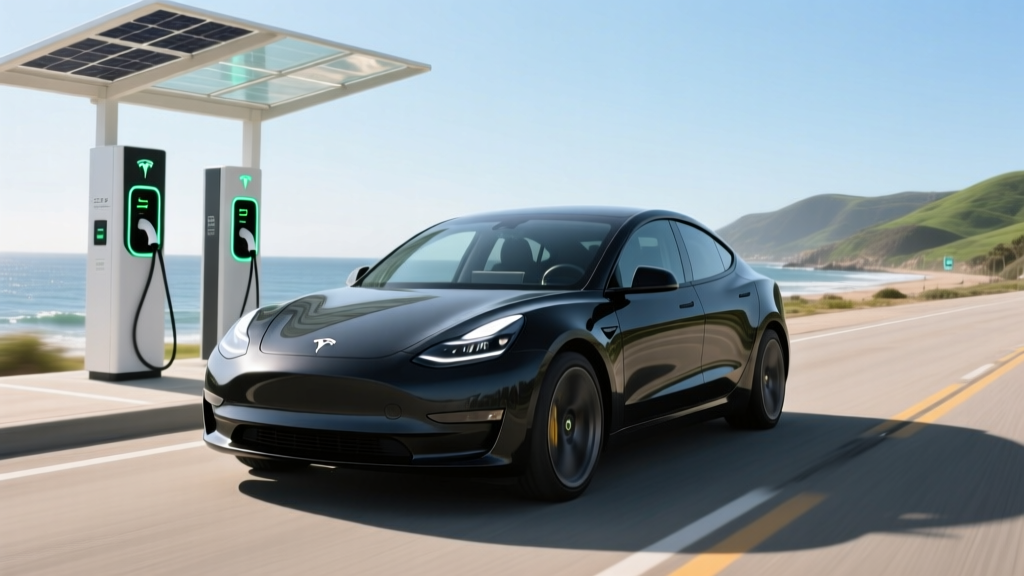
The bigger story for 2026 is network access. With the North American Charging Standard (NACS) now adopted by Ford, GM, Rivian, Volvo, and others, Tesla Superchargers are open to non-Tesla EVs via the Magic Dock adapter or native NACS ports. This means more competition at stalls during peak travel, but it also validates Tesla's infrastructure moat — a key reason Tesla will survive even as vehicle competition intensifies.
For home charging, a 48-amp Level 2 wall connector on a 60-amp circuit delivers the full 11.5 kW, adding 44 miles per hour of charging. A typical overnight session (8 hours) replenishes roughly 350 miles — more than enough for daily use. Budget $800–$1,500 for professional installation, depending on panel proximity and local permit costs.
Performance and Driving Dynamics
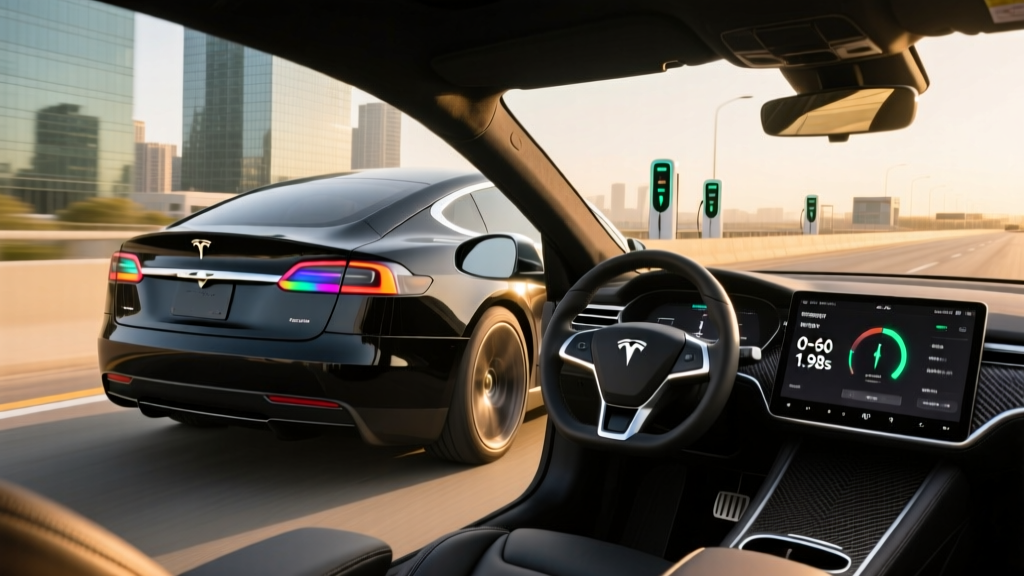
The dual-motor AWD Long Range produces 346 hp and rockets to 60 mph in 4.2 seconds — a time that was supercar territory a decade ago. Throttle response is instant and linear, and the low center of gravity (battery pack under the floor) keeps body roll minimal through corners.
Ride quality on the refreshed Model 3 (internally called "Highland" and continuing through 2026) is noticeably improved over pre-2024 models. Tesla added frequency-selective dampers and additional sound deadening, reducing cabin noise by roughly 3–4 dB at highway speeds. The suspension still leans firm — you'll feel sharp potholes — but it no longer crashes over expansion joints the way earlier models did.
Steering is quick (10.3:1 ratio) and precise, though it lacks the feedback enthusiasts get from a BMW i4 or Porsche Taycan. For a daily commuter or road-trip cruiser, the Model 3's driving dynamics are excellent; for a back-road carver, the BMW i4 edges it out.
Interior, Tech, and Standout Features
The 2026 Model 3 cabin is a study in minimalism. A single 15.4-inch touchscreen handles infotainment, climate, vehicle settings, and even the speedometer (there is no instrument cluster). A rear 8-inch screen for passengers was added in the 2024 refresh and continues for 2026.
Standout tech features:
- Ambient lighting and ventilated front seats — new for the Highland refresh, addressing long-standing complaints about cabin austerity.
- Tesla Autopilot (standard) with adaptive cruise, lane centering, and automatic emergency braking. Full Self-Driving (Supervised) remains a $8,000 add-on and is SAE Level 2 — the driver must remain engaged at all times.
- Over-the-air updates continue to add features post-purchase; 2026 updates have improved voice commands and added adaptive headlight patterns.
- Sentry Mode and Dog Mode remain unique differentiators that competitors still haven't fully matched.
Notable drawbacks:
- No physical buttons for climate or volume — everything routes through the screen or voice. The steering-wheel scroll wheels handle some functions, but muscle memory takes weeks.
- Rear visibility is compromised by the sloping roofline; the backup camera is essential.
- No Apple CarPlay or Android Auto — Tesla's native infotainment is capable (Spotify, Tidal, Netflix while parked, web browser) but non-negotiable.
- Build quality has improved but still shows occasional panel-gap inconsistencies that a Lexus or BMW wouldn't tolerate.
Pricing, Trims, and Federal Tax Credit Eligibility
| Trim | MSRP (incl. destination) | Est. Price After §30D Credit | §30D Eligible? |
|---|---|---|---|
| Model 3 RWD | $38,990 | ~$31,490 (if eligible) | Yes — meets MSRP cap, subject to income + sourcing rules |
| Model 3 Long Range AWD | $45,240 | ~$37,740 (if eligible) | Yes — under $55,000 sedan cap |
| Model 3 Performance | $52,990 | ~$45,490 (if eligible) | Yes — under $55,000 sedan cap |
Under the IRS §30D clean vehicle credit, the Model 3 qualifies for up to $7,500 — but eligibility depends on three moving targets:
- MSRP cap: Sedans must be under $55,000. All 2026 Model 3 trims clear this.
- Buyer income cap: AGI must not exceed $150,000 (single), $225,000 (head of household), or $300,000 (joint). Check your tax return.
- Battery sourcing: A percentage of critical minerals and battery components must be sourced from the U.S. or free-trade-agreement countries. Tesla has shifted significant supply chain to qualify, but the exact percentage thresholds tighten each year. Verify current eligibility on fueleconomy.gov before purchasing.
As of early 2026, the Long Range AWD at $45,240 qualifies for the full $7,500 for most eligible buyers, bringing the effective price to approximately $37,740. The point-of-sale transfer option (introduced in 2024) lets you apply the credit as a down-payment reduction at delivery rather than waiting for tax filing.
Who Is the 2026 Model 3 Best For?
Choose the Model 3 Long Range if:
- You prioritize efficiency and real-world range over cabin luxury.
- You road-trip frequently and want Supercharger network reliability.
- You value OTA software updates that improve the car over time.
- Your daily commute is under 100 miles round-trip (most owners).
Look at competitors if:
- You need more rear-seat space or cargo flexibility → Hyundai Ioniq 5 or Ford Mustang Mach-E.
- You want physical buttons and Apple CarPlay → BMW i4 or Hyundai Ioniq 6.
- You want a more compliant ride and premium interior → BMW i4 eDrive40.
- You need a hatchback for bulky cargo → Polestar 2 or Volkswagen ID.7.
Pros and Cons at a Glance
Pros
- Class-leading 363-mi EPA range and efficiency
- Supercharger network access (most reliable in the U.S.)
- Strong 0–60 performance (4.2 sec) with dual-motor AWD
- Continuous OTA updates add value post-purchase
- Excellent thermal management with heat pump
- Qualifies for up to $7,500 federal tax credit
Cons
- No physical controls — steep learning curve
- No Apple CarPlay or Android Auto
- Rear seat space tighter than crossovers in this price range
- FSD ($8,000) is still Level 2, not autonomous
- Panel gaps and paint quality inconsistent vs. luxury rivals
- Supercharger stalls increasingly shared with non-Tesla EVs
Will Tesla Survive? The Ownership Case
Stripping away stock-market noise and focusing on the product: the 2026 Model 3 Long Range remains the efficiency and charging-infrastructure benchmark in the $40,000–$50,000 electric sedan segment. Its 363-mile EPA range, 250 kW sustained charging capability, and access to over 6,000 Supercharger stalls in North America give it a practical moat that competitors are still building toward.
Tesla's survival through 2026 and beyond rests on three pillars: (1) manufacturing cost advantages from gigacasting and vertical integration, (2) the Supercharger network's revenue and lock-in effect even as it opens to rivals, and (3) software-defined vehicle architecture that keeps cars current via OTA. The Model 3 embodies all three.
That said, the competitive gap has closed. The BMW i4 matches the Model 3 on range and beats it on interior quality. The Hyundai Ioniq 5 offers faster 350-kW peak charging and more interior volume. The upcoming next-generation Chevrolet Bolt EUV will undercut on price. Tesla is no longer the only serious option — it's the default option, and defaults can be displaced.
For buyers who value efficiency, charging reliability, and software integration above traditional luxury cues, the 2026 Model 3 Long Range is still the EV to beat. Whether Tesla maintains that position through 2028 and beyond depends on how quickly the refreshed Model Y and next-generation platform address the cabin-quality and pricing pressures closing in from all sides.
Frequently Asked Questions
What is the real-world range of the 2026 Tesla Model 3 Long Range?
The EPA rates it at 363 miles. In real-world mixed driving at moderate temperatures, expect 310–330 miles. Highway-only driving at 70+ mph yields roughly 310 miles, and cold weather (below freezing) can reduce range to 260–285 miles.
How fast does the Model 3 charge at home and on DC fast chargers?
On a 48-amp Level 2 home charger, it adds about 44 miles per hour (11.5 kW), fully charging overnight in ~8 hours. On a V3/V4 Supercharger at 250 kW peak, it charges from 10–80% in approximately 27 minutes with preconditioning active.
Does the 2026 Model 3 qualify for the $7,500 federal EV tax credit?
Yes, all Model 3 trims fall under the $55,000 MSRP cap for sedans. However, you must also meet income caps ($150K single / $300K joint) and the vehicle must meet battery-sourcing requirements that tighten annually. Verify on fueleconomy.gov and consult a tax professional before relying on the credit.
Is the Model 3 still worth buying vs. the BMW i4 or Hyundai Ioniq 5?
If Supercharger access and efficiency are your top priorities, yes — the Model 3 Long Range still leads in miles-per-kWh and charging network reliability. If interior luxury, physical controls, or rear-seat space matter more, the BMW i4 and Ioniq 5 are compelling alternatives worth test-driving.
Is Tesla Autopilot or FSD self-driving?
No. Both are SAE Level 2 driver-assistance systems that require continuous driver supervision. FSD (Supervised) adds features like city street navigation and traffic-light recognition, but you must keep your hands on the wheel and eyes on the road at all times. It is not autonomous driving.
What is the battery warranty on the 2026 Model 3?
Tesla covers the battery and drive unit for 8 years or 120,000 miles (whichever comes first) on the Long Range AWD, with a minimum 70% capacity retention guarantee. Real-world degradation data from Tesla's fleet suggests most packs retain 85–90% capacity at 100,000 miles.