Will BYD Come to the USA? The Short Answer
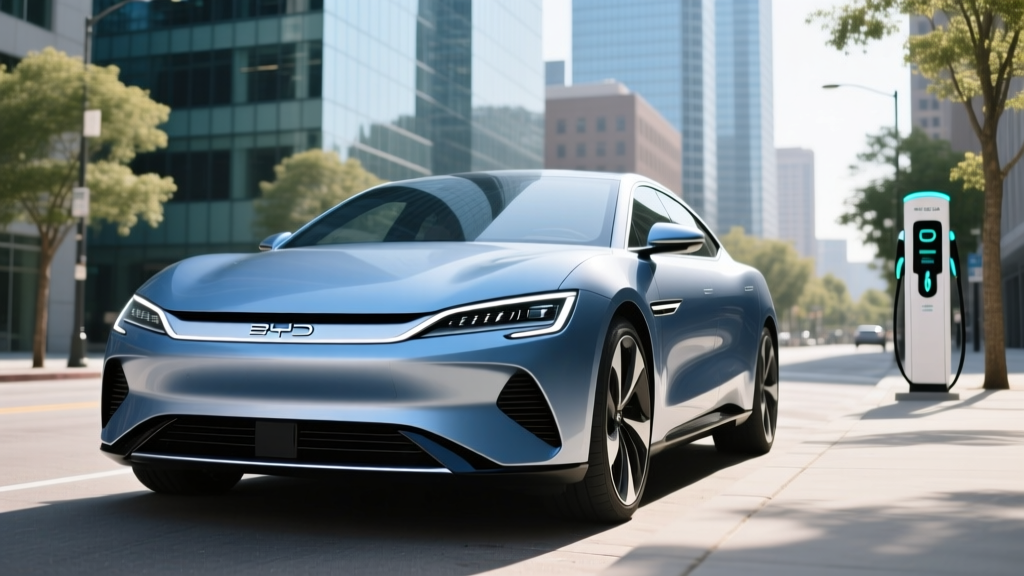
If you've followed the global EV market, you already know BYD (Build Your Dreams) has become the world's largest electric vehicle manufacturer by volume, trading the top spot with Tesla quarter by quarter. The Chinese automaker sells over 3 million electrified vehicles annually across more than 70 countries. So the question is inevitable: will BYD come to the USA?
As of early 2026, the answer remains no — BYD does not sell passenger vehicles in the United States, and there is no confirmed timeline for a US launch. BYD currently sells electric buses and commercial trucks in the US through its Lancaster, California facility, but its passenger EV lineup — including the globally popular Seal, Atto 3, Dolphin, and Han — is unavailable to American consumers.
The barriers are primarily economic and political rather than technical. A combination of existing 2.5% import duties, an additional 100% tariff on Chinese-made EVs imposed in 2024 under Section 301, and the requirement that vehicles be assembled in North America to qualify for the §30D federal EV tax credit make a US passenger car launch financially unworkable under current conditions. Even if BYD imported vehicles, a $35,000 Seal would effectively cost $70,000+ after tariffs — destroying the value proposition that defines the brand.
Still, BYD's global expansion continues aggressively through Europe, Southeast Asia, Latin America, and Australia. Below, we break down the models American buyers are missing, what their specs would look like if they arrived, and the realistic scenarios under which BYD could eventually reach US showrooms.
BYD's Global EV Lineup: Specs American Buyers Are Missing
BYD's passenger lineup spans compact hatchbacks to premium sedans and SUVs. All current models use BYD's proprietary Blade Battery — a lithium iron phosphate (LFP) cell design that prioritizes safety, longevity, and cost over maximum energy density. Here's how the key global models stack up using WLTP figures (note: US EPA estimates would typically run 10-15% lower):
| Model | Segment | Battery (kWh) | Chemistry | WLTP Range | Max DC Charge (kW) | 10-80% DC Time | 0-100 km/h | Drivetrain | Global MSRP (approx.) |
|---|---|---|---|---|---|---|---|---|---|
| Dolphin | Compact Hatch | 60.4 kWh | LFP Blade | 265 mi (427 km) | 88 kW | ~29 min | 7.0 sec | FWD | $25,000-$30,000 |
| Atto 3 (Yuan Plus) | Compact SUV | 60.5 kWh | LFP Blade | 260 mi (420 km) | 88 kW | ~29 min | 7.3 sec | FWD | $30,000-$36,000 |
| Seal | Mid-Size Sedan | 82.5 kWh | LFP Blade | 354 mi (570 km) | 150 kW | ~26 min | 5.9 sec (RWD) / 3.8 sec (AWD) | RWD / AWD | $38,000-$50,000 |
| Seal U | Mid-Size SUV | 87.0 kWh | LFP Blade | 311 mi (500 km) | 140 kW | ~28 min | 7.9 sec | AWD | $42,000-$48,000 |
| Han EV | Full-Size Sedan | 85.4 kWh | LFP Blade | 326 mi (525 km) | 120 kW | ~30 min | 7.9 sec | FWD | $45,000-$55,000 |
Important context on range figures: These are WLTP estimates used in Europe and Asia. If BYD were to sell in the US, EPA testing — which uses higher speeds, colder temperatures, and more aggressive acceleration cycles — would yield lower numbers. Based on typical WLTP-to-EPA conversion ratios observed with other brands, the BYD Seal's 354-mile WLTP figure would likely translate to approximately 290-310 miles EPA.
The BYD Seal AWD (82.5 kWh LFP, est. ~290-310 mi EPA) would likely deliver 240-270 miles in real-world highway driving at 70-75 mph. In cold weather (below 32°F / 0°C), expect an additional 20-30% reduction due to cabin heating demands and LFP chemistry's cold-temperature sensitivity — bringing effective winter highway range to roughly 180-210 miles. LFP batteries lack the energy density of NMC cells, which partly explains the range gap versus competitors like the Tesla Model 3 Long Range (341 mi EPA) or Hyundai Ioniq 6 (361 mi EPA).
Charging and Battery Technology: The Blade Battery Explained
BYD's competitive advantage centers on its vertically integrated supply chain — the company manufactures its own batteries, semiconductors, motors, and even owns lithium mining operations. The Blade Battery, introduced in 2020, is a structural LFP (lithium iron phosphate) pack where long, thin cells double as load-bearing elements within the chassis.
LFP vs. NMC — what it means for buyers:
| Factor | LFP (BYD Blade) | NMC (Tesla, Hyundai, GM) |
|---|---|---|
| Energy Density | Lower (~150-170 Wh/kg) | Higher (~220-260 Wh/kg) |
| Cycle Life | 3,000-5,000+ cycles | 1,000-2,000 cycles |
| Thermal Safety | Excellent (resists thermal runaway) | Good (requires active management) |
| Cold-Weather Performance | Weaker (more range loss below freezing) | Better (less cold-weather degradation) |
| Cost | Lower (no cobalt/nickel) | Higher |
| Recommended Charging | Can charge to 100% regularly | Best kept at 80% daily |
BYD's charging speeds lag behind the segment leaders. The Seal's peak 150 kW DC fast-charge rate trails the Hyundai Ioniq 5's 240 kW (via 800V architecture) and the Tesla Model 3's 250 kW capability. On a 150 kW charger, the Seal's 82.5 kWh battery adds roughly 180 miles in 26 minutes (10-80%), which is adequate for road trips but noticeably slower than 800V competitors that complete the same session in 18 minutes or less.
For home Level 2 charging, BYD models typically accept 7-11 kW AC, adding approximately 25-40 miles of range per hour of charging — enough to fully replenish overnight on a standard 240V home charger.
The Tariff Wall: Why BYD Can't Compete in the US Today
Understanding why BYD hasn't entered the US passenger market requires unpacking three overlapping trade barriers:
1. Section 301 Tariffs (100% on Chinese EVs): In May 2024, the Biden administration raised tariffs on Chinese-made electric vehicles from 25% to 100%, effective August 2024. This effectively doubles the import price of any BYD vehicle, eliminating the cost advantage that makes the brand competitive globally.
2. North American Assembly Requirement (§30D Tax Credit): The federal EV tax credit under §30D requires final assembly in North America for any vehicle to qualify for up to $7,500. A BYD imported from China would be ineligible regardless of price, putting it at a $7,500 disadvantage versus US-built competitors like the Tesla Model 3, Chevrolet Equinox EV, or Ford Mustang Mach-E.
3. Battery Sourcing and FEOC Restrictions: Even if BYD built a US factory, its battery supply chain — entirely Chinese-sourced — would likely trigger the "foreign entity of concern" (FEOC) exclusion under §30D rules, disqualifying the $3,750 battery-component portion of the credit. BYD would need to source critical minerals and battery components from US free-trade-agreement partners, a multi-year supply-chain restructuring.
The combined effect: a BYD Seal that sells for ~$38,000 in Europe would cost American buyers roughly $76,000+ after tariffs, with no tax credit offset. At that price, it competes with the BMW i4 and Mercedes EQB — a segment BYD's brand equity cannot support in the US market.
Could BYD Build Cars in the US? The Mexico Question
BYD has reportedly explored manufacturing sites in Mexico, which would theoretically allow USMCA-compliant vehicles to enter the US tariff-free. However, as of 2026:
- No BYD Mexico factory has been confirmed or broken ground. Reports from 2024 indicated site selection was underway, but automotive plant construction typically requires 2-3 years from announcement to production.
- USMCA rules of origin require 75% of a vehicle's value to be produced in North America for tariff-free import. BYD's vertically integrated Chinese supply chain would need extensive localization — motors, electronics, battery cells — to meet this threshold.
- Political risk remains high. US legislators have proposed additional measures specifically targeting Chinese automakers using Mexico as a backdoor, including potential exclusion from the US market entirely.
The most optimistic realistic timeline for BYD passenger vehicles in the US — assuming a Mexico factory, supply chain localization, and no additional legislative barriers — would be 2028-2029. More likely, BYD will continue prioritizing markets where it faces lower trade friction: Europe (despite EU countervailing duties of 17-36%), Brazil, Thailand, Indonesia, and Australia.
What BYD Buyers Get vs. US Alternatives
If BYD's pricing were achievable in the US market (ignoring tariffs), here's how the Seal would compare against the American EVs it would directly compete with:
| Spec | BYD Seal (AWD, Global) | Tesla Model 3 LR AWD | Hyundai Ioniq 6 SEL AWD | BMW i4 xDrive40 |
|---|---|---|---|---|
| Battery | 82.5 kWh LFP | 79 kWh NMC | 77.4 kWh NMC | 83.9 kWh NMC |
| EPA Range (est./actual) | ~300 mi (est.) | 341 mi | 316 mi | 282 mi |
| Peak DC Charge | 150 kW | 250 kW | 240 kW (800V) | 205 kW |
| 10-80% DC Time | ~26 min | ~25 min | ~18 min | ~31 min |
| 0-60 mph | 3.8 sec | 4.2 sec | 5.1 sec | 4.6 sec |
| Horsepower | 523 hp | 346 hp | 320 hp | 396 hp |
| Global / US MSRP | ~$48,000 (global) | $47,740 | $49,600 | $57,900 |
| US Tax Credit | Not eligible | Up to $7,500 | Up to $7,500 | Not eligible (MSRP/assembled in Germany) |
The comparison reveals BYD's core appeal: more horsepower and competitive range at a significantly lower global price. But the charging speed deficit (150 kW vs. 240-250 kW) means longer road-trip stops, and the LFP battery's cold-weather limitations would be a real drawback for buyers in northern US states.
What Would It Take for BYD to Enter the US Market?
For BYD to viably sell passenger EVs in the United States, several conditions would need to align — none of which appear imminent:
- North American manufacturing plant (likely Mexico, possibly US) reaching production volume — minimum 2-3 year timeline from announcement.
- Supply chain localization to meet USMCA 75% rules-of-origin and §30D battery sourcing requirements — requires partnerships with non-Chinese mineral refiners and cell suppliers.
- Stable political environment without targeted legislative exclusion of Chinese-brand vehicles — currently uncertain given bipartisan scrutiny.
- US-spec vehicle engineering including NACS charge port adoption (mandatory from 2025 for Supercharger access), FMVSS safety compliance, and NHTSA crash testing.
- Dealer/service network buildout or direct-to-consumer sales infrastructure across key US markets.
BYD's leadership has publicly stated that the US is not a near-term priority. The company's 2025-2026 expansion focus is squarely on markets with lower barriers: building factories in Thailand, Brazil, Hungary, Indonesia, and Turkey. Each of these facilities serves regional markets where BYD can compete on price without 100% tariff penalties.
Frequently Asked Questions
Can I buy a BYD car in the United States in 2026?
No. BYD does not sell passenger vehicles (cars, SUVs, or trucks) to US consumers. The company only sells commercial vehicles — electric buses and trucks — in the US market. There is no confirmed date for a US passenger vehicle launch.
Why doesn't BYD sell cars in the US?
Three main barriers: (1) a 100% tariff on Chinese-made EVs makes imports financially unviable, (2) the §30D federal tax credit requires North American assembly, which BYD cannot meet, and (3) battery sourcing rules would likely disqualify BYD's Chinese supply chain from credit eligibility even with a North American factory.
Is BYD planning a factory in Mexico or the US?
As of early 2026, BYD has not confirmed a passenger vehicle factory in Mexico or the United States. Reports from 2024 indicated Mexico site exploration, but no ground has been broken. BYD's confirmed factory buildouts are in Thailand, Brazil, Hungary, Indonesia, and Turkey.
Would BYD vehicles qualify for the $7,500 federal EV tax credit?
Under current IRS §30D rules, BYD vehicles imported from China would not qualify. The credit requires final assembly in North America, battery components from non-FEOC sources, and critical minerals from US free-trade-agreement partners. BYD's fully Chinese supply chain fails all three requirements. Even a Mexico-built BYD would need extensive supply chain restructuring to qualify.
What is the best alternative to a BYD in the US market?
For buyers drawn to BYD's value proposition, the closest US-market alternatives include the Tesla Model 3 ($38,990 base, 341-363 mi EPA, eligible for $7,500 credit), Chevrolet Equinox EV ($33,600 base, 315 mi EPA, $7,500 credit), and Hyundai Ioniq 5 ($42,400 base, 290-361 mi EPA, $7,500 credit). All offer faster DC charging than BYD's global models and full tax credit eligibility.
Are BYD cars safe? Do they have good crash test ratings?
The BYD Atto 3 and Seal have earned 5-star Euro NCAP ratings in European testing. However, neither has been crash-tested by NHTSA or IIHS for the US market, as they are not sold here. Euro NCAP and US testing protocols differ, so US ratings cannot be assumed equivalent.
Will BYD ever sell cars in the US?
It's possible but unlikely before 2028-2029 at the earliest. A North American factory, supply chain localization, and a favorable political environment would all be prerequisites. BYD's current strategy prioritizes markets with lower trade barriers, and company leadership has indicated the US is not a near-term focus.