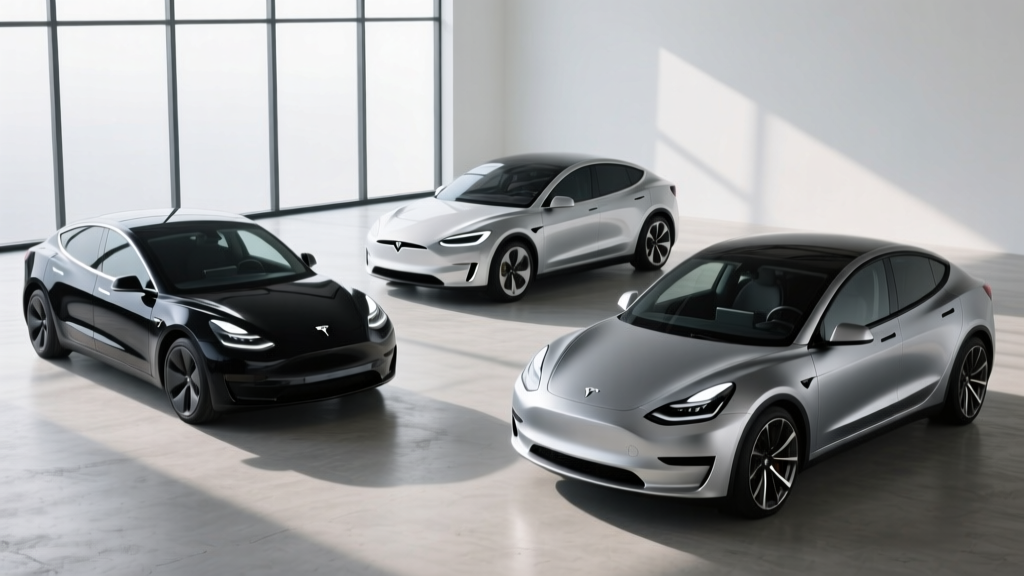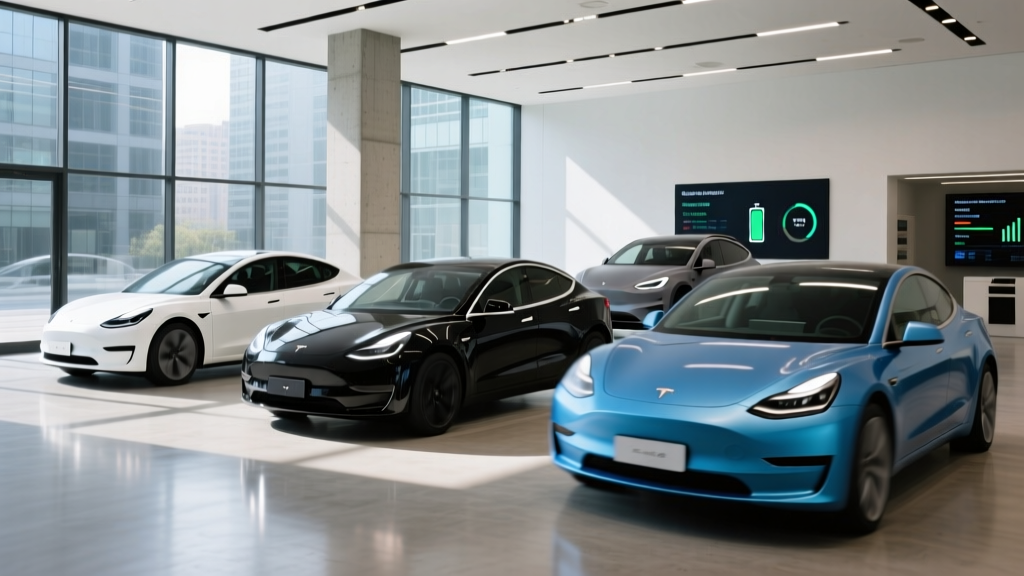
The Question Every EV Shopper Is Asking in 2026
If you've been following automotive headlines lately, you've likely wondered: why are Tesla stocks dropping despite the company still selling some of the most efficient electric vehicles on the road? The answer isn't found in a single quarterly earnings call — it's embedded in the product lineup itself. As competitors close the gap on range, charging speed, and interior quality, Tesla's once-dominant position faces real pressure from Hyundai, BMW, Ford, and a wave of Chinese-market EVs now reaching global showrooms.
But stock performance and product quality are not the same thing. For buyers, the question is simpler: Does a 2026 Tesla still deliver the best EV ownership experience, or have rivals surpassed it? This review examines the core 2026 Tesla lineup — Model 3, Model Y, Model S, and Model X — through the lens that matters to owners: real-world range, charging infrastructure, pricing after federal incentives, and everyday usability.
2026 Tesla Model 3: The Volume Seller Under Pressure
The refreshed Model 3 (internally called "Highland" and now in its second model year of the redesign) remains Tesla's most accessible sedan. It competes directly with the Hyundai Ioniq 6, BMW i4, and the upcoming next-generation Chevrolet Bolt.
| Spec | RWD Long Range | Long Range AWD | Performance |
|---|---|---|---|
| EPA Range | 363 mi | 341 mi | 315 mi |
| Battery (usable) | ~60 kWh (LFP) | ~75 kWh (NMC) | ~75 kWh (NMC) |
| 0-60 mph | 5.8 sec | 4.2 sec | 2.9 sec |
| Horsepower | 283 hp | 346 hp | 510 hp |
| Drivetrain | RWD | Dual-Motor AWD | Dual-Motor AWD |
| Peak DC Charge | 170 kW | 250 kW | 250 kW |
| 10-80% DC Time | ~25 min | ~18 min | ~18 min |
| Level 2 Rate | 11.5 kW (~44 mi/hr) | 11.5 kW (~44 mi/hr) | 11.5 kW (~44 mi/hr) |
| MPGe (combined) | 142 MPGe | 132 MPGe | 121 MPGe |
| Base MSRP | $38,990 | $44,990 | $52,990 |
Interior, Tech, and Cargo
The Highland refresh finally addressed the Model 3's biggest historical complaint: cabin noise and ride harshness. Acoustic glass, improved suspension damping, and ventilated front seats bring it closer to the BMW i4's refinement, though the i4 still edges ahead in material quality. Rear legroom measures 35.2 inches — adequate for adults but tighter than the Hyundai Ioniq 6 (38.4 in). Cargo space is 23 cu ft (trunk + frunk combined), which is competitive for the segment.
The 15.4-inch center touchscreen handles all vehicle functions, including the controversial lack of a traditional instrument cluster. Turn signals are now on steering-wheel buttons rather than a stalk — a polarizing design choice that some owners adapt to quickly and others never do.
Tax Credit Eligibility
The Model 3 RWD with its LFP battery has faced IRS §30D sourcing challenges due to critical-mineral and battery-component requirements. As of 2026, the Long Range AWD (NMC, with North American-sourced components) qualifies for the full $7,500 federal tax credit, provided the buyer meets income caps ($150K single / $300K joint) and the vehicle MSRP stays under $55,000. The RWD variant's eligibility varies by production batch — always verify the VIN on the IRS portal before purchasing. Point-of-sale transfer is available, reducing the effective Long Range AWD price to approximately $37,490.
2026 Tesla Model Y: The Best-Selling EV Faces Its Toughest Fight
The Model Y received its "Juniper" refresh for 2025, and the 2026 model year carries forward with minor software and battery-management tweaks. It remains the best-selling EV globally, but competitors like the Hyundai Ioniq 5, Ford Mustang Mach-E, and Kia EV6 have eroded its once-unassailable lead.
| Spec | Long Range AWD | Performance |
|---|---|---|
| EPA Range | 320 mi | 295 mi |
| Battery (usable) | ~75 kWh (NMC) | ~75 kWh (NMC) |
| 0-60 mph | 4.8 sec | 3.5 sec |
| Horsepower | 384 hp | 456 hp |
| Peak DC Charge | 250 kW | 250 kW |
| 10-80% DC Time | ~20 min | ~20 min |
| Level 2 Rate | 11.5 kW (~37 mi/hr) | 11.5 kW (~37 mi/hr) |
| MPGe (combined) | 122 MPGe | 111 MPGe |
| Base MSRP | $46,990 | $52,490 |
| Cargo (rear seats up) | 30 cu ft | 30 cu ft |
| Cargo (rear seats folded) | 72 cu ft | 72 cu ft |
The Juniper update brought a full-width light bar, ventilated seats, a rear touchscreen for passengers, and a notably quieter cabin. Cargo volume at 72 cu ft with seats folded remains a class advantage — the Ioniq 5 offers 59 cu ft by comparison. However, the Model Y's 250 kW peak charge rate now trails the Hyundai-Kia E-GMP platform's 350 kW capability and the 800V architectures from Porsche, Hyundai, and upcoming GM Ultium vehicles.
Who the Model Y Suits Best
Families needing maximum cargo flexibility, access to the Supercharger network (now open to NACS-equipped Fords, Rivians, and others, reducing Tesla's exclusivity advantage), and those who value over-the-air updates. It's less ideal for buyers prioritizing the fastest possible DC charging or the most premium interior materials at this price point.
2026 Tesla Model S and Model X: Legacy Flagships in a Changed World
The Model S and Model X continue into 2026 with minimal changes. They remain technically impressive — the Model S Plaid's 1,020 hp and 1.99-second 0-60 time are staggering — but their pricing, aging platform, and the rise of competitors like the Lucid Air, BMW iX, and Mercedes EQS have narrowed their appeal.
| Spec | Model S LR | Model S Plaid | Model X LR | Model X Plaid |
|---|---|---|---|---|
| EPA Range | 402 mi | 359 mi | 335 mi | 311 mi |
| Battery (usable) | ~95 kWh (NMC) | ~95 kWh (NMC) | ~95 kWh (NMC) | ~95 kWh (NMC) |
| 0-60 mph | 3.1 sec | 1.99 sec | 3.8 sec | 2.5 sec |
| Peak DC Charge | 250 kW | 250 kW | 250 kW | 250 kW |
| 10-80% DC Time | ~27 min | ~27 min | ~28 min | ~28 min |
| Base MSRP | $74,990 | $89,990 | $79,990 | $94,990 |
At MSRPs above the IRS §30D $55,000 sedan / $80,000 SUV cap, neither the Model S nor Model X qualifies for the federal EV tax credit. This immediately disadvantages them against the Lucid Air Pure ($69,900, eligible for credit as a sedan under $55K in base form — though most trims exceed the cap) and BMW iX ($84,900, eligible as an SUV under the $80K cap in xDrive50 trim). For luxury EV buyers who factor in the $7,500 credit, the math shifts meaningfully.
What Still Works
The Model S's 402-mile EPA range remains among the highest of any production EV. The Supercharger network, while no longer Tesla-exclusive, still offers the most reliable DC fast-charging experience in North America. The yoke steering option, while controversial, is standard alongside a conventional wheel. Cargo space in the Model X (up to 88 cu ft with seats folded) and its available third row (seating up to 7) remain unique in the luxury EV SUV segment.
Charging Infrastructure: Tesla's Biggest Moat Is Now Shared
For years, the Supercharger network was Tesla's unassailable advantage. In 2026, that moat has narrowed considerably. Ford, Rivian, General Motors, Volvo, and Polestar vehicles now access Superchargers via NACS connectors or adapters. While this is great for the broader EV ecosystem, it means Tesla owners may encounter longer wait times at popular corridors — a first for the brand.
| Charging Level | Power | Model 3 LR AWD | Model Y LR | Model S LR |
|---|---|---|---|---|
| Level 1 (120V) | ~1.4 kW | ~5 mi/hr | ~4 mi/hr | ~4 mi/hr |
| Level 2 (240V, 48A) | 11.5 kW | ~44 mi/hr | ~37 mi/hr | ~35 mi/hr |
| DC Fast (peak) | 250 kW | ~18 min (10-80%) | ~20 min (10-80%) | ~27 min (10-80%) |
| DC Fast (sustained avg) | ~150-180 kW | Real-world avg | Real-world avg | Real-world avg |
A critical nuance: peak kW is not sustained kW. The Model 3 Long Range AWD may hit 250 kW at 10-15% SoC, but the charge curve tapers significantly above 50%, and especially above 80%. Average charging power across a 10-80% session is typically 150-180 kW. This is still competitive, but Hyundai's E-GMP vehicles sustain higher average rates thanks to their 800V architecture.
The Stock Question: What Tesla's Lineup Tells Investors
Returning to the core question — why are Tesla stocks dropping — the product picture reveals several structural pressures:
- Charging-speed parity lost: Tesla's 250 kW peak is now mid-pack. Competitors at 350 kW (Hyundai/Kia/Porsche) and upcoming 800V platforms from GM and Stellantis make Tesla's V3 Superchargers look dated, even as V4 stalls begin rolling out.
- Tax credit disadvantage on flagships: Model S and X are priced out of §30D eligibility, while competitors structure pricing to qualify.
- Supercharger exclusivity gone: Opening the network to rivals is the right move for the EV ecosystem but reduces a key Tesla purchase incentive.
- Platform age: The Model S/X platform dates to 2012/2015 (refreshed but fundamentally the same architecture). Model 3/Y are newer but face aggressive competition from purpose-built EV platforms.
- Next-generation vehicle delays: The long-promised sub-$30,000 Tesla (sometimes called "Model 2" or "Redwood") remains unreleased as of early 2026, ceding the affordable EV segment to Chevrolet, Hyundai, and Volvo.
For buyers, none of this makes Tesla products bad — the Model 3 Long Range AWD at $37,490 after the tax credit remains one of the best value-to-range propositions in the market. But the competitive gap has narrowed from a chasm to a crack, and markets price in trajectory, not just current position.
Verdict: Should You Buy a Tesla in 2026?
Pros
- Class-leading efficiency (kWh/100mi) across the lineup
- Supercharger network still the most reliable in North America
- Over-the-air updates continuously add features
- Model 3 LR AWD at ~$37,490 (after credit) is exceptional value
- Strong resale value relative to most EV competitors
- Best-in-class app and remote vehicle management
Cons
- 250 kW peak DC charging now trails 350 kW competitors
- No traditional instrument cluster or turn-signal stalk (Model 3/Y)
- Model S/X priced out of federal tax credit eligibility
- Supercharger stalls increasingly shared with non-Tesla EVs
- Service center wait times remain long in many metro areas
- Panel gap and paint quality inconsistencies persist
Choose Tesla If:
- You prioritize efficiency and real-world range per kWh over peak charging speed
- You want access to the most mature DC fast-charging network in North America
- You value OTA updates and a strong software ecosystem
- The Model 3 LR AWD at ~$37,490 fits your budget and commute
Look at Competitors If:
- Fastest possible DC charging matters to you (Hyundai Ioniq 5/6, Kia EV6 at 350 kW)
- You want a premium interior at the $50-70K price point (BMW i4, iX, Mercedes EQB)
- You need a third row in an electric SUV under $80K (Kia EV9)
- Maximum federal and state incentive stacking is a priority
Frequently Asked Questions
What is the real-world range of a 2026 Tesla?
Real-world range depends on model, weather, and driving style. The Model 3 RWD Long Range (EPA 363 mi) delivers roughly 290-310 miles on highway trips in mild weather and 230-260 miles in freezing conditions. The Model Y Long Range AWD (EPA 320 mi) yields about 265-285 highway miles in temperate weather. The Model S Long Range (EPA 402 mi) can achieve 330-350 highway miles — still among the best in the industry. EPA data at fueleconomy.gov provides official estimates for comparison.
How fast does a 2026 Tesla charge at home and on the road?
At home on a Level 2 (240V, 48A) charger, all 2026 Teslas accept up to 11.5 kW, adding roughly 35-44 miles of range per hour depending on the model. A full overnight charge (8-10 hours) easily replenishes any daily driving. On DC fast chargers, peak rates are 170 kW (Model 3 RWD) or 250 kW (all other trims), with 10-80% sessions taking 18-28 minutes. Always precondition the battery via navigation routing to a Supercharger for optimal charge speed.
How much does a Tesla cost after federal tax credits in 2026?
The Model 3 Long Range AWD starts at $44,990 and qualifies for the full $7,500 §30D federal credit (subject to buyer income caps: $150K single / $300K joint, and MSRP under $55K). That brings the effective price to approximately $37,490 via point-of-sale transfer. The Model Y Long Range AWD at $46,990 similarly qualifies, dropping to roughly $39,490. Model S and Model X exceed MSRP caps and do not qualify. Always verify eligibility by VIN on the IRS portal, as battery-sourcing rules can shift eligibility between production batches.
Is a Tesla still worth buying vs. competitors in 2026?
Yes, but the margin of advantage has narrowed. The Model 3 and Model Y remain excellent choices for efficiency-focused buyers who value the Supercharger network and software ecosystem. However, the Hyundai Ioniq 5/6, Kia EV6, BMW i4, and Ford Mustang Mach-E now match or exceed Tesla in specific areas — charging speed, interior quality, or pricing. Cross-shopping is essential. Test-charge at a Supercharger and a competitor's network before deciding.
What are the biggest pros and cons of owning a Tesla?
Top pros: best-in-class energy efficiency, the most reliable public charging network, continuous OTA feature additions, strong resale value, and an excellent mobile app. Top cons: DC charging speeds now lag some competitors, service center availability is strained in many regions, the minimalist interior (no stalks, no cluster) isn't for everyone, and flagship models don't qualify for federal incentives.
Does the 2026 Tesla lineup qualify for the federal EV tax credit?
It depends on the model and trim. The Model 3 Long Range AWD and Model Y Long Range AWD / Performance qualify for the full $7,500 credit, assuming the buyer meets IRS income limits and the vehicle's battery components and critical minerals satisfy §30D sourcing requirements. The Model 3 RWD (LFP battery) has variable eligibility depending on production batch. The Model S and Model X exceed the §30D MSRP cap ($55K for sedans, $80K for SUVs) and are ineligible. State incentives vary by jurisdiction — consult your state's energy office for local rebates.
What battery warranty does Tesla offer?
Tesla provides an 8-year / 100,000-mile battery and drive unit warranty for the Model 3 RWD, and 8-year / 120,000-mile for the Model 3 Long Range, Model Y, Model S, and Model X. The warranty guarantees at least 70% battery capacity retention over the warranty period. This is competitive with Hyundai's 10-year/100,000-mile warranty but trails it in duration. Tesla does not publish a guaranteed degradation curve, but real-world fleet data suggests most Tesla batteries retain 85-90% capacity after 100,000 miles under normal use patterns.