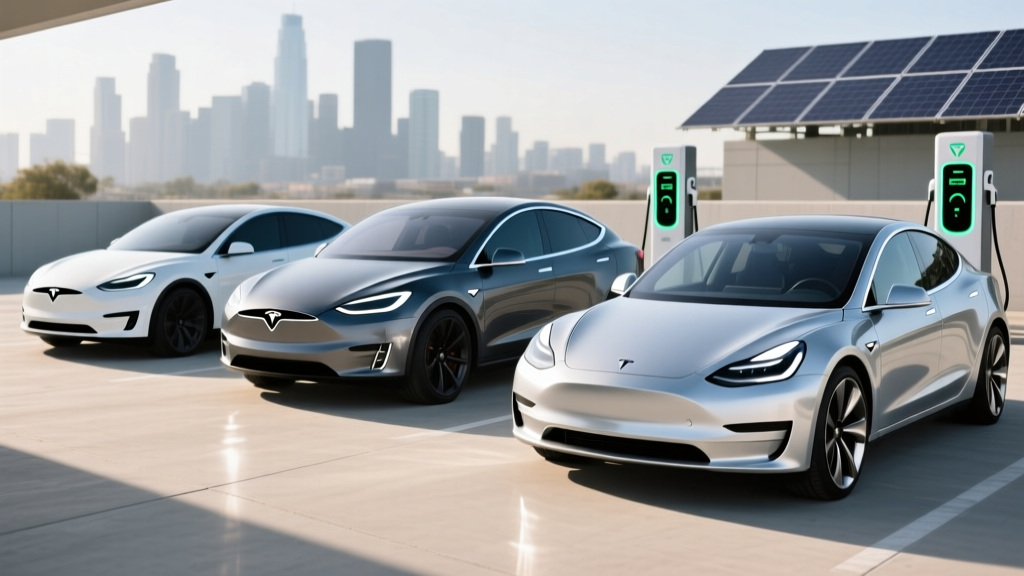
Tesla once defined the affordable electric car. The Model 3 launched at $35,000 in 2017 with a promise to democratize EVs. Fast-forward to 2026, and the conversation has shifted: buyers increasingly ask why Tesla is so expensive compared to a growing field of rivals from Hyundai, Ford, Chevrolet, and BMW. The answer isn't simple. Tesla's pricing reflects a tangle of battery chemistry choices, vertically integrated software, Supercharger network subsidies, shifting federal tax-credit eligibility under IRS §30D, and a premium brand positioning that the company has cultivated since the Roadster. Below, we dissect the 2026 Tesla lineup — Model 3, Model Y, Model S, and Model X — with exact EPA range, kWh, charge rates, and MSRP figures to show where the money actually goes.
2026 Tesla Lineup at a Glance: Specs and Pricing
| Model / Trim | EPA Range | Battery (kWh / Chem.) | 0-60 mph | HP | Base MSRP |
|---|---|---|---|---|---|
| Model 3 RWD | 272 mi | ~60 kWh / LFP | 5.8 s | 283 | $38,990 |
| Model 3 Long Range AWD | 341 mi | ~79 kWh / NMC | 4.2 s | 346 | $42,490 |
| Model 3 Performance | 315 mi | ~79 kWh / NMC | 2.9 s | 510 | $52,990 |
| Model Y Long Range AWD | 320 mi | ~79 kWh / NMC | 4.8 s | 384 | $44,990 |
| Model Y Performance | 292 mi | ~79 kWh / NMC | 3.5 s | 510 | $52,490 |
| Model S Long Range | 402 mi | ~100 kWh / NMC | 3.1 s | 670 | $79,990 |
| Model S Plaid | 359 mi | ~100 kWh / NMC | 1.99 s | 1,020 | $89,990 |
| Model X Long Range | 335 mi | ~100 kWh / NMC | 3.8 s | 670 | $79,990 |
| Model X Plaid | 311 mi | ~100 kWh / NMC | 2.5 s | 1,020 | $94,990 |
Sources: fueleconomy.gov, Tesla.com 2026 specs. Prices exclude $1,390 destination.
Real-World Range: What the EPA Sticker Doesn't Tell You
EPA vs. Reality: A Model 3 Long Range's 341-mile EPA figure assumes a mix of city regen and moderate highway speeds. On a 75-mph interstate run in 40°F weather, expect ~250-270 usable miles before you need to stop. The Model S Long Range's 402-mile sticker translates to roughly 310-330 highway miles in fair weather, dropping to ~260-280 in freezing temps. Cold-weather losses of 20-30% are normal for NMC packs without consistent preconditioning.
Tesla's heat pump (standard on all 2026 models) helps, but physics wins in sub-freezing weather. The LFP pack in the base Model 3 RWD is especially sensitive to cold, losing a larger percentage of range than NMC because LFP's internal resistance climbs more steeply at low temperatures. Plan conservatively: if your commute is 120 miles round-trip in a Minnesota winter, the RWD Model 3 will be tight; the Long Range AWD gives a comfortable buffer.
Charging Speed: Supercharger Advantage Still Matters
| Model | Peak DC kW | 10-80% Time | Level 2 (11.5 kW) | Connector |
|---|---|---|---|---|
| Model 3 RWD (LFP) | 170 kW | ~30 min | ~30 mi/hr | NACS (native) |
| Model 3 Long Range / Perf | 250 kW | ~25 min | ~44 mi/hr | NACS |
| Model Y Long Range / Perf | 250 kW | ~27 min | ~44 mi/hr | NACS |
| Model S / X | 250 kW | ~30 min | ~48 mi/hr | NACS |
The headline peak kW number is misleading if you don't understand the charge curve. Tesla's NMC packs sustain near-peak rates only between ~10-45% State of Charge; above 60%, the curve tapers sharply to protect the cells. A Model 3 Long Range at a V3 Supercharger will pull 250 kW briefly, then settle around 100-120 kW through the middle of the session. That's why the 10-80% time matters more than peak kW. LFP packs in the base Model 3 taper earlier and charge slower overall, which is a real trade-off for the lower price.
Home Level 2 charging on a 48-amp Tesla Wall Connector (11.5 kW) adds 30-48 miles per hour depending on the model, easily replenishing a daily commute overnight. Installation typically runs $800-$2,000 depending on panel proximity and whether your home needs a 200-amp service upgrade.
Where the Money Goes: Why Tesla's Prices Climb
Breaking down why Tesla is so expensive requires separating hardware cost from software-and-ecosystem cost.
Battery Chemistry and Pack Size
NMC (nickel-manganese-cobalt) packs deliver higher energy density than LFP but cost significantly more per kWh. The ~100 kWh pack in the Model S and X alone accounts for an estimated $12,000-$15,000 of the bill of materials at 2026 cell prices. The LFP pack in the Model 3 RWD is cheaper (~$6,500-$8,000), which is how Tesla keeps that trim under $40,000.
Software Stack and Autopilot/FSD
Tesla's HW4 computer, eight-camera suite, and neural-net training infrastructure aren't free. Basic Autopilot is bundled, but Full Self-Driving (Supervised) adds $8,000 or $99/month. Remember: FSD is SAE Level 2 driver-assist — you must stay engaged. It is not Level 4 autonomy like Waymo. This distinction matters both legally and practically.
The Supercharger Network Subsidy
Tesla owns and operates 6,000+ Superchargers in North America. While the network now accepts NACS-equipped Fords, Rivians, and GM EVs, Tesla owners still benefit from seamless plug-and-charge billing, lower per-kWh pricing at many stalls, and integrated routing. That infrastructure cost is partially baked into vehicle pricing.
Premium Positioning and Margin Strategy
Despite price cuts in 2023-2024, Tesla maintains premium gross margins (~17-19% in recent quarters) relative to legacy automakers still losing money on EVs. The brand carries aspirational weight, especially for Model S and X, which compete with Porsche Taycan, BMW i7, and Mercedes EQS on price if not always on interior finish.
Federal Tax Credit Eligibility: Not a Flat $7,500
| Model | MSRP | §30D Eligible? | Effective Price (est.) |
|---|---|---|---|
| Model 3 RWD | $38,990 | Partial — $3,750 | ~$35,240* |
| Model 3 Long Range | $42,490 | Partial — $3,750 | ~$38,740* |
| Model 3 Performance | $52,990 | Partial — $3,750 | ~$49,240* |
| Model Y Long Range | $44,990 | Partial — $3,750 | ~$41,240* |
| Model S / X | $79,990+ | No (MSRP cap) | Full MSRP |
*Assumes buyer meets income caps ($150k single / $300k MFJ) and takes point-of-sale transfer. Rules per IRS §30D. Battery sourcing and critical-mineral rules can reduce credit to $3,750 or eliminate it — verify at purchase.
Key caveats: Sedans (Model 3, S) face a $55,000 MSRP cap; SUVs/trucks/vans (Model Y, X) face an $80,000 cap. Income limits apply. Model S and X blow past the cap, meaning buyers pay full freight. The Model 3 and Y currently qualify for only half the credit ($3,750) due to critical-mineral sourcing rules that tighten annually through 2030. Always confirm eligibility with your dealer and a tax professional before signing.
Efficiency, Space, and Warranty
Tesla still leads the industry in efficiency. The Model 3 Long Range achieves 132 MPGe combined (~25 kWh/100mi), outpacing the Hyundai Ioniq 6 and Ford Mustang Mach-E. The Model Y Long Range sits at ~122 MPGe. That efficiency directly reduces charging costs: at the US average of $0.17/kWh, a Model 3 LR costs roughly $4.25 to add 100 miles of range at home.
Cargo space: Model 3 offers 23 cu ft trunk + 3.1 cu ft frunk. Model Y provides 30 cu ft behind the second row (76 cu ft folded) plus 4.1 cu ft frunk, with an optional third row for very small passengers. Model S delivers 28 cu ft trunk + 25 cu ft frunk; Model X offers up to 92 cu ft with both rows folded.
Warranty: 4 years / 50,000 miles bumper-to-bumper; 8 years / 100,000 miles (Model 3/Y) or 8 years / 150,000 miles (Model S/X) on battery and drive units, with a 70% minimum capacity retention threshold. That's competitive with Hyundai's 10-year/100,000-mile battery warranty on paper, though Tesla's real-world degradation data (typically 8-12% loss over 150,000 miles for NMC) has been strong.
Who Should Buy a Tesla in 2026 — And Who Shouldn't
Choose Tesla if: You want the lowest-efficiency highway cruiser with native Supercharger access, strong OTA updates, and best-in-class mobile app integration. Model 3 LR remains the value sweet spot. Model Y suits families needing SUV cargo and access to the Supercharger network on road trips.
Look elsewhere if: You prioritize interior material quality (Hyundai Ioniq 5, BMW i4), need a truck bed (Rivian R1T, Ford F-150 Lightning), want a luxury sedan with traditional dealership service (Porsche Taycan, BMW i5), or need maximum second-row space (Kia EV9 three-row). Model S and X are tough to justify against the Taycan and iX on fit-and-finish alone.
Pros, Cons, and the Verdict
Pros
- Class-leading efficiency (MPGe) across the lineup
- Native NACS + Supercharger network reliability
- Strong OTA updates and software integration
- Excellent real-world fast-charge curve on NMC trims
- Robust used-EV resale values relative to legacy brands
Cons
- Model S/X pricing exceeds federal tax-credit caps
- LFP Model 3 RWD suffers cold-weather range loss and slower DC charging
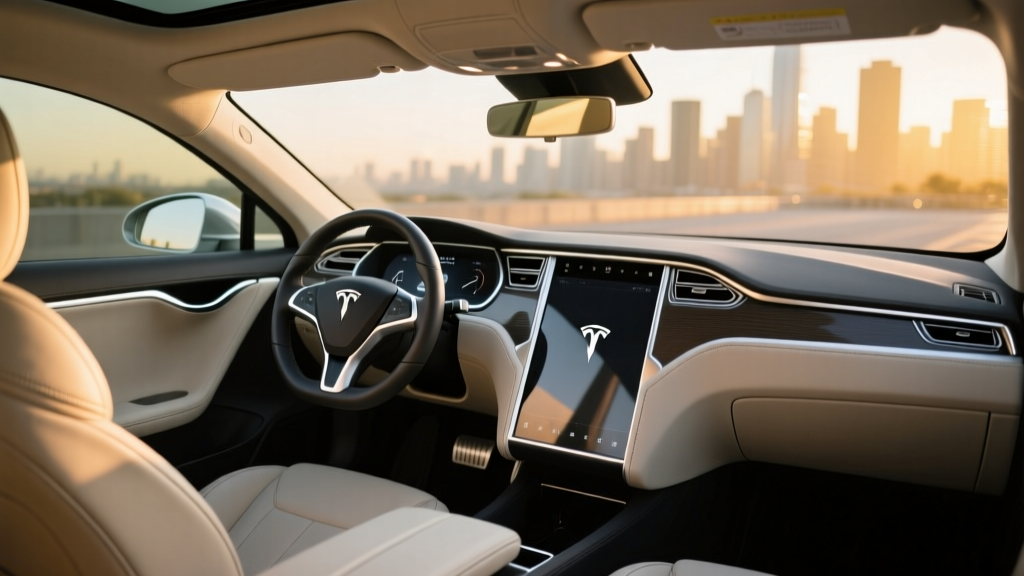
- Minimalist interior isn't for everyone; no physical stalks or buttons
- FSD ($8k) is Level 2 only — not autonomous
- Service-center wait times in some metro areas
Verdict: Tesla is expensive because it bundles battery, software, and charging infrastructure into one premium-priced package. The Model 3 Long Range at ~$38,740 after partial credit remains a benchmark value. The Model S and X, however, are priced for brand loyalists, not cost-conscious buyers. If you're asking why Tesla is so expensive, the honest answer is: for the base trims, it isn't — the premium shows up when you climb the lineup or add FSD.
Frequently Asked Questions
What is the real-world range of a Tesla in 2026?
Expect ~80-85% of EPA on highway trips in fair weather, and 65-75% in freezing conditions. A Model 3 Long Range (341 EPA) typically delivers 270-290 highway miles at 70 mph in summer, dropping to 240-260 in winter.
How fast does a Tesla charge at home and on the road?
Home Level 2 at 11.5 kW adds 30-48 miles per hour. DC fast charging peaks at 170-250 kW depending on trim, with 10-80% taking 25-30 minutes on NMC packs and ~30 minutes on LFP.
Does Tesla qualify for the $7,500 federal tax credit?
Partially. Model 3 and Y currently qualify for $3,750 under IRS §30D, subject to buyer income caps ($150k single / $300k MFJ) and battery-sourcing rules. Model S and X exceed the MSRP cap and do not qualify. Always verify at point of sale.
Is Tesla still worth it vs. Hyundai, Ford, or BMW?
For efficiency, Supercharger access, and software, yes — especially Model 3 LR and Model Y. For interior quality, physical controls, or three-row seating, rivals like the Ioniq 5, Mach-E, and Kia EV9 are compelling alternatives at similar or lower prices.
Why is the Model S so much more expensive than the Model 3?
Larger ~100 kWh NMC pack, dual-motor performance hardware, air suspension, premium interior materials, and lower production volume all push the Model S above $79,990. It competes with the Porsche Taycan and BMW i5, not the Model 3.
Does FSD make Tesla a self-driving car?
No. FSD (Supervised) is SAE Level 2 driver-assist. You must keep hands near the wheel and eyes on the road. Only Level 4 services like Waymo operate without a driver.