If you have ever wondered why oil is not renewable, the answer sits at the intersection of deep-time geology, finite extraction, and transportation economics. Crude oil forms from marine microorganisms buried under sediment, subjected to heat and pressure over hundreds of millions of years. Humanity consumes roughly 100 million barrels per day — burning in decades what Earth took epochs to produce. That fundamental mismatch between formation timescale and consumption rate is what makes petroleum a non-renewable resource.
For drivers, the practical question is what replaces it. Battery-electric vehicles powered by an increasingly renewable grid offer a path off finite fossil fuels. Below, we explain the science behind oil's non-renewability, then profile three 2026 EVs that make the transition tangible — with exact range, charging, pricing, and tax-credit data.
The Geology Behind Why Oil Is Not Renewable
Petroleum originates from ancient phytoplankton and zooplankton that settled on ocean floors during the Carboniferous and Mesozoic periods (roughly 360 to 65 million years ago). Over geologic time, layers of sediment buried this organic matter, and temperatures between 60°C and 160°C transformed it into kerogen, then liquid hydrocarbons. The process requires specific source rocks, migration pathways, and trap structures — conditions that took millions of years to align.
Global proved reserves stand at approximately 1.7 trillion barrels, according to industry estimates. At current consumption rates (~36.5 billion barrels annually), that represents roughly 47 years of supply — though new discoveries and extraction technology shift this number. The critical point is that no meaningful new oil is forming on human timescales. Once extracted and combusted, those carbon molecules are gone from the fuel cycle permanently.
The Economics of Finite Fuel
Beyond geology, oil's non-renewable nature creates structural price volatility. Crude prices respond to geopolitical disruption, OPEC+ production decisions, and depletion of low-cost fields that force extraction from deeper, more expensive reservoirs. The U.S. Energy Information Administration tracks these dynamics at eia.gov.
For drivers, this means gasoline costs are fundamentally unpredictable. An EV charged on a diversified grid (wind, solar, nuclear, hydro, natural gas) decouples transportation from a single finite commodity. Electricity prices are more stable regionally and increasingly tied to zero-marginal-cost renewable generation.
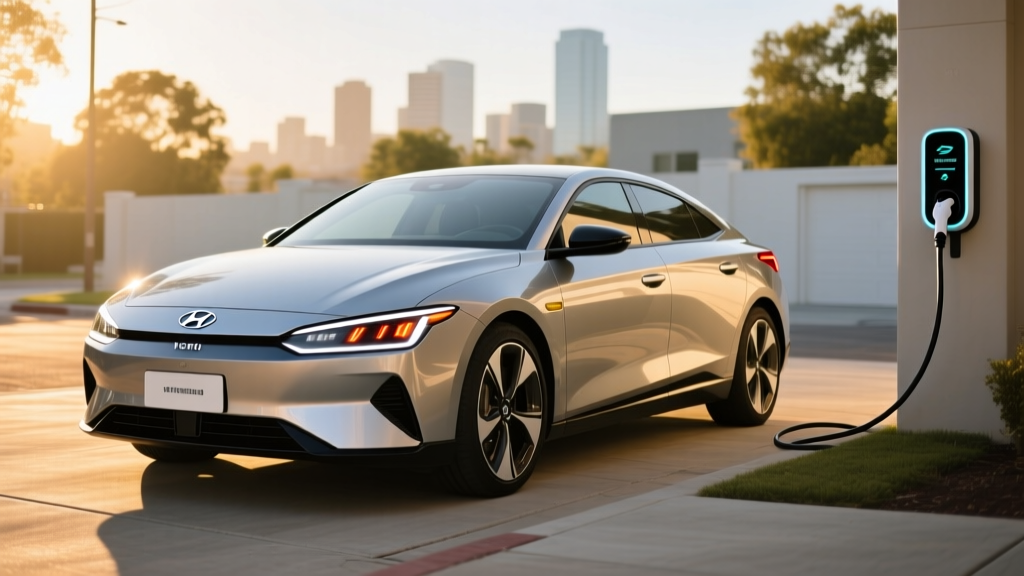
2026 Hyundai Ioniq 5: Efficiency Benchmark
| Spec | Value |
|---|---|
| EPA Range | 305 miles |
| Battery | 84.0 kWh usable, NMC chemistry |
| Efficiency | 110 MPGe combined / 30 kWh/100mi |
| DC Fast Charge (peak) | 240 kW (10-80% in ~18 min) |
| Level 2 Home Charge | 10.9 kW (~36 mi/hr) |
| 0-60 mph | 4.5 seconds |
| Horsepower | 320 hp (dual-motor AWD) |
| Cargo (rear seats up) | 27.2 cu ft |
| Cargo (rear seats folded) | 59.3 cu ft |
| Base MSRP | $47,750 |
| Battery Warranty | 10 years / 100,000 miles |
The Ioniq 5's 800-volt architecture remains one of the fastest-charging platforms in its class. At a 350 kW DC fast charger, the NMC battery sustains over 200 kW through the 20–60% state-of-charge window before tapering. The 10-80% sprint takes roughly 18 minutes under ideal thermal conditions — preconditioning the battery via the navigation-linked charging optimizer is essential for hitting peak rates.
Hyundai's 10-year/100,000-mile battery warranty covers capacity loss below 70% state of health. The cabin offers a flat floor (no transmission tunnel), 41.7 inches of rear legroom, and vehicle-to-load (V2L) capability that can power devices up to 3.6 kW — useful for camping or backup power during outages.
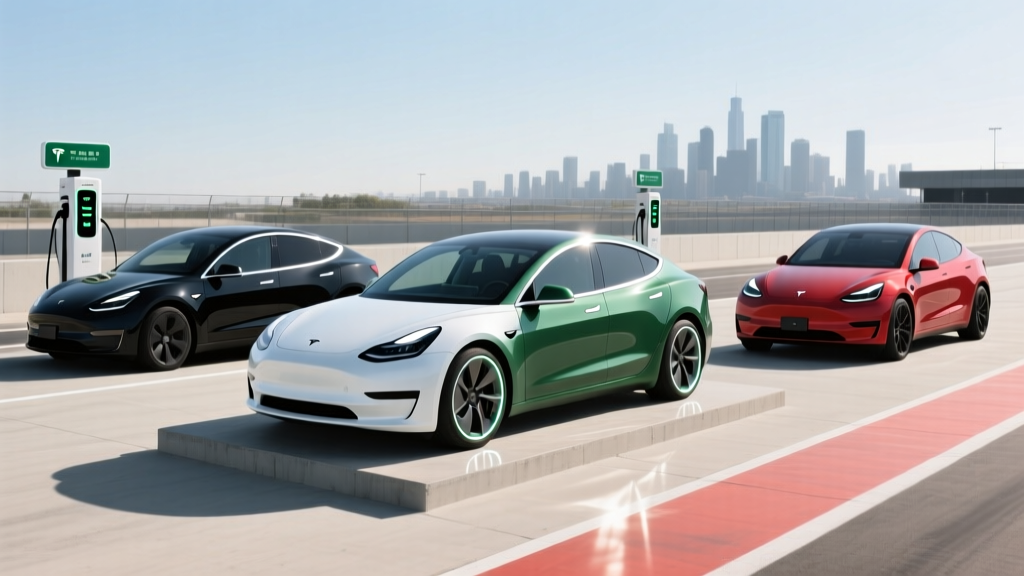
2026 Tesla Model Y Long Range: The Volume Leader
| Spec | Value |
|---|---|
| EPA Range | 320 miles |
| Battery | ~78 kWh usable, NMC chemistry |
| Efficiency | 120 MPGe combined / 28 kWh/100mi |
| DC Fast Charge (peak) | 250 kW (10-80% in ~22 min) |
| Level 2 Home Charge | 11.5 kW (~44 mi/hr) |
| 0-60 mph | 4.8 seconds |
| Horsepower | 384 hp (dual-motor AWD) |
| Cargo (rear seats up) | 30.2 cu ft |
| Cargo (rear seats folded) | 72.1 cu ft |
| Base MSRP | $44,990 |
| Battery Warranty | 8 years / 120,000 miles |
The refreshed Model Y (internally "Juniper") brought improved suspension tuning, ventilated seats, and ambient lighting — addressing the most common criticisms of the pre-2025 model. Tesla's Supercharger network, now with NACS connectors adopted industry-wide, remains the most reliable DC fast-charging ecosystem in North America.
The Model Y's 120 MPGe combined is exceptional for a crossover SUV, translating to roughly 28 kWh per 100 miles. For a driver covering 12,000 miles annually with electricity at $0.14/kWh, that's approximately $470 per year in home charging — compared to $1,500+ for a 28 MPG gasoline crossover at $3.50/gallon.
2026 Chevrolet Equinox EV: The Budget-Friendly Option
| Spec | Value |
|---|---|
| EPA Range | 319 miles |
| Battery | 85 kWh usable, NMC chemistry |
| Efficiency | 104 MPGe combined / 32 kWh/100mi |
| DC Fast Charge (peak) | 150 kW (10-80% in ~32 min) |
| Level 2 Home Charge | 11.5 kW (~37 mi/hr) |
| 0-60 mph | 7.8 seconds |
| Horsepower | 213 hp (single-motor FWD) |
| Cargo (rear seats up) | 26.4 cu ft |
| Cargo (rear seats folded) | 57.1 cu ft |
| Base MSRP | $34,900 |
| Battery Warranty | 8 years / 100,000 miles |
At $34,900 before incentives, the Equinox EV is one of the most affordable 300+ mile EVs available. The 150 kW peak charge rate is modest by 2026 standards — a 10-80% session takes roughly 32 minutes — but adequate for overnight home charging and occasional road trips with planned stops.
Side-by-Side: Which EV Replaces Your Gas Car?
| Category | Ioniq 5 AWD | Model Y LR | Equinox EV FWD |
|---|---|---|---|
| Best Range | 305 mi | 320 mi | 319 mi |
| Fastest Charging | 18 min (10-80%) | 22 min | 32 min |
| Most Efficient | 30 kWh/100mi | 28 kWh/100mi | 32 kWh/100mi |
| Most Cargo | 59.3 cu ft | 72.1 cu ft | 57.1 cu ft |
| Lowest Price (after credit) | ~$40,250 | ~$37,490 | ~$27,400 |
| Longest Battery Warranty | 10 yr / 100k mi | 8 yr / 120k mi | 8 yr / 100k mi |
Pros and Cons at a Glance
- Fuel cost: $0.04–0.06/mile (home charging) vs. $0.12–0.16/mile (gasoline)
- No oil changes, spark plugs, or exhaust maintenance
- Instant torque and smooth, quiet acceleration
- Home charging: start every day with a "full tank"
- Decouples transportation from volatile oil markets
- Higher upfront purchase price (mitigated by tax credits)
- Home charging requires Level 2 installation ($500–2,000+)
- DC fast-charging reliability varies by network and location
- Cold weather reduces range 15–25% in winter
- Insurance premiums can be 10–20% higher for EVs
Frequently Asked Questions
Is oil ever replenished naturally?
Technically, organic matter is being deposited in ocean sediments today, but the transformation into recoverable petroleum requires 1–5 million years of heat and pressure. On any human-relevant timescale, oil is finite and non-renewable.
How much does it cost to charge an EV vs. buying gas?
At $0.14/kWh (national average for residential electricity), a 78 kWh battery costs ~$11 to charge from empty to full, yielding 300+ miles. That same distance in a 28 MPG vehicle at $3.50/gallon costs ~$37.50 — roughly 3.4x more per mile.
Do these EVs qualify for the $7,500 federal tax credit?
Eligibility under IRS §30D depends on the buyer's modified adjusted gross income (≤$150k single / $300k joint), the vehicle's MSRP (≤$55k for SUVs), and battery-component/critical-mineral sourcing requirements. All three vehicles listed can qualify, but sourcing rules tighten annually. Check fueleconomy.gov for the latest eligibility before purchasing.
What happens to EV batteries when they degrade?
Modern NMC and LFP batteries typically retain 85–90% capacity after 100,000 miles. All three vehicles above carry 8–10 year warranties covering capacity loss below 70% state of health. End-of-life batteries are increasingly recycled for cobalt, nickel, and lithium recovery — unlike burned gasoline, which is gone permanently.
The question of why oil is not renewable is ultimately about timescales and alternatives. Geology made petroleum finite; engineering has made battery-electric vehicles a viable, increasingly affordable replacement. The 2026 Ioniq 5, Model Y, and Equinox EV each offer 300+ miles of range, home-charging convenience, and freedom from a fuel source that took 300 million years to form — and that we are consuming in centuries.