The 'Tesla AC Smell' Problem Every Owner Eventually Faces
It starts as a faint musty or sour odor when you first turn on the climate system — sometimes described as dirty socks, vinegar, or wet dog. If you've found yourself asking why does my Tesla AC smell bad, you're far from alone. This is one of the most commonly reported HVAC complaints across Model 3, Model Y, Model S, and Model X owners, and it has nothing to do with the electric powertrain and everything to do with how Tesla's heat pump, evaporator, and cabin filtration system interact with humidity, biology, and time.
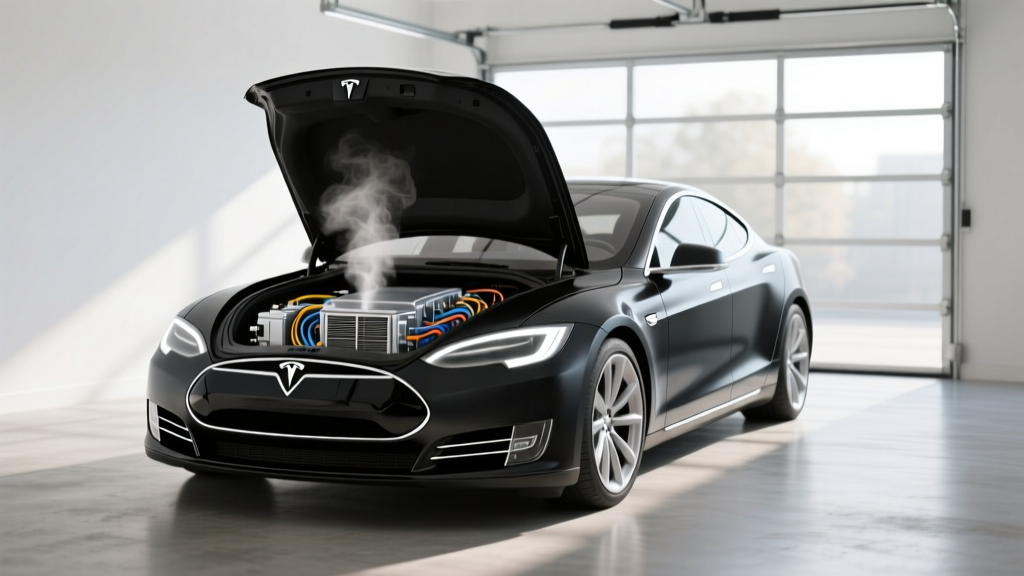
Unlike internal-combustion vehicles where the AC system is a relatively simple afterthought, Tesla's thermal management system is deeply integrated with the battery and powertrain cooling loops via the octovalve and heat pump (standard on Model Y and refreshed Model 3). That integration makes the cabin HVAC highly efficient — but it also means moisture management on the evaporator coil is critical, and when it goes wrong, the smell is hard to ignore.
Below, we'll walk through the root causes, the proven fixes (DIY and service-center level), prevention protocols, and how Tesla's HVAC architecture compares to competitors. We'll also include the full spec profile for the current-generation Tesla Model Y (the most popular Tesla and the model most frequently associated with this complaint) so you have the ownership context in one place.
Why Does My Tesla AC Smell Bad? The 5 Root Causes
Before reaching for a spray or a service appointment, understand what's actually happening inside the dash. The smell is almost always biological — mold, mildew, or bacteria colonizing a damp surface — not a mechanical or refrigerant failure.
1. Evaporator Coil Mold and Mildew
The evaporator is the cold finned coil inside the HVAC housing that removes heat and humidity from cabin air. When the AC runs, condensation forms on the evaporator and drains out through a tube to the underside of the car. If the drain is partially obstructed, or if the system is shut off while the coil is still saturated, standing moisture becomes a breeding ground for mold and bacteria. This is the #1 cause of the "dirty sock" smell in Teslas and most other vehicles.
2. Cabin Air Filter Saturation
Tesla recommends replacing the cabin air filter every 2 years (or annually if you drive in high-pollen or high-pollution environments). A saturated filter traps organic material — pollen, dust, skin cells — which, combined with humidity, becomes a microbial culture medium. On Model 3 and Model Y, the filter is located under the frunk area behind the windshield cowl; on Model S/X, it's behind the glovebox area.
3. HEPA Filter Degradation (Model S/X and some Model Y)
Tesla's optional HEPA filtration ("Bioweapon Defense Mode") uses a much larger, denser filter. While excellent for particulate filtration, a HEPA filter that isn't replaced on schedule (Tesla recommends every 3 years) can hold significantly more organic material and moisture than a standard cabin filter, producing a more intense odor when it degrades.
4. Condensate Drain Blockage
The drain tube that carries water away from the evaporator can clog with debris, leaves, or insect nests — especially on cars parked under trees. A blocked drain causes standing water inside the HVAC housing, which rapidly produces a musty smell and can, in severe cases, lead to water intrusion onto the passenger footwell.
5. Refrigerant Leak (Rare but Distinct)
If the smell is chemical or sweet rather than musty, it may indicate a refrigerant leak at the evaporator. Tesla uses R-1234yf refrigerant, which has a faint ether-like odor when it escapes. This is uncommon but requires immediate service — refrigerant leaks reduce cooling performance and are an environmental concern.
How to Diagnose Which Cause You Have
Use this decision framework before spending money:
- Musty/sour smell only on first startup, fades after 2–3 minutes: Likely evaporator surface mold. Moisture has been sitting on the coil since last use.
- Smell persists throughout the drive and worsens with fan speed: Likely cabin filter saturation. Replace the filter.
- Smell is worse in humid weather or after rain: Evaporator or drain issue. Check drain output under the car after an AC run — you should see a clear water puddle.
- Sweet or chemical smell: Possible refrigerant leak. Schedule Tesla Service.
- Visible moisture on passenger floor mat: Blocked condensate drain. Service required.
Proven Fixes: From DIY to Service Center
DIY Fix: Evaporator Coil Treatment (~$15–$35)
The most effective consumer-level fix is an HVAC evaporator foaming treatment (products like Kool-It, Klima-Cleaner, or Liqui Moly Climate Control Cleaner). The process:
- Locate the cabin air filter housing and remove the filter.
- Insert the foaming treatment's applicator tube into the evaporator access point.
- Dispense the foam and allow it to dwell for 10–15 minutes per product instructions.
- Reinstall a new cabin filter (strongly recommended at the same time).
- Run the fan on high with fresh-air mode (not recirculate) for 10 minutes with windows open.
This typically resolves evaporator-based odor for 6–12 months.
DIY Fix: Cabin Filter Replacement (~$25–$60 in parts)
On Model 3 and Model Y (2021+ Highland/Juniper and earlier), cabin filter replacement is a moderate-DIY job requiring removal of the frunk trim panel and a Torx driver. Aftermarket HEPA-grade filters from Bosch, Fram, or Tesla OEM are widely available. Budget 30–45 minutes the first time, 15 minutes thereafter.
Service Center Fix: Full HVAC Cleaning (~$150–$300)
If DIY treatment doesn't resolve the smell, a Tesla Service Center or qualified HVAC shop can perform a professional evaporator cleaning using pressurized antimicrobial treatment applied directly to the coil. This is the definitive fix for persistent biological odor.
Software-Level Prevention: Enable "Cabin Overheat Protection" Wisely
Tesla's Cabin Overheat Protection runs the AC to keep the interior below a set temperature when parked. While useful, frequent short cycling can leave the evaporator damp without adequate dry-out time. Consider disabling it in moderate climates or setting the threshold higher.
Prevention Protocol: Keep the Smell from Coming Back
Once you've eliminated the odor, these habits prevent recurrence:
- Run fan-only for 2 minutes before shutdown: This dries the evaporator coil. On Teslas, you can do this manually by turning off AC (snowflake icon) while leaving the fan on for the last 2 minutes of your drive.
- Avoid permanent recirculate mode: Fresh air mode introduces drier outside air and reduces condensation buildup.
- Replace cabin filters on schedule: Every 2 years standard; annually in humid, high-pollen, or dusty climates.
- Park in shade or use a sunshade: Lower cabin temperatures reduce the thermal shock that produces heavy condensation on startup.
- Annual evaporator treatment: A preventative foaming treatment once a year (spring is ideal) keeps microbial growth suppressed.
2026 Tesla Model Y: Full Ownership Spec Profile
Since the Model Y is the Tesla most frequently searched for this issue, here is the complete ownership picture for the current-generation (Juniper-refresh) Model Y Long Range AWD, the highest-volume trim.
| Attribute | Specification |
|---|---|
| EPA Estimated Range | 320 miles |
| Battery (Usable) | ~78 kWh, NMC chemistry |
| Drivetrain | Dual-motor AWD |
| Horsepower | 384 hp combined |
| 0–60 mph | 4.8 seconds |
| Peak DC Fast Charge | 250 kW (V3 Supercharger) |
| 10–80% DC Charge Time | ~27 minutes |
| Level 2 Home Charge Rate | 11.5 kW / ~44 miles per hour |
| Efficiency | 122 MPGe combined / 27 kWh/100 mi |
| Cargo Volume (rear seats up) | 30.2 cu ft |
| Cargo Volume (rear seats folded) | 72.1 cu ft |
| Rear Legroom | 41.6 inches |
| Battery & Drive Unit Warranty | 8 years / 120,000 miles |
| Base MSRP | $48,990 (before destination) |
| As-Tested (typical config) | ~$53,000 with FSD and paint |
Sources: EPA fueleconomy.gov, Tesla Model Y design studio.
Charging, Pricing, and Tax Credit Eligibility
| Level | Power | Miles Added | Typical Use Case |
|---|---|---|---|
| Level 1 (120V) | ~1.4 kW | ~4 miles/hour | Emergency / overnight trickle |
| Level 2 (240V, 48A) | 11.5 kW | ~44 miles/hour | Home Wall Connector |
| DC Fast (V3 Supercharger) | 250 kW peak | ~200 miles in 15 min | Road trips, rapid top-ups |
| DC Fast (V4 Supercharger) | Up to 325 kW* | Faster curve, taper above 80% | Next-gen corridor charging |
*V4 peak rates depend on vehicle acceptance; Model Y currently caps at ~250 kW on V3 architecture. Charge curve tapers significantly above 80% SoC — the last 20% can take as long as the first 80%.
Federal Tax Credit (§30D) — Current Rules
The Tesla Model Y qualifies for up to $7,500 in federal EV tax credit under current IRS §30D rules, but eligibility is conditional:
- MSRP cap: SUVs/vans/pickups must be under $80,000. Model Y qualifies comfortably.
- Buyer income cap: AGI must not exceed $150,000 (single), $225,000 (head of household), or $300,000 (joint). Check your current-year AGI.
- Battery sourcing: Critical minerals and battery component requirements phase in annually. Tesla's North American battery production (Nevada, Texas) generally satisfies current thresholds, but verify at the point of sale.
- Point-of-sale transfer: As of 2024+, buyers can transfer the credit to the dealer for an immediate price reduction rather than claiming it at tax time.
Verify current eligibility at IRS.gov §30D before purchase — rules update annually.
| Configuration | MSRP | After $7,500 Credit |
|---|---|---|
| Base LR AWD | $48,990 | $41,490 |
| With FSD ($8,000) | $56,990 | $49,490 |
| With FSD + Premium paint + 20" wheels | ~$61,500 | ~$54,000 |
Tesla HVAC Architecture vs. Key Competitors
The AC-smell issue is not unique to Tesla, but Tesla's HVAC design has specific characteristics that make it more prone than some competitors:
- Heat pump standard (Model Y, refreshed Model 3): More efficient than resistive heating, but the integrated thermal loops mean the evaporator sees more cycling, increasing condensation frequency.
- Minimalist cabin controls: There's no dedicated "evaporator dry" mode as found on some Hyundai/Kia EVs (which run the fan post-shutdown automatically).
- Cabin Overheat Protection: Unique to Tesla — useful but can leave the evaporator damp if it cycles frequently.
By comparison, the Hyundai Ioniq 5 and Kia EV6 include an automatic post-AC evaporator drying cycle that runs the blower for several minutes after the vehicle is locked, which measurably reduces odor complaints. This is one area where Tesla's software could add a simple toggle.
Pros, Cons, and Who the Model Y Suits Best
Pros
- Best-in-class Supercharger network (17,000+ NA stalls)
- Segment-leading efficiency (27 kWh/100 mi)
- Spacious cargo area (72.1 cu ft folded)
- Strong OTA software updates
- Heat pump standard on current generation
Cons
- AC odor susceptibility without owner maintenance
- Service center wait times in many markets
- FSD is SAE Level 2 only — not self-driving
- Insurance costs above segment average
- No Apple CarPlay / Android Auto
Look elsewhere if: You want a vehicle with automated evaporator drying, prefer Apple CarPlay, or live in a region with limited Tesla service infrastructure. The Hyundai Ioniq 5, Kia EV6, and Ford Mustang Mach-E are strong alternatives with different HVAC design philosophies.
Frequently Asked Questions
Why does my Tesla AC smell bad right after I turn it on?
This is almost always evaporator surface mold. Moisture condenses on the cold coil during use, and if the coil doesn't dry before the next startup, microbes produce the musty smell. It typically fades after 2–3 minutes as the coil dries. A foaming evaporator treatment and filter replacement usually resolves it.
Does Tesla's warranty cover AC smell?
The 4-year/50,000-mile basic warranty covers mechanical defects — including a blocked condensate drain or refrigerant leak — but not biological odor from filter or evaporator contamination, which Tesla classifies as maintenance. Cabin filter replacement is explicitly an owner responsibility.
How often should I replace the cabin air filter in my Tesla?
Tesla recommends every 2 years for standard cabin filters and every 3 years for HEPA filters. In high-humidity, high-pollen, or dusty environments, annual replacement is more prudent. Aftermarket filters cost $20–$50; OEM Tesla filters run $40–$80.
Can I use an ozone generator to remove the smell?
Ozone generators are effective at killing microbial growth and eliminating odor, but they must be used carefully — ozone is harmful to breathe and can degrade certain rubber and plastic components with prolonged exposure. Many detailers offer 30-minute ozone treatments for $50–$100, which is a reasonable one-time reset before implementing ongoing prevention.
Is the AC smell worse on Model 3 or Model Y?
Model Y tends to generate more complaints, partly due to its larger cabin volume and higher sales volume, but the HVAC architecture is shared with Model 3 (post-2021 refresh). Earlier Model 3 vehicles (pre-heat-pump, pre-2021) used a simpler resistive HVAC system and report fewer odor issues.
Does using recirculate mode make the smell worse?
Yes. Recirculate mode traps cabin humidity inside the HVAC loop, increasing evaporator condensation and giving microbes more moisture to work with. Use fresh-air mode whenever outdoor air quality allows.
Should I be worried about health effects from the AC smell?
Low-level mold and bacterial odors are generally unpleasant rather than dangerous, but they can aggravate allergies or asthma. If you or passengers experience respiratory irritation, address the issue promptly with an evaporator treatment and filter replacement. Persistent chemical smells (sweet/ether) warrant immediate service evaluation for a refrigerant leak.