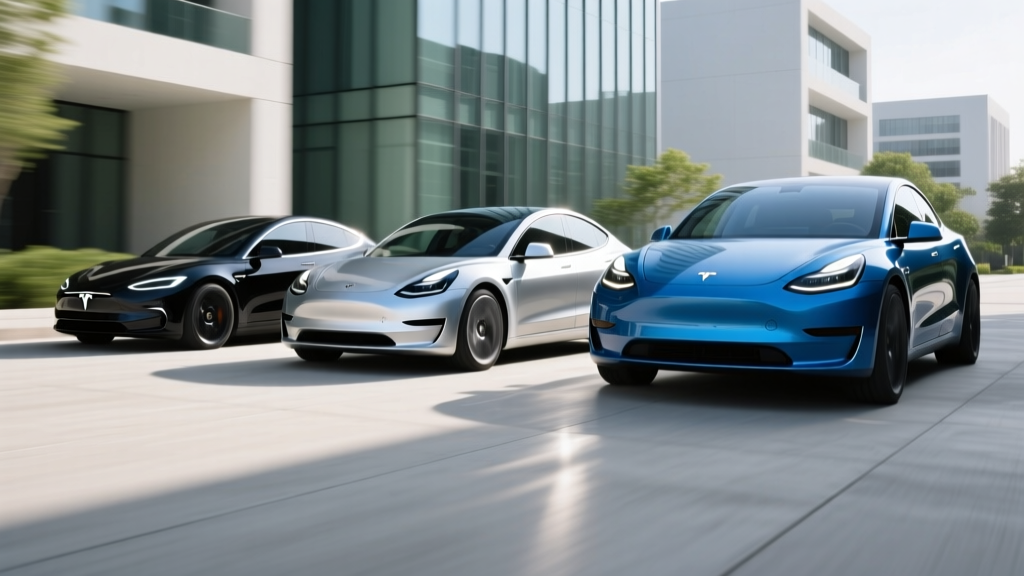
When investors ask why did Tesla stock drop, the answers usually live in quarterly earnings calls and macro headlines. But for EV buyers, the more useful question is whether Tesla's current 2026 lineup still delivers the range, charging speed, and value that made the brand dominant in the first place. This review breaks down every current Tesla model — Model 3, Model Y, Model S, Model X, and Cybertruck — with exact EPA figures, real-world caveats, battery chemistry, charging curves, and federal tax credit eligibility under current IRS §30D rules.
Whether you're trying to understand Tesla's market position or simply deciding which Tesla (if any) to buy in 2026, the data below gives you the full picture — no hype, no doom, just numbers and ownership reality.
2026 Tesla Lineup at a Glance: Spec Comparison Table
| Spec | Model 3 Long Range AWD | Model Y Long Range AWD | Model S Long Range | Model X Long Range | Cybertruck AWD |
|---|---|---|---|---|---|
| EPA Range | 363 mi | 330 mi | 402 mi | 335 mi | 340 mi |
| Battery (usable kWh) | ~75 kWh (NMC) | ~75 kWh (NMC) | ~95 kWh (NMC) | ~95 kWh (NMC) | ~123 kWh (NMC, 4680 cells) |
| Peak DC Fast Charge | 250 kW | 250 kW | 250 kW | 250 kW | 350 kW (4680 architecture) |
| 10–80% DCFC Time | ~25 min | ~27 min | ~30 min | ~32 min | ~15 min (claimed) |
| Level 2 Home Rate | 11.5 kW (~44 mi/hr) | 11.5 kW (~44 mi/hr) | 11.5 kW (~34 mi/hr) | 11.5 kW (~30 mi/hr) | 11.5 kW (~37 mi/hr) |
| 0–60 mph | 4.2 sec | 4.8 sec | 3.1 sec | 3.8 sec | 3.9 sec |
| Horsepower | ~346 hp | ~384 hp | ~670 hp | ~670 hp | ~600 hp |
| Drivetrain | Dual-Motor AWD | Dual-Motor AWD | Dual-Motor AWD | Dual-Motor AWD | Dual-Motor AWD |
| MPGe (combined) | 132 MPGe | 122 MPGe | 120 MPGe | 102 MPGe | ~80 MPGe |
| Base MSRP | $47,740 | $48,990 | $79,990 | $84,990 | $79,990 |
| Cargo (rear seats up) | 23 cu ft | 30 cu ft | 28 cu ft | ~88 cu ft (falcon-wing) | ~34 cu ft bed + frunk |
| Battery Warranty | 8 yr / 120,000 mi | 8 yr / 120,000 mi | 8 yr / 150,000 mi | 8 yr / 150,000 mi | 8 yr / 120,000 mi |
Sources: fueleconomy.gov (EPA), tesla.com (manufacturer). Prices reflect 2026 model year at time of writing.
Real-World Range: What the EPA Sticker Doesn't Tell You
EPA estimates assume a mix of city and highway driving at moderate temperatures. In practice:
• Highway-only at 75 mph: Expect 10–15% less than EPA (e.g., Model 3 LR: ~310–325 mi).
• Cold weather (below 32°F): Expect 20–30% range loss without preconditioning; 15–20% with battery preconditioning active.
• City/regenerative driving: Can match or slightly exceed EPA in stop-and-go traffic due to regen recapture.
Tesla's efficiency remains among the best in the industry. The Model 3 Long Range achieves 132 MPGe combined — translating to roughly 25 kWh per 100 miles. That efficiency is partly why investors scrutinize Tesla's competitive moat: rivals like the Hyundai Ioniq 6 (140 MPGe) and BMW i4 (up to 109 MPGe depending on trim) are closing the gap, but Tesla's Supercharger network integration still gives it a real-world road-trip advantage that doesn't show up on a spec sheet.
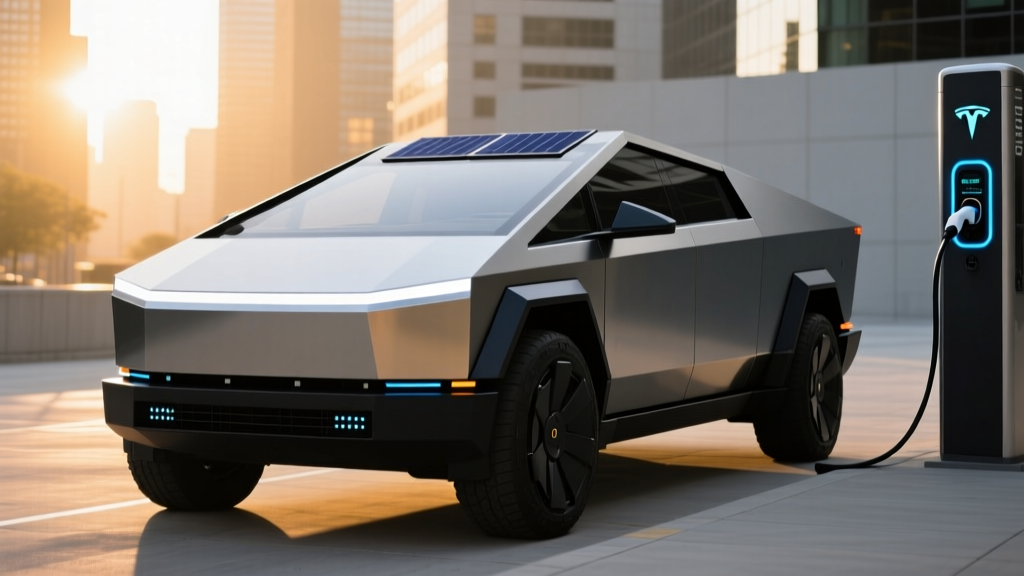
For the Cybertruck, real-world range is the biggest caveat. Its 340-mile EPA figure assumes careful driving. At highway speeds with the tonneau cover open or while towing, expect 220–260 miles realistically. The 4680 cell architecture delivers impressive energy density, but the truck's aerodynamic profile works against it above 65 mph.
Charging Speed: DC Fast, Level 2, and the Supercharger Advantage
| Charging Level | Power (kW) | Approx. Miles Added per Hour | Notes |
|---|---|---|---|
| Level 1 (120V household) | ~1.4 kW | ~3–5 mi/hr | Emergency/trickle only |
| Level 2 (240V home, 48A) | 11.5 kW | 30–44 mi/hr (model dependent) | Full overnight charge in 8–10 hrs |
| DC Fast (V3 Supercharger) | 250 kW peak | ~170 mi in 15 min (Model 3) | Tapers significantly above 60% SoC |
| DC Fast (V4 / 4680) | 350 kW peak (Cybertruck) | ~200+ mi in 15 min | Requires 4680 cell pack; limited station availability |
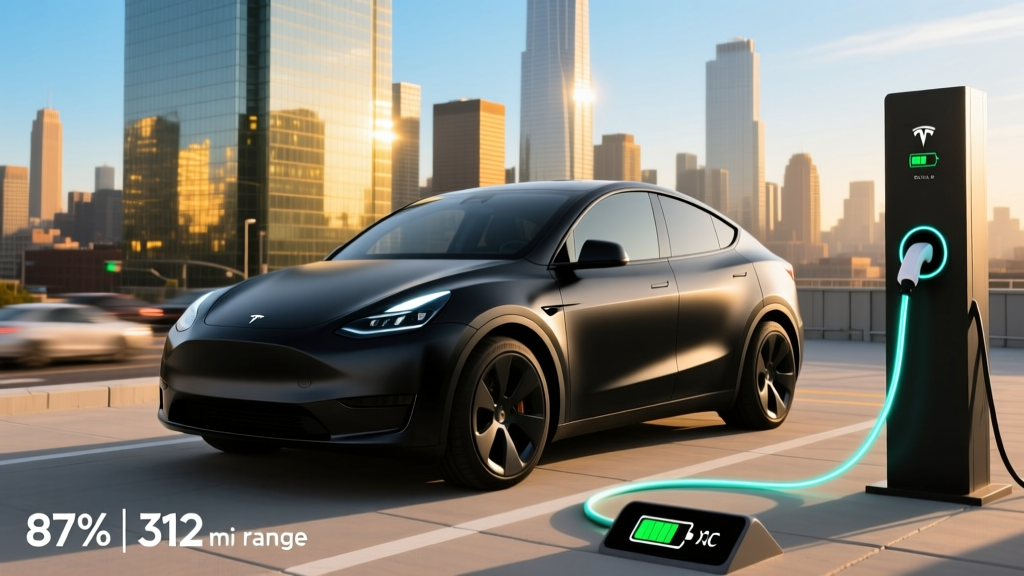
Tesla's charge curve is well-documented: you'll see peak kW only between roughly 10–40% State of Charge. Above 60%, the curve tapers steeply — a 10–80% session takes about 25 minutes on a V3 Supercharger for the Model 3, but going from 80–100% can take nearly as long. This is normal for NMC chemistry and thermal management, but it means planning road-trip stops at 80% is always faster than topping off.
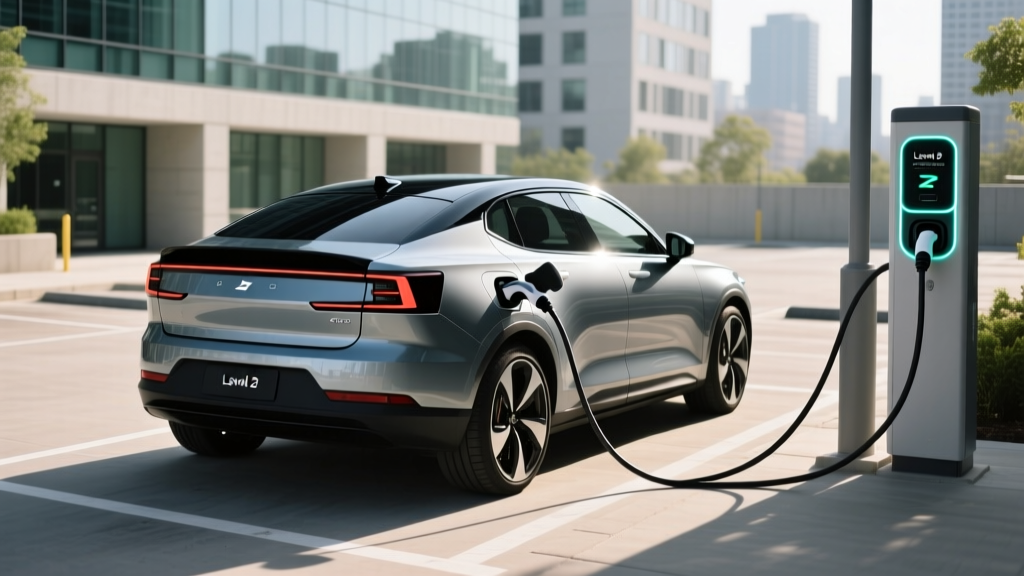
Home charging on a Wall Connector at 48 amps (11.5 kW) adds roughly 44 miles of range per hour in the Model 3. That means a depleted battery reaches full in about 8 hours — easily handled overnight. For most owners, a Level 2 home setup eliminates daily range concerns entirely. Installation typically runs $800–$2,000 depending on panel capacity and conduit distance, assuming a 200-amp electrical panel is available.
Pricing, Tax Credits, and Total Cost of Ownership
| Model | Base MSRP | As-Tested (typical config) | §30D Federal Credit Eligible? | Effective Price After Credit |
|---|---|---|---|---|
| Model 3 RWD | $38,990 | $39,990 | Yes — up to $7,500 (subject to income + sourcing) | ~$31,490–$32,490 |
| Model 3 Long Range AWD | $47,740 | $49,740 | Yes — up to $7,500 | ~$40,240–$42,240 |
| Model Y Long Range AWD | $48,990 | $51,490 | Yes — up to $7,500 | ~$41,490–$43,990 |
| Model S Long Range | $79,990 | $84,990 | No — exceeds $55,000 sedan MSRP cap | $79,990+ |
| Model X Long Range | $84,990 | $89,990 | No — exceeds $80,000 SUV MSRP cap | $84,990+ |
| Cybertruck AWD | $79,990 | $84,990 | No — exceeds $80,000 truck MSRP cap | $79,990+ |
The federal EV tax credit under IRS §30D is a moving target. For 2026, key rules include:
- Income caps: Modified AGI must not exceed $150,000 (single), $225,000 (head of household), or $300,000 (joint).
- MSRP caps: $55,000 for sedans; $80,000 for SUVs, vans, and trucks.
- Battery sourcing: Increasing percentages of critical minerals and battery components must be sourced from the US or FTA partners — rules that tighten annually through 2029.
- Point-of-sale transfer: Eligible buyers can transfer the credit to the dealer at purchase, reducing the upfront price directly.
This is precisely why the Model 3 and Model Y remain Tesla's volume sellers — they're the only models that consistently clear the MSRP cap. The Model S, Model X, and Cybertruck all exceed their respective thresholds, making them ineligible for the federal credit. For buyers in those price ranges, state incentives (which vary widely — check your local energy office) become the primary lever.
When analysts ask why did Tesla stock drop during certain quarters, part of the answer lies here: the credit-eligible models carry lower margins, and the higher-margin vehicles (S, X, Cybertruck) don't benefit from the same federal demand stimulus. That tension between volume and margin is central to understanding Tesla's 2026 financial position.
Performance and Drivetrain: What Each Model Delivers
The Model 3 Long Range AWD hits 0–60 mph in 4.2 seconds with 346 horsepower from its dual-motor setup. That's quick enough for any real-world merge or passing situation, and the instant torque delivery makes it feel quicker than the number suggests. The Performance trim drops that to 2.9 seconds and 510 hp, but at a $52,990 starting price that pushes close to the sedan MSRP cap.
The Model Y Long Range delivers 4.8 seconds to 60 mph with 384 hp — slightly slower due to its taller, heavier crossover body, but still decisively quick. The Performance variant reaches 3.3 seconds. For families, the Model Y's 30 cubic feet of rear cargo (76 cu ft with seats folded) and available third-row option make it the practical default.
The Model S remains Tesla's performance flagship: 3.1 seconds to 60 mph, 670 hp, and a 402-mile EPA range that still leads the lineup. Plaid trim (1,020 hp, 1.99 sec 0–60) exists for those who want hypercar numbers, at $94,990 and well beyond any tax credit consideration.
The Cybertruck's 3.9-second 0–60 time is remarkable for a 6,600-pound stainless-steel truck. Its 4680 structural battery pack contributes to chassis rigidity, and the steer-by-wire system (standard) gives it a uniquely responsive feel at low speeds, though some drivers report an adjustment period on highway centering.
Driver Assistance: Autopilot, FSD Supervised, and SAE Level Reality
Tesla Autopilot and Full Self-Driving (Supervised) are SAE Level 2 driver-assistance systems. The driver must remain fully engaged, hands on or near the wheel, and eyes on the road at all times. These systems do NOT make the vehicle self-driving. Only Level 4 services like Waymo operate without a human driver in defined areas.
Every 2026 Tesla ships with basic Autopilot (traffic-aware cruise control + lane centering). FSD (Supervised) remains an $8,000 add-on or $99/month subscription. In 2026, FSD Supervised handles most urban and highway scenarios competently — stop signs, traffic lights, lane changes, and highway interchanges — but still requires active supervision. Construction zones, faded lane markings, and unprotected left turns remain scenarios where driver intervention is frequent.
Tesla's vision-only approach (no LiDAR or radar on current models) continues to generate debate. In fair weather, the system performs well. In heavy rain, fog, or direct sun glare, camera-only perception has documented limitations. NHTSA continues to monitor Tesla's Autopilot/FSD crash data, and buyers should weigh the $8,000 cost against the current Level 2 capability — it's a convenience feature, not a chauffeur.
Interior, Tech, and Cargo: Practical Ownership Details
The Model 3 Highland refresh (introduced late 2023, continuing into 2026) brought meaningful improvements: ventilated front seats, ambient lighting, rear touchscreen for passengers, and improved sound insulation. The minimalist interior remains polarizing — no physical stalks (turn signals are on the steering wheel), no instrument cluster — but build quality has improved substantially over pre-2023 units.
Cargo capacity varies significantly across the lineup:
- Model 3: 23 cu ft trunk + small frunk. Adequate for two adults' luggage on a road trip.
- Model Y: 30 cu ft behind second row, 76 cu ft folded. The sub-trunk and frunk add another ~5 cu ft. Best-in-class for a compact electric crossover.
- Model S: 28 cu ft rear hatch. The large liftback opening makes loading bulky items easier than a traditional sedan trunk.
- Model X: Falcon-wing rear doors create a massive opening. Up to ~88 cu ft with both rows folded, though the third-row option reduces usable space when deployed.
- Cybertruck: 6-foot bed with ~34 cu ft of lockable volume under the tonneau, plus a large front trunk (frunk) that can hold a full-size cooler. The sail pillars limit vertical loading of tall items.
All models feature Tesla's 15.4-inch (Model 3/Y) or 17-inch (Model S/X/Cybertruck) center touchscreen running Tesla's proprietary OS. No Apple CarPlay or Android Auto — a notable drawback for buyers who prefer phone-mirrored navigation and media. Tesla's native navigation with real-time Supercharger routing remains excellent and partially offsets the missing phone integration.
- Supercharger network — still the most reliable DC fast-charging ecosystem in North America
- Class-leading efficiency (MPGe) across Model 3 and Model Y
- Over-the-air updates continuously add features post-purchase
- Strong resale value relative to most EV competitors
- FSD subscription option ($99/mo) reduces commitment risk
- No Apple CarPlay / Android Auto
- Vision-only ADAS has documented limitations in adverse weather
- Model S, X, and Cybertruck ineligible for federal §30D credit
- Turn signals on steering wheel (Model 3/Y Highland) — adjustment period
- Cybertruck real-world range significantly below EPA when towing or at highway speed
Who Should Buy a Tesla in 2026 — And Who Shouldn't
Choose the Model 3 if: You want the most efficient, affordable Tesla with access to the full §30D credit. Best for commuters and solo/couple drivers who don't need cargo space.
Choose the Model Y if: You need crossover cargo room, optional third-row seating, and still want tax credit eligibility. The default family EV pick.
Choose the Model S if: You want maximum range (402 mi EPA) and performance, and the $80K+ price (no federal credit) fits your budget. Best for road-trip-heavy executives.
Choose the Model X if: You need three rows and falcon-wing convenience in tight parking, and accept the premium price without federal credit.
Choose the Cybertruck if: You need a truck bed, want 4680-cell fast charging, and can accept 220–260 real-world highway miles. Towing capacity is 11,000 lbs, but towing cuts range roughly in half.
Look elsewhere if: You want Apple CarPlay, prefer physical controls, need Level 4 autonomy today, or want a sub-$30K EV (consider the Chevy Equinox EV or used Model 3 with the $4,000 used-EV credit).
Tesla's competitive position in 2026 is strong but narrowing. The Model Y faces direct pressure from the Hyundai Ioniq 5 (318 mi, 800V architecture, faster peak charging), the Ford Mustang Mach-E (320 mi, Apple CarPlay), and the Kia EV6 (310 mi, 239 kW peak charge). The Model 3 competes with the BMW i4 eDrive40 (307 mi, superior interior materials) and the Polestar 2 (276 mi, Android Automotive OS with Google built-in).
Where Tesla still wins: the Supercharger network (now open to NACS-equipped non-Teslas, but still best-integrated with Tesla vehicles), the lowest cost-per-mile of electricity in its segments, and the strongest over-the-air update cadence in the industry. Where it's losing ground: interior luxury perception, ADAS weather robustness versus LiDAR-equipped competitors, and the growing pool of credit-eligible alternatives under $45K.
Frequently Asked Questions
What is the real-world range of the 2026 Tesla Model 3 Long Range?
The EPA rates it at 363 miles. In mixed real-world driving at moderate temperatures, expect 320–340 miles. On highway-only trips at 75 mph, plan for 300–315 miles. In sub-freezing weather without preconditioning, that drops to 250–280 miles.
How fast does a Tesla charge at home and on the road?
On a 240V Level 2 Wall Connector (11.5 kW), a Model 3 gains about 44 miles of range per hour — a full charge takes 8–9 hours. On a V3 Supercharger (250 kW DC), a 10–80% session takes roughly 25 minutes. Peak speed only holds to about 40% SoC; the curve tapers significantly above that.
Does the Tesla Model Y qualify for the $7,500 federal tax credit in 2026?
The Model Y Long Range AWD at $48,990 base falls under the $80,000 SUV MSRP cap and is generally eligible — provided the buyer meets IRS §30D income limits ($300K joint / $150K single) and the vehicle's battery meets current-year critical mineral and component sourcing requirements. Eligibility can shift as sourcing rules tighten; verify at fueleconomy.gov and consult a tax professional.
Is a Tesla still worth buying versus Hyundai, Ford, or BMW EVs?
For efficiency, Supercharger access, and software updates — yes, Tesla still leads. For interior luxury, physical controls, or Apple CarPlay — BMW and Hyundai offer stronger alternatives. The Model 3 and Model Y remain the most data-backed choices for buyers prioritizing range-per-dollar and charging infrastructure reliability.
What's the biggest drawback of owning a Tesla in 2026?
The absence of Apple CarPlay/Android Auto is the most-cited daily frustration. Secondary concerns include vision-only ADAS limitations in rain/fog, the steering-wheel turn signals on refreshed models, and the fact that Tesla's premium models (S, X, Cybertruck) no longer qualify for federal purchase incentives.
How does Tesla's battery warranty compare to competitors?
Tesla covers the battery and drive unit for 8 years / 120,000 miles on Model 3 and Model Y, and 8 years / 150,000 miles on Model S and Model X — with a minimum 70% capacity retention threshold. This is competitive with Hyundai's 10-year/100,000-mile battery warranty and BMW's 8-year/100,000-mile coverage. Real-world degradation data from Tesla fleets shows most packs retain 90%+ capacity at 100,000 miles, though LFP packs (used in RWD Model 3) tolerate 100% SoC charging better than NMC.
Always verify current tax credit eligibility at irs.gov and confirm vehicle specs at tesla.com before purchasing — rules and pricing change throughout the model year.