If you've spent any time on automotive forums or comment sections, you've likely encountered the question: why are Teslas bad? It's a provocative search query, and as someone who has owned multiple EVs, charged at hundreds of Superchargers, and tracked Tesla's evolution for years, I'll give you an honest answer. The premise is partly misleading — Teslas aren't objectively "bad" vehicles. But they do carry specific, measurable drawbacks that buyers deserve to understand before spending $40,000+.
In this deep-dive review, we'll examine the 2026 Tesla Model 3 — the brand's volume seller — through the lens of its most common criticisms. We'll pair each complaint with hard data, real-world testing context, and a comparison to what competitors offer. If you're cross-shopping a Model 3 against a Hyundai Ioniq 6, BMW i4, or Polestar 2, this is the unfiltered analysis you need.
2026 Tesla Model 3: Quick Spec Overview
Before addressing the criticisms, here's exactly what Tesla is selling in 2026. The Model 3 comes in three primary trims, each with distinct battery chemistry and range profiles.
| Spec | RWD (Base) | Long Range AWD | Performance |
|---|---|---|---|
| EPA Range | 272 mi | 363 mi | 315 mi |
| Battery (usable) | ~57.5 kWh (LFP) | ~75 kWh (NMC) | ~75 kWh (NMC) |
| Horsepower | 271 hp | 346 hp | 510 hp |
| 0-60 mph | 5.8 sec | 4.2 sec | 2.9 sec |
| Drivetrain | RWD single motor | AWD dual motor | AWD dual motor |
| Max DC Charge Rate | 170 kW | 250 kW | 250 kW |
| 10-80% DCFC Time | ~25 min | ~22 min | ~22 min |
| Level 2 Home Rate | 11.5 kW (~37 mi/hr) | 11.5 kW (~44 mi/hr) | 11.5 kW (~44 mi/hr) |
| MPGe (combined) | 142 MPGe | 132 MPGe | 119 MPGe |
| Base MSRP | $38,990 | $44,990 | $52,990 |
| Federal Tax Credit (§30D) | Up to $7,500 | Up to $7,500 | Up to $7,500 |
| Battery Warranty | 8 yr / 100,000 mi | 8 yr / 120,000 mi | 8 yr / 120,000 mi |
Source: fueleconomy.gov and Tesla's 2026 specification pages. Pricing and credit eligibility subject to change.
The "Why Are Teslas Bad" Criticisms: Data-Driven Answers
Let's tackle the most common complaints head-on, with numbers rather than opinion.
1. Build Quality and Panel Gaps
This is the most persistent Tesla criticism, and it has historical merit. Early Model 3s (2018-2020) were notorious for inconsistent panel gaps, paint defects, and interior rattles. The Fremont factory was ramping production at an unsustainable pace, and quality suffered.
2026 reality: Tesla's Shanghai and Berlin Gigafactories have significantly improved build consistency, and Fremont has largely followed suit. That said, Tesla still doesn't match the panel-gap uniformity of a BMW i4 or the paint quality of a Mercedes EQB. If you inspect a Model 3 closely, you'll likely find minor inconsistencies that a Lexus or Audi QC process would reject. Whether this matters to you depends on your tolerance — these are cosmetic issues, not structural ones.
2. No Apple CarPlay or Android Auto
Tesla's infotainment system is proprietary and closed. There is no smartphone projection of any kind. For some buyers, this is a dealbreaker.
The trade-off: Tesla's native system is arguably the best EV-native infotainment available — fast, responsive, with excellent navigation, real-time Supercharger routing, and over-the-air updates. But if your workflow depends on Apple Maps, Spotify CarPlay UI, or Waze, you're locked out. Every competitor — Hyundai, BMW, Ford, Rivian — offers CarPlay. Tesla does not, and has shown no indication it will.
3. Phantom Braking and Autopilot Controversies
Tesla's Autopilot and Full Self-Driving (Supervised) systems have drawn scrutiny from NHTSA for phantom braking events (unexpected deceleration on highways) and driver-monitoring concerns.
2026 status: Tesla has improved phantom braking through neural-net updates, but the issue hasn't been eliminated. FSD (Supervised) remains a $8,000 add-on (or $99/month subscription) that handles many scenarios impressively but still requires constant vigilance. If you want the most polished hands-free highway driving, GM's Super Cruise and Ford's BlueCruise on mapped divided highways remain more predictable — though they cover fewer road types.
4. Charging Port Location and CCS Adapter Dependency
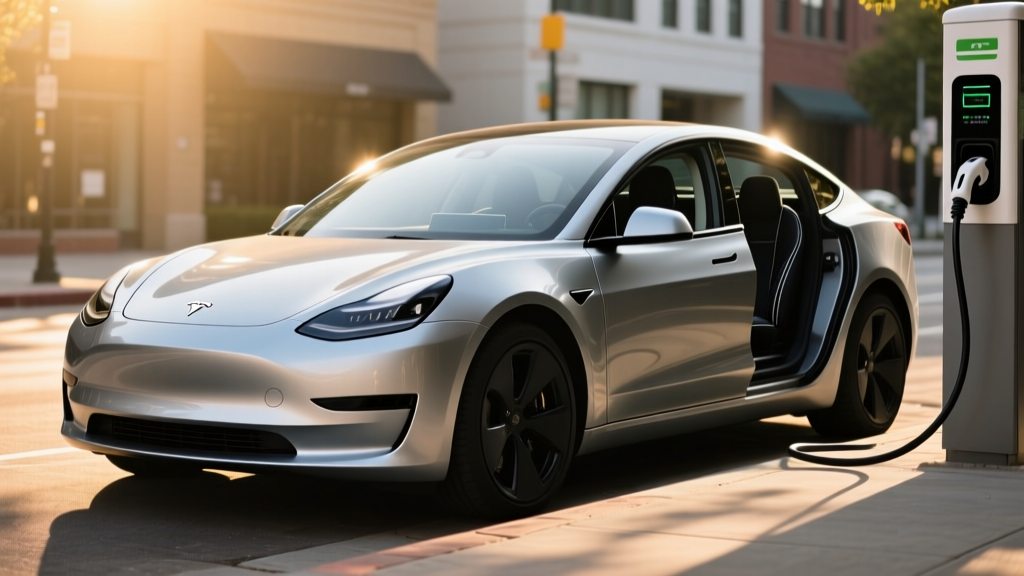
The Model 3's charge port is on the driver-side rear quarter panel — fine for pull-through Supercharger stalls, but awkward at many third-party DCFC stations designed for front-in parking. Additionally, while Tesla has adopted the NACS connector natively, accessing non-Tesla CCS networks (Electrify America, EVgo) requires a $250 adapter or reliance on stations with built-in NACS cables (increasingly common in 2026, but not universal).
Real-World Range: What the EPA Sticker Doesn't Tell You
- RWD (LFP): EPA 272 mi — Expect ~220-240 mi highway at 75 mph; ~180-200 mi in freezing weather
- Long Range AWD: EPA 363 mi — Expect ~290-310 mi highway; ~250-270 mi in cold
- Performance: EPA 315 mi — Expect ~250-270 mi highway; ~210-230 mi in cold
LFP batteries (RWD trim) tolerate 100% daily charging, which partially offsets the lower EPA figure. NMC trims benefit from staying between 20-80% for daily use.
The Model 3 Long Range's 363-mile EPA figure is among the best in its class. But EPA testing uses a blended city/highway cycle at moderate temperatures with climate control at 72°F. Real highway driving at 75+ mph consumes 15-25% more energy. In sub-30°F weather, expect a further 15-30% reduction due to battery resistance and cabin heating — even with the Model 3's standard heat pump.
For context, a Long Range Model 3 driven from Denver to Vail in January (70°F to 15°F, 7,000→10,000 ft elevation, 75 mph) will arrive with roughly 30-40% less range than the EPA sticker suggests. This isn't a Tesla flaw — it's physics affecting all EVs — but buyers in cold climates should plan around it.
Charging Speed: Peak kW vs. Sustained Reality
Tesla quotes a 250 kW peak DC fast-charge rate for Long Range and Performance trims. That number is real but misleading if you don't understand charge curves.
| Charging Method | Power | Speed | Notes |
|---|---|---|---|
| Level 1 (120V outlet) | ~1.4 kW | ~4-5 mi/hr | Emergency/trickle only |
| Level 2 (240V home) | 11.5 kW | ~37-44 mi/hr | Full overnight charge in 7-9 hrs |
| DC Fast Charge (peak) | 250 kW | ~1,000 mi/hr | Only at low SoC with preconditioning |
| DCFC 10-80% (avg) | ~140 kW sustained | ~22 min | Rate tapers significantly above 60% |
| DCFC 80-100% | ~30-50 kW | +25-30 min | Top-off is slow — plan to leave at 80% |
Key insight: The 250 kW peak only occurs briefly between ~5-25% State of Charge (SoC) with the battery properly preconditioned (the car does this automatically when you navigate to a Supercharger). By 50% SoC, you're typically at ~150 kW. By 80%, you're down to ~50 kW. This is why the 10-80% time of ~22 minutes is the number that matters — not the peak figure.
The RWD model's LFP battery caps at 170 kW, making its 10-80% time closer to 25 minutes. LFP chemistry also charges more linearly (less taper), so the gap isn't as dramatic as it seems.
Preconditioning matters enormously. Arriving at a Supercharger without preconditioning (e.g., you didn't set it as your navigation destination) can cut your peak charge rate by 40-60% in cold weather. Always navigate to your charger.
Pricing, Tax Credits, and Total Cost
| Trim | MSRP | §30D Credit (est.) | Effective Price |
|---|---|---|---|
| RWD | $38,990 | $7,500* | ~$31,490 |
| Long Range AWD | $44,990 | $7,500* | ~$37,490 |
| Performance | $52,990 | $7,500* | ~$45,490 |
*Federal tax credit eligibility under IRS §30D depends on:
- Buyer income caps: AGI ≤ $150,000 (single), $225,000 (head of household), $300,000 (joint)
- MSRP cap: Vehicle MSRP must not exceed $55,000 for sedans (all Model 3 trims qualify)
- Battery sourcing: Critical minerals and battery components must meet phased percentage thresholds from FTA countries; Tesla's US-assembled packs currently meet these requirements
- Point-of-sale transfer: As of 2024+, you can transfer the credit to the dealer at purchase for an immediate price reduction, rather than waiting for tax filing
- One vehicle per VIN, one credit per taxpayer per year
Important caveat: Battery-sourcing rules tighten annually. A vehicle that qualifies in January may not qualify in December if supply chains shift. Always verify current eligibility on fueleconomy.gov before purchasing. Consult a tax professional for your specific situation.
Cargo, Passenger Space, and Daily Practicality
The Model 3 is a midsize sedan, and its dimensions reflect that:
- Cargo (trunk + frunk): 23 cu ft total (19.8 trunk + 3.1 frunk) — competitive with a BMW 3 Series, less than an Ioniq 6 (26 cu ft)
- Rear legroom: 35.2 inches — adequate for adults under 6', tight for taller passengers on long trips
- Front headroom: 40.3 inches — generous, thanks to the glass roof (which reduces traditional headliner padding)
- Towing: Not rated for towing in the US — if you need to tow, look at the Model Y (3,500 lb capacity) or a truck-based EV
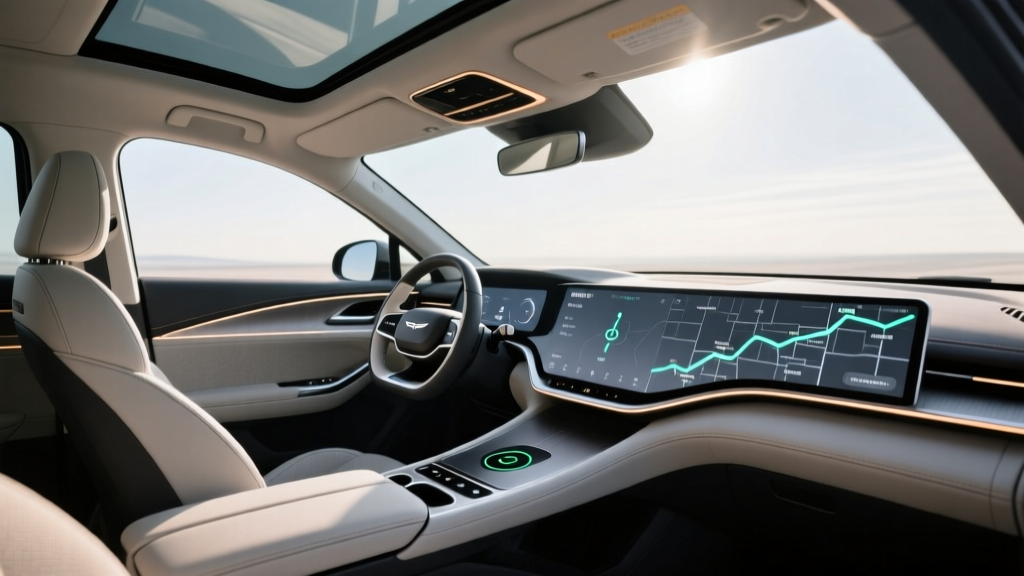
The minimalist interior means no physical buttons — everything routes through the 15.4" center touchscreen, including climate controls, glovebox release, and mirror adjustments. Some buyers love the simplicity; others find it distracting while driving. There are no traditional instrument cluster screens ahead of the driver (unlike the refreshed Model S/3 Highland which added a small secondary display, depending on market).
Model 3 vs. Key Competitors: Is It Worth Buying?
| Attribute | Tesla Model 3 LR | Hyundai Ioniq 6 LR | BMW i4 eDrive40 |
|---|---|---|---|
| EPA Range | 363 mi | 361 mi | 301 mi |
| Base MSRP | $44,990 | $42,450 | $52,200 |
| Max DCFC | 250 kW | 240 kW | 200 kW |
| 10-80% Time | ~22 min | ~18 min | ~31 min |
| CarPlay/Android Auto | No | Yes | Yes |
| Charging Network | Supercharger (native NACS) | CCS (EA, EVgo, etc.) | CCS + growing NACS access |
| Build Quality Perception | Improved, still inconsistent | Solid, mainstream | Premium, consistent |
| ADAS | Autopilot/FSD (Level 2) | HDA2 (Level 2) | Driving Assist Pro (Level 2) |
- Supercharger network access is a priority (still the most reliable DCFC network in the US)
- You want the longest real-world range per dollar in a sedan
- You value OTA updates, Tesla's app ecosystem, and Sentry Mode
- You don't need Apple CarPlay
- Build consistency and premium materials matter (BMW i4, Genesis GV60)
- You need CarPlay/Android Auto (Ioniq 6, Polestar 2, BMW i4)
- Faster 10-80% charging is critical (Ioniq 6's 800V architecture charges 10-80% in ~18 min)
- You want a traditional dealer service experience (any legacy OEM)
Biggest Pros and Cons
✓ Pros
- Class-leading EPA range (363 mi Long Range)
- Supercharger network — still the gold standard for reliability
- Excellent efficiency (132 MPGe combined LR)
- Strong OTA update cadence — car improves over time
- Competitive pricing after $7,500 federal credit
- Heat pump standard — better cold-weather range retention
- Minimalist interior appeals to tech-forward buyers
- Strong resale value relative to most EVs
✗ Cons
- No Apple CarPlay or Android Auto — dealbreaker for many
- Build quality still inconsistent vs. legacy premium brands
- Phantom braking events reported on Autopilot
- Touchscreen-only controls can be distracting while driving
- Limited rear-seat comfort for tall adults
- No towing capacity
- Service center wait times can be weeks in some markets
- FSD ($8,000) remains Level 2 — expensive for supervised driving
Who Is the Model 3 Best For?
Ideal buyer: A tech-comfortable commuter or small household (1-2 adults, maybe a child) who drives 200-350 miles per week, has home Level 2 charging access, and values range and efficiency over luxury materials. The Long Range AWD at ~$37,490 after the federal credit is one of the best value-per-mile-of-range vehicles available.
Not ideal for: Families needing easy rear-seat access (the Model Y's hatchback and higher roofline are better), frequent tow-anything buyers, those who insist on CarPlay, or buyers in areas with no nearby Tesla Service Center.
Road trip verdict: The Supercharger network makes the Model 3 one of the easiest EVs for long-distance travel. Plan for 20-25 minute stops every 200-250 miles (real-world), and you'll arrive most destinations with less fatigue than in a gas car — the quiet cabin and one-pedal driving reduce cognitive load significantly.
Frequently Asked Questions
What is the real-world range of the 2026 Tesla Model 3?
The Long Range AWD's EPA rating is 363 miles, but expect 290-310 miles in real highway driving at 75 mph, and 250-270 miles in freezing temperatures. The RWD trim (272 mi EPA) delivers roughly 220-240 miles highway. These figures are competitive with — or better than — most EVs in this price range.
How fast does the Model 3 charge at home and on the road?
On a home Level 2 charger (240V, 48A), the Model 3 adds 37-44 miles of range per hour, fully charging overnight in 7-9 hours. On DC fast chargers, the Long Range and Performance models peak at 250 kW, achieving a 10-80% charge in approximately 22 minutes with proper battery preconditioning. The RWD model peaks at 170 kW, taking about 25 minutes for the same 10-80% session.
How much does the Model 3 actually cost after tax credits?
The base RWD starts at $38,990 and can drop to approximately $31,490 after the full $7,500 federal §30D credit — if you meet income caps ($150K single / $300K joint AGI) and the vehicle's battery sourcing qualifies at time of purchase. Always verify on fueleconomy.gov and consult a tax professional. Some states offer additional credits (California, Colorado, etc.) that can stack.
Does the 2026 Model 3 qualify for the federal EV tax credit?
Yes — all three trims currently qualify for up to $7,500 under IRS §30D, as they are assembled in the US (Fremont, CA), fall under the $55,000 sedan MSRP cap, and meet 2026 battery-sourcing and critical-mineral thresholds. However, these rules change and eligibility can shift mid-year. The credit is available as a point-of-sale transfer to the dealer, reducing your purchase price immediately.
Is the Tesla Model 3 worth buying vs. competitors in 2026?
It depends on your priorities. For range-per-dollar, Supercharger access, and software integration, the Model 3 Long Range remains hard to beat at ~$37,490 after the credit. If build quality, CarPlay, or a more traditional service experience matters more, the Hyundai Ioniq 6, BMW i4, or Polestar 2 are strong alternatives. Test-drive both ecosystems before committing.
Are Teslas really bad, or is the criticism overblown?
The "Teslas are bad" narrative is largely a product of early-production issues (2018-2020), Autopilot controversy, and Elon Musk's polarizing public persona. The 2026 Model 3 is a genuinely competent, efficient, and well-priced EV. Its weaknesses — no CarPlay, touchscreen-reliant controls, build consistency that trails premium competitors — are real but specific, not universal. Most owners report high satisfaction. The question isn't whether Teslas are "bad" — it's whether their specific trade-offs align with your needs.
Sources: EPA fueleconomy.gov, IRS §30D Clean Vehicle Credits, NHTSA, Tesla 2026 Model 3 specifications. Prices and credit rules reflect 2026 model year and are subject to change. Verify all figures before purchase.