If you've been researching the electric truck and SUV market, you've likely typed who owns Rivian company into a search bar. The answer isn't a single parent corporation or a legacy automaker. Rivian Automotive is a publicly traded company (NASDAQ: RIVN), but its ownership structure tells a story of strategic partnerships, institutional investors, and a founder who still steers the vision.
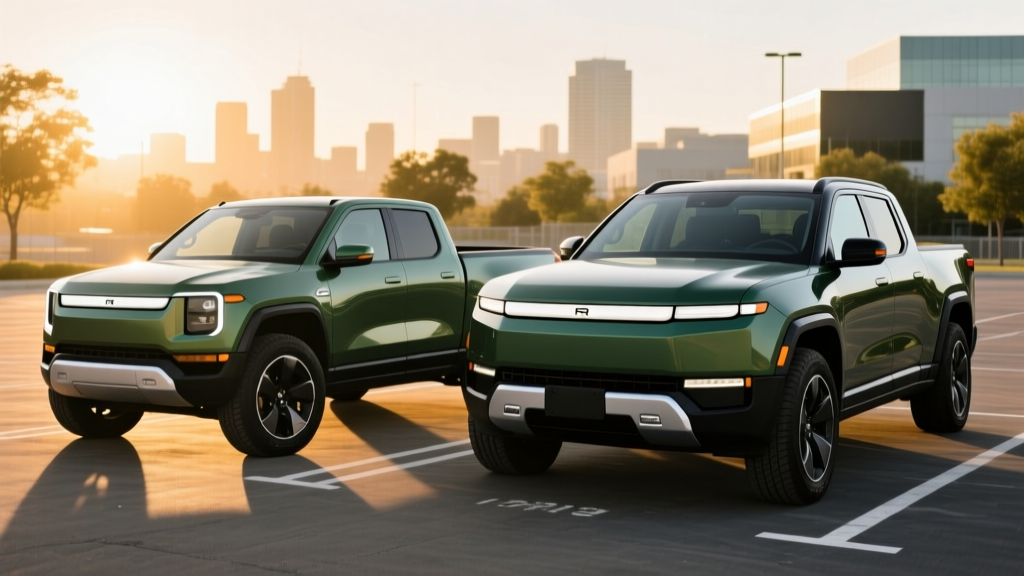
Before we map the cap table, let's ground this in what matters to buyers: Rivian's 2026 R1T pickup and R1S SUV, built on the company's second-generation platform with upgraded battery packs, faster charging, and refined software. Understanding who backs Rivian financially helps explain the company's staying power — and whether you can count on parts, service, and software updates for years to come.
Rivian Ownership: Volkswagen, Amazon, and the Public Markets
Rivian went public in November 2021 in one of the largest EV IPOs in history. As of early 2026, ownership breaks down across several major stakeholders:
- Volkswagen Group — VW committed up to $5 billion in investment through a joint venture framework announced in mid-2024. VW holds a significant equity stake and co-develops software and vehicle platforms with Rivian. This partnership gives Rivian the cash runway to scale production and develop its upcoming R2 midsize platform.
- Amazon — Amazon was an early anchor investor and remains a major shareholder. Beyond equity, Amazon is Rivian's largest commercial customer, operating thousands of Rivian EDV (Electric Delivery Vans) across its logistics network.
- RJ Scaringe (Founder/CEO) — Scaringe retains super-voting Class B shares, giving him outsized control over corporate decisions despite holding a minority economic stake.
- Institutional investors — Firms like BlackRock, State Street, and Vanguard hold substantial blocks of Class A shares through index funds and active management.
- Retail shareholders — Individual investors who bought RIVN stock on the open market post-IPO.
The bottom line: Rivian is not owned by a legacy automaker the way Volvo is owned by Geely or Polestar is jointly held. It's an independent, publicly traded company with deep-pocketed strategic partners. For buyers, the VW investment is the most consequential — it signals long-term capital access and technology-sharing that strengthens Rivian's competitive position through the late 2020s.
2026 Rivian R1T & R1S: Range, Battery, and Real-World Efficiency
Rivian's 2026 R1T (truck) and R1S (three-row SUV) share the same skateboard platform and are offered with two battery configurations on the Gen 2 architecture. Both use NMC (nickel manganese cobalt) lithium-ion chemistry, optimized for energy density and cold-weather performance. Rivian has also introduced a Standard battery using LFP (lithium iron phosphate) chemistry on select trims — heavier but more affordable and rated for more charge cycles.
| Spec | Standard Pack (LFP) | Large Pack (NMC) | Max Pack (NMC) |
|---|---|---|---|
| Usable battery capacity | ~95 kWh | ~115 kWh | ~141 kWh |
| EPA est. range (R1T Dual-Motor) | 270 mi | 352 mi | 420 mi |
| EPA est. range (R1S Dual-Motor) | 260 mi | 340 mi | 400 mi |
| Efficiency (R1T Large) | ~48 kWh/100 mi (2.1 mi/kWh) | ~50 kWh/100 mi | |
| MPGe (R1T Large, combined) | ~70 MPGe | ||
Charging Speed: DC Fast, Level 2, and the Rivian Network
Rivian's Gen 2 platform supports significantly faster DC fast charging than the original 2022 models, with improved thermal management that sustains peak power longer on the charge curve.
| Charging Level | Power / Rate | Speed / Time |
|---|---|---|
| DC Fast Charge (peak) | Up to 220 kW (Large/Max NMC) | 10–80% in ~28 min (Large); ~34 min (Max) |
| DC Fast Charge (Standard LFP) | Up to 180 kW | 10–80% in ~30 min |
| Level 2 (home, 48A / 11.5 kW) | 11.5 kW | ~16–19 mi/hr of range; full charge overnight |
| Level 2 (40A / 9.6 kW) | 9.6 kW | ~13–16 mi/hr of range |
| Level 1 (120V household) | ~1.4 kW | ~2–3 mi/hr — emergency/trickle only |
The charge curve matters more than the peak number. In real-world DC fast-charging sessions, the Large Pack R1T sustains roughly 190–210 kW up to about 40% state of charge, then tapers progressively. You'll add approximately 150 miles of range in the first 15 minutes — enough for most highway rest stops. Above 80%, charging slows sharply to protect the battery; plan to unplug at 80% on road trips unless you need the full capacity for a long stretch without chargers.
Rivian uses the NACS (North American Charging Standard) connector natively on 2026 models, giving direct access to Tesla Supercharger stations alongside Rivian's own Adventure Network of chargers placed near national parks and outdoor destinations. Electrify America and other CCS networks are accessible via adapter.
Performance, Drivetrain, and Towing Capability
Every 2026 R1T and R1S comes with dual-motor all-wheel drive as standard on most trims, with a tri-motor performance option available on higher trims. The quad-motor configuration from earlier model years has been consolidated into the tri-motor setup for Gen 2.
| Configuration | Horsepower | Torque (lb-ft) | 0–60 mph | Max Towing |
|---|---|---|---|---|
| Dual-Motor AWD | 533 hp | 610 | 4.5 sec | 11,000 lbs |
| Performance Dual-Motor | 665 hp | 829 | 3.4 sec | 11,000 lbs |
| Tri-Motor AWD | 850 hp | 1,103 | 2.9 sec | 11,000 lbs |
The dual-motor R1T is more than quick enough for daily driving and trailering. The tri-motor variant turns the R1T into a supercar-truck, but the $10,000+ premium and slight efficiency hit make the Performance Dual-Motor the sweet spot for most buyers who want strong acceleration without paying for sub-3-second sprints they'll rarely use.
Pricing, Trim Levels, and Federal Tax Credit Eligibility
Rivian's pricing has stabilized after several rounds of adjustments. Here's where the 2026 lineup lands before destination fees and options:
| Model / Trim | Base MSRP | As-Tested (typical) | §30D Credit Eligible? |
|---|---|---|---|
| R1T Dual-Motor Standard | $69,900 | $72,500 | Partial — see rules below |
| R1T Dual-Motor Large | $75,900 | $80,000 | Partial — see rules below |
| R1S Dual-Motor Large | $79,900 | $84,500 | Partial — see rules below |
| R1T Tri-Motor Max | $94,500 | $99,000+ | No — exceeds $80K MSRP cap |
- MSRP cap: Trucks (R1T) must be under $80,000; SUVs (R1S) and vans under $80,000. Most R1T Dual-Motor trims qualify; R1S models near the cap may not depending on options.
- Buyer income cap: Modified AGI must not exceed $150,000 (single), $225,000 (head of household), or $300,000 (joint).
- Battery sourcing: Critical minerals and battery components must meet phased-in domestic/free-trade requirements. Rivian's supply chain has been shifting to comply, but specific trims may qualify for $3,750 (half credit) or the full $7,500 depending on the battery pack's mineral sourcing for that model year. Check the DOE/Fueleconomy.gov credit lookup for your exact VIN.
- Point-of-sale transfer: You can transfer the credit to the dealer at purchase, reducing your out-of-pocket cost immediately rather than waiting for a tax refund.
Interior, Cargo Space, and Everyday Practicality
The R1T seats five with a 4-door crew-cab layout. The R1S offers three rows with seating for seven (or six with optional second-row captain's chairs). Interior materials on the 2026 models have moved upmarket, with vegan leather standard and available Nappa leather on higher trims.
| Dimension | R1T (Pickup) | R1S (SUV) |
|---|---|---|
| Front legroom | 41.3 in | 41.3 in |
| Rear legroom | 38.2 in | 36.5 in (2nd row) / 30.2 in (3rd row) |
| Bed / cargo behind 3rd row | 54.0 cu ft (bed, 4.5 ft) | 21.0 cu ft |
| Cargo (R1S, 2nd row folded) | — | 57.0 cu ft |
| Cargo (R1S, all rear rows folded) | — | 104.0 cu ft |
| Front trunk (frunk) | 11.0 cu ft | 11.0 cu ft |
| Gear Tunnel (R1T only) | 11.7 cu ft (lockable, through-cab) | — |
The R1T's Gear Tunnel — a lockable, illuminated pass-through compartment between the cab and the bed — remains one of the most clever storage solutions in any truck. It fits golf bags, camping gear, or groceries and is sealed from weather. The R1S third row is best suited for children on longer trips; adults will find the 30.2 inches of legroom tight beyond short commutes.
Tech, Software, and Driver Assistance
Rivian runs its own vertically integrated software stack, including infotainment, over-the-air updates, and its Driver+ ADAS suite. The 2026 models feature a 15.6-inch center touchscreen, a 12.3-inch digital cluster, and a rear-seat entertainment display option.
Standout tech features include:
- Over-the-air (OTA) updates that have added features like improved regen profiles, new drive modes, and camp-mode enhancements post-purchase.
- Native navigation with route-based battery preconditioning — the truck warms or cools the battery pack as you approach a DC fast charger, improving charge speed.
- Vehicle-to-load (V2L) capability: built-in 120V and 240V outlets in the bed and Gear Tunnel can power campsite equipment, tools, or serve as backup home power with an appropriate transfer setup.
- Bluetooth phone-as-key and Apple Watch integration for passive entry and start.
Notable drawbacks: Rivian's infotainment, while clean, lacks Apple CarPlay and Android Auto — a deliberate choice that frustrates some buyers who prefer phone-mirroring. The Driver+ system is competent but doesn't match GM's Super Cruise for hands-free highway miles on mapped roads.
Warranty, Reliability, and Service Network
Rivian backs the 2026 R1T and R1S with competitive warranty coverage:
- Battery & drivetrain: 8 years / 175,000 miles (whichever comes first), with a capacity retention threshold of 70% over the warranty period.
- Vehicle (bumper-to-bumper): 5 years / 60,000 miles.
- Corrosion perforation: 8 years / unlimited miles.
The 175,000-mile battery warranty is among the most generous in the EV truck segment, exceeding the standard 100,000-mile coverage offered by many competitors. Rivian's service network has expanded to over 60 service centers and a growing fleet of mobile service vans that handle most software-related and minor hardware repairs at your home or office.
Pros, Cons, and the Verdict
Pros
- Class-leading range with Max Pack (420 mi EPA)
- Gear Tunnel and frunk offer unmatched storage versatility
- 11,000-lb towing capacity with integrated trailer software
- 8-yr/175,000-mi battery warranty
- OTA updates continuously add features
- VW investment provides long-term financial stability
Cons
- Base pricing starts near $70K — premium segment only
- No Apple CarPlay or Android Auto
- Third-row R1S seating tight for adults
- Towing cuts range by 35–45%
- Service network still growing in rural areas
- Driver+ is competent but not hands-free
Who Should Buy a Rivian — And Who Shouldn't
Buy the R1T if: You need a full-size electric pickup for outdoor adventures, light-to-moderate towing, and daily driving — and you want the longest electric range available in a truck. The Large Pack Dual-Motor at ~$76K is the value sweet spot.
Buy the R1S if: You need three-row family seating with electric drivetrain and genuine off-road capability. It's one of very few 3-row electric SUVs that can handle a ski trip, a trail, and a school run in the same weekend.
Look elsewhere if: Your budget is under $55K (consider the Ford F-150 Lightning XLT or wait for the Rivian R2 in 2027), you need hands-free highway driving (GM Super Cruise), or you rely on Apple CarPlay for daily navigation.
Frequently Asked Questions
Who owns Rivian company in 2026?
Rivian Automotive is a publicly traded company (NASDAQ: RIVN) with no single owner. Volkswagen Group is the largest strategic investor through a multi-billion-dollar joint venture. Amazon holds a significant equity stake and is Rivian's largest commercial customer. Founder RJ Scaringe retains super-voting control. The remainder is held by institutional and retail investors.
What is the real-world range of the 2026 Rivian R1T?
The EPA rates the R1T Dual-Motor Large at 352 miles. In real-world highway driving at 70–75 mph, expect 290–310 miles. In sub-freezing temperatures, plan for 250–280 miles. The Max Pack extends these figures proportionally, with roughly 350 miles highway and 300+ in cold weather.
How fast does the Rivian R1T charge?
On a DC fast charger, the Large Pack peaks at 220 kW and charges from 10–80% in about 28 minutes, adding roughly 150 miles in the first 15 minutes. At home on a 48-amp Level 2 charger (11.5 kW), you'll recover about 16–19 miles of range per hour — a full overnight charge for most daily needs.
Does the Rivian R1T qualify for the $7,500 federal tax credit?
It depends on the trim, your income, and battery sourcing. R1T Dual-Motor models priced under the $80,000 MSRP cap for trucks may qualify if your modified AGI is under $150K (single) or $300K (joint) and the battery meets critical-mineral sourcing requirements. Some trims may qualify for the half-credit ($3,750). Check Fueleconomy.gov for your specific configuration and consult a tax professional.
Is the Rivian R1T worth buying over the Ford F-150 Lightning?
The R1T offers more range (352 vs. 320 mi on comparable packs), a more sophisticated air suspension, the Gear Tunnel, and a longer battery warranty. The F-150 Lightning starts at a lower price point and has a more established dealer/service network. If budget is the priority, the Lightning wins. If range, adventure features, and build quality matter more, the R1T justifies its premium.
Is Rivian going out of business?
No. While Rivian has posted operating losses typical of a scaling automaker, the Volkswagen investment of up to $5 billion, Amazon's ongoing EDV orders, and growing consumer deliveries provide substantial financial backing. The upcoming R2 platform (expected 2027) targets a lower price point and higher volume. As with any young automaker, financial risk exists, but Rivian's backing is among the strongest of any EV startup.