The Rivian Owner Profile: Who Is Actually Buying the R1S and R1T?
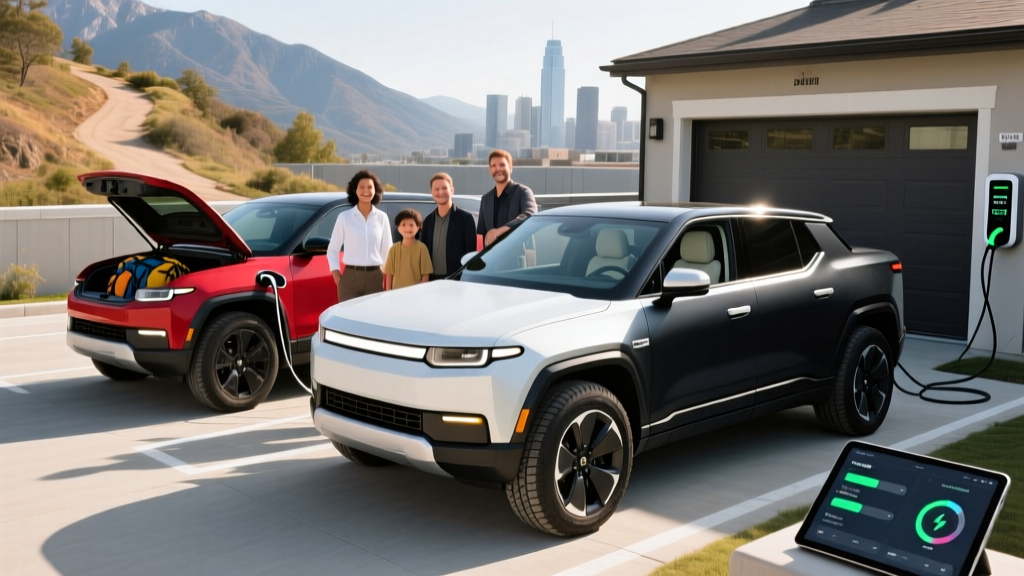
If you've been searching for clarity on who owns Rivian cars, the answer in 2026 is more nuanced than the "outdoor enthusiast" stereotype. Rivian's buyer base has expanded well beyond early adopters and overlanding fans. Today, the R1S (three-row SUV) and R1T (pickup truck) attract a specific cross-section of the EV market: affluent families seeking three-row electric utility, professionals who need a capable truck without the fuel bill, and adventure-oriented buyers who want genuine off-road chops paired with daily-driver refinement.
With the second-generation R1 platform now in full production — featuring updated battery packs, improved motors, and the NACS charging port standard — Rivian has addressed many of the first-gen pain points. But at premium pricing, the question isn't just who can buy a Rivian, but who should.
2026 Rivian R1S and R1T: Core Specifications at a Glance
| Spec | R1S Dual-Motor (Standard) | R1S Tri-Motor | R1T Dual-Motor (Standard) | R1T Quad-Motor |
|---|---|---|---|---|
| EPA Range (Max Pack) | ~340 mi | ~330 mi | ~345 mi | ~328 mi |
| Battery (usable, Max Pack) | ~141 kWh (NMC) | ~141 kWh (NMC) | ~141 kWh (NMC) | ~141 kWh (NMC) |
| Horsepower | 533 hp | 850 hp | 533 hp | 1,025 hp |
| 0-60 mph | 4.5 sec | 2.9 sec | 4.5 sec | 2.5 sec |
| Drivetrain | AWD (dual-motor) | AWD (tri-motor) | AWD (dual-motor) | AWD (quad-motor) |
| Max DC Fast Charge | ~220 kW | ~220 kW | ~220 kW | ~220 kW |
| 10-80% DC Fast Charge | ~27 min | ~27 min | ~27 min | ~27 min |
| Level 2 Home Charging | 11.5 kW (~25 mi/hr) | 11.5 kW (~25 mi/hr) | 11.5 kW (~25 mi/hr) | 11.5 kW (~25 mi/hr) |
| Towing Capacity | 7,700 lbs | 7,700 lbs | 11,000 lbs | 11,000 lbs |
| Base MSRP | $79,900 | $105,900 | $74,800 | $99,900 |
Source: Rivian R1S and Rivian R1T official specification pages. EPA range figures verified via fueleconomy.gov.
Real-World Range: What the EPA Sticker Doesn't Tell You
The Max Pack R1S Dual-Motor carries an EPA estimate of approximately 340 miles. In real-world highway driving at 70-75 mph, expect 280-310 miles. In cold weather (below 32°F), range drops an additional 15-25%, putting winter highway range closer to 230-265 miles. The large 141 kWh battery provides a substantial buffer, but physics still applies: heavy vehicles pushing air at highway speeds consume more energy. The R1S averages roughly 48-52 kWh/100 mi on the highway — higher than a sedan, expected for a 7,000-lb three-row SUV.
Rivian's battery packs use NMC (nickel manganese cobalt) chemistry across the lineup. NMC offers higher energy density than LFP, which matters in a heavy vehicle where every pound counts. The trade-off: NMC batteries are generally recommended to stay between 20-80% state of charge for daily use, only charging to 100% for road trips. Rivian's software manages this with configurable charge limits.
The Standard Pack (~106 kWh usable) brings EPA range down to approximately 260-270 miles for the R1S, which in real-world highway terms translates to roughly 210-240 miles. For most daily commuters with home charging, this is more than adequate. Road trippers and frequent long-distance drivers should consider the Max Pack.
Charging Speed: DC Fast Charging and Home Setup
| Charging Level | Power (kW) | Approximate Rate | Time to Add 200 Miles |
|---|---|---|---|
| Level 1 (120V standard outlet) | ~1.4 kW | ~3 mi/hr | ~67 hours |
| Level 2 (240V, 48A home charger) | 11.5 kW | ~25 mi/hr | ~8 hours |
| DC Fast Charge (peak) | 220 kW | ~140+ mi in 10 min | ~25-30 min (10-80%) |
Rivian's second-gen platform charges at up to 220 kW on DC fast chargers. The charge curve is reasonably flat through 50% state of charge before tapering — meaning you'll see close to peak speeds for the first half of your session, then a gradual slowdown. The 10-80% time of approximately 27 minutes is competitive with similarly sized EVs but trails the Hyundai Ioniq 5 and Kia EV9, which benefit from 800V architectures enabling 350 kW peak charging.
At home, the Rivian Wall Charger delivers up to 11.5 kW on a 60-amp circuit (48 amps continuous). For a 141 kWh Max Pack, a full charge from near-empty takes roughly 12-14 hours. Most owners charge nightly, topping up 30-50 miles of daily driving in 1-2 hours — effectively invisible to your routine.
Important: The 2026 R1S and R1T come with the NACS (North American Charging Standard) port natively. This grants access to Tesla's Supercharger network — the most reliable public charging infrastructure in the U.S. — without an adapter. Rivian also supports access to Electrify America and other networks, but Supercharger reliability is a significant ownership advantage.
Pricing, Trim Levels, and Federal Tax Credit Eligibility
Rivian positions the R1S and R1T in the premium segment. Here's how the pricing breaks down and whether the federal EV tax credit applies:
| Model / Trim | Base MSRP | §30D Federal Credit | Effective Price (after credit) |
|---|---|---|---|
| R1T Dual-Motor Standard | $74,800 | $0 (exceeds $80K truck cap on some configs) | $74,800 |
| R1T Dual-Motor Max Pack | $84,800 | Potentially $7,500* | ~$77,300 |
| R1S Dual-Motor Standard | $79,900 | $0 (exceeds $80K SUV cap on higher trims) | $79,900 |
| R1S Tri-Motor | $105,900 | $0 (exceeds MSRP cap) | $105,900 |
*Tax credit eligibility under IRS §30D depends on multiple factors: buyer income caps ($150K single / $300K joint MAGI), vehicle MSRP caps ($80K for SUVs, $80K for trucks), battery critical-mineral and component sourcing requirements, and point-of-sale transfer availability. Many Rivian configurations exceed the MSRP cap. Always verify current eligibility at IRS.gov and consult a tax professional before purchasing.
Realistically, most Rivian buyers will not qualify for the full $7,500 federal credit on higher trims. The base Dual-Motor models hover right at the MSRP cap threshold, and adding options pushes them over. This is a critical factor in total cost of ownership calculations — don't build your budget assuming the credit applies.
Performance, Efficiency, and Daily Drivability
The Dual-Motor R1S and R1T deliver 533 horsepower and a 4.5-second 0-60 time — genuinely quick for vehicles of this size and weight. The Tri-Motor and Quad-Motor variants push into supercar territory (2.5-2.9 seconds to 60), but the real-world value is less about drag racing and more about effortless highway merging and confident passing power with a full load.
Efficiency varies significantly by configuration and driving style:
- R1S Dual-Motor Max Pack: ~69 MPGe combined, ~48 kWh/100 mi
- R1T Dual-Motor Max Pack: ~70 MPGe combined, ~47 kWh/100 mi
- R1S Tri-Motor: ~62 MPGe combined, ~54 kWh/100 mi
- R1T Quad-Motor: ~59 MPGe combined, ~57 kWh/100 mi
These numbers reflect the physics of moving 6,800-7,200 pounds. For comparison, the three-row Kia EV9 achieves roughly 79-89 MPGe but offers less ground clearance, no serious off-road capability, and lower towing capacity. Rivian buyers accept the efficiency penalty in exchange for capability.
Cargo, Passenger Space, and Practicality
The R1S offers genuine three-row usability — a rarity in the EV space:
- Cargo (behind 3rd row): ~10.6 cu ft
- Cargo (3rd row folded): ~46.7 cu ft
- Cargo (all rows folded): ~88.2 cu ft
- Front trunk (frunk): ~11.0 cu ft
- Second-row legroom: ~38.2 inches
- Third-row legroom: ~30.4 inches (best for children or short trips)
The R1T pickup offers a 4.5-foot bed with a unique Gear Tunnel — a pass-through storage compartment behind the rear seats that spans the full width of the truck (~11.0 cu ft). Combined with the bed, frunk, and in-cabin storage, the R1T offers cargo versatility that conventional pickups can't match.
Ground clearance is adjustable via air suspension: up to 14.9 inches in off-road mode, dropping to 7.4 inches for highway efficiency. Approach and departure angles rival dedicated off-roaders like the Jeep Wrangler Rubicon.
Warranty Coverage and Long-Term Ownership
Rivian's warranty package is competitive for the premium EV segment:
- Basic vehicle: 5 years / 60,000 miles
- Battery and drive unit: 8 years / 120,000 miles (whichever comes first)
- Battery capacity retention: Rivian warrants the battery will retain at least 70% of original capacity during the warranty period
- Corrosion: 5 years / unlimited miles
The 8-year/120,000-mile battery warranty exceeds the federal minimum (8 years / 100,000 miles) and aligns with competitors like Tesla and BMW. The 70% capacity retention threshold is standard — if your Max Pack degrades below ~99 kWh usable within 8 years, Rivian will repair or replace it.
One ownership consideration: Rivian operates a direct-to-consumer service model with company-owned service centers and mobile service vans. Coverage is expanding, but owners in rural areas may face longer wait times or need to travel to a service hub. Check Rivian's service center map against your location before committing.
Driver Assistance and Technology
Rivian's Driver+ system is an SAE Level 2 driver-assistance feature. It provides adaptive cruise control, lane centering, and automatic lane changes on supported highways. The driver must remain attentive, keep hands on the wheel, and be prepared to take over at any moment. This is not autonomous driving — it's an advanced cruise system that reduces fatigue on long trips.
The infotainment system runs on a 15.6-inch center touchscreen with a clean, responsive interface. Wireless Apple CarPlay and Android Auto are supported. The digital instrument cluster and head-up display round out the tech suite. Over-the-air updates continue to add features and refine existing ones — a key advantage of Rivian's software-defined architecture.
Notable tech features include:
- Camp Kitchen accessory: A slide-out kitchen system that integrates with the R1T's Gear Tunnel
- Powered tonneau cover: Available on the R1T for secure bed storage
- Vehicle-to-everything readiness: The platform supports future V2L (vehicle-to-load) capability for powering devices and tools
- Digital key: Phone-as-key with automatic unlock and driver profile loading
Who Should Buy a Rivian — And Who Should Look Elsewhere
Pros
- Genuine off-road capability with air suspension and quad-motor torque vectoring
- Class-leading towing (11,000 lbs on R1T) among EVs
- NACS port with native Supercharger access
- Three-row seating (R1S) in a capable EV
- Distinctive design — doesn't look like every other crossover
- Strong OTA update cadence improving the vehicle over time
Cons
- Premium pricing — most configs exceed $80K, limiting tax credit access
- Efficiency lags lighter EVs (48-57 kWh/100 mi)
- Service center network still expanding — rural owners may face gaps
- DC fast charging at 220 kW trails 800V competitors
- Third row in R1S is tight for adults on long trips
- No LFP battery option — daily charging to 100% not recommended
- Choose the R1S if: You need three rows, want genuine off-road capability, have home charging access, and your budget accommodates $80K+ without relying on the federal tax credit.
- Choose the R1T if: You need a truck for work or recreation, want EV running costs, tow regularly (up to 11,000 lbs), and value the Gear Tunnel and frunk for gear-heavy lifestyles.
- Look elsewhere if: You're budget-constrained and need the $7,500 credit to make the math work, you prioritize maximum efficiency over capability, or you live far from a Rivian service center and can't tolerate potential service delays.
Frequently Asked Questions
What is the real-world range of the Rivian R1S and R1T?
With the Max Pack, expect 280-310 miles on the highway in moderate weather, and 230-265 miles in freezing temperatures. The EPA rates the Max Pack R1S at ~340 miles, but that figure includes city driving and regenerative braking benefits that highway cruising doesn't replicate.
How fast does a Rivian charge at home and on the road?
At home on a Level 2 charger (11.5 kW), you'll add roughly 25 miles per hour — enough to fully replenish overnight. On DC fast chargers, the R1S and R1T peak at 220 kW, reaching 10-80% in approximately 27 minutes. The NACS port gives you native access to Tesla Superchargers, which tend to be the most reliable public chargers nationwide.
Does the Rivian R1S or R1T qualify for the $7,500 federal EV tax credit?
It depends on the exact configuration and your income. The §30D credit has an $80,000 MSRP cap for SUVs and trucks, income limits ($150K single / $300K joint), and battery sourcing requirements. Many Rivian builds — especially with the Max Pack or higher trims — push past the MSRP cap. Verify your specific build's eligibility on fueleconomy.gov and the IRS clean vehicle credits page before ordering.
How does the Rivian R1S compare to the Kia EV9 or Tesla Model X?
The R1S offers superior off-road capability, more ground clearance, and higher towing capacity than the EV9, but at a significantly higher price and lower efficiency. Compared to the Model X, the R1S provides a more rugged, adventure-oriented character with better build quality consistency, though the Model X has a longer-established Supercharger-adjacent ecosystem and slightly faster DC charging. The Kia EV9 starts ~$25,000 lower and qualifies more easily for the tax credit, making it the pragmatic family choice if off-roading isn't a priority.
Is Rivian's service network reliable enough for daily ownership?
Rivian has expanded its service center footprint significantly, and mobile service vans handle many routine issues at your home or office. However, coverage remains uneven — major metro areas are well-served, while rural regions may require a 2-3 hour drive to the nearest hub. Check Rivian's service locator for your area. For body work after collisions, Rivian partners with certified body shops, which are growing in number but aren't yet ubiquitous.
What kind of owner does Rivian attract in 2026?
The typical Rivian owner in 2026 is a household earning $150K+, with outdoor or adventure hobbies, who needs a versatile vehicle for both daily commuting and weekend trips involving towing, gear hauling, or off-pavement driving. They value build quality, distinctive design, and the flexibility of the NACS/Supercharger network. They accept the premium price and moderate efficiency in exchange for capability that no mainstream EV crossover can match.