Who Owns Rivian? The Ownership Story Behind America's Electric Adventure Brand
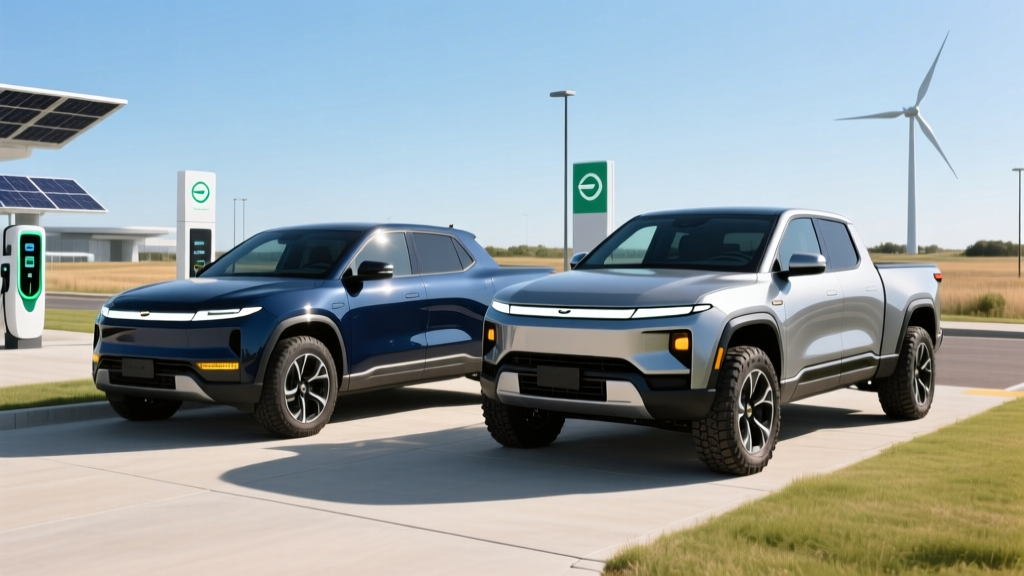
If you've been researching the R1S SUV or R1T pickup, you've probably typed "who owns Rivian" into a search bar and found a tangle of names: Amazon, Volkswagen, founder RJ Scaringe, and a roster of institutional investors. Unlike legacy automakers with a century of public-market history, Rivian's ownership structure is relatively young, heavily concentrated, and directly tied to the company's ability to keep building, iterating, and expanding its EV lineup through 2026 and beyond.
Understanding who actually owns Rivian matters if you're spending $70,000–$100,000+ on one of its vehicles. Ownership concentration affects everything from R&D investment cycles and factory expansion in Normal, Illinois, to long-term parts support and software updates. Here's the full breakdown — and what it means for the R1S and R1T you're considering.
Rivian's Major Shareholders: Amazon, Volkswagen, and RJ Scaringe
Rivian Automotive (NASDAQ: RIVN) is a publicly traded company, but three stakeholders hold outsized influence:
- Amazon — Amazon holds roughly 17–19% of Rivian through a combination of direct equity and warrants tied to the EDV (Electric Delivery Van) program. Amazon was Rivian's earliest anchor investor, committing to 100,000 delivery vans before the R1S or R1T ever reached customers. As of early 2026, Amazon remains the single largest external shareholder, though its stake has diluted somewhat as Rivian issued new shares for capital raises.
- Volkswagen Group — In November 2024, Volkswagen announced a joint venture with Rivian worth up to $5.8 billion, structured in tranches tied to technology-sharing milestones. VW's initial $1 billion equity investment gave it a minority stake, with the JV focused on co-developing Rivian's electrical architecture and software stack for future VW Group vehicles. By 2026, VW has made additional capital injections as milestones were met, making it the second-largest strategic investor.
- RJ Scaringe (Founder & CEO) — Scaringe controls a significant block of Class B shares with super-voting rights, giving him effective operational control even though his economic ownership percentage is smaller than Amazon's. This structure is similar to Ford's family-controlled voting shares and insulates Rivian's product roadmap from short-term market pressure.
Other notable institutional holders include T. Rowe Price, Capital World Investors, and various index funds that track the Russell 1000 and total-market benchmarks. Retail investors make up a meaningful percentage of the float, reflecting Rivian's cult-like brand following.
What Rivian's Ownership Means for R1S and R1T Buyers
Ownership structure isn't just a Wall Street concern — it directly shapes the ownership experience in ways that matter when you're writing a check:
The VW JV effect: Volkswagen's investment is explicitly tied to Rivian's software and electrical architecture. This means Rivian's R&D budget has a backstop from one of the world's largest automakers, reducing the risk of the company running out of capital mid-cycle. For buyers, this translates to more confidence in long-term OTA update support, parts availability, and service-center expansion.
The Amazon anchor: Amazon's continued stake keeps the EDV van program humming, which in turn keeps the Normal, Illinois factory running at higher volume — driving down per-unit costs for R1S and R1T components that share the same platform.
Founder-led control: Scaringe's super-voting shares mean product decisions (like the R2 compact SUV launch timeline and the tri-motor performance variants) stay with the founding team rather than being overridden by activist investors pushing for short-term margin over engineering.
Rivian R1S & R1T (2026): Quick Spec Overview
Whether you're looking at the dual-motor R1S or the tri-motor R1T, here's what the current-generation lineup delivers on paper and in practice.
| Spec | R1S Dual-Motor (Standard Battery) | R1S Dual-Motor (Max Pack) | R1T Tri-Motor Performance |
|---|---|---|---|
| EPA Range | ~270 mi | ~410 mi | ~328 mi |
| Battery Capacity | ~95 kWh (NMC) | ~149 kWh (NMC) | ~149 kWh (NMC) |
| Horsepower | 533 hp | 533 hp | 850 hp |
| 0–60 mph | 4.5 sec | 4.5 sec | ~3.0 sec |
| Drivetrain | AWD (dual-motor) | AWD (dual-motor) | AWD (tri-motor) |
| Max DC Fast Charge | ~200 kW (peak) | ~220 kW (peak) | ~220 kW (peak) |
| 10–80% DC Time | ~28 min | ~42 min | ~42 min |
| Level 2 Home Charge | 11.5 kW (~25 mi/hr) | 11.5 kW (~25 mi/hr) | 11.5 kW (~25 mi/hr) |
| MPGe (combined) | ~69 MPGe | ~64 MPGe | ~60 MPGe |
| Towing Capacity | 7,700 lb | 7,700 lb | 7,700 lb |
| Cargo (R1S behind 3rd row) | ~10.4 cu ft / 91.6 cu ft folded | ~10.4 cu ft / 91.6 cu ft folded | N/A (R1T bed: 54 cu ft) |
Real-World Range, Charging Speed, and Efficiency
EPA vs. Reality: The R1S Max Pack's 410-mile EPA estimate is among the highest of any production SUV, but real-world results depend heavily on conditions. In mild weather at city speeds, owners regularly report 370–390 miles. At sustained 75–80 mph highway speeds, expect 310–340 miles. In freezing temperatures (below 25°F), range can drop 20–30%, bringing the Max Pack down to roughly 280–320 miles. The Standard Battery pack (~270 mi EPA) realistically delivers 220–240 miles on highway road trips in winter.
Rivian uses NMC (nickel manganese cobalt) chemistry across its current battery packs. NMC offers higher energy density than LFP, which is critical for fitting 149 kWh into the Max Pack — but it also means Rivian recommends charging to 80% for daily use and only going to 100% before long trips. The battery management system includes a substantial top and bottom buffer to protect long-term health.
Charging curve reality: Rivian's peak DC fast-charge rate (~200–220 kW) is competitive but not class-leading. The charge curve holds near peak from roughly 10–40% SoC, then tapers progressively. On the Max Pack, the large battery means even at a taper you're still adding meaningful range — but a 10–80% session on a 350 kW Electrify America or Tesla Supercharger (with adapter) will take roughly 40–45 minutes. The Standard Pack charges faster in absolute time (~28 minutes, 10–80%) because there's less total energy to push.
Home charging: Rivian's onboard charger supports up to 11.5 kW on Level 2 (48A on a 60A circuit). That adds roughly 25 miles of range per hour, meaning a full overnight session (8–10 hours) can replenish 200–250 miles — enough for most daily driving. For the Max Pack, a full 0–100% Level 2 charge takes roughly 13–14 hours. Rivian sells its own Wall Connector-compatible home charger, and the NACS charge port on 2025+ models means native Tesla Supercharger access without an adapter.
Rivian Pricing, Trims, and Federal Tax Credit Eligibility
Rivian's pricing has shifted multiple times since launch. As of the 2026 model year, here's where the lineup sits:
| Model & Trim | Base MSRP | Federal §30D Credit | Effective Price |
|---|---|---|---|
| R1T Dual-Motor (Standard) | ~$69,900 | Up to $7,500* | ~$62,400 |
| R1S Dual-Motor (Standard) | ~$74,900 | Up to $7,500* | ~$67,400 |
| R1S Dual-Motor (Max Pack) | ~$89,900 | Up to $7,500* | ~$82,400 |
| R1T Tri-Motor Performance | ~$99,900 | Up to $7,500* | ~$92,400 |
*Federal tax credit caveats (IRS §30D): Eligibility for the full $7,500 credit depends on three moving targets that change annually:
- MSRP cap: SUVs and pickups must have an MSRP at or below $80,000 to qualify. This means the R1S Max Pack and all Tri-Motor Performance trims exceed the cap and are not eligible for the federal credit. The Standard and dual-motor Adventure trims typically fall under the cap.
- Buyer income cap: Modified adjusted gross income must not exceed $150,000 (single), $225,000 (head of household), or $300,000 (joint filing).
- Battery sourcing requirements: A percentage of critical minerals and battery components must be sourced from the U.S. or free-trade-agreement partners. Rivian has worked to reshore its supply chain, but the exact credit amount ($3,750 vs. $7,500) can vary by production batch and model year. Always verify current eligibility at IRS.gov before purchasing.
Starting in 2024, the credit can be transferred to the dealer as a point-of-sale discount, reducing your out-of-pocket cost at delivery rather than waiting for tax season. Rivian supports this transfer at its direct-to-consumer delivery centers.
Technology, Driver Assists, and Interior Highlights
Rivian's software-first approach is one of its biggest differentiators — and also one of its most polarizing features.
Infotainment: The 15.6-inch center touchscreen runs Rivian's proprietary OS, which is responsive and visually polished but lacks Apple CarPlay and Android Auto. Instead, Rivian offers native integrations for Spotify, Apple Music, and navigation. Some buyers love the clean interface; others consider the lack of phone projection a dealbreaker. This is a genuine ownership friction point — test it during your demo drive.
Driver assistance (SAE Level 2): Rivian's Driver+ system combines adaptive cruise control and lane-centering on divided highways. It is a Level 2 driver-assist system, meaning you must keep your hands on the wheel and eyes on the road at all times. It is not "self-driving" — that term applies only to Level 4+ services like Waymo. Driver+ is competent and comparable to Toyota's TSS 3.0 or Ford's BlueCruise in non-hands-free mode, but it does not currently offer hands-off operation on mapped highways the way GM's Super Cruise does.
Unique features:
- Camp Kitchen (R1T): An available slide-out kitchen system integrates with the gear tunnel, including an induction cooktop and sink — a genuine lifestyle feature with no competitor equivalent.
- Powered tonneau cover: The R1T's available powered retractable bed cover integrates with the gear tunnel for weather-sealed storage.
- OTA updates: Rivian pushes frequent over-the-air software updates that add features, improve efficiency, and refine ride quality. The VW JV is expected to accelerate software development through 2027.
- Adventure Network: Rivian has built its own destination charging network at trailheads, campsites, and national parks — a brand-specific perk that complements public DC fast-charging networks.
Pros, Cons, and Key Competitors
Pros
- Class-leading Max Pack range (~410 mi EPA) on the R1S
- Excellent build quality and fit/finish for a startup automaker
- True off-road capability with air suspension, quad-motor torque vectoring, and 14.9 inches of ground clearance
- Strong OTA update cadence backed by VW JV R&D resources
- NACS charge port for native Tesla Supercharger access (2025+ models)
- Unique lifestyle features (Camp Kitchen, gear tunnel, Adventure Network)
Cons
- No Apple CarPlay or Android Auto — a dealbreaker for some buyers
- Service center network still limited outside major metro areas
- DC fast-charge speed (~200–220 kW peak) trails Hyundai Ioniq 5 and Kia EV9
- High MSRP pushes most trims above the $80,000 §30D tax credit cap
- Third-row seating in the R1S is tight for adults (best for children)
- Insurance costs tend to run 15–25% higher than comparable gas SUVs
Versus key competitors: The R1S competes most directly with the Tesla Model X, BMW iX, Kia EV9, and the upcoming electric Jeep Wagoneer S. The R1T has no direct electric pickup rival at its price point — the Ford F-150 Lightning is larger and more truck-focused, while the Tesla Cybertruck occupies a different design and pricing niche. If you prioritize off-road capability and lifestyle integration, Rivian stands alone. If you prioritize fast charging and service-center density, Tesla and Hyundai/Kia have the edge. If you want luxury badge prestige and dealer support, the BMW iX wins.
Battery Warranty, Service, and Long-Term Ownership
Rivian covers its battery pack and drive units with an 8-year / 175,000-mile warranty (whichever comes first), which is above the industry-standard 8-year/100,000-mile threshold. The bumper-to-bumper warranty is 5 years / 60,000 miles.
The battery degradation profile on Rivian's NMC packs has been encouraging in early owner data. Most high-mileage R1T owners (60,000+ miles) report State of Health (SoH) readings above 92–94%, consistent with NMC packs that have robust thermal management. Rivian's liquid-cooled battery system includes preconditioning for DC fast charging — activating navigation to a charger warms the pack to optimal temperature, improving charge speed and reducing long-term wear.
Service remains a work in progress. Rivian operates a mix of company-owned service centers and mobile service vans that handle most non-lift work at your home or office. For major repairs, you may need to travel to a metro-area service center. Before buying, check Rivian's service locator for your ZIP code — if the nearest center is 90+ minutes away, factor that into your ownership calculus.
Who Should Buy a Rivian R1S or R1T?
Rivian's lineup isn't for everyone, but it's the best choice for a specific type of buyer:
Choose Rivian if: You want a genuine adventure vehicle — one that can handle a ski trip to Colorado, a week of camping in the backcountry, and a Monday-morning commute without compromise. You value build quality and software iteration speed over having the cheapest DC fast-charging or the largest service network. You can charge at home (Level 2 is essential for a satisfying Rivian ownership experience).
Look elsewhere if: You need Apple CarPlay, live in a rural area far from any service center, require the fastest possible road-trip charging, or need a third row that comfortably seats adults. Budget-conscious buyers should also consider that the most compelling Rivian trims (Max Pack, Tri-Motor) exceed the federal tax credit MSRP cap, effectively raising their price by $7,500 versus competitors that qualify.
Frequently Asked Questions
Who owns Rivian in 2026?
Rivian is a publicly traded company (NASDAQ: RIVN) with three dominant stakeholders: Amazon (~17–19% stake), Volkswagen Group (minority stake via the $5.8B joint venture), and founder/CEO RJ Scaringe (super-voting Class B shares granting operational control). The remainder is held by institutional and retail investors.
Does Rivian qualify for the $7,500 federal EV tax credit?
Some trims do, but it depends on MSRP, buyer income, and battery-sourcing requirements. Under IRS §30D rules, SUVs must have an MSRP of $80,000 or less. The R1S and R1T in Standard and dual-motor Adventure trims typically qualify, while Max Pack and Tri-Motor Performance trims exceed the cap. Buyer income must not exceed $300,000 (joint) / $150,000 (single). Always verify eligibility at purchase time.
What is the real-world range of the Rivian R1S?
The R1S Max Pack's EPA estimate is ~410 miles. Real-world highway driving at 75 mph yields roughly 310–340 miles. In freezing weather, expect 280–320 miles. The Standard Battery pack (~270 mi EPA) delivers approximately 220–240 miles in real-world highway use.
How fast does a Rivian charge at home and on the road?
At home on a Level 2 charger (11.5 kW / 48A), Rivian adds roughly 25 miles of range per hour. On DC fast chargers, the peak rate is ~200–220 kW, with a 10–80% session taking approximately 28 minutes (Standard Battery) to 42–45 minutes (Max Pack). Charging tapers significantly above 80% SoC.
Is Rivian a reliable long-term bet given its ownership structure?
The Volkswagen joint venture ($5.8B committed through milestone tranches) provides significant financial and technical backing that most EV startups lack. Amazon's continued stake ensures factory volume through the EDV program. Combined with founder-led operational control, Rivian's ownership structure is more stable than most startups — but it is still a young company with a limited service network compared to legacy brands.
Does Rivian have Apple CarPlay?
No. Rivian uses its own proprietary infotainment system with native music and navigation apps. Apple CarPlay and Android Auto are not supported. This is one of the most cited complaints from prospective buyers who prefer phone projection.