Who Owns Rivian? The Investors, Leadership, and Vision Behind the EV Maker
If you've searched "who owns Rivian" and landed here expecting a single name on a deed, the answer is more layered than that. Rivian Automotive is a publicly traded company (NASDAQ: RIVN), meaning its ownership is distributed among institutional investors, strategic partners, and retail shareholders. But a few names dominate the cap table — and understanding who holds sway matters if you're considering a $70,000+ EV purchase from this brand.
Rivian was founded in 2009 by RJ Scaringe, who remains CEO and a significant shareholder. The company went public in November 2021 in one of the largest IPOs in history. As of early 2026, the major stakeholders include:
- Amazon — holds a substantial stake (roughly 16-18% as of recent SEC filings) and remains Rivian's largest commercial customer through the EDV (Electric Delivery Van) program.
- Volkswagen Group — announced a major joint venture and up to $5.8 billion investment in late 2024, making VW a strategic partner and significant equity holder as the collaboration scales into 2026.
- Institutional investors — firms like Vanguard, BlackRock, and State Street hold meaningful positions typical of large-cap public companies.
- RJ Scaringe — retains founder-level equity and supervoting shares, keeping operational control aligned with his vision.
For buyers, this ownership structure signals stability: Amazon's logistics dependency on Rivian vans and VW's software/platform partnership give the company revenue anchors beyond consumer vehicle sales. That matters when you're committing to an 8-year battery warranty from a startup-era automaker.
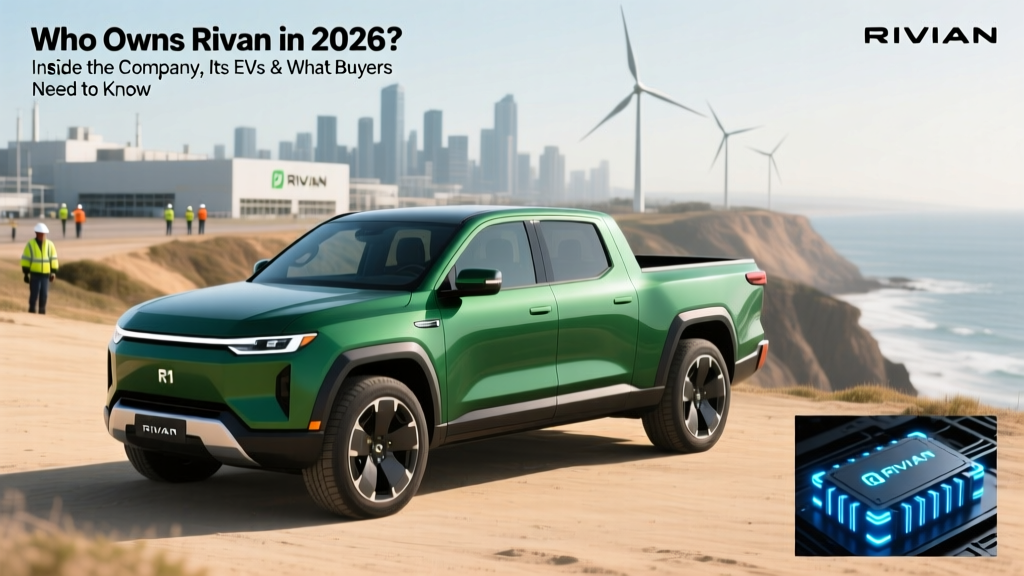
Rivian's 2026 Consumer Lineup: R1T, R1S, and the R2 Horizon
Rivian currently sells two consumer vehicles built on its Gen 2 "skateboard" platform, both substantially redesigned for the 2025 model year and carried into 2026:
- R1T — a 4-door electric pickup truck, competing with the Ford F-150 Lightning, Chevrolet Silverado EV, and Tesla Cybertruck.
- R1S — a 3-row electric SUV sharing most mechanicals with the R1T, aimed at the Tesla Model X, Kia EV9, and Jeep Grand Wagoneer.
A third vehicle, the R2 (a smaller, more affordable crossover), is announced for production starting in 2026 at Rivian's new Normal, Illinois facility expansion and a planned Georgia plant. R2 specs remain preliminary and are not yet available for purchase. This review focuses on the currently available R1T and R1S.
Range, Battery, and Efficiency: What the EPA Says vs. Reality
Rivian offers three battery pack sizes across the R1T and R1S for 2026, using a mix of NMC (nickel manganese cobalt) and LFP (lithium iron phosphate) chemistries depending on the pack:
| Pack | Chemistry | Usable Capacity | EPA Range (R1T Dual-Motor) | EPA Range (R1S Dual-Motor) | Efficiency |
|---|---|---|---|---|---|
| Standard | LFP | ~95 kWh | ~270 mi | ~260 mi | ~48 kWh/100mi |
| Large | NMC | ~109 kWh | ~330 mi | ~320 mi | ~46 kWh/100mi |
| Max | NMC | ~141 kWh | ~420 mi | ~400 mi | ~47 kWh/100mi |
According to fueleconomy.gov, the R1T Dual-Motor Large Pack achieves an estimated 73 MPGe combined. Efficiency is typical for a heavy, boxy, AWD electric truck — the Ford F-150 Lightning Extended Range lands in a similar 70-72 MPGe range.
Charging Speed: DC Fast Charging and Home Level 2
Rivian's Gen 2 platform supports up to 220 kW peak DC fast charging on NACS-equipped vehicles (all 2025+ models ship with native NACS ports, granting access to Tesla Supercharger stalls with "Magic Dock" or native NACS cables). Here's the realistic charging picture:
| Charging Level | Max Power | Time / Rate | Notes |
|---|---|---|---|
| Level 1 (120V) | ~1.4 kW | ~3-4 mi/hr | Emergency/top-up only |
| Level 2 (240V, 48A) | ~11.5 kW | ~25-30 mi/hr; full charge in 10-14 hrs | Rivian Wall Connector or J1772/NACS L2 |
| DC Fast Charge | 220 kW peak | 10-80% in ~21 min (Large Pack) | Curve tapers sharply above 80%; Max Pack takes ~28 min 10-80% |
A key ownership insight: Rivian's charge curve is aggressive in the 10-50% window but tapers meaningfully past 70%. On a road trip, plan to charge to 80% and move on — the final 20% can add another 20+ minutes. Preconditioning the battery (triggered automatically when you navigate to a charger in the infotainment system) is essential for hitting peak kW in cold weather.
Performance: 0-60, Horsepower, and Drivetrain Options
The Gen 2 Rivian lineup offers three drivetrain configurations, each with distinct performance characteristics:
| Drivetrain | Horsepower | Torque (lb-ft) | 0-60 mph | Towing Capacity |
|---|---|---|---|---|
| Dual-Motor AWD | 533 hp | 610 | 4.5 sec | 11,000 lbs |
| Performance Dual-Motor | 665 hp | 829 | 3.5 sec | 11,000 lbs |
| Tri-Motor AWD | 850 hp | 1,103 | 2.9 sec | 11,000 lbs |
All R1T and R1S models use a single-speed reduction gear (no multi-speed transmission) and feature standard air suspension with roughly 6.5 inches of adjustable ride height. Ground clearance tops out at 14.9 inches in Off-Road mode, giving the R1T genuine trail capability that unibody competitors like the Cybertruck can't match.
Pricing, Trims, and Federal Tax Credit Eligibility
Rivian's 2026 pricing reflects the Gen 2 cost reductions achieved through the simplified skateboard architecture. Here's the current MSRP landscape before incentives:
| Model | Trim | Base MSRP | As-Tested (Typical) |
|---|---|---|---|
| R1T | Dual-Motor Standard | $69,900 | $72,000-$76,000 |
| R1T | Dual-Motor Large | $75,900 | $79,000-$84,000 |
| R1T | Tri-Motor Max | $99,900 | $104,000+ |
| R1S | Dual-Motor Standard | $74,900 | $78,000-$82,000 |
| R1S | Dual-Motor Large | $80,900 | $84,000-$90,000 |
| R1S | Tri-Motor Max | $104,900 | $109,000+ |
Federal Tax Credit: Does Rivian Qualify?
Under IRS §30D rules for 2026, the Rivian R1T and R1S may qualify for up to $7,500 in federal clean vehicle credits, but eligibility hinges on several criteria:
- MSRP cap: Pickup trucks (R1T) must be under $80,000 MSRP; SUVs (R1S) under $80,000 as well. This means Tri-Motor Max trims do NOT qualify.
- Buyer income cap: Modified AGI must not exceed $150,000 (single), $225,000 (head of household), or $300,000 (joint).
- Battery sourcing: Critical minerals and battery component requirements tighten each year. Rivian has worked to qualify the Dual-Motor Standard and Large packs, but verify current-year eligibility on the IRS qualified vehicles list before purchase.
- Point-of-sale transfer: As of 2024+, you can transfer the credit to the dealer at purchase, reducing your out-of-pocket cost immediately rather than waiting for tax filing.
Always confirm eligibility with your tax professional and the IRS qualified vehicles list at the time of purchase — sourcing rules change and trim-level eligibility can shift mid-year.
Interior, Cargo, and Tech: What Daily Ownership Feels Like
The R1S offers three rows of seating for up to seven passengers, with approximately 104 cu ft of total cargo volume behind the first row (seats folded) and 42 cu ft behind the second row. Third-row legroom is 30.5 inches — tight for adults on long trips but workable for children. The R1T offers a 4.5-foot bed with a lockable gear tunnel (11.7 cu ft) that's become a signature feature for camping and gear storage.
Tech highlights include:
- A 15.6-inch center touchscreen running Rivian's in-house OS with over-the-air updates
- Rivian Driver+ (Level 2 ADAS) with hands-on-wheel highway assist — this is not autonomous driving and requires active supervision per SAE Level 2 standards
- Standard NACS port (2025+ models) for native Tesla Supercharger access
- Vehicle-to-load (V2L) capability, allowing you to power campsite equipment or tools from the truck's battery
- Camp Kitchen accessory (slide-out induction cooktop) available for the R1T gear tunnel
Notable drawbacks: the R1S lacks Apple CarPlay and Android Auto — Rivian insists on its native infotainment, which frustrates some buyers. Rear visibility in the R1T is limited without the digital rearview mirror option. And insurance premiums for Rivian vehicles run 15-25% above comparable gas trucks, per industry data.
Warranty and Long-Term Ownership
Rivian provides an 8-year / 175,000-mile battery and drive unit warranty, with a capacity retention threshold of 70% during that period. The bumper-to-bumper limited warranty covers 5 years / 60,000 miles. For context, this battery warranty mileage is among the most generous in the segment — Tesla's is 8 years / 150,000 miles for Model S/X and 120,000-150,000 miles for Model 3/Y depending on pack.
Service remains a consideration: Rivian operates a growing network of service centers and mobile service vans, but coverage in rural areas is still thinner than legacy automakers. Owners in metro areas report good mobile-service turnaround for software and minor hardware issues; body repair after collisions can take longer due to parts availability.
Pros, Cons, and the Verdict
Pros
- Class-leading off-road capability with air suspension and 14.9" ground clearance
- Up to 420 miles EPA range (Max Pack R1T)
- Native NACS access to Tesla Supercharger network
- Innovative gear tunnel (R1T) and camp-ready accessories
- Strong 8-yr / 175,000-mi battery warranty
- Tri-Motor offers supercar-level 0-60 in a truck
Cons
- No Apple CarPlay or Android Auto
- High starting price — Dual-Motor Standard starts near $70K
- Insurance costs run above segment average
- Service network still growing, especially outside major metros
- Efficiency (kWh/100mi) trails more aero-optimized EVs
- Third row in R1S is best for children only
Is Rivian Worth It vs. the Competition?
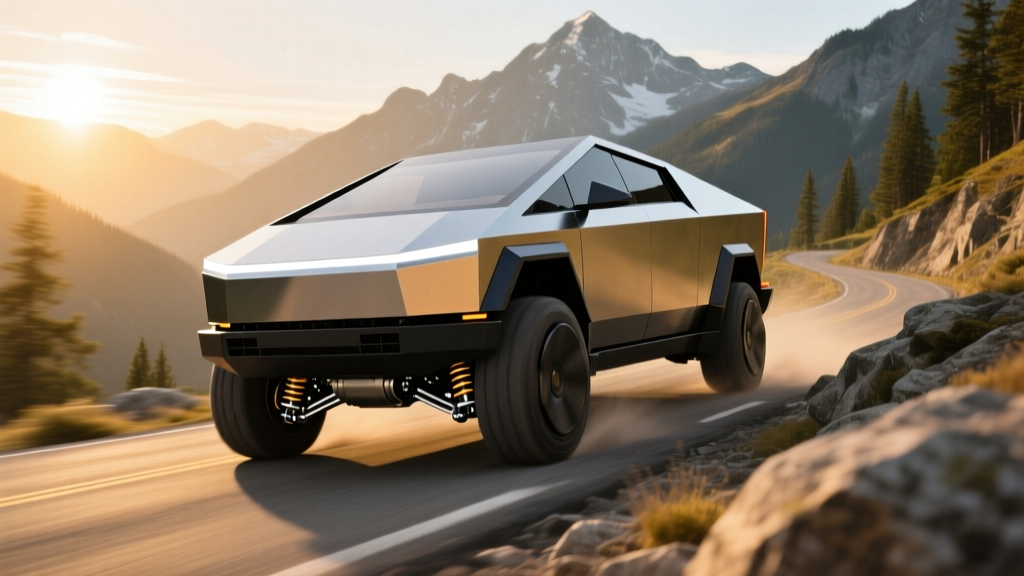
If you need a genuine truck that can tow 11,000 lbs, ford 3+ feet of water, and serve as a campsite base, the R1T has no direct equal. The F-150 Lightning is cheaper and has a broader dealer network, but lacks the R1T's off-road chops and gear tunnel. The Cybertruck offers polarizing design and a stainless exoskeleton but trails on interior refinement and service maturity.
For three-row SUV buyers, the R1S competes with the Kia EV9 (significantly cheaper, less range, no off-road pretensions) and Tesla Model X (faster Supercharger network historically, but Rivian's NACS access now closes that gap). The R1S wins on adventure credibility and interior material quality but loses on price and third-row space.
Choose Rivian if: you prioritize outdoor/adventure capability, want NACS Supercharger access, value unique features like the gear tunnel, and can absorb premium pricing.
Look elsewhere if: you need the lowest possible price per mile of range, require Apple CarPlay, or live far from a Rivian service hub.
Frequently Asked Questions
Who actually owns Rivian in 2026?
Rivian is a publicly traded company (NASDAQ: RIVN) with no single owner. Amazon holds roughly 16-18%, Volkswagen Group is a major strategic investor, and founder RJ Scaringe retains operational control through supervoting shares.
What is the real-world range of a Rivian R1T?
The EPA rates the R1T Dual-Motor Large Pack at ~330 miles. Real-world highway driving at 75 mph typically yields 280-300 miles; in cold weather (below 30°F), expect 250-275 miles. The Max Pack extends this to roughly 360 highway miles in moderate temperatures.
How fast does the Rivian R1S charge?
Peak DC fast charging is 220 kW, with a 10-80% charge taking about 21 minutes on the Large Pack and 28 minutes on the Max Pack. Home Level 2 charging at 11.5 kW adds roughly 25-30 miles per hour.
Does Rivian qualify for the $7,500 federal EV tax credit?
Some trims do. The R1T and R1S Dual-Motor Standard and Large packs fall under the $80,000 MSRP cap for trucks/SUVs, but buyer income limits ($150K single / $300K joint) and battery-sourcing requirements apply. Tri-Motor Max trims exceed the MSRP cap and do not qualify. Verify on the IRS qualified vehicles list before purchase.
Is Rivian a reliable brand?
Rivian's Gen 2 vehicles (2025+) have shown improved build quality over early 2022-2023 models, which had reported issues with panel gaps and software glitches. Long-term reliability data is still limited given the brand's age. The 8-year / 175,000-mile battery warranty provides meaningful protection.
Is Rivian Driver+ self-driving?
No. Rivian Driver+ is an SAE Level 2 driver-assistance system requiring active driver supervision — hands on the wheel, eyes on the road. It is not autonomous and does not replace the driver. Only Level 4 services like Waymo operate without a human driver.