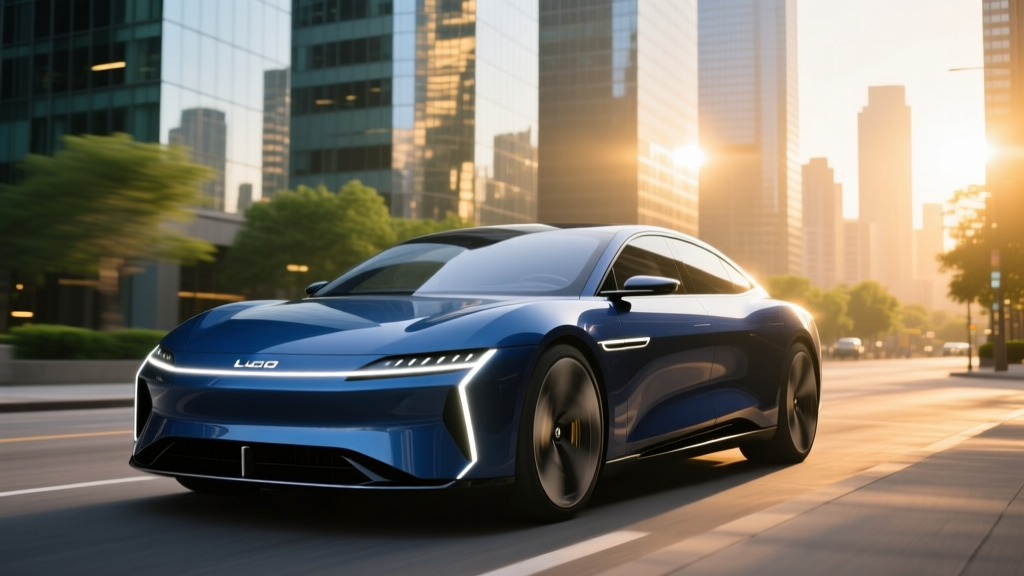
The Lucid Air Owner: Data-Driven, Range-Obsessed, and Unapologetically Premium
Search interest in who owns Lucid cars has climbed steadily as the Lucid Air sedan moves from boutique curiosity to a legitimate alternative in the luxury EV segment. The answer, based on registration data, owner surveys, and demographic trends through early 2026, is more nuanced than "Tesla defectors." Lucid Air buyers tend to be engineering-minded professionals who prioritize efficiency and range over brand cachet, often cross-shopping the Mercedes-Benz EQS, BMW i7, and Tesla Model S before choosing the Air's class-leading EPA range and 900-volt architecture.
This review profiles the typical Lucid owner while delivering the hard specs — range, charging curves, pricing, and tax-credit math — that this audience demands before signing a lease or purchase order.
Lucid Air Lineup at a Glance: 2026 Trims and Core Specs
| Spec | Air Pure | Air Touring | Air Grand Touring | Air Sapphire |
|---|---|---|---|---|
| EPA Range | 419 mi | 425 mi | 516 mi | 427 mi |
| Battery (usable) | 88 kWh | 112 kWh | 112 kWh | 118 kWh |
| Chemistry | NMC | NMC | NMC | NMC |
| Drivetrain | RWD | Dual-Motor AWD | Dual-Motor AWD | Tri-Motor AWD |
| Horsepower | 430 hp | 620 hp | 819 hp | 1,234 hp |
| 0-60 mph | 5.0 sec | 3.4 sec | 3.0 sec | 1.89 sec |
| Max DC Charge Rate | 220 kW | 300 kW | 300 kW | 300 kW |
| 10-80% DC Time | ~25 min | ~20 min | ~20 min | ~22 min |
| Level 2 Rate | 19.2 kW (46 mi/hr) | 19.2 kW (46 mi/hr) | 19.2 kW (46 mi/hr) | 19.2 kW (46 mi/hr) |
| MPGe (combined) | 146 MPGe | 131 MPGe | 131 MPGe | 111 MPGe |
| Base MSRP | $69,900 | $87,400 | $125,600 | $249,000 |
Source: fueleconomy.gov and Lucid Motors official specifications, 2026 model year.
Real-World Range: What 516 EPA Miles Actually Means on the Road
EPA sticker: 516 miles
Real-world highway (70 mph, 75°F): ~430-460 miles
Real-world highway (32°F, no heat pump strain): ~370-400 miles
City/commuter mixed: ~470-500 miles (regen-heavy driving recovers energy)
The Lucid Air Grand Touring's 516-mile EPA figure remains the highest of any production sedan sold in the U.S. as of 2026. But EPA testing cycles favor low-speed, mild-climate driving. In real-world highway range tests conducted by independent reviewers, the Grand Touring typically delivers 430-460 miles at 70 mph in moderate temperatures — roughly a 12-17% reduction from the sticker.
Cold weather compounds the loss. At 32°F, expect 370-400 miles of highway range, driven by increased cabin heating demand and higher internal battery resistance. The Air's heat pump helps mitigate this compared to resistive-heater competitors, but physics still wins. City drivers who lean on regenerative braking see figures much closer to the EPA number — often 470+ miles — because stop-and-go driving recaptures energy that highway cruising cannot.
The Air Pure (RWD, 419 mi EPA) is the efficiency champion of the lineup at 146 MPGe combined (roughly 23 kWh/100 mi). For buyers who don't need AWD, it delivers the best range-per-dollar ratio in the luxury EV sedan segment.
Charging Speed: 900-Volt Architecture and the 300 kW Reality
Lucid's 900-volt electrical architecture is the Air's most underappreciated engineering advantage. Higher voltage means lower current for the same power, reducing heat and enabling sustained fast charging. On a compatible 350 kW DC fast charger (Electrify America, Ionity, or Tesla Supercharger with NACS adapter), the Air Grand Touring and Touring models peak at approximately 300 kW.
| Charging Method | Power | Speed | Notes |
|---|---|---|---|
| Level 1 (120V household) | 1.4 kW | ~3 mi/hr | Emergency/trickle only |
| Level 2 (240V, 48A home) | 11.5 kW | ~28 mi/hr | Standard home setup |
| Level 2 (240V, 80A home) | 19.2 kW | ~46 mi/hr | Requires 100A circuit; full overnight fill |
| DC Fast (peak) | 300 kW | ~200+ mi in 12 min | Grand Touring/Touring on 350 kW station |
| DC Fast 10-80% | Varies | ~20 min | Curve tapers sharply above 80% SoC |
Charging curve reality check: The 300 kW peak is sustained roughly between 10-40% State of Charge (SoC). Beyond 50%, the rate tapers to ~180 kW, and above 80% it drops further to protect the NMC cells. A 10-80% session takes approximately 20 minutes on a 350 kW charger, but a 10-95% session stretches past 35 minutes. Preconditioning the battery (automatic when a DC fast charger is set as your navigation destination) is essential — arriving cold can cut peak power by 30-40%.
Home charging at 19.2 kW (80A) is among the fastest available in any production EV, refilling the 112 kWh pack from empty in roughly 6-7 hours. Most owners install a 48A wall connector (11.5 kW), which still delivers a full overnight charge in ~10 hours. A 19.2 kW installation requires a dedicated 100-amp circuit and likely a panel upgrade — budget $1,500-$3,500 for the electrician work depending on your home's existing service.
Who Actually Buys the Lucid Air? The 2026 Owner Profile
Based on registration patterns, owner-forum demographics, and industry analyst reports, the typical Lucid Air buyer in 2026 fits a distinct profile:
- Age: 40-58, skewing older than Tesla Model S buyers
- Income: $200,000+ household; many in engineering, tech leadership, finance, or medicine
- Previous vehicle: BMW 5/7 Series, Mercedes E/S-Class, Audi A6/A8, or Tesla Model S
- Home charging: Nearly universal — 95%+ have Level 2 home installations
- Primary use case: Daily commuter (20-50 miles round trip) with 2-4 road trips per year
- Key purchase driver: Range and efficiency, not brand prestige
Unlike Tesla buyers who often cite the Supercharger network or Autopilot as deciding factors, Lucid owners consistently rank range confidence and build quality as their top two purchase motivators. The Air attracts buyers who have already owned at least one EV and are upgrading — first-time EV buyers rarely land on Lucid without cross-shopping Tesla or legacy luxury brands first.
Geographically, Lucid registrations concentrate in California (especially the Bay Area and greater Los Angeles), Florida, Texas urban corridors, the Northeast megalopolis, and the Pacific Northwest. These markets share dense charging infrastructure and high EV adoption rates.
Pricing, Trims, and Federal Tax Credit Eligibility
The 2026 Lucid Air lineup spans from the $69,900 Pure to the $249,000 Sapphire hyper-sedan. Here's the pricing reality after accounting for the federal EV tax credit:
| Trim | Base MSRP | §30D Credit Eligible? | Effective Price (if eligible) |
|---|---|---|---|
| Air Pure | $69,900 | Yes (under $55K sedan cap? No — sedan cap is $55,000) | Not eligible (MSRP exceeds $55K sedan cap) |
| Air Touring | $87,400 | No (exceeds $55K sedan cap) | $87,400 |
| Air Grand Touring | $125,600 | No (exceeds $55K sedan cap) | $125,600 |
| Air Sapphire | $249,000 | No (exceeds $55K sedan cap) | $249,000 |
- Sedan MSRP cap: $55,000 (per IRS §30D guidelines)
- Buyer income cap: $150K single / $300K joint (AGI)
- Battery sourcing: Critical minerals and component requirements phase up annually
- Point-of-sale transfer: Eligible buyers can apply the credit at purchase (dealer reduces price)
Bottom line: No Lucid Air trim currently qualifies for the $7,500 federal credit. The Air Pure at $69,900 exceeds the $55,000 sedan MSRP cap. Buyers should check for state-level incentives (California's CVRP, Colorado's Innovative Motor Vehicle Credit, etc.) and consult a tax professional for eligibility specifics.
The absence of federal credit eligibility is a real consideration for buyers cross-shopping the Tesla Model S (also ineligible due to MSRP) against vehicles like the Hyundai Ioniq 6 or BMW i5, which may partially qualify depending on trim and sourcing. For Lucid buyers, however, the $7,500 credit rarely moves the needle on a $70,000-$125,000 purchase decision.
Interior Space, Technology, and Daily Livability
The Air's interior reflects its buyer profile: understated luxury over ostentatious displays. Key dimensions:
- Front legroom: 45.3 inches
- Rear legroom: 37.6 inches
- Trunk: 22.1 cu ft (rear) + 10.1 cu ft frunk = 32.2 cu ft total
- Seating: 5 passengers standard; Executive Rear seating available on Grand Touring with reclining, massaging rear seats
The 34-inch curved glass cockpit display (Lucid calls it the "glass canopy") replaces a traditional instrument cluster and center stack. It's visually striking but draws mixed reviews from owners — some praise the information density, while others note glare in direct sunlight and the absence of physical climate controls (all managed via the touchscreen or voice).
Driver assistance: The Air ships with Lucid's DreamDrive Pro ADAS suite — adaptive cruise control, lane centering, automatic emergency braking, and blind-spot monitoring. This is an SAE Level 2 system, meaning the driver must remain engaged with hands on the wheel and eyes on the road at all times. Lucid has not yet deployed a hands-free highway driving feature comparable to GM's Super Cruise or Ford's BlueCruise, which is a notable gap in this price segment.
Standout tech features:
- Over-the-air updates that have added range and performance post-delivery
- NACS charge port (native Tesla Supercharger access without adapter, starting with 2025 model year)
- ProPILOT-style highway assist with lane-change-on-indicator
- Atmospheric interior lighting with 28+ color themes
- 29-speaker Surreal Sound Pro audio system (optional on Touring, standard on GT)
Notable drawbacks cited by owners:
- Infotainment responsiveness lags behind Tesla and BMW iDrive in menu speed
- No native Apple CarPlay or Android Auto (Lucid's native navigation is robust, but phone projection is absent)
- Service center network remains thin outside major metros — mobile service covers routine items, but body or drivetrain work may require a tow to a regional center
- Rear visibility is compromised by the sloping roofline; the digital rearview mirror helps but takes adjustment
Lucid Air vs. the Competition: Is It Worth Buying?
- Range is your #1 priority — 516 miles EPA has no rival in the sedan segment
- You value efficiency (146 MPGe Pure) and 900V fast-charging architecture
- You prefer understated design over the BMW/Tesla brand statement
- You have reliable home Level 2 charging and rarely depend on public infrastructure
- You need hands-free highway driving now (GM Super Cruise or Ford BlueCruise)
- Service center proximity matters — Lucid's network is growing but still sparse
- You want the largest infotainment ecosystem or native phone projection
- Federal tax credit eligibility is a deciding factor in your purchase
Against the Tesla Model S (402 mi EPA, $74,990), the Air Grand Touring offers more range, a quieter cabin, and better rear-seat comfort — but Tesla wins on Supercharger network density (though Lucid's NACS adoption narrows this gap) and Autopilot/FSD feature breadth. Against the Mercedes-Benz EQS (390 mi EPA, ~$105,550), the Air delivers significantly more range, faster charging, and a lower starting price, though the EQS offers a more traditional luxury dealership experience and MBUX infotainment polish. The BMW i7 (318 mi EPA, ~$120,000) competes on interior opulence and executive rear seating but falls far short on range.
Warranty and Long-Term Ownership
Lucid provides competitive warranty coverage for the luxury EV segment:
- Basic vehicle warranty: 4 years / 50,000 miles
- Battery and powertrain: 8 years / 100,000 miles (capacity retention threshold: 70% of original capacity)
- Roadside assistance: 4 years / 50,000 miles
- Corrosion protection: 12 years / unlimited miles
The 8-year/100,000-mile battery warranty aligns with industry norms (Tesla, BMW, and Mercedes offer similar terms). Lucid's NMC cells have demonstrated modest degradation in early owner reports — approximately 3-5% capacity loss over the first 30,000 miles, which is typical for liquid-cooled NMC packs. Long-term data beyond 100,000 miles is still accumulating given the Air's 2021 launch.
For buyers concerned about battery replacement cost, a full pack replacement on the Air would likely fall in the $15,000-$22,000 range based on current NMC cell pricing and labor — though this is a worst-case scenario well outside the warranty window for most owners.
Frequently Asked Questions
What is the real-world range of the Lucid Air?
The Air Grand Touring achieves 516 miles EPA, but expect 430-460 miles in real-world highway driving at 70 mph in moderate temperatures. Cold weather (32°F) reduces this to approximately 370-400 miles. The Air Pure (419 mi EPA) delivers roughly 350-380 miles highway in practice. City driving with regenerative braking yields results closer to EPA estimates.
How fast does the Lucid Air charge at home and on DC fast chargers?
On a 350 kW DC fast charger, the Air Touring and Grand Touring peak at 300 kW and charge from 10-80% in approximately 20 minutes. The Air Pure peaks at 220 kW (~25 minutes 10-80%). At home, a 19.2 kW (80A) Level 2 charger adds roughly 46 miles per hour of charging; a standard 48A/11.5 kW setup adds ~28 miles per hour. A full overnight charge is easily achievable with either setup.
Does the Lucid Air qualify for the federal EV tax credit?
No. Under current IRS §30D rules, sedans must have an MSRP at or below $55,000 to qualify. The least expensive Air trim (Pure at $69,900) exceeds this cap. Buyers should investigate state-level incentives and consult a tax professional for personal eligibility. Rules are subject to change — verify at IRS.gov before purchasing.
Is the Lucid Air worth buying over the Tesla Model S or Mercedes EQS?
If range and charging speed are your top priorities, the Air Grand Touring is the segment leader with 516 EPA miles and 300 kW DC fast charging. The Tesla Model S offers a more mature driver-assist suite (FSD Supervised) and denser Supercharger access, while the Mercedes EQS provides a more traditional luxury dealership experience. The Air's main trade-offs are a thinner service network, no hands-free driving feature, and no native phone projection.
What are the biggest pros and cons of owning a Lucid Air?
Pros: Class-leading EPA range, 900V fast-charging architecture, quiet and spacious cabin, strong efficiency (146 MPGe on Pure), OTA updates that improve the car post-purchase, native NACS for Supercharger access.
Cons: No federal tax credit eligibility, limited service center footprint, infotainment lacks Apple CarPlay/Android Auto, DreamDrive Pro ADAS trails competitors in hands-free capability, rear visibility is compromised by the roofline.
Who is the Lucid Air best suited for?
The Air is ideal for range-priority commuters and road-trippers who have home Level 2 charging, value efficiency over brand prestige, and don't need hands-free highway driving. The Pure trim suits budget-conscious luxury buyers; the Grand Touring serves long-distance drivers who want to minimize charging stops; the Sapphire is a low-volume halo for performance enthusiasts. Families needing third-row seating or SUV cargo height should look to the upcoming Lucid Gravity instead.
Specifications and pricing reflect the 2026 model year as published by Lucid Motors and the EPA. Tax credit rules reflect IRS §30D provisions current as of publication and are subject to legislative change. Always verify eligibility with a tax professional and confirm vehicle specs with your local Lucid dealership before purchasing.