Who Owns Lucid Car Company? The Backstory Buyers Should Know
If you've searched "who owns Lucid car company" while researching the luxury EV sedan market, you're not alone. Lucid Motors — formally Lucid Group, Inc. — is a publicly traded company listed on NASDAQ under the ticker LCID. But the single largest shareholder is the Public Investment Fund (PIF) of Saudi Arabia, which holds roughly 60% of Lucid's outstanding shares as of early 2026. PIF began investing in Lucid (then Atieva) in 2018 and has committed billions through successive funding rounds, most recently a $750 million convertible note in 2024.
What does this mean for buyers? Saudi backing has given Lucid financial runway that rivals like Fisker and Lordstown never had, allowing the company to build its own factory in Casa Grande, Arizona, and develop its in-house powertrain technology. However, it also means Lucid's production decisions and expansion plans are influenced by a sovereign wealth fund with interests in the broader energy sector. The company was originally founded in 2007 as Atieva by Bernard Tse and Sam Weng, with Peter Rawlinson — former Tesla Model S chief engineer — joining as CTO in 2013 and later becoming CEO.
Now let's look at what that ownership has produced: the 2026 Lucid Air lineup, one of the most efficient luxury sedans on the market.
2026 Lucid Air: Quick Verdict
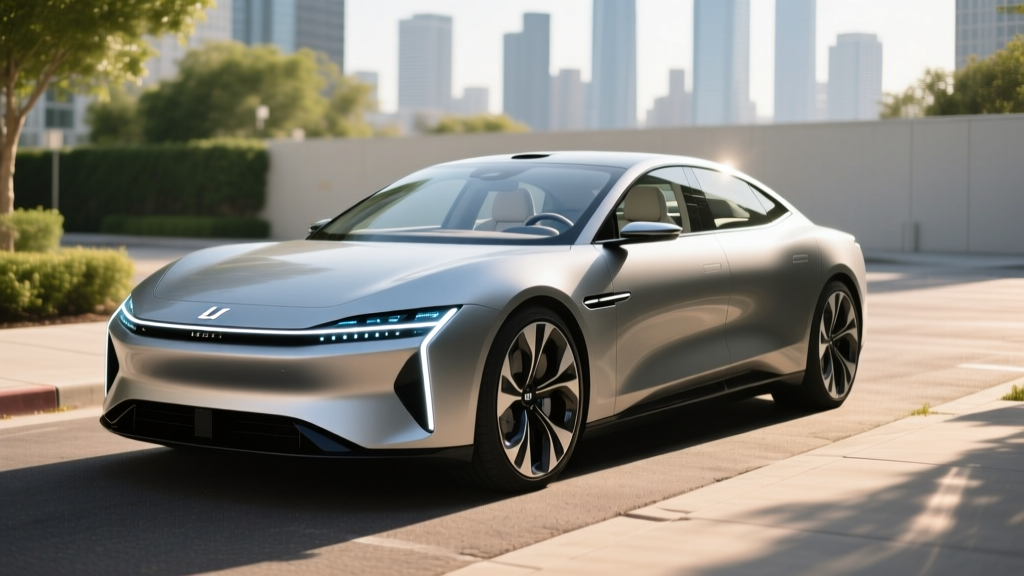
The 2026 Lucid Air remains the efficiency king of the luxury EV sedan segment. Its miniaturized powertrain — the smallest and most power-dense motors in any production EV — delivers class-leading range without a massive battery. The Air Pure starts at $69,900 and offers up to 419 miles EPA, while the range-topping Air Sapphire produces 1,234 horsepower and hits 60 mph in under 2 seconds. It's a compelling choice for tech-savvy luxury sedan buyers who prioritize range and efficiency over brand cachet.
The Air Grand Touring is EPA-rated at 516 miles. In real-world highway driving at 70-75 mph, expect approximately 420–450 miles in mild weather. In cold conditions (below 30°F), range drops to roughly 370–400 miles due to cabin heating demands and reduced battery chemistry efficiency. The Air Pure (419 mi EPA) realistically delivers 340–370 miles on the highway. These are still best-in-class numbers, but plan charging stops using the lower figure on long trips.
Range, Battery, and Efficiency Specs
Lucid's secret weapon is its Wunderbox battery pack architecture and compact drive units. Unlike competitors that simply pack in more kWh, Lucid extracts more miles per kilowatt-hour through aerodynamic efficiency (a drag coefficient as low as 0.197 Cd) and motor efficiency.
| Spec | Air Pure | Air Touring | Air Grand Touring | Air Sapphire |
|---|---|---|---|---|
| EPA Range | 419 mi | 425 mi | 516 mi | 427 mi |
| Battery (usable) | 88 kWh | 92 kWh | 112 kWh | 118 kWh |
| Chemistry | NMC | NMC | NMC (2170 cells) | NMC (high-output) |
| Drivetrain | RWD | AWD Dual-Motor | AWD Dual-Motor | AWD Tri-Motor |
| Horsepower | 430 hp | 620 hp | 819 hp | 1,234 hp |
| 0–60 mph | 5.0 sec | 3.4 sec | 3.0 sec | 1.89 sec |
| Efficiency (MPGe) | 146 MPGe | 134 MPGe | 131 MPGe | 116 MPGe |
| kWh/100 mi | 23 | 25 | 26 | 29 |
| Base MSRP | $69,900 | $87,400 | $125,600 | $249,000 |
The Air Pure achieves its 419-mile EPA rating with just 88 kWh of usable battery — a figure that would yield closer to 300 miles in a less efficient platform like the Mercedes EQS. Lucid's NMC (nickel manganese cobalt) cells are sourced from a mix of suppliers including Samsung SDI and LG Energy Solution, using 2170-format cylindrical cells in the higher trims. Lucid does not currently offer an LFP (lithium iron phosphate) variant, which means the battery is optimized for energy density rather than cycle-life longevity — though the 8-year/100,000-mile warranty provides reasonable coverage.
Charging Speed: DC Fast and Home Level 2
The Lucid Air uses a 900-volt electrical architecture, which enables faster charging at compatible DC stations while reducing current (and therefore heat). Here's what you can expect:
| Charging Level | Power / Rate | Speed |
|---|---|---|
| Level 1 (120V household) | ~1.4 kW | ~4 mi/hr |
| Level 2 (240V, 48A) | 11.5 kW (onboard charger max 19.2 kW) | ~33 mi/hr |
| Level 2 (240V, 80A) | 19.2 kW (max) | ~56 mi/hr |
| DC Fast Charge (peak) | Up to 300 kW (GT/Sapphire) | 10–80% in ~20 min |
| DC Fast Charge (Pure/Touring) | Up to 220 kW | 10–80% in ~25 min |
Real-world charging note: The 300 kW peak on the Grand Touring and Sapphire is achieved only at chargers capable of delivering that power (Electrify America 350 kW stalls, Tesla Supercharger V4 with magic dock). On a typical 150 kW station, expect 10–80% in roughly 35–40 minutes. Like all NMC batteries, the Air's charge curve tapers significantly above 80% SoC — a full 80–100% top-up can add another 20+ minutes. For road trips, plan 10–80% stops and move on.
Lucid uses the CCS1 (Combined Charging System) connector natively. As of 2025, Lucid began offering a NACS adapter for access to Tesla Supercharger stations, and the 2026 model year integrates the NACS port on newer production vehicles. Confirm connector type with your dealer at purchase.
Interior Space, Tech, and Driver Assistance
The Air's cabin is defined by its "Space Concept" design philosophy — Lucid pushed the wheels to the corners and miniaturized the drive units to maximize interior volume.
- Front legroom: 41.1 inches
- Rear legroom: 37.4 inches (class-leading for a sedan)
- Trunk: 32.0 cu ft (rear cargo) + 10.0 cu ft frunk = 42.0 cu ft total
- Infotainment: 34-inch curved glass cockpit display with Lucid UX software
- Audio: 21-speaker Surreal Sound system with Dolby Atmos (Grand Touring/Sapphire)
The Air comes standard with DreamDrive Pro, Lucid's Level 2 driver-assistance suite featuring adaptive cruise control, lane-centering, automatic emergency braking, and a 32-sensor array including lidar. This is not self-driving — it's a hands-on-wheel, eyes-on-road system comparable to Tesla Autopilot or GM Super Cruise in capability but without hands-free operation on mapped highways.
Notable drawbacks: The Air's infotainment system, while visually impressive, lacks Apple CarPlay and Android Auto — a significant omission for a luxury vehicle in 2026. Some owners report that the Lucid mobile app has been slower to mature than Tesla's or Hyundai's, affecting remote preconditioning reliability. Rear-seat headroom can feel tight for passengers over 6'2" due to the sloping roofline.
Pricing, Tax Credits, and Total Cost
The 2026 Lucid Air lineup spans from the $69,900 Pure to the $249,000 Sapphire. Here's how federal tax credits factor in:
| Trim | Base MSRP | Under §30D MSRP Cap? | Potential Credit |
|---|---|---|---|
| Air Pure | $69,900 | Yes (cap: $55,000 sedan) | No — exceeds $55K sedan cap |
| Air Touring | $87,400 | No | Not eligible |
| Air Grand Touring | $125,600 | No | Not eligible |
| Air Sapphire | $249,000 | No | Not eligible |
Critical note on the §30D federal tax credit: Under current IRS rules, the new clean vehicle credit has an MSRP cap of $55,000 for sedans and $80,000 for SUVs/trucks/vans. Since the Air is classified as a sedan, no trim qualifies — even the base Pure at $69,900 exceeds the limit. Additionally, the credit requires meeting critical-mineral and battery-component sourcing requirements, and buyer income caps apply ($150K single / $300K joint filers). Always consult a tax professional and verify current rules at irs.gov before purchasing.
Lease workaround: The commercial clean vehicle credit (§45W) can sometimes be passed through by leasing companies as a "lease cash" discount. Check with Lucid's financing partners for current lease incentives, which may effectively reduce the Pure's cost by $7,500.
How the Lucid Air Compares to Key Rivals
- Best-in-class EPA range (516 mi Grand Touring)
- Outstanding efficiency (23 kWh/100 mi Pure)
- Class-leading rear-seat legroom
- 900V architecture enables 300 kW DC charging
- Massive frunk + trunk (42 cu ft total)
- Miniaturized motors create spacious cabin
- No Apple CarPlay or Android Auto
- No federal tax credit (sedan MSRP cap)
- Limited service center network vs. Tesla/BMW
- Brand recognition still lags German luxury
- App and software still maturing
- NACS adapter required at non-native NACS vehicles
Air vs. Tesla Model S: The Model S Long Range offers 402 miles EPA at $74,990 and qualifies for no federal credit either (sedan cap). Tesla wins on Supercharger network access (native NACS) and Autopilot maturity, but the Air beats it on efficiency, rear-seat space, and build quality perception.
Air vs. Mercedes EQS: The EQS 450+ delivers 390 miles EPA at ~$105,550 with a far more established dealer and service network. The Air Grand Touring offers 126 more miles of range for roughly $20K more, but the Mercedes badge and service infrastructure carry weight for many luxury buyers.
Air vs. BMW i5: The i5 eDrive40 starts at ~$67,795 with 295 miles EPA. It's a more traditional luxury sedan experience with CarPlay, a robust dealer network, and stronger brand cachet — but gives up 124 miles of range to the Air Pure at a similar price point.
Who Should Buy the 2026 Lucid Air?
- Long-distance commuters who value 400+ mile range and can charge at home overnight
- Tech-forward luxury buyers who prioritize efficiency specs over brand heritage
- Family sedan shoppers needing genuine rear-seat space (37.4" legroom) and 42 cu ft of cargo
- Road trippers who want fewer charging stops — 516 mi EPA means most legs need only one 20-min charge
- You need CarPlay/Android Auto for daily navigation and media
- You live far from a Lucid service center (check Lucid's service locator)
- You want hands-free Level 2+ driving (DreamDrive Pro requires hands on wheel)
- Tax credit eligibility is a deal-breaker — look at the Hyundai Ioniq 6 or Tesla Model 3 instead
Battery Warranty and Long-Term Ownership
Lucid provides an 8-year / 100,000-mile battery and powertrain warranty across all Air trims. The warranty covers defects and battery degradation below a specified capacity retention threshold (typically 70% State of Health over the warranty period, though confirm exact terms with your purchase agreement).
For context, this matches the industry standard set by Tesla, Hyundai, and most mainstream EV makers. The EPA's fueleconomy.gov listing for the Air confirms its efficiency figures, and NHTSA maintains crash-test data as it becomes available.
Long-term NMC battery degradation data specific to the Air is still limited given the vehicle's 2022 launch, but early owner reports suggest degradation in line with industry norms — approximately 5–8% capacity loss over the first 50,000 miles before leveling off. Lucid's thermal management system (liquid cooling with active preconditioning) is designed to mitigate accelerated degradation from DC fast charging.
Frequently Asked Questions
Who owns Lucid car company?
Lucid Group, Inc. (NASDAQ: LCID) is a publicly traded company, but its majority shareholder is the Public Investment Fund (PIF) of Saudi Arabia, holding approximately 60% of shares. The company was founded as Atieva in 2007 and is headquartered in Newark, California, with manufacturing in Casa Grande, Arizona.
What is the real-world range of the Lucid Air?
The Air Grand Touring is EPA-rated at 516 miles; real-world highway driving yields approximately 420–450 miles in mild weather and 370–400 miles in cold conditions. The Air Pure (419 mi EPA) delivers roughly 340–370 highway miles. These remain best-in-class figures for a production sedan.
How fast does the Lucid Air charge?
On a 350 kW-capable DC fast charger, the Grand Touring and Sapphire peak at 300 kW, achieving 10–80% in about 20 minutes. The Pure and Touring peak at 220 kW (10–80% in ~25 min). At home on a 48A Level 2 charger, expect roughly 33 miles of range added per hour; an 80A circuit yields ~56 mi/hr thanks to the Air's 19.2 kW onboard charger.
Does the Lucid Air qualify for the federal EV tax credit?
No. Under current IRS §30D rules, the new vehicle credit has a $55,000 MSRP cap for sedans. Even the base Air Pure at $69,900 exceeds this limit. Buyer income caps ($150K single / $300K joint) and battery sourcing requirements also apply. A lease may allow the lessor to claim the commercial credit and pass savings to you.
Is the Lucid Air worth buying over a Tesla Model S or Mercedes EQS?
If you prioritize range, efficiency, and interior space, the Air is objectively superior on paper — 516 miles EPA and 23 kWh/100 mi beat both rivals. However, Tesla wins on charging infrastructure (native Supercharger access) and the Mercedes wins on dealer/service network depth and brand prestige. Test-drive all three and weigh what matters most to your daily use.
Does the Lucid Air have Apple CarPlay?
No. The Lucid Air does not support Apple CarPlay or Android Auto. Lucid uses its proprietary Lucid UX infotainment system with built-in navigation, streaming, and phone mirroring via Bluetooth. This is a common complaint among owners who prefer their phone's native maps and media apps.