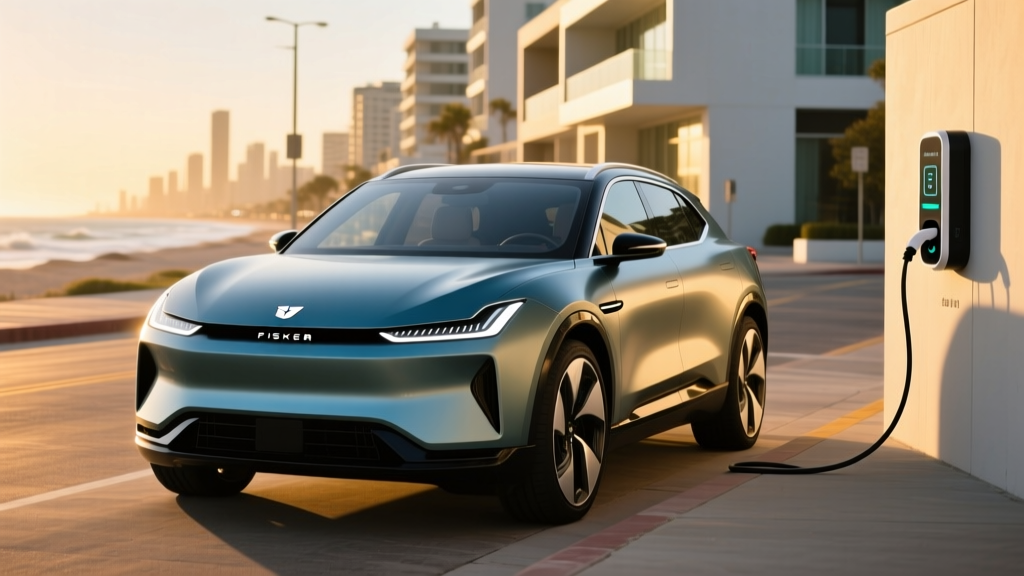
If you've searched who owns Fisker lately, you're not alone. The question has a complicated answer in 2026, because the Fisker nameplate has been through two distinct corporate lives — and the second one ended in one of the most dramatic EV startup bankruptcies in recent memory.
Here's the short version: Fisker Inc., the Henrik Fisker–led EV startup behind the Fisker Ocean SUV, filed for Chapter 11 bankruptcy in June 2024 and subsequently liquidated its assets. As of 2026, no single entity has revived the Fisker brand for new vehicle production. The Fisker Ocean exists only on the used market, where steeply discounted examples present both an opportunity and a serious risk for bargain-hunting EV shoppers.
This guide breaks down the Fisker corporate timeline, what happened to the Ocean, and whether buying a used Fisker Ocean in 2026 is a smart move — complete with the real-world specs, range data, and ownership considerations you need.
Who Owns Fisker? The Corporate Timeline Explained
The Fisker name has been attached to two separate automotive ventures, and confusing them is easy. Here's the breakdown:
Fisker Automotive (2007–2013): Founded by designer Henrik Fisker, this company produced the Fisker Karma — a plug-in hybrid (extended-range EV) with a gasoline generator. Fisker Automotive went bankrupt in 2013. Its assets were acquired by China's Wanxiang Group, which later rebranded the company as Karma Automotive. Karma Automotive continues to operate independently and has no corporate connection to the later Fisker Inc. Henrik Fisker himself departed the original company before its collapse.
Fisker Inc. (2016–2024): Henrik Fisker launched a second venture, initially called Fisker Mobility, later Fisker Inc. This company designed the all-electric Fisker Ocean SUV and went public via a SPAC merger in 2021. Fisker Inc. began delivering the Ocean in mid-2023 but struggled with production ramp-up, software quality, financing, and a shifting EV market. The company filed for Chapter 11 bankruptcy protection on June 17, 2024, and its remaining assets — including intellectual property, tooling, and unsold vehicles — were liquidated through late 2024 and into 2025.
As of 2026: The Fisker Inc. brand and its remaining intellectual property were sold off in pieces during bankruptcy proceedings. No buyer has emerged to restart Ocean production or launch a successor vehicle. The Fisker name is effectively dormant in new-car manufacturing. Henrik Fisker has not announced a third automotive venture.
Fisker Ocean: The EV That Almost Was
The Fisker Ocean was genuinely compelling on paper — and in many ways, in person. It was a midsize all-electric SUV with competitive range, a solar roof option, and a sub-$40,000 starting price that undercut rivals like the Tesla Model Y and Ford Mustang Mach-E. Here's what the top-trim Fisker Ocean Extreme delivered:
| Spec | Value |
|---|---|
| EPA Range | 360 miles (Extreme/One AWD); 250 mi (Sport FWD) |
| Battery (Usable) | ~113 kWh (Hyper Range pack, NMC chemistry) |
| Drivetrain | Dual-motor AWD (Extreme); Single-motor FWD (Sport) |
| Horsepower | 564 hp (Extreme AWD) |
| 0–60 mph | 3.9 seconds (Extreme AWD) |
| Max DC Fast Charge | ~250 kW (peak, NMC pack) |
| 10–80% DC Charge | ~30 minutes (estimated; varied by conditions) |
| Level 2 Home Charging | ~11 kW onboard charger (~36 mi/hr at 240V) |
| Efficiency (Extreme AWD) | ~95 MPGe combined / ~35 kWh/100 mi |
| Cargo Volume | ~32 cu ft (rear seats up); ~67 cu ft (seats folded) |
| Base MSRP (at launch) | $37,499 (Sport); $68,999 (Extreme) |
| Battery/Powertrain Warranty | 6 years / 60,000 miles (originally; now void post-bankruptcy) |
Why Did Fisker Inc. Fail?
Fisker Inc.'s collapse wasn't caused by a single factor — it was a convergence of problems that proved fatal for a cash-hungry startup in a capital-intensive industry:
Production and delivery chaos: Fisker contracted Magna Steyr in Austria to build the Ocean, but ramp-up was painfully slow. By early 2024, Fisker had built roughly 10,000 vehicles but delivered only a fraction. Thousands of Oceans sat in parking lots in the U.S. and Europe, undelivered to customers who had placed reservations.
Software and quality issues: Early Ocean owners reported significant software bugs — infotainment freezes, phantom braking from the ADAS suite, keyless-entry failures, and over-the-air update failures. The infotainment system, which used a unique "Revolve" rotating screen on the Extreme trim, was visually striking but plagued by reliability complaints.
Financing collapse: By Q1 2024, Fisker was burning through cash faster than it could raise it. A proposed strategic investment from a major automaker (widely reported to be Nissan) fell through. The company's stock, which had traded above $13 at its SPAC peak, collapsed below $0.50. Nasdaq delisted the shares. Chapter 11 followed in June 2024.
Fire-sale liquidation: In late 2024, Fisker's remaining inventory of approximately 3,000–4,000 undelivered Oceans was sold at auction to a New York-based investment firm, American Lease, for roughly $14 million — an average of under $5,000 per vehicle. These units have since been trickling into the used market at deeply discounted prices, some appearing for $15,000–$25,000 depending on trim and condition.
Buying a Used Fisker Ocean in 2026: What You Need to Know
The liquidation Oceans represent an unusual proposition: a 360-mile-range electric SUV for the price of a used Nissan Leaf. But the risks are substantial and must be weighed carefully.
The Case For
- Price-to-range ratio is unmatched: No other used EV offers 300+ real-world miles of range for under $25,000.
- Build quality is solid: Magna Steyr assembly means panel gaps and hardware are better than many startups.
- Design still stands out: The Ocean's styling, solar roof (on Extreme/One trims), and California Mode (rear window drops for an open-air feel) remain distinctive.
The Case Against
- No warranty support: Fisker Inc. no longer exists. The original 6-year/60,000-mile battery and powertrain warranty is void. There is no corporate entity to honor claims.
- No service network: There are no authorized Fisker service centers. Owners are dependent on independent EV mechanics and whatever parts remain in circulation.
- Software is frozen: No OTA updates will ever come. Known bugs — including ADAS calibration issues and infotainment glitches — are permanent.
- Parts scarcity: Body panels, replacement screens, sensors, and proprietary components are extremely limited. A collision could render the vehicle unrepairable.
- Insurance complications: Some insurers are reluctant to write comprehensive/collision policies on a vehicle from a defunct manufacturer. Expect higher premiums or coverage limitations.
- Resale value is uncertain: You may be buying at the floor, or you may be buying into further depreciation as the orphan-vehicle stigma deepens.
Pros
- 360-mile EPA range (Extreme) at bargain used prices
- Magna Steyr build quality
- Unique design features (solar roof, Revolve screen, California Mode)
- Dual-motor AWD with 564 hp
- Spacious interior with ~67 cu ft max cargo
Cons
- No warranty — manufacturer is defunct
- No service network or OTA updates
- Proprietary parts are scarce or unavailable
- Software bugs are permanent
- Insurance may be difficult or expensive
- Resale value highly uncertain
Fisker Ocean vs. Competitors: What You Can Buy Instead
If the orphan-vehicle risk gives you pause, here's how the Ocean stacks up against used and new alternatives in the same price-and-size bracket:
| Vehicle | EPA Range | Used Price Range | Warranty Status | Service Network |
|---|---|---|---|---|
| Fisker Ocean Extreme | 360 mi | $15,000–$25,000 | Void | None |
| Tesla Model Y LR (2023) | 330 mi | $30,000–$38,000 | Transferable (active) | Extensive |
| Ford Mustang Mach-E ER AWD (2023) | 312 mi | $28,000–$35,000 | Transferable (active) | Dealer network |
| Hyundai Ioniq 5 SEL AWD (2023) | 266 mi | $27,000–$33,000 | Transferable (active) | Dealer network |
| VW ID.4 Pro S AWD (2023) | 275 mi | $25,000–$31,000 | Transferable (active) | Dealer network |
The Ocean wins on raw range-per-dollar, but every competitor above comes with an active warranty, a functioning service network, and ongoing software support. For most buyers, those factors outweigh the Ocean's range advantage.
Federal Tax Credit and Used-EV Credit Considerations
Under the IRS §25E used clean vehicle credit, buyers of qualifying used EVs can claim up to $4,000 (or 30% of the sale price, whichever is lower) if:
- The vehicle's sale price is $25,000 or less
- The buyer's adjusted gross income is under $75,000 (single) / $150,000 (married filing jointly)
- The vehicle is purchased from a licensed dealer (private-party sales don't qualify)
- The vehicle's original MSRP was under $80,000 when new
- The buyer has not claimed another used-EV credit in the prior 3 years
A used Fisker Ocean Sport or Ultra purchased from a dealer for under $25,000 could potentially qualify for the full $4,000 credit, bringing effective cost as low as $11,000–$18,000. However, verify with a tax professional that the specific VIN qualifies — the IRS maintains a list of eligible models, and Fisker's post-bankruptcy status adds complexity. The original §30D new-vehicle credit no longer applies, as no new Fiskers are being sold.
Who Is the Used Fisker Ocean For?
Consider a used Fisker Ocean if: You're mechanically inclined, have access to an independent EV-capable mechanic, want maximum range on a tight budget, and can accept the risk of owning an orphan vehicle with no warranty or support infrastructure.
Choose a competitor instead if: You need reliable warranty coverage, want a local service center, depend on OTA software improvements, plan to finance the vehicle (lenders may be wary), or want predictable resale value.
The Ocean is best suited as a secondary vehicle for an EV-savvy owner who understands the risks and has a contingency plan for repairs. It is not advisable as a sole family vehicle or a first EV for someone new to electric ownership.
Frequently Asked Questions
Does the Fisker brand still exist?
As of 2026, the Fisker Inc. corporate entity has been dissolved through bankruptcy liquidation. The brand name and associated IP were sold off in pieces. The earlier Fisker Automotive name lives on indirectly through Karma Automotive, which is a separate company with no connection to Fisker Inc. or the Ocean SUV.
Can I still get a Fisker Ocean serviced?
There is no official Fisker service network. Some former Fisker-authorized service partners may still perform basic maintenance, and independent EV shops can handle tire rotations, brake service, and cabin-air-filter replacements. However, proprietary components — like the Revolve screen, battery management system, or ADAS sensors — may be unrepairable if they fail.
What happened to Fisker's unsold inventory?
Approximately 3,000–4,000 undelivered Oceans were purchased at auction by American Lease, a New York investment firm, in late 2024 for roughly $14 million. These vehicles have been gradually entering the used market through dealer channels, often at prices far below their original MSRP.
Is the Fisker Ocean safe to drive?
The Ocean received a 5-star overall Euro NCAP safety rating before Fisker's collapse. However, NHTSA crash testing was not completed for the U.S. market. The ADAS system (branded Fisker Intelligent Pilot) is a Level 2 driver-assist system — it requires full driver attention at all times and is not self-driving. Known software bugs in the ADAS suite, including phantom braking reports, are a concern given that no fixes will be issued.
Will Fisker ever come back?
There are no announced plans to revive the Fisker brand or restart Ocean production as of 2026. Henrik Fisker has not publicly discussed a new automotive venture. While the EV landscape shifts constantly, a Fisker revival appears unlikely in the near term.
Does a used Fisker Ocean qualify for any tax credits?
The federal §25E used clean vehicle credit (up to $4,000) may apply if the purchase price is $25,000 or less, you buy from a licensed dealer, and you meet IRS income requirements. Consult a tax professional and check the IRS used EV credit page for current eligibility details.