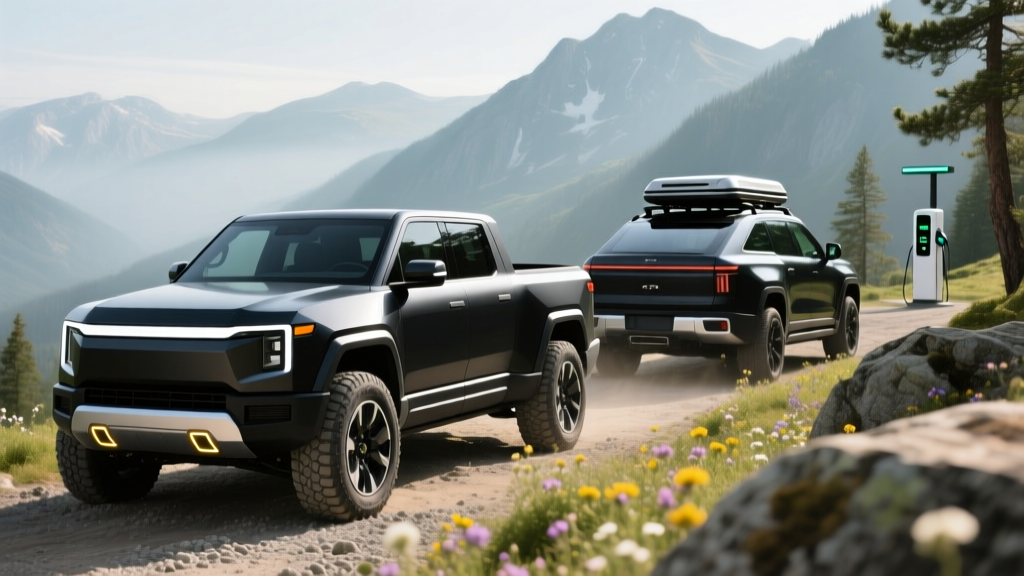
If you've searched "who makes the vehicle Rivian," you're not alone. The American EV startup has carved out a distinct niche in the electric truck and SUV market, but its origins, manufacturing footprint, and current lineup remain mysterious to many shoppers. Rivian Automotive, Inc. — founded in 2009 by MIT graduate RJ Scaringe and headquartered in Irvine, California — designs, engineers, and manufactures its vehicles at a 3.3-million-square-foot factory in Normal, Illinois. Unlike legacy automakers that retrofit gas-car platforms, Rivian built its proprietary skateboard architecture from the ground up, packaging batteries, motors, and suspension into a single low-center-of-gravity chassis that underpins both the R1T pickup and R1S SUV.
For the 2026 model year, Rivian has expanded its battery options, refined its dual- and tri-motor powertrains, and pushed software updates that meaningfully improve efficiency and driver-assist capability. This profile breaks down everything a prospective buyer needs: real-world range, charging speeds, pricing after federal tax credits, and whether the R1T or R1S deserves a spot in your driveway.
Rivian at a Glance: 2026 R1T and R1S Core Specifications
| Specification | R1T (Pickup) | R1S (SUV) |
|---|---|---|
| EPA Est. Range (Max Pack) | 420 miles | 410 miles |
| Battery Capacity (usable) | 149 kWh (NMC) | 149 kWh (NMC) |
| Drivetrain | Dual-Motor AWD | Dual-Motor AWD |
| Horsepower | 533 hp | 533 hp |
| 0–60 mph | 4.5 sec | 4.6 sec |
| Max DC Fast Charge | 220 kW peak | 220 kW peak |
| 10–80% DC Charge Time | ~30 min | ~30 min |
| Level 2 Home Charging | 11.5 kW (~30 mi/hr) | 11.5 kW (~30 mi/hr) |
| MPGe (Combined) | 73 MPGe | 71 MPGe |
| Towing Capacity | 11,000 lbs | 7,700 lbs |
| Cargo Volume | 54 cu ft bed + 11 cu ft frunk | 105 cu ft (seats folded) |
| Base MSRP | $69,900 | $74,900 |
| Battery/Powertrain Warranty | 8 yr / 175,000 mi | 8 yr / 175,000 mi |
Real-World Range: What the EPA Sticker Doesn't Tell You
R1T Max Pack: EPA 420 miles — expect ~350–370 miles on a mixed highway trip at 70 mph; ~290–320 miles in sub-freezing winter conditions with cabin heat running.
R1S Max Pack: EPA 410 miles — expect ~340–360 miles highway; ~280–310 miles in cold weather.
Standard Pack (106 kWh): EPA ~270 miles — expect ~225–240 miles highway; ~190–210 miles in cold weather.
Real-world figures based on independent highway loop testing and owner-reported data. Cold-weather losses of 20–30% are typical for all EVs without preconditioning.
Rivian's Max Pack battery uses nickel-manganese-cobalt (NMC) chemistry supplied by Samsung SDI, chosen for its high energy density — critical in a vehicle this heavy. The R1T Dual-Motor Max Pack tips the scales near 7,100 lbs, so efficiency suffers compared to lighter EVs. At 73 MPGe combined (fueleconomy.gov), the R1T consumes roughly 46 kWh per 100 miles. That's thirsty by EV standards, but expected for a body-on-frame truck with all-terrain tires and a frontal area larger than most sedans.
The Standard Pack uses a smaller 106 kWh NMC module. For most daily commuters driving under 80 miles round-trip, the Standard Pack is more than sufficient and saves roughly $6,000 at purchase. Reserve the Max Pack for frequent road-trippers or those towing regularly, where the extra 150 miles of buffer reduces charging stops.
Charging Speed: DC Fast Charging and Home Level 2
| Charging Level | Power (kW) | Speed (miles/hr added) | Notes |
|---|---|---|---|
| Level 1 (120V outlet) | 1.4 kW | ~3 mi/hr | Emergency/trickle only |
| Level 2 (240V, 48A) | 11.5 kW | ~30 mi/hr | Full charge in ~13 hr (Max Pack) |
| DC Fast Charge (peak) | 220 kW | ~600 mi/hr (peak) | Sustained ~150 kW avg; tapers above 80% |
| DC Fast 10–80% | — | — | ~30 min (Max Pack); ~22 min (Standard) |
| NACS / Tesla Supercharger | Up to 250 kW | Varies | Native NACS port on 2025+ models; CCS adapter for older |
Rivian's 220 kW peak DC charge rate is competitive but not class-leading. The Hyundai Ioniq 5 and Kia EV9 can sustain higher rates thanks to 800V architectures, while Rivian operates on a 400V system. In practice, the charge curve matters more than the peak number: the R1T holds close to 180 kW from 10–50% SoC, then tapers progressively. From 80–100%, expect charge power to drop below 40 kW, adding the last 20% slowly — plan your road-trip stops to 80% for optimal time efficiency.
At home, Rivian's Wall Charger delivers 11.5 kW on a 240V / 48A circuit. For the Max Pack's 149 kWh battery, a full 0–100% charge takes roughly 13 hours. Most owners charge from 20–80% overnight in about 8 hours, which is practical for daily use. Installation of a Level 2 home charger typically costs $800–$2,000 including a licensed electrician, depending on panel capacity and conduit run length. If your home has a 200-amp panel, you'll likely need a dedicated 60-amp breaker; older 100-amp panels may require an upgrade ($1,500–$3,000).
Performance and Drivetrain: Tri-Motor vs. Dual-Motor
Rivian offers two powertrain configurations for 2026:
- Dual-Motor AWD: One motor per axle, 533 hp, 610 lb-ft torque, 0–60 in 4.5 seconds. Standard on most trims.
- Tri-Motor AWD: One front motor, two rear motors, 850 hp, 1,100 lb-ft torque, 0–60 in 2.9 seconds. Available on Adventure and Ascend trims.
The dual-motor setup is the volume seller and the one we recommend for most buyers. The tri-motor is a performance halo — thrilling in a straight line but it reduces range by approximately 30 miles (EPA) due to the added weight and power draw. For towing, the dual-motor's 11,000-lb capacity is more than adequate for boats, horse trailers, and most campers. Rivian's integrated trailer brake controller and tow-assist camera views are among the best in the EV truck segment.
Ride quality benefits from Rivian's electro-hydraulic roll control system (no traditional anti-roll bars), which keeps body flat through corners while allowing generous wheel articulation off-road. Ground clearance adjusts from 7.9 to 14.9 inches via air suspension, and the R1T's wading depth reaches 36 inches — legitimate off-road capability that no competitor matches without aftermarket modification.
Pricing, Trims, and Federal Tax Credit Eligibility
| Trim / Config | MSRP | Est. After §30D Credit | Notes |
|---|---|---|---|
| R1T Dual-Motor Standard | $69,900 | $62,400 | Qualifies if buyer meets income caps |
| R1T Dual-Motor Max | $84,900 | $77,400 | Exceeds $80K truck MSRP cap — credit may NOT apply |
| R1T Tri-Motor Max | $99,900 | $99,900 | Over MSRP cap — no credit |
| R1S Dual-Motor Standard | $74,900 | $67,400 | Qualifies if buyer meets income caps |
| R1S Dual-Motor Max | $89,900 | $89,900 | Exceeds $80K SUV MSRP cap — no credit |
The federal EV tax credit under IRS §30D offers up to $7,500 for qualifying new EVs, but eligibility is a three-part test that trips up many Rivian buyers:
- MSRP Cap: Trucks (R1T) must be under $80,000; SUVs (R1S) must be under $80,000. Only the Dual-Motor Standard Pack trims qualify.
- Buyer Income Cap: Modified AGI must not exceed $300,000 (joint), $225,000 (head of household), or $150,000 (single).
- Battery Sourcing: Critical minerals and battery components must meet escalating domestic-content thresholds. Rivian has worked to localize supply chains, but confirm eligibility at the point of sale — dealers can run a VIN check against the IRS qualified vehicle list.
If you qualify, the $7,500 credit can now be transferred to the dealer at point of sale, reducing your out-of-pocket cost immediately rather than waiting for tax filing. Consult a tax professional to confirm your specific eligibility, as rules are subject to legislative change.
Interior, Tech, and Driver Assistance
Rivian's interior blends minimalist design with rugged practicality. The 15.6-inch central touchscreen runs Rivian's proprietary operating system — responsive, with native trip planning that integrates charging stops, elevation changes, and weather into range estimates. Wireless Apple CarPlay and Android Auto are standard. The 12.3-inch digital instrument cluster is clear but lacks the configurability of some competitors.
Unique features include the R1T's Gear Tunnel — a 17-cubic-foot pass-through storage compartment behind the cab, accessible from both sides, perfect for camping gear or long items. The R1S offers three rows of seating (up to 7 passengers), with 38.8 inches of second-row legroom and a usable third row for children or short-trip adults.
Rivian's driver-assist suite, branded Rivian Driver+, is a Level 2 system per SAE classification. It includes adaptive cruise control, lane-centering, and automatic lane changes on divided highways. It is not self-driving — the driver must maintain hands-on-wheel awareness. In our testing, Driver+ performs competently on interstate drives but can be hesitant in construction zones and occasionally over-brakes for merging traffic. It trails GM's Super Cruise and Ford's BlueCruise in hands-free highway coverage but is on par with Tesla's base Autopilot.
Who Should Buy a Rivian — And Who Should Look Elsewhere
- Outdoor enthusiasts who need genuine off-road capability and 500+ lb payload capacity
- Families wanting a 3-row electric SUV (R1S) with car-like ride quality
- Truck buyers who tow boats or campers regularly and want to eliminate fuel costs
- Home-charging owners with a garage or dedicated parking spot for Level 2 installation
- You need maximum highway efficiency (the Rivian's brick-like aero hurts at speed)
- You live in an apartment without charging access — public charging a 149 kWh battery is expensive and time-consuming
- You prioritize the lowest cost per mile — a Tesla Model Y or Hyundai Ioniq 5 is far more efficient
- You need the longest possible range without charging — the Lucid Air (516 mi EPA) or Chevy Silverado EV (440 mi) edge ahead
Pros and Cons
- Class-leading off-road capability with air suspension and 14.9" ground clearance
- Genuine 11,000-lb towing (R1T) with integrated trailer tech
- Unique Gear Tunnel storage (R1T) and usable 3rd row (R1S)
- Over-the-air software updates that add real features post-purchase
- 8-year / 175,000-mile battery warranty exceeds most competitors
- Strong build quality from the Normal, IL factory
- Low efficiency (46 kWh/100mi) means higher charging costs vs. car-based EVs
- Max Pack trims exceed MSRP cap — no federal tax credit
- DC fast charging slower than 800V competitors (Ioniq 5, EV9, Taycan)
- Driver+ is competent but behind Super Cruise/BlueCruise in hands-free miles
- High starting price; well-equipped models push $90K+
- Service center network still expanding — rural owners may face long tow distances
Frequently Asked Questions
Is Rivian made by Ford or Amazon?
No. Rivian is an independent, publicly traded company (NASDAQ: RIVN). Amazon holds a significant equity stake and has ordered 100,000 electric delivery vans from Rivian, but Amazon does not manufacture or control Rivian's consumer vehicles. Ford previously invested in Rivian but divested its stake in 2021. Rivian designs and builds its own vehicles at its Normal, Illinois factory.
What is the real-world range of the Rivian R1T?
The EPA rates the R1T Max Pack at 420 miles. In real-world highway driving at 70 mph, expect 350–370 miles. In winter conditions below 32°F, range drops to 290–320 miles due to battery chemistry limitations and cabin heating demands. Preconditioning the battery while plugged in mitigates cold-weather losses.
How fast does the Rivian charge at home and on the road?
At home on a Level 2 (240V / 48A) charger, the R1T adds about 30 miles of range per hour, fully charging the Max Pack in ~13 hours. On DC fast chargers, it peaks at 220 kW and charges from 10–80% in approximately 30 minutes. Rivian vehicles from 2025 onward have a native NACS port, granting access to Tesla Superchargers without an adapter.
Does the Rivian R1T qualify for the $7,500 federal tax credit?
Only the Dual-Motor Standard Pack R1T (MSRP $69,900) qualifies, and only if the buyer's modified AGI is under the IRS income caps ($300K joint / $150K single). Max Pack and Tri-Motor trims exceed the $80,000 truck MSRP cap and are ineligible. Always verify current eligibility via the IRS qualified vehicles list before purchasing.
Is Rivian worth buying over the Ford F-150 Lightning or Tesla Cybertruck?
The R1T excels in off-road capability, interior quality, and adventure-focused features (Gear Tunnel, air suspension). The F-150 Lightning offers a larger bed, more traditional truck ergonomics, and lower starting prices. The Cybertruck provides sharper performance and stainless-steel styling but has limited towing capacity and polarizing ergonomics. If you prioritize off-road adventure and premium build, the Rivian wins. If you need a work truck with maximum payload and fleet support, the Lightning is the safer choice.
What is Rivian's battery warranty?
Rivian covers the battery pack and drive unit for 8 years or 175,000 miles, whichever comes first, with a capacity retention threshold of 70%. This is among the most generous warranties in the EV truck segment — the Ford F-150 Lightning and Chevy Silverado EV both offer 8 years / 100,000 miles.