Who Makes Rivian Cars? The American EV Automaker Explained
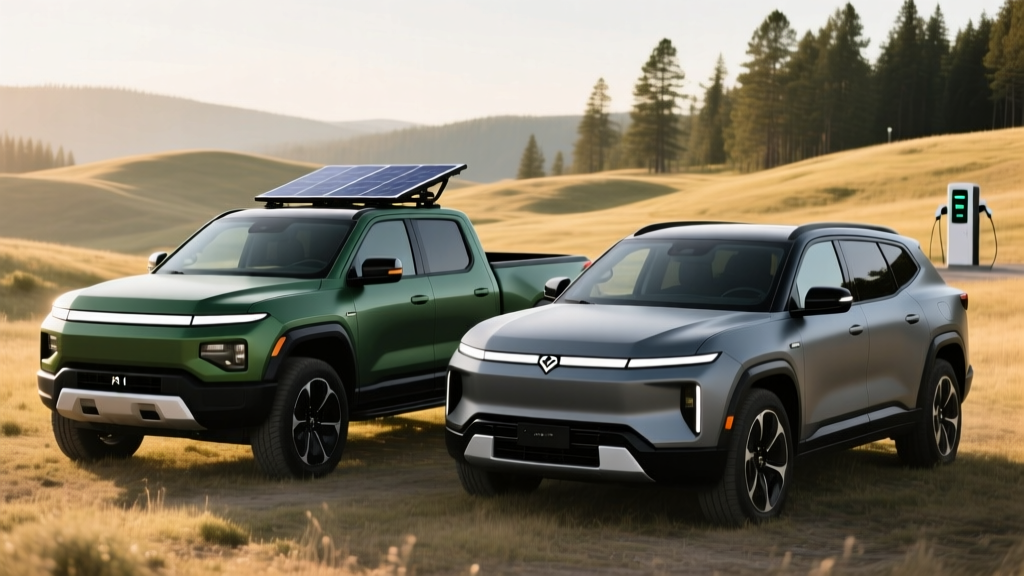
Rivian Automotive is the company behind every Rivian-badged vehicle on the road. Founded in 2009 by MIT-trained engineer RJ Scaringe, Rivian designs, engineers, and manufactures its own electric vehicles at a repurposed Mitsubishi plant in Normal, Illinois. Unlike many EV startups that outsource production or badge-engineer platforms, Rivian controls everything from battery pack architecture to the software stack running its infotainment and driver-assistance systems.
Rivian went public on NASDAQ in November 2021 and has since scaled to produce hundreds of thousands of vehicles. The company currently sells two consumer models—the R1T electric pickup truck and the R1S three-row electric SUV—both built on Rivian's proprietary skateboard platform. In 2026, Rivian also builds commercial delivery vans for Amazon, though those aren't available to retail buyers.
If you're asking "who makes Rivian cars" because you're evaluating the brand against legacy automakers, the short answer: Rivian is a vertically integrated American EV manufacturer competing directly with Tesla, Ford, Hyundai, and Rivian's own delivery partner Amazon's logistics fleet. The company designs its own motors, battery management systems, and software in-house, with manufacturing centered entirely in the United States.
2026 Rivian R1T and R1S: What's Available Now
Rivian refreshed both the R1T and R1S for the 2025 model year with a new electrical architecture, updated motor options, and the NACS (Tesla) charging port as standard. These changes carry into 2026 production. Here's the current lineup:
| Spec | R1T Dual-Motor (Standard) | R1T Tri-Motor | R1S Dual-Motor | R1S Tri-Motor |
|---|---|---|---|---|
| Drivetrain | AWD (2 motors) | AWD (3 motors) | AWD (2 motors) | AWD (3 motors) |
| Horsepower | 533 hp | 850 hp | 533 hp | 850 hp |
| 0-60 mph | 4.5 sec | 2.9 sec | 4.6 sec | 3.0 sec |
| Battery (usable kWh) | 92 kWh (Standard) | 141 kWh (Max) | 92 kWh (Standard) | 141 kWh (Max) |
| Battery Chemistry | NMC | NMC | NMC | NMC |
| EPA Range | 270 mi | 420 mi | 270 mi | 410 mi |
| Towing Capacity | 11,000 lbs | 11,000 lbs | 7,700 lbs | 7,700 lbs |
| Base MSRP | $69,900 | $99,900 | $75,900 | $104,900 |
Sources: Rivian official specifications, fueleconomy.gov
Charging Speed: DC Fast Charging and Home Level 2
Rivian equips all 2026 R1T and R1S models with the NACS (Tesla) charging port, granting native access to Tesla's Supercharger network—the most extensive and reliable DC fast-charging infrastructure in North America. Here's what charging looks like across different scenarios:
| Charging Method | Power (kW) | R1T Standard Pack (92 kWh) | R1T Max Pack (141 kWh) |
|---|---|---|---|
| DC Fast Charge (Peak) | 220 kW | 10-80% in ~21 min | 10-80% in ~34 min |
| DC Fast Charge (Sustained avg) | ~150 kW | ~180 mi added in 30 min | ~250 mi added in 40 min |
| Level 2 Home (48A / 11.5 kW) | 11.5 kW | ~25 mi/hr added | ~25 mi/hr added |
| Level 2 Home (32A / 7.7 kW) | 7.7 kW | ~17 mi/hr added | ~17 mi/hr added |
| Level 1 (120V / 12A) | 1.4 kW | ~3 mi/hr added | ~3 mi/hr added |
Rivian's DC fast-charging curve peaks at approximately 220 kW on the Max Pack and sustains above 150 kW through roughly 60% state of charge before tapering. This means a 10-80% session takes longer on the larger battery, but you gain substantially more range per minute of charging. The Standard Pack charges faster in absolute time but holds less total energy.
For home charging, Rivian recommends a 60-amp circuit with a 48-amp wall connector for optimal Level 2 speed. Most R1T and R1S owners report overnight charging fully replenishes the battery from a typical daily drive of 40-80 miles. If your electrical panel is at capacity, a panel upgrade to 200 amps may be required—budget $1,500-$3,000 for that work separately from the charger installation.
Efficiency: MPGe and Real-World Energy Consumption
The 2026 Rivian R1T Dual-Motor Standard Pack achieves an EPA-estimated 73 MPGe combined (approximately 46 kWh per 100 miles). The Max Pack variant drops slightly to 70 MPGe due to added battery weight. The R1S SUV, with its slightly less aerodynamic profile, rates at 69-71 MPGe combined depending on configuration.
To put these numbers in context: at the national average electricity rate of $0.16/kWh, driving the R1T Standard Pack 1,000 miles costs roughly $73. A comparable gas-powered F-150 at 20 MPG combined, with fuel at $3.40/gallon, would cost $170 for the same distance. The efficiency gap widens further if you charge at home on a time-of-use plan with off-peak rates below $0.10/kWh.
Pricing, Trims, and Federal Tax Credit Eligibility
Rivian positions the R1T and R1S as premium adventure vehicles, and pricing reflects that positioning. Here's the 2026 pricing breakdown by configuration:
| Model & Config | Base MSRP | As-Tested (Typical Options) | §30D Tax Credit Eligible? |
|---|---|---|---|
| R1T Dual-Motor Standard | $69,900 | $73,000-$76,000 | Potentially — see rules below |
| R1T Tri-Motor Max | $99,900 | $105,000-$112,000 | No (exceeds $80K truck cap) |
| R1S Dual-Motor Standard | $75,900 | $79,000-$83,000 | Potentially — see rules below |
| R1S Tri-Motor Max | $104,900 | $110,000-$118,000 | No (exceeds $80K SUV cap) |
Federal tax credit rules (IRS §30D) for 2026: The R1T qualifies as a pickup truck with an $80,000 MSRP cap; the R1S qualifies as an SUV with an $80,000 cap. Only Dual-Motor Standard Pack configurations priced below $80,000 can potentially qualify. Additional requirements include:
- Buyer income caps: Modified AGI must not exceed $150,000 (single), $225,000 (head of household), or $300,000 (joint filers)
- Battery sourcing: Critical minerals and battery components must meet escalating domestic-content thresholds that tighten each year through 2030
- Point-of-sale transfer: Eligible buyers can apply the credit at purchase, reducing the out-of-pocket cost immediately
Because battery sourcing requirements change annually and depend on Rivian's supply chain at time of delivery, confirm eligibility with your dealer and a tax professional before assuming you'll receive the credit. Check current rules at irs.gov.
Cargo, Passenger Space, and Practical Dimensions
The R1T's defining feature is its 54-inch bed (4.5 feet), shorter than a full-size F-150 bed but compensated by the Gear Tunnel—a 11.7-cubic-foot pass-through storage compartment behind the rear seats that's unique to Rivian. Combined cargo capacity:
- R1T bed: 54 inches long, ~21 cu ft
- R1T Gear Tunnel: 11.7 cu ft (lockable, weather-sealed)
- R1T Frunk: 11.1 cu ft (front trunk with drain)
- R1T rear seat legroom: 38.6 inches
The R1S offers three rows of seating with the following space:
- Behind 3rd row: 17.6 cu ft
- Behind 2nd row (3rd folded): 54.1 cu ft
- Behind 1st row (all rear folded): 104.7 cu ft
- 2nd-row legroom: 39.6 inches
- 3rd-row legroom: 30.4 inches (best for children or short trips)
Warranty Coverage: Battery, Powertrain, and Bumper-to-Bumper
Rivian provides competitive warranty coverage for the EV segment:
- Battery warranty: 8 years / 175,000 miles (retains at least 70% capacity)
- Powertrain warranty: 8 years / 175,000 miles
- Bumper-to-bumper: 5 years / 60,000 miles
- Roadside assistance: 5 years / 60,000 miles
The 175,000-mile battery warranty exceeds the federal minimum (8 years/100,000 miles) and matches or exceeds most competitors. Rivian's NMC battery chemistry has shown minimal degradation in early fleet data—most 2022-2023 R1T owners report 94-97% state of health after 30,000-50,000 miles, though long-term data beyond 100,000 miles is still accumulating.
Standout Tech and Notable Drawbacks
Standout features:
- Quad-motor option (R1T only): Individual motor per wheel enables tank turns and precise torque vectoring
- Camp Kitchen: Available slide-out kitchen with induction cooktop and sink, integrated into the Gear Tunnel
- Rivian Waypoints: Curated adventure routes with integrated charging stops
- Driver+ (Level 2 ADAS): Highway assist with lane centering and adaptive cruise; hands-on-wheel required at all times
- Over-the-air updates: Continuous feature additions and performance improvements
- NACS port: Native Tesla Supercharger access without adapters
Notable drawbacks:
- Service center availability: Rivian's service network is growing but sparse in rural areas; mobile service handles minor issues, but collision repair may require long-distance towing
- No Apple CarPlay/Android Auto: Rivian's proprietary infotainment lacks smartphone projection, which frustrates some buyers
- Premium pricing: Even the base model starts near $70K, placing it above the F-150 Lightning and Chevrolet Silverado EV in entry cost
- Third-row limitations (R1S): The 30.4-inch legroom is tight for adults on extended trips
- Insurance costs: Rivian owners report premiums 20-40% higher than comparable gas trucks, reflecting repair costs and parts availability
- Class-leading range (420 mi EPA, Max Pack)
- Exceptional off-road capability with air suspension
- Unique Gear Tunnel storage (R1T)
- Native Tesla Supercharger access (NACS)
- Strong build quality and fit/finish
- 11,000-lb towing (R1T)
- High starting price ($69,900+)
- Limited service centers outside major metros
- No Apple CarPlay or Android Auto
- Cramped third row (R1S)
- Above-average insurance premiums
- Tri-Motor configs exceed tax credit MSRP cap
Who Should Buy a Rivian R1T or R1S?
The R1T is ideal for: Adventure-oriented truck buyers who tow boats or trailers on weekends, need a daily driver for commuting, and value the Gear Tunnel for gear storage. If you regularly tow near 11,000 lbs and want zero tailpipe emissions, the R1T Max Pack is one of the few EVs that can handle it without range collapsing below 200 miles.
The R1S is ideal for: Families of 5-6 who want three-row capability without the minivan aesthetic. The R1S works well for school runs, ski trips, and light off-roading. If your third-row passengers are children or you only use the third row occasionally, the R1S delivers more cargo versatility than a Tesla Model X at a lower price.
Look elsewhere if: You need a work truck with an 8-foot bed (the R1T's 54-inch bed won't handle full sheets of plywood flat), you're on a tight budget (the Ford F-150 Lightning starts ~$15K lower), or you rely on Apple CarPlay for navigation.
Rivian vs. Key Competitors: Is It Worth Buying?
The R1T competes against the Ford F-150 Lightning (lower price, shorter range, larger bed), the Chevrolet Silverado EV (longer bed, less refined interior), and the Tesla Cybertruck (polarizing design, stainless steel body, similar price). The R1S competes against the Tesla Model X (faster, falcon-wing doors, higher price), the Kia EV9 (lower price, shorter range), and the BMW iX (luxury focus, no third row).
Rivian's edge lies in build quality, off-road capability, and the adventure-focused ecosystem (Gear Tunnel, Camp Kitchen, Waypoints). If those features matter to you, Rivian justifies its premium. If you prioritize value or need maximum bed length, the F-150 Lightning or Silverado EV may serve you better at lower cost.
Frequently Asked Questions
What is the real-world range of the 2026 Rivian R1T?
The R1T Max Pack achieves an EPA-estimated 420 miles. In real-world highway driving at 70-75 mph, expect 340-370 miles. In cold weather below freezing, reduce that to 290-320 miles. The Standard Pack's 270 EPA miles translates to approximately 220-240 highway miles and 180-200 cold-weather miles.
How fast does the Rivian R1T charge at home and on the road?
On a DC fast charger, the R1T peaks at 220 kW and charges from 10-80% in approximately 21 minutes (Standard Pack) or 34 minutes (Max Pack). At home on a 48-amp Level 2 charger (11.5 kW), the R1T adds roughly 25 miles of range per hour, fully replenishing overnight from a typical daily drive.
How much does a 2026 Rivian cost after the federal tax credit?
Only the Dual-Motor Standard Pack configurations priced below $80,000 can potentially qualify for the $7,500 §30D credit. If eligible, the R1T drops from $69,900 to an effective $62,400, and the R1S drops from $75,900 to $68,400. Tri-Motor and Max Pack variants exceed the MSRP cap and do not qualify. Verify eligibility based on your income, the vehicle's battery sourcing, and current IRS rules at irs.gov.
Is Rivian a reliable brand compared to Tesla or Ford?
Rivian's 2022-2024 models showed typical early-production issues (software glitches, panel gaps, 12V battery failures), but the 2025+ refresh addressed many of these. Long-term reliability data is still limited compared to Tesla's decade-plus track record or Ford's century of manufacturing. Rivian's 8-year/175,000-mile battery warranty provides substantial protection, but service center availability remains a concern in rural areas.
Does the Rivian R1T qualify for the federal EV tax credit?
The R1T Dual-Motor Standard Pack (MSRP $69,900) can qualify for the full $7,500 §30D credit if the buyer meets income caps ($150K single / $300K joint), the vehicle's battery meets critical-mineral and component sourcing requirements, and the purchase occurs before the credit phases out. The Tri-Motor Max Pack ($99,900+) exceeds the $80,000 truck MSRP cap and is ineligible. Always confirm eligibility with a tax professional before purchase.