Who Makes the Polestar Car? The Volvo-Geely Partnership Explained
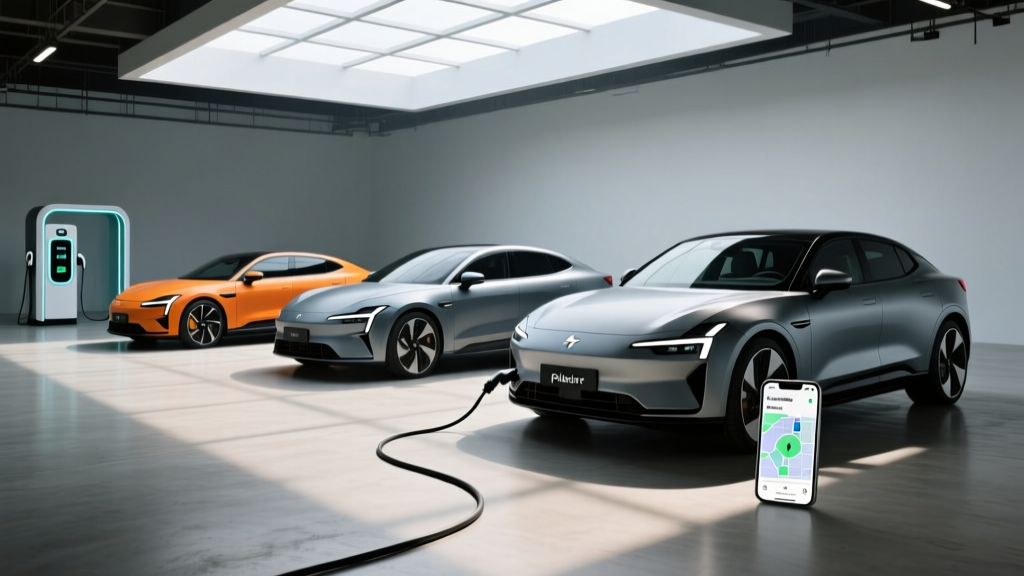
Polestar is a Swedish-headquartered electric vehicle brand jointly owned by Zhejiang Geely Holding Group (China's largest private automaker) and Volvo Cars (itself majority-owned by Geely since 2010). Originally a racing team and Volvo performance sub-brand (Polestar Racing, later Polestar Engineered), it was spun off as a standalone EV marque in 2017. Today, Polestar operates out of Gothenburg, Sweden, with design, engineering, and executive leadership rooted in Scandinavian automotive tradition — but manufacturing spread across China (Luqiao, Chengdu) and, starting with the Polestar 4, South Korea (Renault Korea's Busan plant).
This dual heritage matters for buyers: Polestar vehicles share platforms, safety engineering, and supply chains with Volvo and Geely's broader EV portfolio (including the SEA platform shared with Zeekr, Smart, and Volvo's EX30/EX90), while maintaining a distinct design language focused on minimalist performance aesthetics. For U.S. buyers, the brand now fields three core models for 2026: the Polestar 2 sedan/fastback, the Polestar 3 mid-size SUV, and the Polestar 4 coupe-SUV.
Polestar trades on Volvo's safety reputation and Geely's manufacturing scale, but its driving dynamics and software stack (Android Automotive OS) are tuned for a sportier, more tech-forward buyer than a typical Volvo cross-shopper.
2026 Polestar Lineup: Specs at a Glance
| Spec | Polestar 2 (2026) | Polestar 3 (2026) | Polestar 4 (2026) |
|---|---|---|---|
| Body Style | Fastback Sedan | Mid-Size SUV | Coupe-SUV |
| EPA Range (max) | 320 mi (LRSM RWD) | 315 mi (LRDM) | 300 mi (LRDM) |
| Battery (usable) | 82 kWh (NMC) | 107 kWh (NMC) | 100 kWh (NMC) |
| Drivetrain | RWD or AWD (dual-motor) | AWD (dual-motor) | RWD or AWD (dual-motor) |
| 0-60 mph | 5.9s (RWD) / 4.3s (AWD) | 4.8s (std) / 4.5s (PP) | 5.1s (RWD) / 3.6s (AWD) |
| Horsepower | 299 hp (RWD) / 421 hp (AWD) | 489 hp (std) / 517 hp (PP) | 272 hp (RWD) / 544 hp (AWD) |
| Max DC Fast Charge | 200 kW | 250 kW | 210 kW |
| 10-80% DC Time | ~27 min | ~25 min | ~26 min |
| Level 2 Home Rate | 11 kW (~37 mi/hr) | 11 kW (~34 mi/hr) | 11 kW (~35 mi/hr) |
| MPGe (combined) | 107 MPGe | 89 MPGe | 98 MPGe |
| Cargo Volume | 14.4 cu ft (trunk) + 1.4 frunk | 17.1 cu ft + 2.3 frunk | 18.6 cu ft (no frunk) |
| Base MSRP | $49,900 | $69,900 | $54,900 |
| Battery Warranty | 8 yr / 100,000 mi | 8 yr / 100,000 mi | 8 yr / 100,000 mi |
Real-World Range: What the EPA Sticker Doesn't Tell You
EPA vs Reality: The Polestar 2 Long Range Single Motor earns an EPA-estimated 320 miles — but real-world highway driving at 70+ mph typically yields 260-285 miles depending on terrain and temperature. In cold weather (below 32°F), expect a further 15-25% reduction, landing around 220-250 miles in winter highway conditions.
The heavier Polestar 3 (315 mi EPA) realistically delivers 255-280 miles highway, while the Polestar 4 (300 mi EPA) lands around 245-270 miles in mixed driving. All three models benefit from a heat pump (standard on 2026 models), which mitigates cold-weather cabin heating losses compared to resistive systems.
Efficiency varies by configuration. The Polestar 2 RWD achieves 107 MPGe combined (roughly 31 kWh/100 mi), which is competitive with the Tesla Model 3 Long Range (132 MPGe) but trails the Hyundai Ioniq 6 (140 MPGe). The AWD variants drop efficiency by roughly 10-15%. For the Polestar 3, the 89 MPGe combined figure reflects its larger frontal area and 5,000+ lb curb weight — comparable to the BMW iX xDrive50 (86 MPGe) but less efficient than the lighter Jaguar I-PACE.
Charging Speed: DC Fast Charging and Home Setup
Polestar uses the NACS (Tesla-style) connector on all 2026 U.S.-market models, a shift that began with the 2025 model year. This grants native access to Tesla's Supercharger network (20,000+ stalls in North America) without an adapter — a significant practical advantage over the CCS-equipped competition.
| Charging Level | Power / Rate | Polestar 2 | Polestar 3 | Polestar 4 |
|---|---|---|---|---|
| Level 1 (120V) | ~1.4 kW | ~4 mi/hr | ~4 mi/hr | ~4 mi/hr |
| Level 2 (240V, 48A) | 11 kW | ~37 mi/hr | ~34 mi/hr | ~35 mi/hr |
| DC Fast Charge | Peak 200-250 kW | 200 kW peak | 250 kW peak | 210 kW peak |
| 10-80% DC Time | — | ~27 min | ~25 min | ~26 min |
Charging curve reality: The Polestar 3's 250 kW peak rate is not sustained across the full session. Like all modern EVs, the charge rate tapers significantly above 80% State of Charge to protect battery longevity. Expect to see peak rates between 10-40% SoC, dropping to roughly 100-120 kW by 60%, and below 50 kW past 80%. A 10-80% session in ~25 minutes assumes a 350 kW-capable charger and battery preconditioning (which Polestar's navigation system triggers automatically when a DC charger is set as your destination).
For home charging, all three models accept up to 11 kW on Level 2 (48 amps on a 60-amp circuit). A full overnight charge (10-100%) takes roughly 8-10 hours depending on the battery size. Installation of a hardwired Level 2 station (e.g., ChargePoint Home Flex or Tesla Wall Connector) typically runs $500-$1,500 for the unit plus $800-$2,500 for electrician labor and permitting, depending on panel proximity and whether a 200-amp service upgrade is needed.
Performance and Driving Dynamics
The Polestar 2 with the optional Performance Pack (AWD, Öhlins dampers, Brembo brakes, 20" forged wheels) delivers a 4.3-second 0-60 mph time and sharp handling that rivals the BMW i4 M50. The standard RWD model's 5.9-second run is adequate for daily driving but less thrilling than a Tesla Model 3 Long Range AWD (4.2s).
The Polestar 4 is the performance standout of the lineup: its dual-motor AWD variant produces 544 hp and hits 60 mph in just 3.6 seconds — making it one of the quickest SUVs in its price class, rivaling the Porsche Macan Electric Turbo (3.3s, but at a significantly higher price). The Polestar 3 with the Performance Plus pack (517 hp) manages 4.5 seconds, which is brisk for a family SUV but less urgent than the BMW iX M60 (3.6s).
All 2026 Polestars feature torque vectoring on AWD models, adaptive dampers (standard on Performance trims, optional elsewhere), and regenerative braking with adjustable intensity. One-pedal driving is available but not as aggressively tuned as in a Nissan Leaf or Chevrolet Bolt — Polestar's regen philosophy favors a more natural deceleration feel.
Pricing, Tax Credits, and Ownership Cost
| Model / Trim | Base MSRP | As-Tested (typical) | §30D Credit Eligibility | Effective Price (with credit) |
|---|---|---|---|---|
| Polestar 2 Standard Range | $44,900 | $47,500 | Partial (sourcing-dependent) | ~$40,000-$44,900 |
| Polestar 2 Long Range RWD | $49,900 | $53,000 | Partial (sourcing-dependent) | ~$42,500-$49,900 |
| Polestar 2 Long Range AWD | $53,900 | $58,500 | Partial (sourcing-dependent) | ~$46,000-$53,900 |
| Polestar 4 Long Range RWD | $54,900 | $58,000 | Eligible (Korea-assembled) | ~$47,400 |
| Polestar 4 Long Range AWD | $59,900 | $65,000 | Eligible (Korea-assembled) | ~$52,400 |
| Polestar 3 Long Range DM | $69,900 | $78,000 | Ineligible (>$80k MSRP cap for SUVs after options) | $69,900+ |
Tax credit caveats: The federal §30D credit of up to $7,500 is subject to multiple requirements per current IRS rules:
- MSRP caps: $55,000 for sedans (Polestar 2); $80,000 for SUVs/vans/pickups (Polestar 3 and 4)
- Buyer income limits: AGI ≤ $150,000 (single), $225,000 (head of household), $300,000 (joint)
- Battery sourcing: Critical minerals and battery components must meet escalating domestic-content thresholds (2026 requirements are stricter than 2024)
- Assembly: The Polestar 4, assembled in South Korea, qualifies because the U.S.-Korea FTA satisfies final-assembly-adjacent requirements under current guidance — but this is subject to regulatory change
- Point-of-sale transfer: Buyers can transfer the credit to the dealer at purchase, reducing the purchase price directly rather than waiting for a tax refund
The Polestar 3's tax-credit eligibility is the most precarious: while its base MSRP of $69,900 falls under the $80,000 SUV cap, popular option packages (Performance Plus, Nappa leather, Bowers & Wilkins audio) can push the sticker above $80,000, disqualifying it. Buyers targeting the credit should configure carefully.
Tech, Interior, and Driver Assistance
All 2026 Polestars run Android Automotive OS natively — meaning Google Maps, Google Assistant, and the Play Store are built into the infotainment system (not projected from your phone). This is one of the best EV infotainment implementations available: navigation integrates with battery management for route planning and charger preconditioning, and voice commands are genuinely useful.
The interior design language is deliberately restrained: recycled materials, minimal physical buttons, and a portrait-oriented 11.2" center screen (Polestar 2) or 14.5" landscape screen (Polestar 3/4). Build quality is excellent — on par with Audi and BMW — but rear-seat legroom in the Polestar 2 (38.0" rear legroom) is tighter than a Tesla Model 3 (43.1") or Hyundai Ioniq 6 (42.3"). The Polestar 3 and 4 offer more generous rear accommodations, with 41.2" and 40.8" of rear legroom respectively.
ADAS: Polestar's Pilot Pack includes adaptive cruise control, lane-centering, and blind-spot intervention — all SAE Level 2 driver-assist features. The driver must remain engaged with hands on the wheel at all times. This is not "self-driving" (which would require SAE Level 4+). Polestar's system is competent for highway cruising but less aggressive in lane-change execution than Tesla's Autopilot or GM's Super Cruise. A LiDAR-equipped Pilot Pack (standard on Polestar 3, optional on 4) adds enhanced object detection for future over-the-air feature expansions.
ADAS Limitation Notice: Polestar's driver-assist features are SAE Level 2 — the driver must continuously supervise and be ready to take over instantly. These systems do NOT make the vehicle autonomous. Hands-off driving is not supported on U.S. roads.
Pros, Cons, and Who Should Buy
Pros
- Scandinavian design with premium build quality and recycled materials
- Native NACS connector = direct Tesla Supercharger access (no adapter)
- Android Automotive OS is the most capable native EV infotainment available
- Strong safety engineering (Volvo heritage, IIHS Top Safety Pick+ for Polestar 2)
- Polestar 4's 3.6s 0-60 makes it a genuine performance SUV bargain
- Heat pump standard across lineup (better cold-weather range retention)
Cons
- Polestar 2 rear seat and cargo space trail key competitors (Model 3, Ioniq 6)
- Efficiency (MPGe) lags behind Tesla and Hyundai — more kWh per mile = higher charging cost
- Tax credit eligibility is uncertain for Polestar 2 and 3 due to battery-sourcing rules
- Dealer/service network is small (~50 U.S. "Polestar Spaces") — rural buyers may struggle
- DC charging speeds are good but not class-leading (Tesla, Hyundai/Kia 800V systems charge faster)
- Polestar 3 options can push MSRP above the $80k SUV tax-credit cap
Who Should Buy a Polestar?
Choose Polestar 2 if: You want a premium electric sedan with distinctive design, value Android Automotive's native Google integration, and prioritize build quality over maximum range or rear-seat space. Best for urban professionals and couples without large cargo needs.
Choose Polestar 4 if: You want SUV practicality with sports-car acceleration (3.6s AWD), prefer a coupe-SUV silhouette, and want strong §30D tax-credit eligibility thanks to Korean assembly. Best for performance-oriented families.
Choose Polestar 3 if: You need a mid-size luxury electric SUV with premium materials, LiDAR-equipped ADAS, and 300+ mile range — and you're less price-sensitive. Best for luxury SUV buyers cross-shopping the BMW iX and Audi Q8 e-tron.
Look elsewhere if: You need maximum range-per-dollar (Tesla Model 3/Y), the largest service network (Tesla), or maximum rear-seat and cargo space (Hyundai Ioniq 5, Kia EV9).
Frequently Asked Questions
Who makes the Polestar car?
Polestar is a Swedish EV brand co-owned by Volvo Cars and China's Geely Holding Group. It was established as a standalone electric performance brand in 2017, leveraging Volvo's engineering, safety expertise, and Geely's global manufacturing infrastructure. Vehicles are manufactured in China (Polestar 2, 3) and South Korea (Polestar 4).
What is the real-world range of a Polestar?
The Polestar 2 Long Range RWD achieves an EPA-estimated 320 miles, but real-world highway driving typically yields 260-285 miles. In cold weather (below freezing), expect 220-250 miles. The Polestar 3 (315 mi EPA) delivers roughly 255-280 real-world miles, and the Polestar 4 (300 mi EPA) lands around 245-270 miles in mixed use. See fueleconomy.gov for official EPA data.
How fast does a Polestar charge?
On DC fast chargers, the Polestar 3 peaks at 250 kW (10-80% in ~25 min), the Polestar 4 at 210 kW (~26 min), and the Polestar 2 at 200 kW (~27 min). At home on a Level 2 (240V, 48A) charger, all three accept up to 11 kW, adding roughly 34-37 miles of range per hour of charging.
Does Polestar qualify for the federal EV tax credit?
It depends on the model, trim, and buyer eligibility. The Polestar 4 (Korea-assembled, under $80k SUV cap) has the strongest §30D eligibility. The Polestar 2's credit is partial and depends on battery-sourcing compliance for the specific production batch. The Polestar 3 may be disqualified if options push its MSRP above $80,000. All buyers must also meet IRS income caps ($150k single / $300k joint). Check IRS §30D guidance and confirm with your dealer and tax professional before purchasing.
Is Polestar worth buying vs. Tesla or Hyundai?
Polestar wins on design distinctiveness, interior material quality, and Android Automotive integration. Tesla wins on charging speed, Supercharger network density (though Polestar now has native access), range efficiency, and price. Hyundai/Kia wins on charging speed (800V architecture), range-per-dollar, and interior space. If you value Scandinavian design and build quality over pure spec-sheet dominance, Polestar is a strong choice — but cross-shop carefully.
What is Polestar's battery warranty?
All 2026 Polestar models carry an 8-year / 100,000-mile battery and powertrain warranty, consistent with industry norms. The warranty covers defects and capacity loss below a specified threshold (typically 70% of original capacity). Polestar uses NMC (nickel manganese cobalt) chemistry across its lineup, which offers higher energy density than LFP but requires more careful charge-habit management for long-term longevity — avoid routinely charging to 100% or letting the battery sit at 0%.
Is Polestar a Chinese car?
Polestar is headquartered in Gothenburg, Sweden, with Swedish design and engineering leadership. However, its parent companies (Volvo/Geely) are Chinese-owned, and manufacturing occurs in China (Polestar 2 and 3) and South Korea (Polestar 4). It is most accurately described as a Swedish brand with Chinese corporate ownership and global manufacturing.