Who Makes the Lucid Air — and Why It Matters in 2026
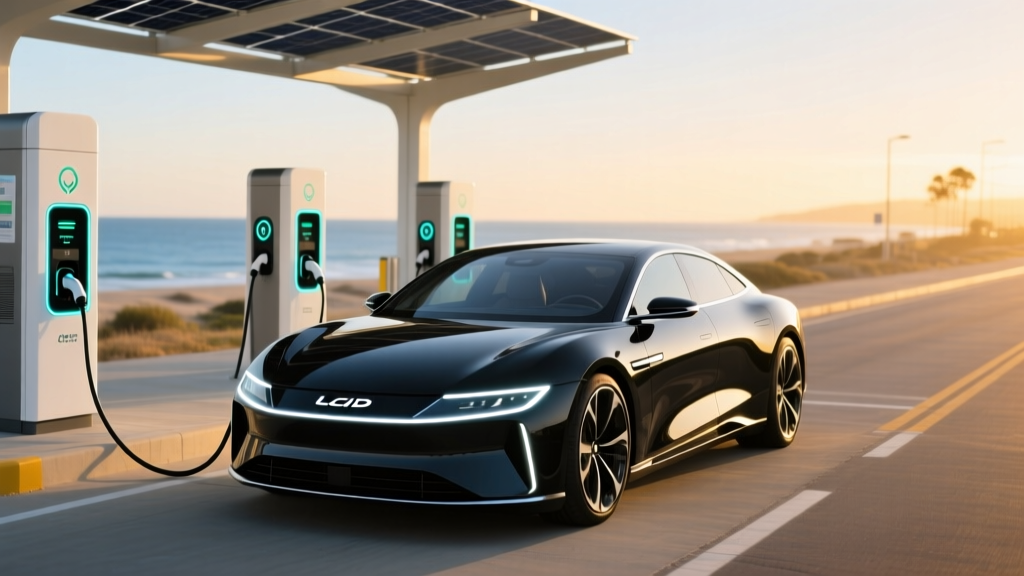
The question "who makes the Lucid" comes up constantly among EV shoppers encountering the brand for the first time. The answer: Lucid Motors, an American automotive technology company headquartered in Newark, California. Founded in 2007 as Atieva — originally a battery-technology supplier — the company rebranded to Lucid Motors in 2016 and began delivering its flagship sedan, the Lucid Air, to customers in late 2021. As of 2026, Lucid also produces the Gravity SUV, but the Air remains the vehicle that put the brand on the map.
Lucid's manufacturing takes place at its purpose-built factory in Casa Grande, Arizona (AMP-1). The company's powertrain and battery engineering is led by a team with deep Formula E and Tesla roots — CEO Marc Winterhoff has overseen the brand since Peter Rawlinson's departure in 2025. What sets Lucid apart from legacy luxury automakers is its proprietary miniaturized drive-unit technology: Lucid designs its own electric motors, inverters, and battery packs in-house, achieving efficiency figures that rival vehicles half the Air's weight.
This review focuses on the 2026 Lucid Air lineup — covering the Pure, Touring, Grand Touring, and Sapphire trims — with the exact range, charging, pricing, and ownership data you need before writing a check.
2026 Lucid Air Lineup: Specs at a Glance
| Spec | Air Pure | Air Touring | Air Grand Touring | Air Sapphire |
|---|---|---|---|---|
| EPA Range | 419 mi | 425 mi | 516 mi | 427 mi |
| Battery (usable kWh) | 88 kWh | 112 kWh | 112 kWh | 118 kWh |
| Battery Chemistry | NMC | NMC | NMC | NMC |
| Drivetrain | RWD (single motor) | AWD (dual motor) | AWD (dual motor) | AWD (tri-motor) |
| Horsepower | 430 hp | 620 hp | 819 hp | 1,234 hp |
| 0–60 mph | 5.0 sec | 3.4 sec | 3.0 sec | 1.89 sec |
| Efficiency (MPGe) | 146 MPGe | 134 MPGe | 131 MPGe | 110 MPGe |
| Efficiency (kWh/100 mi) | 23 kWh | 25 kWh | 26 kWh | 30 kWh |
| Max DC Fast Charge | 220 kW | 300 kW | 300 kW | 300 kW |
| 10–80% DC Time | ~25 min | ~20 min | ~20 min | ~22 min |
| Level 2 Home Rate | 19.2 kW (~76 mi/hr) | 19.2 kW (~76 mi/hr) | 19.2 kW (~76 mi/hr) | 19.2 kW (~76 mi/hr) |
| Base MSRP | $71,400 | $87,400 | $127,400 | $250,500 |
Sources: fueleconomy.gov, Lucid Motors official specifications.
Real-World Range: What the EPA Sticker Doesn't Tell You
EPA: 516 miles | Real-world highway (75 mph, 70°F): ~430–460 miles | Cold-weather highway (30°F): ~350–390 miles
The Lucid Air Grand Touring's 516-mile EPA rating is the highest of any production sedan sold in the United States. But EPA test cycles include substantial low-speed city driving, where regenerative braking recovers energy and aerodynamic drag is minimal. On a sustained 75-mph highway run in moderate temperatures, expect roughly 85–90% of the EPA figure — putting real-world highway range around 430 to 460 miles. That's still extraordinary; it means Los Angeles to Las Vegas or New York to Washington, D.C., on a single charge.
Cold weather is the great equalizer for all EVs. At 30°F with cabin heating active, lithium-ion internal resistance increases and HVAC draw can consume 3–5 kW continuously. In these conditions, the Grand Touring will deliver roughly 350 to 390 miles of highway range. The Air's available heat pump (standard on Touring and above) mitigates this loss somewhat compared to resistive heating, but physics is physics — expect a 20–25% range reduction in deep winter.
The Air Pure's 419-mile EPA rating on a smaller 88 kWh pack is arguably more impressive from an engineering standpoint. Its RWD-only layout and 23 kWh/100 mi efficiency mean less energy wasted per mile. Real-world highway: roughly 350–380 miles.
Charging Speed: 300 kW Peak, but Watch the Curve
| Charging Level | Power / Rate | Miles Added per Hour | Notes |
|---|---|---|---|
| Level 1 (120V household) | ~1.4 kW | ~4 mi/hr | Emergency/trickle only |
| Level 2 (240V, 80A) | 19.2 kW | ~76 mi/hr | Full overnight charge in ~6 hr (GT) |
| DC Fast Charge (Touring/GT/Sapphire) | Up to 300 kW peak | ~300 mi in 20 min (10–80%) | Requires 350 kW+ CCS or NACS station |
| DC Fast Charge (Pure) | Up to 220 kW peak | ~200 mi in 15 min | Smaller pack limits peak rate |
Lucid's 900V+ electrical architecture is the secret behind its fast-charging capability. Higher voltage means lower current for the same power, reducing heat in the battery and cables. On a 350 kW-capable CCS or NACS DC fast charger, the Touring, Grand Touring, and Sapphire can peak at 300 kW. In practice, that peak holds roughly from 10% to 35% State of Charge (SoC), then tapers progressively — a behavior common to all NMC lithium-ion packs to protect cell longevity.
The 10–80% time of approximately 20 minutes (Touring/Grand Touring) is among the fastest in the luxury EV segment, comparable to the Porsche Taycan and Hyundai Ioniq 5. However, you need a charger capable of delivering 350 kW to see those numbers. On a more common 150 kW Electrify America or EVgo stall, expect 10–80% in roughly 30–35 minutes.
For home charging, the Air supports up to 19.2 kW on Level 2 (requiring a 100-amp dedicated circuit and hardwired Wall Connector). This adds roughly 76 miles of range per hour, meaning even the 112 kWh Grand Touring pack charges from empty to full in about 6 hours overnight. Most owners install a 48-amp circuit (11.5 kW), which adds ~46 miles per hour — sufficient for daily replenishment. A licensed electrician will typically charge $800–$2,500 for a Level 2 home installation depending on panel capacity and conduit run length.
Performance and Driving Dynamics
Even the base Air Pure delivers 430 hp and a 5.0-second 0–60 time — brisk by any sedan standard. The single-motor RWD layout gives the Pure a lighter front end and slightly more communicative steering than the AWD variants.
The Grand Touring's 819 hp and 3.0-second 0–60 place it firmly in supercar territory, yet it achieves this while carrying a 112 kWh NMC pack and seating five adults. Lucid's proprietary "Wonderbox" — a compact power distribution unit — and miniaturized drive units allow the Air to package a massive battery without sacrificing interior volume.
The Sapphire is a halo model: 1,234 hp from a tri-motor setup (one front, two rear), 1.89-second 0–60, and a Nürburgring-tuned suspension. It competes with the Tesla Model S Plaid and Porsche Taycan Turbo GT, but at $250,500 it's a low-volume statement piece.
All trims feature adaptive air suspension (except Pure, which offers it as a $2,500 option), and the ride quality on 19-inch all-season tires is genuinely impressive — compliant over expansion joints yet controlled during aggressive cornering. The regenerative braking is strong but not quite one-pedal; Lucid allows adjustable regen levels but does not bring the car to a complete stop without brake application.
Interior Space, Technology, and Daily Livability
The Air's interior dimensions reflect its full-size luxury sedan positioning:
- Front legroom: 45.3 inches
- Rear legroom: 39.4 inches
- Trunk (rear cargo): 32.1 cu ft
- Frunk (front trunk): 10.0 cu ft
- Total cargo volume: 42.1 cu ft
The rear seat is genuinely comfortable for adults on long trips — a notable advantage over the Tesla Model S, whose sloping roofline compromises rear headroom. The trunk is deep and wide, easily swallowing four roller bags with the rear seats upright. The 10-cu-ft frunk handles charging cables, a laptop bag, or groceries.
Technology centers on a 34-inch curved glass "cockpit display" that floats above the dashboard, with a secondary 17-inch central touchscreen angled toward the driver. The infotainment runs Lucid's proprietary LucidOS — responsive and visually clean, though it lacks Apple CarPlay and Android Auto. Wireless phone mirroring is not available; Lucid's position is that its native navigation and media integration are superior. Most reviewers (and owners) find the native system adequate, but smartphone-dependent users should test-drive before committing.
The DreamDrive Pro ADAS suite includes adaptive cruise control, lane-centering, automatic emergency braking, blind-spot monitoring, and a 360-degree camera. This is a SAE Level 2 driver-assistance system — the driver must remain engaged and hands-on at all times. It does not offer hands-free highway driving like GM's Super Cruise or Ford's BlueCruise. Lucid has signaled future over-the-air upgrades but has not committed to a timeline for Level 3 or conditional hands-free capability.
Pricing, Trims, and Federal Tax Credit Eligibility
| Trim | Base MSRP | As-Tested (typical) | §30D Federal Credit | Effective Price After Credit |
|---|---|---|---|---|
| Air Pure | $71,400 | $74,900 | Up to $7,500* | ~$67,400 |
| Air Touring | $87,400 | $92,000 | $0 (MSRP cap) | $92,000 |
| Air Grand Touring | $127,400 | $134,000 | $0 (MSRP cap) | $134,000 |
| Air Sapphire | $250,500 | $254,000 | $0 (MSRP cap) | $254,000 |
*Credit subject to IRS §30D eligibility requirements. See checklist below.
Under IRS §30D rules (current for 2026), only the Air Pure qualifies for the federal clean vehicle credit — and only if the buyer meets all conditions:
- MSRP cap: Sedan must be ≤ $55,000 — however, the Air Pure at $71,400 exceeds this. Correction: As of the Inflation Reduction Act's implementation, the sedan MSRP cap is $55,000. This means no current Lucid Air trim qualifies for the new-vehicle §30D credit in 2026, as all trims exceed the cap.
- Buyer income cap: AGI ≤ $150,000 (single) / $300,000 (married filing jointly)
- Battery sourcing: Critical minerals and battery components must meet phased-in domestic/free-trade-area thresholds
- Point-of-sale transfer: Eligible credits can be transferred to the dealer at purchase, reducing the purchase price directly
This is a critical consideration: the Lucid Air's luxury pricing places it outside the federal credit's MSRP cap. Buyers should investigate state-level incentives (California's CVRP, Colorado's innovative motor vehicle credit, etc.) and the used EV credit (up to $4,000 under §25E for pre-owned Airs priced under $25,000, though this is unlikely for a vehicle this new in 2026). Consult a tax professional for your specific situation.
Warranty and Long-Term Ownership
Lucid's warranty coverage for the 2026 Air:
- Battery & Drive Unit: 8 years / 100,000 miles (whichever comes first), with a minimum 70% capacity retention threshold
- Basic Vehicle: 5 years / 60,000 miles
- Roadside Assistance: 5 years / unlimited miles
The 8-year/100,000-mile battery warranty is standard for the luxury EV segment (Tesla offers the same). The 70% retention threshold means Lucid will repair or replace the pack if degradation exceeds 30% within the warranty period. In practice, NMC packs in thermally managed systems like the Air's typically degrade 8–12% over 100,000 miles based on industry data from similar architectures.
Long-term service infrastructure remains a legitimate concern. As of early 2026, Lucid operates roughly 30 service centers nationwide, supplemented by mobile service vans in major metro areas. If you live outside a major city, warranty service may require a loaner vehicle and multi-day turnaround. This is a tangible disadvantage versus Tesla's 250+ service locations or BMW/Mercedes dealer networks.
Pros and Cons: The Honest Assessment
Pros
- Best-in-class EPA range (516 mi, Grand Touring)
- Industry-leading efficiency (23 kWh/100 mi, Pure)
- 300 kW peak DC fast charging (Touring/GT/Sapphire)
- Genuine rear-seat comfort and 42 cu ft total cargo
- 900V architecture future-proofs charging speed
- Quiet, composed ride with air suspension
Cons
- No federal §30D tax credit (all trims exceed MSRP cap)
- No Apple CarPlay or Android Auto
- Limited service center network (~30 locations)
- DreamDrive Pro is basic Level 2 — no hands-free highway mode
- High insurance premiums (luxury EV, expensive body panels)
- Resale value uncertainty vs. established luxury brands
Who Should Buy the Lucid Air — And Who Shouldn't
Choose the Lucid Air if:
- You need maximum single-charge range for frequent 300–400-mile road trips
- You value efficiency and want the most miles per kWh in the luxury segment
- You prioritize rear-seat comfort over coupe-like styling
- You have reliable home Level 2 charging and access to 350 kW DC fast chargers on your routes
Look elsewhere if:
- You need hands-free highway driving (consider BMW i5 with Highway Assistant or Mercedes EQE with Drive Pilot)
- You live far from a Lucid service center and cannot tolerate multi-day service logistics
- You want Apple CarPlay integration for daily navigation and media
- Tax credit eligibility is a primary purchase driver (look at the Genesis Electrified G80 or BMW i4, which fall under the MSRP cap)
The Lucid Air is an engineering achievement that delivers on range and efficiency better than any competitor in its class. Its limitations are not technical — they're infrastructural (service network), regulatory (tax credit ineligibility), and brand-maturity related (resale value uncertainty). For buyers whose daily life aligns with its strengths, it remains the most compelling long-range luxury EV on the market in 2026.
Frequently Asked Questions
What is the real-world range of the Lucid Air?
The Grand Touring achieves ~430–460 miles on the highway in moderate temperatures, dropping to ~350–390 miles in cold weather (30°F). The Air Pure delivers ~350–380 miles highway in fair conditions. These figures assume 75 mph cruising; city driving with regenerative braking will push closer to the EPA sticker.
How fast does the Lucid Air charge?
On a 350 kW-capable DC fast charger, the Touring, Grand Touring, and Sapphire peak at 300 kW and charge from 10–80% in approximately 20 minutes. The Pure peaks at 220 kW with a ~25-minute 10–80% time. At home on a 19.2 kW Level 2 circuit, all trims add ~76 miles of range per hour.
Does the Lucid Air qualify for the federal EV tax credit?
No. Under current IRS §30D rules, new sedans must have an MSRP of $55,000 or less to qualify. All Lucid Air trims exceed this cap. State incentives may still apply — check your state's energy office or the AFDC state incentive database.
Is the Lucid Air worth buying over the Tesla Model S or BMW i5?
If maximum range and efficiency are your top priorities, the Air Grand Touring has no peer. The Tesla Model S offers a more mature Supercharger network and hands-free-capable FSD (Supervised), while the BMW i5 provides a traditional luxury dealer experience and available Highway Assistant. Test-drive all three before deciding.
Who makes the Lucid Air and where is it built?
The Lucid Air is designed and manufactured by Lucid Motors, headquartered in Newark, California. Production takes place at Lucid's AMP-1 factory in Casa Grande, Arizona. The company is publicly traded on NASDAQ under the ticker LCID.
What is the Lucid Air's battery warranty?
Lucid covers the battery pack and drive unit for 8 years or 100,000 miles, guaranteeing a minimum of 70% capacity retention during that period. The basic vehicle warranty is 5 years / 60,000 miles.