The Short Answer: Fisker Inc. Made the Ocean — But It's Complicated
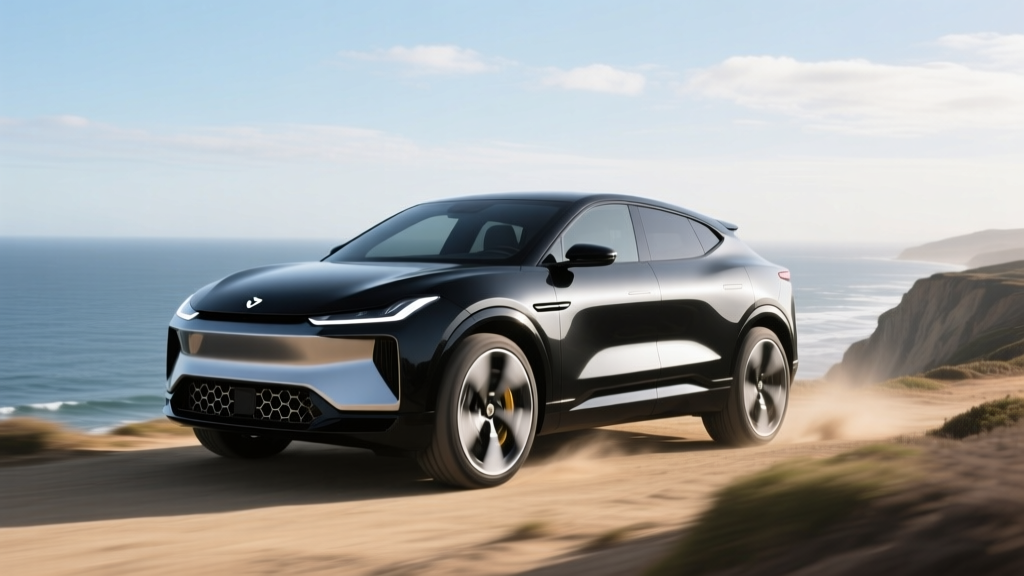
The Fisker Ocean was designed and developed by Fisker Inc., an American electric vehicle startup founded in 2016 by automotive designer Henrik Fisker. The company is headquartered in Manhattan Beach, California, and was publicly traded on the NYSE under the ticker FSR.
However, if you're asking "who makes Fisker Ocean" because you're considering buying one, you need to know that Fisker Inc. filed for Chapter 11 bankruptcy in June 2024 and ceased all vehicle production. The company manufactured approximately 12,000 Fisker Ocean SUVs before halting operations, and most of those vehicles remain unsold or have been liquidated at steep discounts.
This review examines the Fisker Ocean's specifications, real-world performance, and ownership considerations for anyone evaluating a used or liquidation-stock Ocean in 2026.
Fisker Ocean Specifications & Performance
| Specification | Fisker Ocean Sport (FWD) | Fisker Ocean Ultra/Extreme (AWD) |
|---|---|---|
| EPA Range | 250 miles | 360 miles (Extreme) |
| Battery Capacity | 80 kWh (LFP) | 113 kWh (NMC) |
| Battery Chemistry | Lithium Iron Phosphate | Nickel Manganese Cobalt |
| Drivetrain | Single Motor FWD | Dual Motor AWD |
| Horsepower | 275 HP | 564 HP (Hyper Mode) |
| 0-60 mph | 6.9 seconds | 3.7 seconds |
| Max DC Fast Charge | 150 kW | 250 kW |
| 10-80% Charge Time | ~35 minutes | ~30 minutes |
| Level 2 Home Charging | 11 kW (37 mi/hr) | 11 kW (37 mi/hr) |
| MPGe Combined | 97 MPGe | 88 MPGe |
| Efficiency | 35 kWh/100mi | 38 kWh/100mi |
| Cargo Volume | 27.5 cu ft (rear seats up) / 56.5 cu ft (rear seats down) | |
| Base MSRP (2024) | $37,499 | $68,999 (Extreme) |
Real-World Range vs. EPA Estimates
Real-World Expectation: 280-310 miles highway; 240-270 miles in cold weather (below 40°F)
The Fisker Ocean Extreme's 360-mile EPA rating was among the highest of any production EV when it launched. However, real-world testing revealed the expected gap between laboratory estimates and actual driving conditions.
At sustained highway speeds of 70-75 mph, expect approximately 280-310 miles of range. The Ocean's boxy SUV profile creates more aerodynamic drag than sleeker competitors like the Tesla Model Y or Hyundai Ioniq 5, reducing efficiency at speed.
Cold weather impacts are significant. In temperatures below 40°F, the 113 kWh NMC battery loses 15-25% of its usable capacity due to increased internal resistance and cabin heating demands. The Ocean lacks a heat pump (standard on most 2024+ EVs), relying instead on resistive heating that draws heavily from the traction battery.
The smaller Sport trim with its 80 kWh LFP battery delivers closer to its 250-mile EPA estimate in mixed driving, though highway and cold-weather penalties still apply.
Charging Speed & Infrastructure
The Fisker Ocean's charging performance depends heavily on trim level:
| Charging Method | Sport (80 kWh LFP) | Ultra/Extreme (113 kWh NMC) |
|---|---|---|
| DC Fast Charging (Peak) | 150 kW | 250 kW |
| 10-80% Time | ~35 minutes | ~30 minutes |
| Level 2 Home (240V) | 11 kW (37 mi/hr) | 11 kW (37 mi/hr) |
| Level 1 (120V) | ~1.4 kW (4 mi/hr) | ~1.4 kW (4 mi/hr) |
| Connector | CCS1 (no NACS adapter available) | |
The Ocean's 250 kW peak charge rate on Ultra/Extreme trims is competitive, but sustained charging is another matter. Like most EVs, the Ocean's charge curve tapers significantly above 80% state of charge. A 10-80% session takes roughly 30 minutes at a 350 kW-capable Electrify America or EVgo station, but charging from 80-100% can add another 25-30 minutes.
The Ocean uses the CCS1 connector, not Tesla's NACS. As of 2026, no official Fisker NACS adapter exists, and third-party adapters for CCS-to-NACS are limited. This restricts Ocean owners from accessing Tesla Supercharger networks without cumbersome workarounds.
Home Level 2 charging at 11 kW adds approximately 37 miles of range per hour, fully replenishing the 113 kWh battery in about 10-11 hours. A 240V/48A home charger installation typically costs $800-$2,000 depending on electrical panel capacity and local permit fees.
Federal Tax Credit Eligibility (IRS §30D)
When Fisker Inc. was operational, the Ocean's tax credit status was complicated and ultimately unfavorable for most buyers:
- MSRP Cap: The Ocean Sport ($37,499) fell under the $80,000 SUV cap. Ultra ($52,999) and Extreme ($68,999) trims also qualified on MSRP alone.
- Income Limits: Buyers must have modified adjusted gross income (MAGI) below $300,000 (joint), $225,000 (head of household), or $150,000 (single) to qualify.
- Battery Sourcing Requirements: This was the Ocean's downfall. The 113 kWh NMC battery (supplied by CATL) did not meet the critical minerals and battery component sourcing requirements under the Inflation Reduction Act. As a result, the Ocean did not qualify for the full $7,500 federal tax credit in most configurations.
- Point-of-Sale Transfer: Had the Ocean qualified, buyers could have transferred the credit to the dealer for an immediate price reduction. However, Fisker's direct-to-consumer model complicated this process.
For 2026 buyers purchasing a used or liquidation-stock Fisker Ocean, the used EV tax credit (IRC §25E) may apply: up to $4,000 or 30% of the sale price (whichever is lower) for vehicles under $25,000, subject to income caps and battery sourcing verification. Consult IRS.gov or a tax professional for current eligibility.
Interior, Technology & Standout Features
The Fisker Ocean's interior blends minimalist design with some genuinely innovative features:
- California Mode: One-touch button lowers all windows simultaneously for open-air driving
- Solar Roof (Extreme trim): Integrated photovoltaic panel adds ~1,500 miles of range per year in optimal conditions
- 17.1-inch Rotating Touchscreen: Landscape mode for driving, portrait mode for media
- Digital Rearview Mirror: Camera-based system with optional traditional mirror toggle
- Recycled Materials: Vegan leather, recycled plastics, and sustainable textiles throughout
However, the Ocean's tech execution drew criticism. The infotainment system suffered from sluggish response times and limited third-party app integration. Over-the-air updates were promised but inconsistently delivered before Fisker's bankruptcy.
Driver assistance features include adaptive cruise control, lane-keeping assist, and automatic emergency braking — all SAE Level 2 systems requiring constant driver supervision. The Ocean does not offer hands-free driving like GM's Super Cruise or Ford's BlueCruise.
Warranty & Long-Term Ownership Concerns
Fisker Inc. originally offered:
- Battery Warranty: 8 years / 100,000 miles (70% capacity retention threshold)
- Powertrain Warranty: 6 years / 60,000 miles
- Bumper-to-Bumper: 4 years / 50,000 miles
With Fisker in bankruptcy, warranty claims are uncertain. Third-party warranty administrators may honor remaining coverage, but parts availability and authorized service centers are extremely limited. As of 2026, only a handful of independent shops have access to Fisker diagnostic tools and replacement components.
The 113 kWh NMC battery's long-term degradation remains unproven due to the Ocean's short production run. Industry averages suggest 10-15% capacity loss over 8 years for NMC chemistry, but real-world Fisker data is unavailable.
Should You Buy a Fisker Ocean in 2026?
- You find a liquidation-stock Ocean at 40-60% below original MSRP
- You prioritize unique design and sustainability features over mainstream support
- You have access to reliable independent EV service in your area
- You accept the risk of limited parts availability and uncertain warranty coverage
- You need a reliable daily driver with robust service infrastructure
- You want access to Tesla Supercharger networks (NACS connector)
- You prioritize proven long-term battery performance data
- You're uncomfortable with orphan-vehicle ownership risks
For most buyers, established competitors like the Tesla Model Y, Hyundai Ioniq 5, or Ford Mustang Mach-E offer better real-world support, charging infrastructure, and resale value predictability.
Pros & Cons
Pros
- Class-leading 360-mile EPA range (Extreme)
- Unique solar roof and California Mode features
- Sustainable materials and vegan interior
- Competitive 0-60 times (3.7s AWD)
- Steep liquidation discounts available
Cons
- Fisker Inc. bankrupt — no manufacturer support
- CCS1 connector only — no Supercharger access
- Limited service centers and parts availability
- Did not qualify for full $7,500 tax credit when new
- Unproven long-term reliability and battery degradation
- Sluggish infotainment system
Frequently Asked Questions
Who owns Fisker now?
Fisker Inc. filed for Chapter 11 bankruptcy in June 2024. The company's assets, including intellectual property and remaining inventory, were liquidated. There is no current parent company manufacturing or supporting Fisker vehicles.
Can I still buy a new Fisker Ocean?
No. Fisker ceased production in 2024. Some liquidation-stock vehicles may be available through third-party dealers or auctions, but these are sold as-is with no manufacturer warranty.
Does the Fisker Ocean qualify for the federal EV tax credit?
When new, the Ocean did not qualify for the full $7,500 credit due to battery sourcing requirements. Used Oceans may qualify for the $4,000 used-EV credit under IRC §25E if sold under $25,000 and meeting income limits.
How much does it cost to charge a Fisker Ocean?
At the national average of $0.16/kWh, fully charging the 113 kWh battery costs approximately $18. DC fast charging at $0.35/kWh costs roughly $35-40 for a 10-80% session.
Is the Fisker Ocean reliable?
Long-term reliability data is unavailable due to Fisker's short production run and bankruptcy. Early owner reports cited software glitches and build-quality inconsistencies.
Where can I get a Fisker Ocean serviced?
Authorized Fisker service centers no longer exist. A small number of independent EV shops may offer basic maintenance, but proprietary diagnostics and replacement parts are extremely limited.