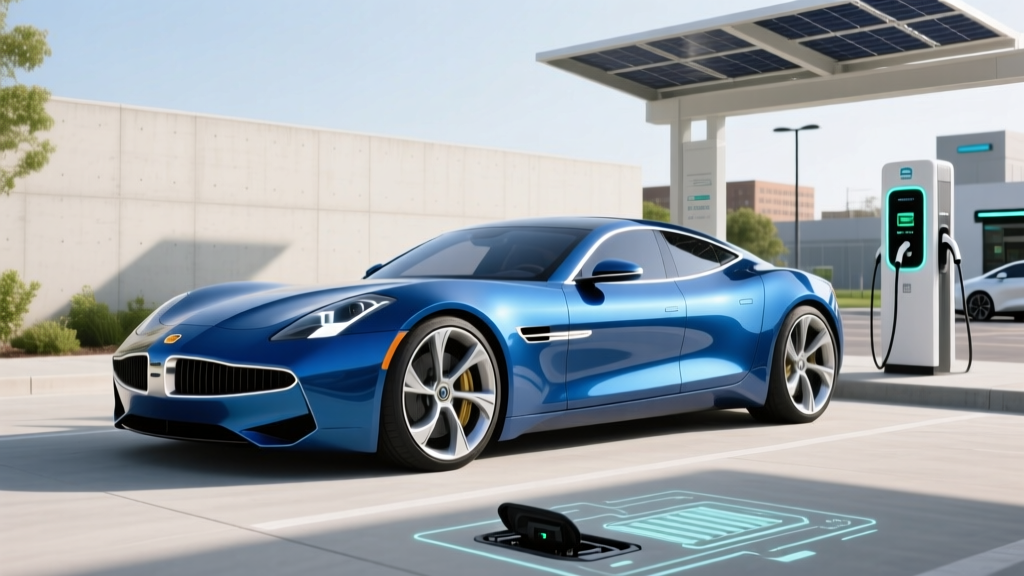
If you've ever typed who makes Fisker Karma into a search bar, you're not alone. The answer is tangled — involving bankruptcy, a Chinese auto-parts giant, a name change, and a luxury plug-in hybrid that was ahead of its time but plagued by early quality issues. As of 2026, the short answer is: Karma Automotive LLC, a subsidiary of China's Wanxiang Group, owns the Karma platform. Henrik Fisker himself hasn't been involved since 2014, and his subsequent venture (Fisker Inc., maker of the Ocean SUV) filed for Chapter 11 bankruptcy in mid-2024.
This article untangles the corporate history, walks through what the Karma Revero GT (the last widely sold variant) actually delivers in range, charging, and performance, and explains whether a used Karma makes any sense as a daily driver today.
From Henrik Fisker to Wanxiang: Who Actually Builds It
The original Fisker Karma was designed by Danish automotive designer Henrik Fisker and produced by Fisker Automotive from 2011 to 2012. Roughly 2,450 units were built before the company burned through its capital, recalled cars for battery-pack safety concerns, and ultimately filed for bankruptcy in November 2013.
In 2014, Wanxiang Group — a massive Hangzhou-based auto-parts supplier — purchased Fisker Automotive's assets at auction for approximately $149.2 million. Wanxiang rebranded the company as Karma Automotive and relocated operations to Moreno Valley, then later Irvine, California. The Karma Revero (2017–2019) and updated Revero GT (2020–2021) followed, built at a new facility in Riverside County using a revised powertrain.
By 2023, Karma Automotive had effectively ceased retail production. The company pivoted toward a business-to-business model, offering its skateboard platform and design services to other automakers. As of 2026, no new Karma vehicles are available for retail purchase. Any Karma you encounter is a used-market proposition.
Karma Revero GT Specs: What the Last Retail Model Delivered
Because no current-production Karma exists, the most relevant reference point is the 2020–2021 Karma Revero GT — the final iteration sold to consumers. Here's what that car actually put on the road.
| Attribute | Value |
|---|---|
| EPA Electric Range | 61 miles (EV mode) |
| Total Range (EV + Gas) | ~360 miles combined |
| Battery Capacity | 28 kWh usable (NMC lithium-ion) |
| Powertrain | Series PHEV — 1.5L BMW 3-cyl range extender + dual rear electric motors |
| Total System Output | 536 hp / 550 lb-ft torque |
| 0–60 mph | 4.5 seconds |
| Drivetrain | Rear-wheel drive (dual-motor rear axle) |
| MPGe (EV mode) | 70 MPGe combined |
| Gas Mode Fuel Economy | ~22 MPG combined |
| Max DC Fast Charge | ~40 kW (CCS) |
| 10–80% DC Charge | ~30 minutes |
| Level 2 Home Charging | 7.2 kW (~22 miles of EV range per hour) |
| Cargo Volume | 6.9 cu ft (trunk) |
| Curb Weight | 5,400 lbs |
| Original Base MSRP | $139,000 |
Real-World Range: The 61-Mile EV Sticker vs. Reality
EPA-rated EV-only range: 61 miles. In real-world mixed driving (highway at 70 mph, moderate climate), expect approximately 48–55 miles before the BMW range-extender engine fires up. In cold weather (below 35°F), that figure drops to roughly 38–45 miles due to cabin heating demand and reduced NMC cell efficiency. Once the gasoline engine engages, total range extends to approximately 360 miles.
The Revero GT operates as a series hybrid — the gasoline engine never directly drives the wheels. It functions solely as a generator to charge the battery or supply electricity to the motors. This means driving feel remains purely electric, but highway fuel economy once the battery depletes is unremarkable for a car this heavy: roughly 22 MPG. For comparison, a Toyota Prius Prime delivers similar electric range at a fraction of the weight and cost.
Charging Speed: Adequate for PHEV, Slow by BEV Standards
| Level | Power | Charge Time (10–80%) | Miles Added per Hour |
|---|---|---|---|
| Level 1 (120V) | 1.4 kW | ~14 hours | ~4 mi/hr |
| Level 2 (240V) | 7.2 kW | ~2.5 hours | ~22 mi/hr |
| DC Fast Charge | ~40 kW peak | ~30 minutes | ~80 mi/hr (EV equivalent) |
For a 28 kWh battery, 40 kW DC fast charging is reasonable — that's roughly a 1.4C charge rate. The taper above 80% is moderate. Most owners will charge overnight on Level 2 and rarely use DC fast charging, since 61 miles of EV range covers most daily commutes. The CCS connector on the Revero GT is compatible with Electrify America, EVgo, and most public networks — an advantage over older CHAdeMO-only vehicles.
Tax Credits, Pricing, and the Used-Market Reality
When new, the Karma Revero GT qualified for a reduced federal tax credit (the original Fisker Karma's §30D allocation of 75,000 units per manufacturer was largely exhausted, and the reorganized Karma Automotive inherited complicated eligibility). As of 2026, no Karma model qualifies for the federal §30D new-EV tax credit because the vehicle is no longer in production.
For used-car buyers, the Used Clean Vehicle Credit (§25E) offers up to $4,000 or 30% of the sale price (whichever is lower) on qualifying pre-owned EVs and PHEVs. To qualify, the car must be purchased from a dealer for $25,000 or less, the buyer must meet income caps ($75,000 single / $150,000 joint), and the vehicle must have a battery of at least 7 kWh. The Revero GT's 28 kWh battery clears that bar, but the $25,000 price cap is the real hurdle — most used Revero GTs list between $45,000 and $75,000 depending on mileage and condition.
| Item | Value |
|---|---|
| Original MSRP (2020) | $139,000 |
| Typical Used Price (2026) | $45,000–$75,000 |
| Federal New-EV Credit | Not eligible (discontinued) |
| Federal Used-EV Credit (§25E) | Unlikely — price cap is $25,000 |
| State Incentives | Varies by jurisdiction — check local DMV/air-district programs |
For the latest rules, consult the IRS Clean Vehicle Credits page and verify with a tax professional before purchasing.
Ownership Practicalities: Warranty, Parts, and Service
This is where the Karma ownership story gets complicated. When Karma Automotive was actively selling cars, the warranty covered:
- Battery: 6 years / 60,000 miles (below the industry-standard 8/100,000)
- Powertrain: 4 years / 50,000 miles
- Bumper-to-bumper: 4 years / 50,000 miles
With Karma Automotive no longer producing vehicles and its corporate status uncertain, warranty claims are effectively unsupported. Parts availability is limited to third-party salvage, independent specialists, and the BMW-sourced 1.5L range-extender engine (which BMW service centers can address). The electric drivetrain, bespoke body panels, and interior components are far harder to source.
Insurance premiums reflect this risk. Expect quotes 30–50% above comparable luxury sedans due to parts scarcity and low production volume.
Who Should (and Shouldn't) Consider a Used Karma
- Stunning design — genuine head-turner
- 536 hp from a series-hybrid PHEV is genuinely quick
- 61 miles EV range covers most commutes gas-free
- Exclusivity — fewer than 3,000 total Karmas exist
- BMW-sourced engine means some serviceability
- Company is defunct — no warranty support
- Parts scarcity for body, interior, EV drivetrain
- Only 6.9 cu ft trunk — impractical for families
- 22 MPG on gas is poor for a PHEV
- Insurance costs are elevated
- Resale value is unpredictable
- No federal tax credit at current used prices
This car suits: Collectors, design enthusiasts, and owners who want a rare grand-touring PHEV for weekend drives and short commutes — and who have a trusted independent shop familiar with hybrid systems.
This car does not suit: Daily commuters who need cargo space, families, anyone who prioritizes warranty coverage, or buyers who want predictable ownership costs. For similar money, a used Porsche Taycan, Tesla Model S, or even a BMW i5 delivers far more practicality and support infrastructure.
Frequently Asked Questions
Does Henrik Fisker still make the Karma?
No. Henrik Fisker left the company in 2013 before its bankruptcy. He later founded Fisker Inc., which produced the Fisker Ocean SUV starting in 2023 but filed for Chapter 11 bankruptcy in June 2024. The Karma nameplate and platform are owned by Wanxiang Group's Karma Automotive, which is a completely separate entity.
Is the Fisker Karma a full electric car?
No. The Karma is a series plug-in hybrid (PHEV). It drives on electric motors only, but carries a 1.5L BMW gasoline engine that acts as a generator to extend range once the 28 kWh battery depletes. Total range is approximately 360 miles.
Can I still buy a new Karma Revero?
No. Karma Automotive ceased retail vehicle production around 2023. Only used examples are available, typically priced between $45,000 and $75,000.
What's the real-world electric range?
EPA-rated at 61 miles. Expect 48–55 miles in temperate mixed driving, and 38–45 miles in cold weather (below 35°F) due to heating demand and reduced NMC cell efficiency.
Is Karma Automotive the same as Fisker Inc.?
They are entirely separate companies. Karma Automotive (Wanxiang-owned) holds the Karma platform. Fisker Inc. (Henrik Fisker's later venture) produced the Ocean SUV and is now bankrupt. Neither company currently manufactures vehicles.