Who Makes Fisker? Untangling a Name With a Complicated History
If you've searched "who makes Fisker" and ended up more confused than when you started, you're not alone. The Fisker name has been attached to multiple automotive ventures over the past 15 years, and the answer depends entirely on which era and which vehicle you're asking about. As of 2026, understanding this brand requires separating three distinct chapters — each with different manufacturers, different outcomes, and very different implications for anyone considering a Fisker-badged vehicle.
This guide breaks down exactly who built what, the engineering behind the most significant Fisker models, and what the brand's turbulent history means for buyers and owners today.
The Three Fisker Entities: A Quick Timeline
The Fisker name traces back to Henrik Fisker, a Danish automotive designer known for penning the Aston Martin DB9 and BMW Z8. His entrepreneurial ventures have produced three distinct companies:
- Fisker Automotive (2007–2013): The original company, which produced the Fisker Karma plug-in hybrid. Manufacturing was handled by Valmet Automotive in Finland. The company filed for bankruptcy in 2013 after battery supplier A123 Systems collapsed and Hurricane Sandy destroyed over 300 vehicles at a New Jersey port.
- Karma Automotive (2014–present): Chinese auto parts giant Wanxiang Group purchased Fisker Automotive's assets at auction and rebranded as Karma Automotive. The Karma Revero, produced in Moreno Valley, California, is the spiritual successor to the original Karma. Henrik Fisker had no involvement with this company after the sale.
- Fisker Inc. (2016–2024): Henrik Fisker's second attempt — a new company that designed the Fisker Ocean all-electric SUV. Magna Steyr in Graz, Austria, handled contract manufacturing. Fisker Inc. filed for bankruptcy in June 2024, ceasing all operations and leaving roughly 11,200 Ocean owners without direct manufacturer support.
When someone asks "who makes Fisker" today, the honest answer is: nobody is currently manufacturing new Fisker-badged vehicles. The Fisker Ocean — the most relevant model for modern EV shoppers — is out of production, and remaining inventory was liquidated at steep discounts through late 2024 and early 2025.
Fisker Ocean: Full Specs, Range, and What Owners Actually Experience
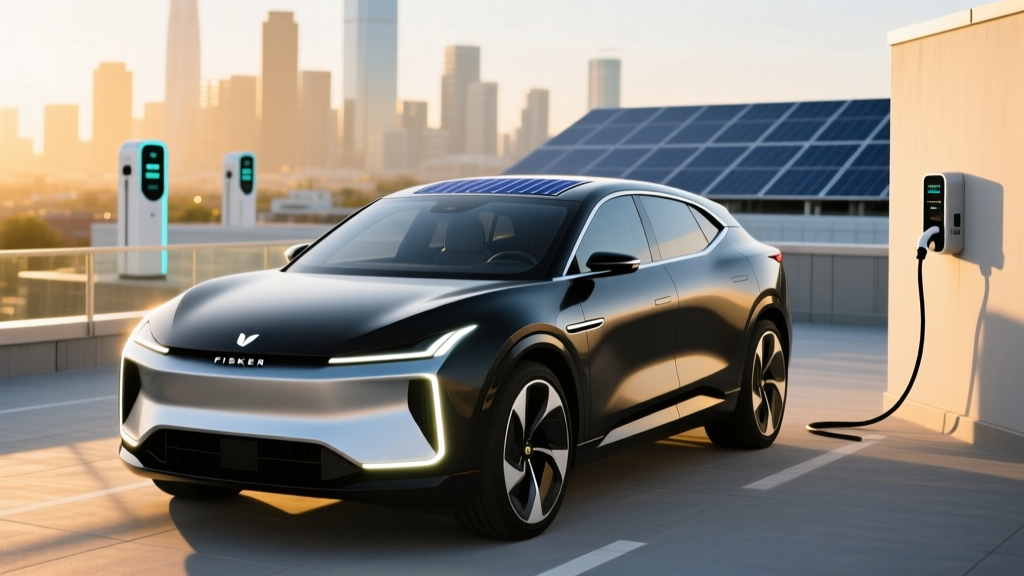
The Fisker Ocean was the most significant vehicle to wear the Fisker badge in the EV era. Designed in California and built by Magna Steyr — the same Austrian contract manufacturer that produces the Mercedes G-Class and BMW Z4 — the Ocean was positioned as a premium midsize electric SUV competing with the Tesla Model Y, Ford Mustang Mach-E, and Hyundai Ioniq 5.
| Specification | Ocean Sport (FWD) | Ocean Ultra / Extreme (AWD) |
|---|---|---|
| EPA Range | 250 miles | 360 miles (Ultra) / 355 miles (Extreme) |
| Battery Capacity | ~74 kWh usable (LFP) | ~113 kWh usable (NMC) |
| Horsepower | 275 hp | 564 hp |
| 0-60 mph | 6.9 seconds | 3.7 seconds |
| Drivetrain | Single-motor FWD | Dual-motor AWD |
| Max DC Fast Charge | ~170 kW (peak) | ~250 kW (peak) |
| 10-80% DC Charge Time | ~35 minutes | ~29 minutes |
| Level 2 Home Charging | 11 kW (~33 mi/hr) | 11 kW (~33 mi/hr) |
| EPA Efficiency | ~98 MPGe | ~100 MPGe (Ultra) |
| Cargo Volume | 31.1 cu ft (rear seats up) / 56.2 cu ft (folded) | 31.1 cu ft / 56.2 cu ft |
| Original Base MSRP | $37,499 | $52,999 (Ultra) / $68,999 (Extreme) |
Battery Chemistry: LFP vs NMC in the Ocean Lineup
Fisker made an unusual decision to split battery chemistry across trims. The base Ocean Sport used a CATL-sourced lithium iron phosphate (LFP) pack — heavier and less energy-dense but more durable over thousands of cycles and less reliant on cobalt. The Ultra and Extreme trims used an NMC (nickel manganese cobalt) pack from CATL, offering the energy density needed for the 360-mile range target but with faster long-term degradation and higher replacement cost.
For used buyers today, this matters: LFP batteries in the Sport trim typically degrade slower and tolerate frequent 100% charging better than NMC. If daily driving is under 150 miles and you prioritize battery longevity over range, the Sport's LFP chemistry is actually the more durable choice.
Charging: Where the Ocean Falls Short of Modern Rivals
The Fisker Ocean uses a CCS1 connector for DC fast charging and a J1772 inlet for Level 2. It does not have a native NACS (Tesla) port, meaning Supercharger access requires a CCS-to-NACS adapter — and only at Superchargers that have been opened to non-Tesla vehicles via the "Open to Non-Tesla EVs" program.
For home Level 2 charging, the Ocean's 11 kW onboard charger is competitive. On a 48-amp Level 2 circuit (the most common home installation), you'll recover roughly 33 miles of range per hour — enough for a full overnight charge on any trim.
What Does a Fisker Ocean Cost Now? Tax Credits and Used Market Reality
Because Fisker Inc. is bankrupt and the Ocean is out of production, new-vehicle purchases are no longer possible through traditional channels. Remaining dealer and liquidation inventory has largely been sold. The relevant market for buyers in 2026 is the used and certified-pre-owned segment.
Used Ocean pricing has dropped significantly from original MSRP. As of early 2026:
- Ocean Sport (used, 10k-30k miles): $16,000 – $22,000
- Ocean Ultra (used, 10k-30k miles): $24,000 – $32,000
- Ocean Extreme (used, 10k-30k miles): $30,000 – $40,000
Federal Tax Credit Eligibility for Used Fisker Oceans
A used Fisker Ocean may qualify for the federal used EV tax credit under IRS §25E (up to $4,000 or 30% of sale price, whichever is less), subject to these requirements:
- Sale price must be $25,000 or less (this disqualifies most used Ultra and Extreme trims)
- Buyer AGI must not exceed $75,000 (single), $112,500 (head of household), or $150,000 (joint)
- Vehicle must be at least two model years old (2023 and 2024 models qualify in 2026)
- Must be purchased from a licensed dealer (private-party sales do not qualify)
- Credit is non-refundable — you must have sufficient tax liability to claim it
In practice, the Ocean Sport is the only trim likely to fall under the $25,000 cap, potentially bringing the effective price to around $12,000–$18,000 after credit. Always verify eligibility with a tax professional and check the latest IRS guidance before purchasing, as rules and eligible vehicle lists update regularly.
Ownership After Bankruptcy: Support, Parts, and Warranty Reality
This is the single most important consideration for anyone researching who makes Fisker and whether to buy one. When Fisker Inc. filed Chapter 11 bankruptcy in June 2024, the company ceased operations. Here's what that means in practice:
- Warranty: The original 6-year/60,000-mile bumper-to-bumper and 10-year/100,000-mile battery warranty are effectively void. There is no entity honoring these claims. Some states' motor vehicle guarantee funds may offer limited recourse, but outcomes vary.
- Software Updates: Over-the-air updates have ceased. The vehicle's software is frozen at its last pushed version. Features that were "coming soon" at launch — including the digital rearview mirror enhancement and certain ADAS refinements — were never delivered.
- Parts Supply: Because Magna Steyr built the Ocean on a dedicated platform, body panels, trim pieces, and proprietary components are scarce. Independent collision repair and replacement parts availability is a genuine concern.
- Service Network: Fisker partnered with third-party service providers rather than operating dealerships. Some of these partners continue to service Oceans, but coverage is spotty and dependent on parts availability.
- Insurance: Several major insurers have increased premiums or limited coverage options for Fisker Oceans due to parts scarcity and uncertain repair costs.
Standout Tech and Notable Drawbacks
What the Ocean Does Well
- Solar Roof (Extreme trim): The full-length solar roof can add up to 1,500 miles of range per year in optimal sun conditions — roughly 5-6 miles per day. It won't replace plugging in, but it meaningfully offsets phantom drain and climate preconditioning.
- California Mode: All four windows and the rear hatch glass drop simultaneously for an open-air experience rivaling a convertible SUV.
- Interior Space: With 31.1 cu ft behind the rear seats and 41.5 inches of rear legroom, the Ocean matches or exceeds the Model Y and Ioniq 5 for passenger comfort.
- Sustainability Materials: Recycled and vegan interior materials throughout, with a fully animal-free cabin.
Where It Falls Short
- Infotainment: The 17.1-inch rotating center screen is visually impressive but plagued by sluggish response times and software bugs that were never patched post-bankruptcy.
- Driver Assistance: Fisker's "Intelligent Pilot" ADAS is a basic Level 2 system — far behind Tesla Autopilot, GM Super Cruise, or Ford BlueCruise in capability and refinement. It requires constant steering input and struggles with lane centering on curves.
- Regenerative Braking: Only two regen levels (low and high) with no true one-pedal driving mode — a surprising omission for a 2023-era EV.
- Build Consistency: Early-production Oceans (2023) had documented panel gap issues, rattles, and trim adhesion problems. Later 2024 builds improved but weren't immune.
Who Should (and Shouldn't) Consider a Fisker Ocean in 2026?
Choose the Fisker Ocean if:
- You want a long-range AWD electric SUV at a steep discount to equivalent Model Y or Ioniq 5 pricing
- You have access to reliable CCS DC fast charging on your regular routes
- You're comfortable with orphan-brand risk and have an independent EV mechanic nearby
- You primarily drive in moderate climates where the 360-mile EPA range holds up
- You value distinctive design and sustainability credentials over brand cachet
Skip the Fisker Ocean if:
- You need guaranteed warranty coverage and manufacturer support
- You live in a region with harsh winters where range loss compounds the risk
- You rely on Tesla Superchargers for road trips (adapter compatibility is inconsistent)
- You want the latest ADAS features or over-the-air software improvements
- You plan to keep the vehicle 5+ years and are concerned about long-term parts availability
Frequently Asked Questions
Does Henrik Fisker still make cars?
No. As of 2026, Henrik Fisker is not actively producing vehicles. Fisker Inc., his most recent venture, filed for bankruptcy in June 2024. He has not announced a new automotive venture since.
Is Karma Automotive the same company as Fisker?
No. Karma Automotive is owned by Wanxiang Group, a Chinese auto parts conglomerate that purchased the original Fisker Automotive's assets in 2014. Henrik Fisker has no connection to Karma Automotive, which produces the Karma Revero extended-range electric sedan.
Can I still get a Fisker Ocean serviced?
Some independent EV shops and former Fisker-authorized service partners continue to work on Oceans, but parts availability — especially for body panels and proprietary electronics — is limited and worsening. Before purchasing, identify a service provider in your area willing to work on the vehicle.
What's the real-world range of the Fisker Ocean Ultra?
The EPA rates the Ocean Ultra at 360 miles. In real-world highway driving at 70 mph in moderate temperatures, expect approximately 280-310 miles. In cold weather (below 30°F), that drops to roughly 210-250 miles. City and mixed driving yields results closer to the EPA sticker.
Does the Fisker Ocean qualify for any tax credits?
New-vehicle credits (§30D) are no longer available since the vehicle is out of production. A used Ocean Sport purchased from a dealer for $25,000 or less may qualify for the §25E used EV credit (up to $4,000), subject to buyer income limits. Higher trims typically exceed the $25,000 sale price cap. Consult a tax professional and check current IRS guidance.
Is the Fisker Ocean worth buying compared to a used Tesla Model Y?
On price alone, the Ocean Ultra offers more range (360 vs. ~310 miles for a Long Range Model Y) at a comparable or lower used price. However, the Model Y has active manufacturer support, Supercharger access, ongoing software updates, and far better parts availability. The Ocean is a value play for risk-tolerant buyers; the Model Y is the safer ownership proposition.