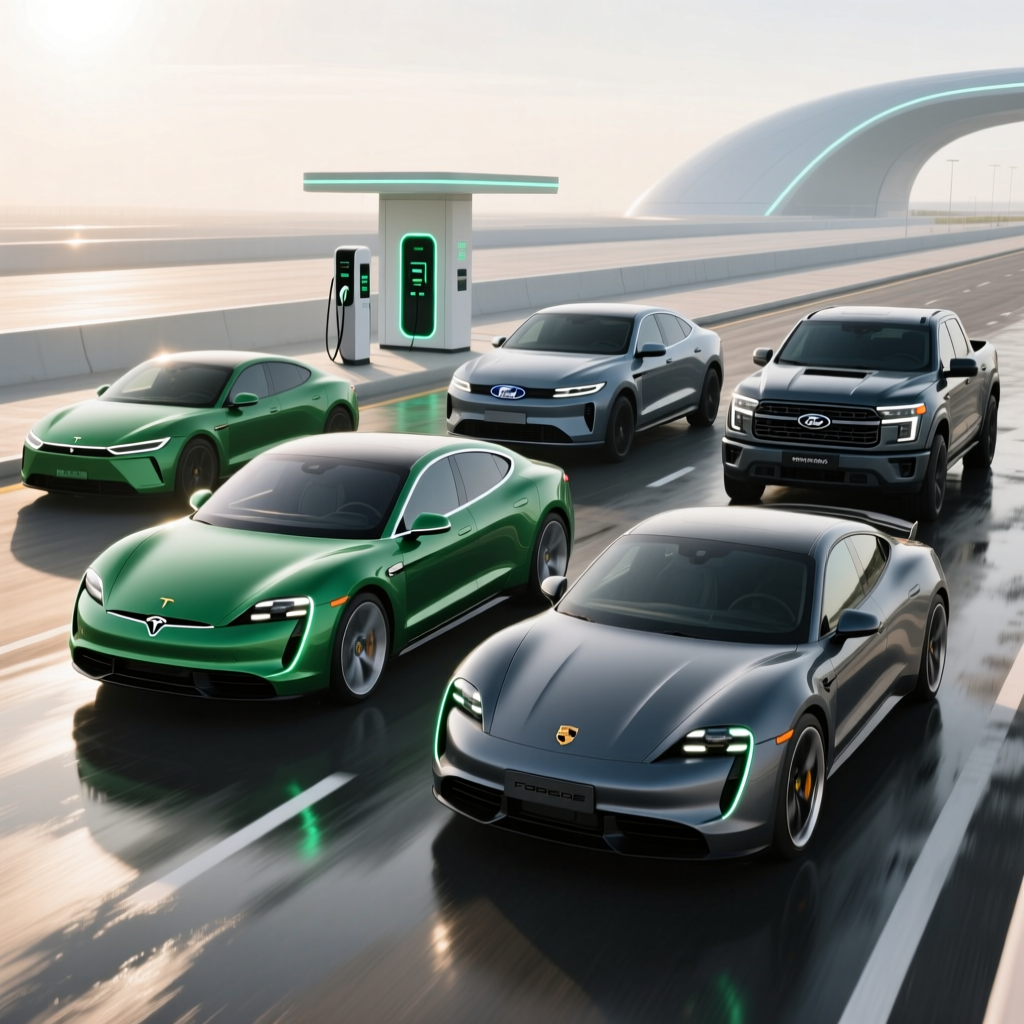
Determining who has the best electric vehicle is no longer a simple question with a single answer. The EV landscape has evolved from a niche market dominated by one pioneer into a fiercely competitive global arena. Today, the title of 'best' depends entirely on what you value most: unmatched charging infrastructure, blistering charging speeds, luxurious driving dynamics, or rugged utility. Automakers like Tesla, Hyundai Motor Group, Ford, and Porsche have each carved out distinct territories, pushing the boundaries of battery chemistry, software integration, and vehicle architecture.
In this comprehensive review, we break down the top EV manufacturers across the most critical metrics. By analyzing official EPA ratings, independent track testing, and long-term ownership data, we will help you decide which brand truly builds the best electric vehicle for your specific lifestyle. If you are also exploring specific body styles, be sure to check out our guides on the best EV SUVs and the longest-range EVs currently on the market.
Real-World Range & Efficiency
Range anxiety remains a primary concern for EV buyers, but the industry's top contenders have largely mitigated this through advanced battery management systems and aerodynamic engineering. Tesla continues to set the benchmark for efficiency. The Tesla Model 3 Long Range consistently achieves some of the highest miles-per-kWh ratings in the industry, translating to exceptional real-world highway range that closely mirrors its EPA estimates. Tesla's proprietary heat pump and silicon carbide inverters minimize energy loss, making them incredibly efficient in both freezing winters and scorching summers.
However, Hyundai and Kia have emerged as formidable rivals in the efficiency department. Built on the Electric-Global Modular Platform (E-GMP), vehicles like the Hyundai Ioniq 6 utilize sleek, teardrop aerodynamics to achieve outstanding range figures. The Ioniq 6's streamlined design allows it to slice through the air, rivaling Tesla's efficiency on long road trips. Meanwhile, luxury brands like Porsche prioritize performance over maximum range, though the Taycan's massive battery packs and advanced thermal management still deliver respectable real-world mileage, particularly when utilizing its regenerative braking capabilities, which can recover up to 400 kW of energy during deceleration.
For those prioritizing sheer distance over efficiency, Lucid Motors offers the highest EPA-rated range on the market, though at a premium price point. Ultimately, if you want the best blend of everyday efficiency and accessible pricing, Tesla and Hyundai currently share the crown. For a deeper dive into specific models, read our Tesla vs Hyundai comparison.
Charging Speed & Infrastructure
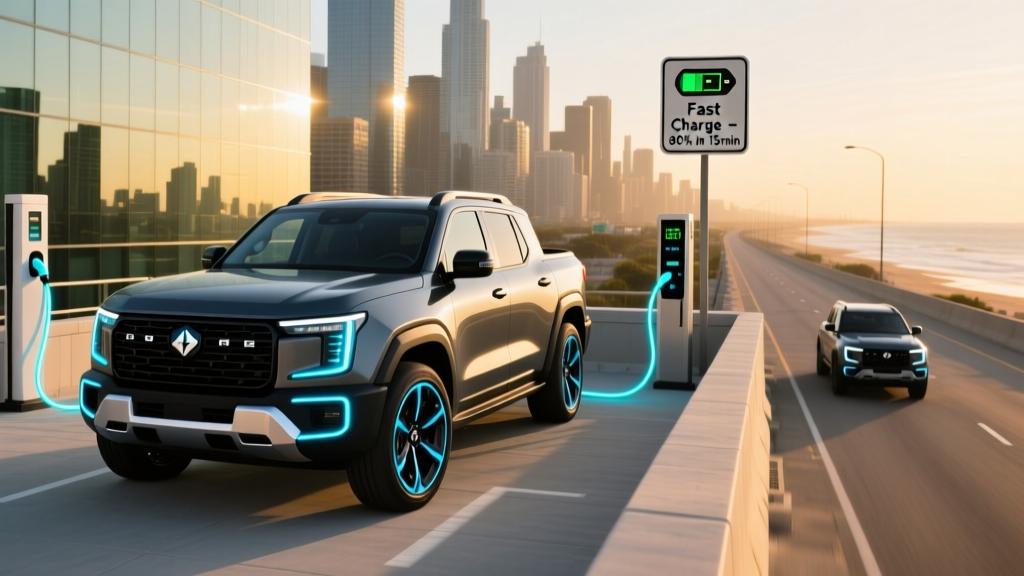
Having a large battery is only half the equation; how quickly you can replenish it dictates the viability of an EV for road trips. In the realm of charging speed, Hyundai Motor Group (Hyundai, Kia, and Genesis) holds a distinct architectural advantage. Their E-GMP platform utilizes an 800-volt electrical architecture, allowing compatible vehicles to charge from 10% to 80% in approximately 18 minutes when connected to a 350 kW DC fast charger. This blistering speed significantly reduces downtime on long journeys and helps preserve long-term battery health by minimizing heat generation during peak charging.
Tesla, while traditionally operating on a 400-volt architecture, compensates with the undisputed king of charging infrastructure: the Supercharger network. Tesla's proprietary network (now widely adopted as the North American Charging Standard, or NACS, by rival automakers) offers unparalleled reliability, seamless plug-and-charge integration, and widespread geographic coverage. While a Tesla might take slightly longer to charge from 10% to 80% compared to an 800V Hyundai on a maximum-speed charger, the ease of finding a working, high-speed Tesla Supercharger makes the overall charging experience superior for many drivers.
Ford and Rivian have also transitioned to the NACS standard, granting their owners access to Tesla's expansive network via adapters, fundamentally shifting the infrastructure landscape. Porsche also utilizes an 800-volt system, delivering incredible charge rates that match or exceed Hyundai, but the availability of non-Tesla 350 kW chargers remains a bottleneck in rural areas. For a complete breakdown of connectors and networks, consult our ultimate EV charging guide.
Interior Quality, Space & Technology
The interior of an electric vehicle is where the divergence in brand philosophy becomes most apparent. Tesla champions extreme minimalism. The cabin is dominated by a single central touchscreen that controls everything from climate settings to glovebox release. While this creates a spacious, airy environment and allows for rapid Over-The-Air (OTA) software updates, it can be frustrating for users who prefer tactile feedback. Tesla's infotainment system, however, remains the gold standard for responsiveness, gaming capabilities, and integrated navigation.
Conversely, Hyundai and Kia blend retro-futuristic aesthetics with practical ergonomics. Models like the Kia EV6 and Hyundai Ioniq 5 feature dual-screen setups, ambient lighting, and crucial physical buttons for climate control and volume. The E-GMP platform's flat floor and extended wheelbases create cavernous interior spaces, often rivaling full-size SUVs despite having mid-size footprints. Furthermore, their Vehicle-to-Load (V2L) technology allows owners to use the car's battery to power external electronics, camping gear, or even home appliances during an outage.
In the luxury segment, Porsche and Mercedes-Benz define premium EV interiors. The Porsche Taycan offers a driver-focused cockpit with multiple screens, including an optional passenger display, wrapped in exquisite leather and sustainable materials. The build quality, sound insulation, and tactile switchgear in a Porsche are a tier above the mainstream market, justifying the premium price tag for buyers seeking a traditional luxury experience combined with electric propulsion.
Driving Dynamics & Performance
Electric motors provide instant torque, meaning even basic EVs feel quick off the line. But true driving dynamics encompass steering feel, suspension tuning, and chassis balance. Porsche is the undisputed leader in this category. The Taycan features a two-speed transmission on the rear axle, allowing for explosive acceleration off the line while maintaining high-speed efficiency. Its low center of gravity, rear-wheel steering, and adaptive air suspension deliver a level of handling and driver engagement that makes it feel like a true sports car, despite its heavy battery pack.
Tesla offers mind-bending straight-line acceleration, particularly in its Plaid models, which can rival hypercars in quarter-mile sprints. However, Tesla's suspension tuning and steering feedback often lean toward comfort and isolation rather than track-focused engagement. The Model 3 Performance has seen significant chassis upgrades to address this, but it still lacks the analog feedback of a Porsche.
Ford has successfully translated its internal combustion heritage into the EV space. The Mustang Mach-E GT offers engaging, sporty handling that lives up to its pony car namesake, while the F-150 Lightning redefines utility. The Lightning's independent rear suspension and low center of gravity make it drive significantly better than its gas-powered counterpart, proving that EVs can excel in the truck and off-road segments. Rivian also deserves mention here, as its R1T and R1S utilize quad-motor setups and advanced air suspensions to deliver unmatched off-road capability and on-road comfort.
Ownership Costs & Reliability
The total cost of ownership (TCO) is a critical factor when determining who makes the best EV. Electric vehicles generally require less routine maintenance than gas cars—there are no oil changes, spark plugs, or transmission fluid flushes. Regenerative braking also drastically extends the life of brake pads. However, insurance premiums and tire wear (due to heavy vehicle weight and instant torque) can offset some of these savings.
Tesla historically benefits from strong brand recognition, though depreciation has fluctuated wildly due to aggressive price cuts on new models. Hyundai and Kia offer incredible value, frequently undercutting competitors on price while offering generous standard features. Their battery warranties are among the best in the business, typically covering 10 years or 100,000 miles, providing immense peace of mind regarding long-term battery degradation.
Reliability data from independent consumer testing organizations shows a mixed bag across the industry. Tesla's powertrains are highly reliable, but the brand occasionally struggles with panel gaps and interior trim consistency. Hyundai and Kia have faced some software-related recalls but generally score well in powertrain reliability. Legacy luxury automakers like Porsche offer exceptional build quality, but out-of-warranty repairs and replacement parts can be exorbitantly expensive. According to IIHS safety evaluations, top contenders across all these brands consistently earn top safety picks, ensuring that structural integrity and crash protection remain paramount.
Pros & Cons of the Top Contenders
To summarize the landscape, here is a quick breakdown of the strengths and weaknesses of the leading EV manufacturers.
Tesla
- Pros: Unmatched Supercharger network, industry-leading software and OTA updates, exceptional drivetrain efficiency, expansive cargo space (frunks).
- Cons: Minimalist interior lacks physical buttons, inconsistent panel gaps, reliance on touchscreen for basic adjustments, high insurance rates.
Hyundai / Kia (E-GMP Platform)
- Pros: Ultra-fast 800V charging, excellent interior ergonomics with physical buttons, V2L capability, outstanding warranty coverage.
- Cons: Infotainment software is slightly less responsive than Tesla, reliance on third-party charging networks (though improving with NACS adoption).
Ford
- Pros: Excellent utility (F-150 Lightning), BlueCruise hands-free driving tech, familiar and practical interior layouts, strong towing capabilities.
- Cons: Software integration can be buggy, efficiency and range lag behind Tesla and Hyundai, heavy battery packs impact payload capacity.
Porsche
- Pros: Best-in-class driving dynamics, exquisite build quality, 800V fast-charging architecture, repeatable performance without thermal throttling.
- Cons: Very high starting price, expensive maintenance and repairs, lower EPA range estimates compared to efficiency-focused rivals.
Head-to-Head Comparison Table
The table below highlights key specifications across the top models from each leading manufacturer, illustrating the diverse approaches to EV engineering.
| Brand | Representative Model | Architecture | Max EPA Range | Peak Charge Rate | Best For |
|---|---|---|---|---|---|
| Tesla | Model 3 Long Range | 400V | ~341 miles | ~250 kW | Road trips & Software |
| Hyundai | Ioniq 6 Limited | 800V | ~361 miles | ~350 kW | Fast charging & Value |
| Ford | F-150 Lightning | 400V | ~320 miles | ~150 kW | Utility & Towing |
| Porsche | Taycan Turbo S | 800V | ~283 miles | ~320 kW | Performance & Luxury |
| Rivian | R1T Dual-Motor | 400V | ~352 miles | ~200 kW | Off-Road & Adventure |
Frequently Asked Questions
Which electric vehicle brand has the best battery longevity?
Tesla and Hyundai/Kia are widely regarded as leaders in battery longevity. Tesla's extensive data collection and advanced thermal management systems have proven to keep battery degradation to a minimum over hundreds of thousands of miles. Hyundai and Kia utilize excellent liquid-cooling systems paired with their 800-volt architecture, which reduces heat stress during fast charging. Both brands back their battery packs with robust warranties, ensuring long-term viability for original owners.
Is Tesla still the best electric vehicle manufacturer overall?
Tesla remains the best choice for buyers who prioritize charging infrastructure, software integration, and raw efficiency. The Supercharger network provides a level of convenience that third-party networks are still struggling to match universally. However, if you value interior ergonomics, ultra-fast 800V charging speeds, or traditional luxury build quality, brands like Hyundai, Kia, and Porsche offer compelling alternatives that may better suit your specific needs.
Who makes the most reliable electric vehicles on the market?
Reliability in the EV sector is heavily tied to software stability and build quality. Tesla's drivetrains are incredibly reliable, though owners occasionally report issues with exterior trim and suspension components. Porsche consistently ranks at the top for build quality and mechanical reliability, albeit at a higher cost of ownership. Hyundai and Kia offer a strong middle ground, providing reliable powertrains backed by industry-leading warranty coverage that protects consumers against unexpected defects.
What is the best electric vehicle brand for a growing family?
For families, interior space, safety, and convenience are paramount. Hyundai and Kia excel here with models like the Kia EV9 and Hyundai Ioniq 5, offering massive interior volume, V2L capabilities for family camping trips, and physical buttons that are easier to use while driving. Tesla's Model Y is also a top contender due to its expansive cargo space, optional third-row seating, and access to the Supercharger network, making family road trips significantly less stressful.
Which EV brand offers the most comprehensive warranty coverage?
Hyundai, Kia, and Genesis offer some of the most comprehensive warranty packages in the automotive industry. Their standard battery warranties typically cover 10 years or 100,000 miles, which is significantly longer than the industry standard of 8 years or 100,000 miles offered by Tesla, Ford, and most legacy automakers. This extensive coverage makes the Hyundai Motor Group an exceptionally safe bet for buyers planning to hold onto their vehicles long-term.