Who Designed the Cybertruck? The Origin Story
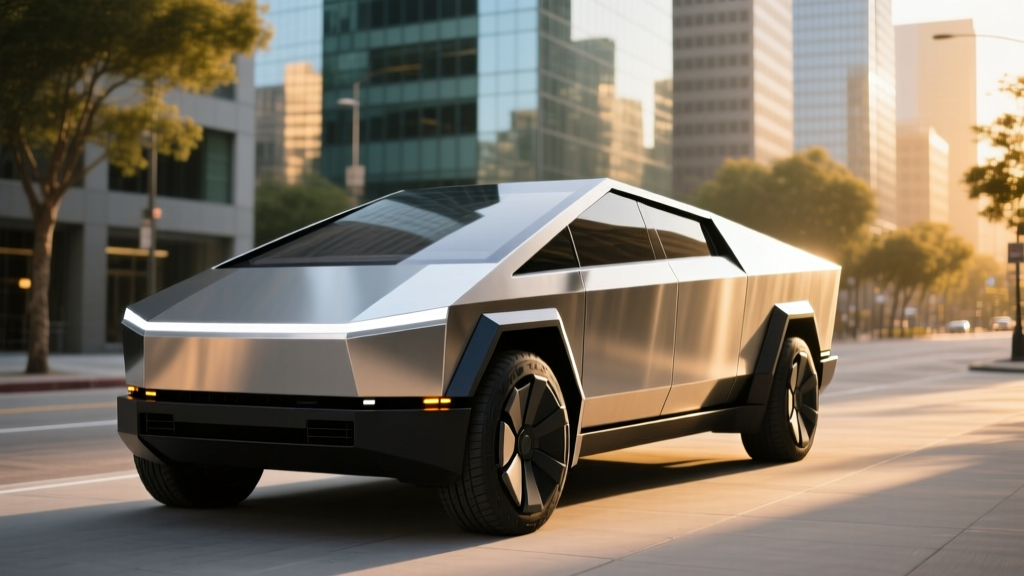
The question of who designed the Cybertruck doesn't have a single answer — it has a constellation of them. The vehicle's radical, angular concept was first unveiled by Tesla CEO Elon Musk in November 2019, but the industrial design was led by Franz von Holzhausen, Tesla's Chief Designer since 2008 and the pen behind the Model S, Model 3, Model X, and Model Y. Von Holzhausen, a former designer at Mazda and Volkswagen, has repeatedly cited 1970s sci-fi — particularly Blade Runner and the Lotus Esprit from The Spy Who Loved Me — as core visual influences on the Cybertruck's brutalist, polygon-heavy exterior.
But the Cybertruck's structural identity goes deeper than surface styling. The truck's exoskeleton architecture — using ultra-hard 30X cold-rolled stainless steel — was an engineering mandate as much as a design one. Tesla's then-lead engineer Wesley Morrill and the structural engineering team had to solve problems no mass-market automaker had attempted: bending stainless steel that was too hard for conventional stamping dies, leading Tesla to develop a proprietary air-bending fabrication process. The result is a vehicle that looks like nothing else on the road, for better or worse.
Production deliveries began in late November 2023, and the 2026 model year reflects Tesla's ongoing refinements — including expanded trim availability, software-driven range improvements, and the long-awaited rear-wheel-drive base variant. Let's break down what the Cybertruck actually delivers on the road, at the charger, and on your budget.
2026 Tesla Cybertruck: Core Specifications at a Glance
| Specification | Dual Motor AWD | Cyberbeast (Tri-Motor) |
|---|---|---|
| EPA Estimated Range | 340 miles | 320 miles |
| Battery Capacity (usable) | ~123 kWh (NMC) | ~123 kWh (NMC) |
| Drivetrain | Dual Motor AWD | Tri-Motor AWD |
| Horsepower | 600 hp | 845 hp |
| 0–60 mph | 4.1 seconds | 2.6 seconds |
| Max DC Fast Charge | 250 kW | 250 kW |
| 10–80% DC Charge Time | ~28 minutes | ~28 minutes |
| Level 2 Charge Rate | 11.5 kW (~37 mi/hr) | 11.5 kW (~37 mi/hr) |
| MPGe (Combined) | 79 MPGe | 74 MPGe |
| Efficiency | 43 kWh/100 mi | 46 kWh/100 mi |
| Towing Capacity | 11,000 lbs | 11,000 lbs |
| Payload Capacity | 2,500 lbs | 2,500 lbs |
| Bed Length | 6 ft (72 in) | 6 ft (72 in) |
| Cargo Volume (Bed + Frunk) | 67 cu ft bed + 7 cu ft frunk | 67 cu ft bed + 7 cu ft frunk |
| Base MSRP | $79,990 | $99,990 |
Note: The previously announced base Rear-Wheel-Drive Cybertruck, originally targeted at ~$60,990, has seen limited availability as of early 2026. Tesla has shifted volume toward the Dual Motor and Cyberbeast trims. Always confirm current trim availability directly with Tesla.
Range and Real-World Efficiency: What the EPA Number Doesn't Tell You
Dual Motor AWD: EPA 340 miles. Expect ~270–295 miles at sustained 75 mph highway speeds. In cold weather (below 32°F), plan for 220–255 miles before needing a charge stop.
Cyberbeast (Tri-Motor): EPA 320 miles. Expect ~255–280 miles highway. Cold weather drops this to roughly 210–240 miles.
The Cybertruck's angular, stainless-steel body is visually arresting, but it is not aerodynamically optimized in the way a teardrop-shaped sedan is. Tesla claims a drag coefficient around 0.34 Cd — respectable for a pickup, but far from the 0.21–0.23 range of a Model 3 or Model S. At highway speeds, aerodynamic drag dominates energy consumption, and the Cybertruck's slab sides and sharp edges exact a real-world toll.
In EPA testing, the Dual Motor achieves 79 MPGe combined (43 kWh/100 mi). That's notably less efficient than the Ford F-150 Lightning Extended Range (70 MPGe combined but with a larger battery) and significantly behind the Rivian R1T Dual-Motor Large Pack (73 MPGe). The Cybertruck compensates with its large ~123 kWh usable battery pack — one of the largest in any consumer EV — which gives it the raw energy store to push past 300 miles even without class-leading efficiency.
For towing: Expect range to drop by 40–55% when pulling a trailer near the 11,000-pound maximum. A 340-mile EPA rating becomes roughly 150–190 miles with a heavy enclosed trailer at highway speeds. This is consistent with every other electric pickup — towing remains the Achilles' heel of battery-electric trucks.
Charging Speed: Supercharger Access and Home Setup
The Cybertruck uses the North American Charging Standard (NACS) connector natively — which makes sense, as Tesla invented it. This gives the truck seamless access to Tesla's Supercharger network, now the most reliable and widely deployed DC fast-charging network in the United States.
| Charging Level | Power / Rate | Miles Added per Hour | Notes |
|---|---|---|---|
| Level 1 (120V household) | 1.4 kW | ~3–4 mi/hr | Emergency/trickle only; impractical for daily use |
| Level 2 (240V home) | 11.5 kW | ~37 mi/hr | Full charge in ~11–12 hours; ideal overnight setup |
| DC Fast (V3 Supercharger) | 250 kW peak | ~1,000+ mi/hr (peak) | 10–80% in ~28 min; tapers significantly above 80% |
| DC Fast (V4 Supercharger) | Up to 250 kW | Similar to V3 | Newer stalls with cable management improvements |
Charging curve reality: The Cybertruck's ~123 kWh battery can accept 250 kW at peak, but like all lithium-ion packs, the charge rate tapers as the state of charge rises. You'll see the fastest rates between roughly 10–50% SoC. From 50–80%, the rate steps down progressively, and above 80% it slows dramatically to protect battery health. On a road trip, plan your stops to charge from ~10–15% to ~80%, then move on. Sitting at a Supercharger waiting for the last 20% is a waste of time — that final stretch can take as long as the first 70%.
Home charging: With Tesla's Wall Connector on a 60-amp circuit (48 amps continuous), you'll recover about 37 miles of range per hour. An overnight charge of 10 hours adds ~370 miles — more than enough to replenish the pack. Installation of a 240V/60A circuit typically costs $800–$2,500 depending on your electrical panel's proximity to the garage and whether a panel upgrade (to 200A service) is needed. Consult a licensed electrician for a site-specific quote.
Performance and Driving Dynamics
The Cyberbeast's 2.6-second 0–60 mph time is supercar territory in a 6,800-pound stainless-steel truck. It is, objectively, absurd. The Dual Motor's 4.1 seconds is still quicker than most sports sedans. Tesla's tri-motor torque vectoring provides genuinely impressive grip and cornering composure for a vehicle this heavy, and the rear-wheel steering (up to 10 degrees) shrinks the turning circle to a surprisingly manageable 40.4 feet.
Ride quality is where the Cybertruck diverges from its competitors. The adaptive air suspension offers up to 12 inches of ground clearance in Off-Road mode and can lower the truck for highway efficiency. However, the stainless-steel exoskeleton and heavy structure transmit more road imperfections than a Rivian R1T or an F-150 Lightning, which use more conventional body-on-frame or skateboard architectures with additional sound deadening. The Cybertruck is not a luxury ride — it's a performance machine that happens to be a truck.
Driver assistance: The Cybertruck ships with Tesla's basic Autopilot (lane centering + adaptive cruise control). Full Self-Driving (Supervised) remains an optional add-on or subscription. Make no mistake: FSD is an SAE Level 2 system. Despite its name, it requires continuous driver attention, hands on the wheel, and eyes on the road. It does not make the Cybertruck autonomous. Tesla's camera-only vision stack has improved in urban environments, but the system can still make unexpected lane changes, misread construction zones, and struggle in heavy rain. Treat it as an advanced cruise control, not a chauffeur.
Pricing, Trims, and Federal Tax Credit Eligibility
| Trim | Base MSRP | Federal §30D Credit | Effective Price (if eligible) |
|---|---|---|---|
| Dual Motor AWD | $79,990 | Up to $7,500 (see caveats) | ~$72,490 |
| Cyberbeast (Tri-Motor) | $99,990 | Up to $7,500 (see caveats) | ~$92,490 |
Federal tax credit — critical caveats: Under IRS §30D rules for 2026, the Cybertruck faces several eligibility hurdles:
- MSRP Cap: Pickup trucks must have an MSRP at or below $80,000 to qualify. The Dual Motor AWD at $79,990 squeaks under this cap. The Cyberbeast at $99,990 does not qualify.
- Buyer Income Limits: Modified adjusted gross income must not exceed $150,000 (single), $225,000 (head of household), or $300,000 (joint filers).
- Battery Sourcing: The $7,500 credit is split into two halves — $3,750 for critical minerals and $3,750 for battery component sourcing. Tesla has worked to localize its supply chain, but the exact credit amount varies by production batch and sourcing compliance at time of delivery. Confirm with your Tesla advisor and a tax professional before assuming the full $7,500.
- Point-of-Sale Transfer: As of 2024, the credit can be transferred to the dealer at purchase, reducing your out-of-pocket cost immediately rather than waiting for tax filing. Tesla supports this process at delivery.
Bottom line: Only the Dual Motor AWD is potentially credit-eligible, and only if you meet income requirements and the specific vehicle's battery sourcing qualifies. The Cyberbeast is excluded by price alone.
Interior, Cargo, and Practical Utility
The Cybertruck's cabin is minimalist even by Tesla standards. A single 18.5-inch touchscreen dominates the dash, running Tesla's latest infotainment stack with integrated navigation, media, and vehicle controls. There is no instrument cluster — speed and range data appear on the left portion of the main screen. Rear passengers get a 9.4-inch touchscreen for climate and media control.
Dimensions that matter:
- Front headroom: 41.0 inches
- Front legroom: 41.3 inches
- Rear legroom: 38.0 inches (adequate for adults, tighter than an F-150 Lightning)
- Bed length: 72 inches (6 feet) with the tonneau-style motorized bed cover closed
- Bed width (between wheel wells): ~48 inches — a standard 4×8 sheet of plywood will not fit flat between the wells
- Frunk (front trunk): ~7 cu ft — useful for groceries or charging cables, not substantial cargo
- Towing: 11,000 lbs rated; includes an integrated trailer brake controller and Tesla's trailer-assist camera system
The bed's powered retractable tonneau cover is a standout feature — it seals the bed from weather and can support up to 300 pounds of distributed weight. The stainless-steel bed floor is durable but slippery; cargo tie-downs are present but fewer than you'll find on a traditional pickup. If your use case involves frequent hauling of loose gear, plan for aftermarket bed mats and organizers.
Battery Chemistry, Degradation, and Warranty
The Cybertruck uses an NMC (nickel manganese cobalt) battery chemistry — chosen for its high energy density, which is necessary to push a heavy, aerodynamically challenged truck past 300 miles of range. NMC offers superior energy-per-kilogram versus LFP (lithium iron phosphate), but it comes with trade-offs: slightly faster degradation over time, more sensitivity to sustained high SoC storage, and higher reliance on cobalt and nickel supply chains.
Tesla's battery and drive unit warranty:
- Battery: 8 years or 120,000 miles (whichever comes first), with a minimum 70% capacity retention guarantee.
- Drive unit: 8 years or 120,000 miles.
- Vehicle limited warranty: 4 years or 50,000 miles.
Tesla's long-term degradation data across its fleet suggests NMC packs lose roughly 10–15% capacity over 150,000 miles, with the steepest drop occurring in the first 20,000–30,000 miles before leveling into a slow linear decline. To maximize longevity: avoid routinely charging to 100% (set daily limit to 80–90%), use preconditioning before Supercharger stops, and avoid letting the battery sit at very low SoC for extended periods.
Pros, Cons, and the Verdict
Pros
- Class-leading acceleration (Cyberbeast at 2.6 sec 0–60)
- Native NACS connector with seamless Supercharger access
- Stainless-steel exoskeleton is dent- and corrosion-resistant
- 11,000-lb towing capacity with integrated trailer tech
- Rear-wheel steering improves low-speed maneuverability
- Motorized bed cover is genuinely useful
- Over-the-air updates continue to add features post-purchase
Cons
- Real-world highway range falls well short of EPA sticker
- Aerodynamic inefficiency drives high kWh/100mi consumption
- Bed cannot fit a 4×8 plywood sheet flat between wheel wells
- Rear visibility is poor; reliance on cameras is mandatory
- Ride quality is firm; more road noise than competitors
- Cyberbeast excluded from federal tax credit by MSRP cap
- Panel gaps and early build-quality issues persist on some units
- FSD (Supervised) is Level 2 — not autonomous despite the name
Who Is the Cybertruck Actually For?
Choose the Cybertruck if:
- You want an electric pickup that stands out and delivers genuine performance (especially Cyberbeast buyers).
- You're already invested in the Tesla/Supercharger ecosystem and want a truck that integrates seamlessly.
- Your towing needs are moderate (under 7,000 lbs frequently; heavier loads occasionally) and you accept the range trade-off.
- You value OTA software improvements and tech-forward features over traditional truck refinement.
Look elsewhere if:
- You need maximum real-world range for frequent road trips in cold climates — the Rivian R1T Dual-Motor Max Pack (420 miles EPA) or Ford F-150 Lightning Extended Range may serve you better.
- Bed utility is paramount (fitting 4×8 sheets flat, abundant tie-downs) — a traditional truck or the F-150 Lightning is more practical.
- Ride comfort and cabin quietness are top priorities — the Rivian R1T and Chevrolet Silverado EV offer more refined experiences.
- You need guaranteed federal tax credit eligibility — the Dual Motor barely qualifies, and only under strict conditions.
Frequently Asked Questions
What is the real-world range of the Tesla Cybertruck?
The Dual Motor AWD carries an EPA rating of 340 miles, but real-world highway driving at 70–80 mph typically yields 270–295 miles. In cold weather (below freezing), expect 220–255 miles. The Cyberbeast rates at 320 miles EPA with similar proportional reductions.
How fast does the Cybertruck charge at home and on the road?
On a Level 2 home charger (240V, 11.5 kW), the Cybertruck gains roughly 37 miles of range per hour, fully charging overnight in about 11–12 hours. On a V3 or V4 Supercharger, it peaks at 250 kW and charges from 10–80% in approximately 28 minutes, though the rate tapers significantly above 80%.
Does the Cybertruck qualify for the $7,500 federal EV tax credit?
Only the Dual Motor AWD ($79,990 MSRP) is potentially eligible — it falls under the $80,000 truck MSRP cap. The Cyberbeast ($99,990) is excluded. Even for the Dual Motor, you must meet IRS income limits ($150K single / $300K joint) and the vehicle's battery must meet critical-mineral and component-sourcing requirements under §30D rules. Always verify with a tax professional.
Is the Cybertruck worth buying over the Rivian R1T or F-150 Lightning?
It depends on priorities. The Cybertruck wins on acceleration, Supercharger network access, and sheer distinctiveness. The Rivian R1T offers more range (up to 420 mi EPA with Max Pack), better ride quality, a more practical bed, and a quad-motor option. The F-150 Lightning provides the most traditional truck experience, a larger frunk, and better rear-seat space. Test-drive all three before committing.
Can the Cybertruck really tow 11,000 pounds?
Yes, it is rated for 11,000 lbs. However, towing at or near maximum capacity will reduce range by 40–55%, turning a 340-mile EPA rating into roughly 150–190 real-world miles. Plan charging stops accordingly and use Tesla's integrated trailer brake controller and assist cameras.
Is Tesla's Full Self-Driving actually self-driving?
No. FSD (Supervised) is classified as SAE Level 2 driver assistance. The driver must remain fully engaged, with hands on the wheel and eyes on the road, at all times. It does not make the vehicle autonomous. True driverless operation (Level 4) is currently limited to geofenced robotaxi services like Waymo in select cities.