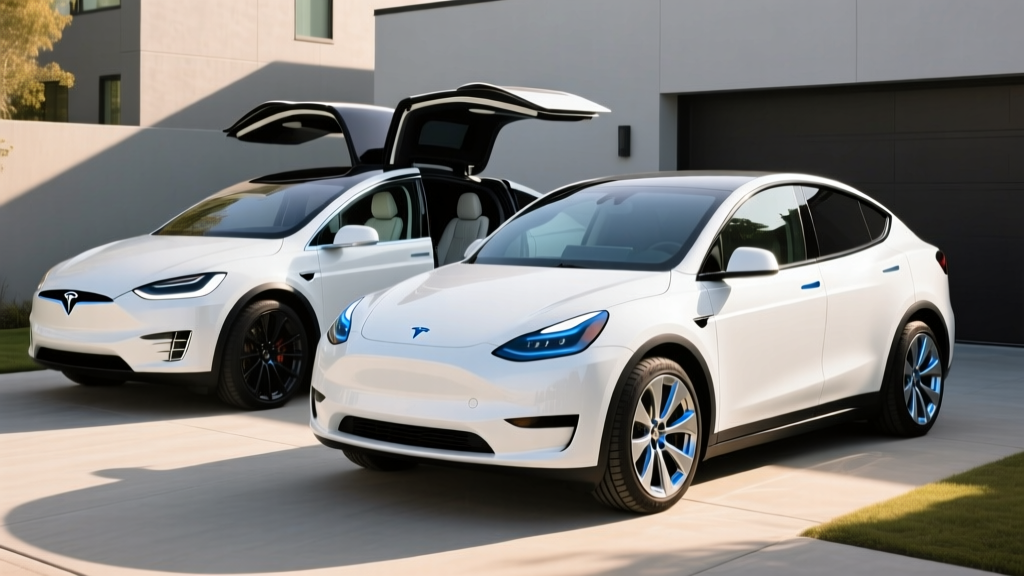
If you've searched for a "white Tesla SUV," you're not alone. Pearl White Multi-Coat remains one of Tesla's most popular exterior colors across the Model Y crossover and Model X flagship SUV — and for good reason. White paint hides dust and light scratches better than darker hues, reflects heat in warm climates, and carries no upcharge on the Model Y. But color is just the starting point. The real decision is which Tesla SUV fits your driving needs, budget, and charging situation.
This guide covers the current 2026 Tesla Model Y (recently refreshed) and the Model X, with exact EPA range figures, real-world expectations, DC fast-charging speeds, federal tax credit eligibility under IRS §30D, and the ownership realities that spec sheets don't always reveal.
2026 Tesla Model Y: The Volume Seller
The Model Y is Tesla's best-selling vehicle globally and the default choice for most buyers looking for a white Tesla SUV. The 2026 model year carries forward the significant refresh introduced in early 2025 — revised exterior lighting, a quieter cabin with acoustic glass, an updated interior with ventilated front seats, and a rear touchscreen for passengers.
| Spec | Long Range AWD | Performance AWD |
|---|---|---|
| EPA Range | 320 miles | 295 miles |
| Battery (usable) | ~75 kWh (NMC) | ~75 kWh (NMC) |
| Drivetrain | Dual-Motor AWD | Dual-Motor AWD |
| Horsepower | ~384 hp | ~456 hp |
| 0-60 mph | 4.8 sec | 3.5 sec |
| MPGe (combined) | 111 MPGe | 103 MPGe |
| Efficiency | 30 kWh/100 mi | 33 kWh/100 mi |
| Peak DC Charge Rate | 250 kW | 250 kW |
| 10-80% DC Fast Charge | ~25 min | ~25 min |
| Level 2 Home Charge | 11.5 kW (~37 mi/hr) | 11.5 kW (~37 mi/hr) |
| Cargo (rear seats up) | 30.2 cu ft | 30.2 cu ft |
| Cargo (rear seats folded) | 72.1 cu ft | 72.1 cu ft |
| Base MSRP | $46,630 | $51,630 |
| Battery Warranty | 8 yr / 120,000 mi | 8 yr / 120,000 mi |
Source: fueleconomy.gov, Tesla.com. Pricing reflects current MSRP before destination fees; verify at time of purchase.
The Model Y Long Range AWD carries an EPA estimate of 320 miles. In real-world highway driving at 70-75 mph, expect roughly 265-285 miles before needing to charge. In cold weather (below 30°F), that figure can drop to 220-240 miles due to battery resistance and cabin heating demands. The heat pump included on all 2026 Model Y trims helps mitigate cold-weather losses compared to older EVs without one, but physics still applies. City driving with regenerative braking can actually exceed the EPA combined figure, sometimes reaching 330+ miles in mild conditions.
Charging the Model Y: Home and on the Road
The Model Y's 250 kW peak DC fast-charge rate is solid but not class-leading in 2026 — Hyundai's Ioniq 5 and Kia's EV6 can peak above 300 kW on 800V architectures. However, Tesla's Supercharger network reliability is the equalizer. At a V3 or V4 Supercharger, you'll see peak rates near 250 kW up to about 30% State of Charge (SoC), after which the charge curve tapers progressively. The 10-80% session takes roughly 25 minutes.
| Charging Level | Power (kW) | Miles Added per Hour | Typical Use Case |
|---|---|---|---|
| Level 1 (120V) | ~1.4 kW | ~4-5 mi/hr | Emergency / overnight trickle |
| Level 2 (240V, 48A) | 11.5 kW | ~37 mi/hr | Home daily charging |
| DC Fast (Supercharger V3/V4) | Up to 250 kW | ~1,000+ mi/hr (peak) | Road trips, 10-80% in ~25 min |
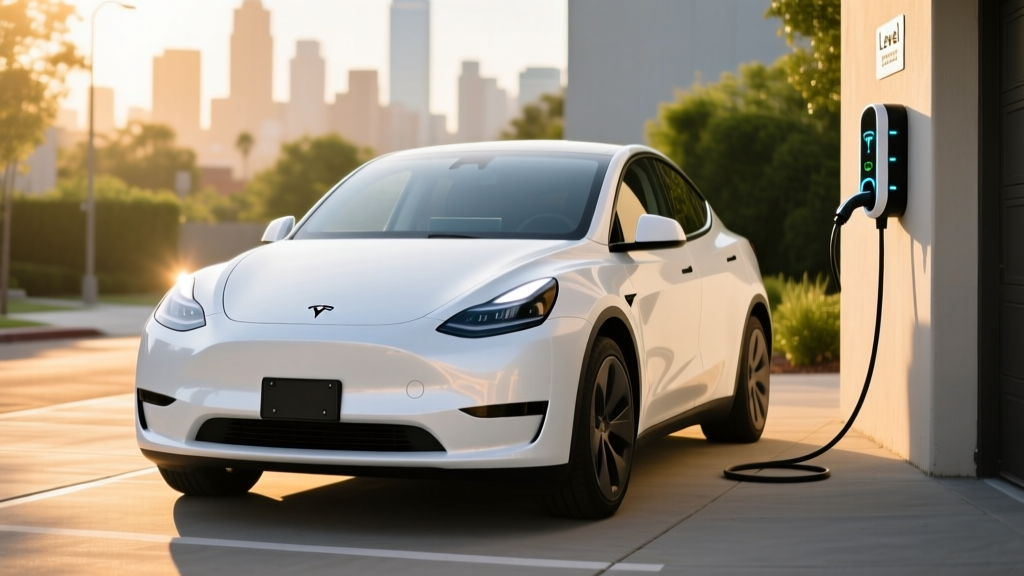
For home charging, a Level 2 wall connector on a 60-amp circuit delivers the full 11.5 kW. That's enough to replenish a full day's driving in 1-2 hours, or a near-empty battery overnight in roughly 7-8 hours. Installation costs typically range from $800 to $2,000 depending on your electrical panel's capacity and the run distance from panel to garage — a 200-amp panel upgrade can add $1,500-$3,000 if needed.
2026 Tesla Model X: The Flagship SUV
The Model X occupies a different tier entirely. It's larger, more expensive, and offers features no other Tesla SUV matches: standard All-Wheel Drive, optional third-row seating for up to seven passengers, and the signature falcon-wing rear doors. The 2026 model continues with incremental updates to software and interior materials.
| Spec | Long Range AWD | Plaid (Tri-Motor) |
|---|---|---|
| EPA Range | 335 miles | 311 miles |
| Battery (usable) | ~100 kWh (NMC) | ~100 kWh (NMC) |
| Drivetrain | Dual-Motor AWD | Tri-Motor AWD |
| Horsepower | ~670 hp | ~1,020 hp |
| 0-60 mph | 3.8 sec | 2.5 sec |
| MPGe (combined) | 98 MPGe | 92 MPGe |
| Efficiency | 34 kWh/100 mi | 37 kWh/100 mi |
| Peak DC Charge Rate | 250 kW | 250 kW |
| 10-80% DC Fast Charge | ~30 min | ~30 min |
| Level 2 Home Charge | 11.5 kW (~30 mi/hr) | 11.5 kW (~30 mi/hr) |
| Cargo (rear seats up) | 37.1 cu ft | 37.1 cu ft |
| Cargo (all seats folded) | 85.7 cu ft | 85.7 cu ft |
| Base MSRP | $79,990 | $94,990 |
| Battery Warranty | 8 yr / 150,000 mi | 8 yr / 150,000 mi |
Source: fueleconomy.gov, Tesla.com. Model X Plaid MSRP exceeds the IRS §30D SUV MSRP cap — see tax credit section below.
The Model X Long Range's EPA rating of 335 miles is genuinely useful for road trips, but this is a heavy, aerodynamically compromised SUV. At sustained highway speeds of 75 mph, expect 270-290 miles of practical range. In winter conditions, plan for 230-260 miles. The larger 100 kWh battery means longer charging sessions — even at 250 kW peak, the 10-80% session runs closer to 30 minutes because there's simply more energy to move. Preconditioning the battery (automatic when navigating to a Supercharger) is critical to achieving peak charge rates.
Federal Tax Credit: What White Tesla SUV Buyers Actually Qualify For
The IRS §30D federal EV tax credit remains one of the most confusing aspects of buying an EV. Here's the current landscape for Tesla SUVs in 2026:
| Model / Trim | MSRP | SUV MSRP Cap | §30D Eligible? | Est. Price After Credit |
|---|---|---|---|---|
| Model Y Long Range AWD | $46,630 | $80,000 | Yes (if income/sourcing met) | ~$39,130 |
| Model Y Performance AWD | $51,630 | $80,000 | Yes (if income/sourcing met) | ~$44,130 |
| Model X Long Range | $79,990 | $80,000 | Borderline — verify current pricing | ~$72,490 |
| Model X Plaid | $94,990 | $80,000 | No (exceeds MSRP cap) | $94,990 |
- MSRP Cap: SUVs/vans/pickups must have an MSRP at or below $80,000. The Model Y qualifies comfortably. The Model X Long Range sits right at the edge — options or price adjustments can push it over.
- Income Cap: Modified adjusted gross income (MAGI) must not exceed $150,000 (single), $225,000 (head of household), or $300,000 (married filing jointly).
- Battery Sourcing: Critical minerals and battery components must meet phased-in domestic/free-trade sourcing thresholds. Tesla has made significant progress in North American sourcing, but exact eligibility can shift. Verify the specific VIN on the IRS's qualified vehicle list before purchasing.
- Point-of-Sale Transfer: Qualified buyers can transfer the credit to the dealer at purchase, reducing the purchase price directly rather than waiting for a tax refund.
Always verify current eligibility on IRS.gov and consult a tax professional. Rules are subject to legislative change.
Tech, Driver Assistance, and Interior
Both the Model Y and Model X run Tesla's latest software on a 15.4-inch center touchscreen (Model Y) or a 17-inch center screen plus a rear passenger display (Model X). Key tech features include:
- Autopilot (standard): SAE Level 2 driver assistance — adaptive cruise control, lane centering, and automatic emergency braking. The driver must remain engaged with hands on the wheel at all times.
- Full Self-Driving (Supervised): Available as a paid add-on or subscription, FSD adds automatic lane changes, traffic light/stop sign recognition, and Navigate on Autopilot. Despite the name, this remains SAE Level 2 — not autonomous driving.
- Over-the-air updates: Tesla continuously pushes software improvements, from efficiency tweaks to new entertainment features.
- Sentry Mode: Cameras record surroundings when parked, a valuable feature for any vehicle in an urban setting.
Tesla's Autopilot and FSD (Supervised) are classified as SAE Level 2 driver-assist systems. You must keep your hands on the steering wheel and eyes on the road. True self-driving (Level 4) is currently limited to geofenced robotaxi services like Waymo in select cities. Do not treat any Tesla driver-assist feature as a substitute for active driving.
Interior quality on the refreshed Model Y has improved noticeably — soft-touch materials, ambient lighting, and acoustic glass make it feel more premium than pre-2025 models. The Model X interior is more spacious but still reflects Tesla's minimalist philosophy. The falcon-wing doors are a conversation-starter but add mechanical complexity; owners have reported occasional sensor and seal issues over time.
Model Y vs. Model X: Which White Tesla SUV Fits You?
- You want a daily-driver crossover with strong range and practicality under $50K (before credits).
- You primarily commute, run errands, and take occasional road trips.
- You need federal tax credit eligibility to make the math work.
- You value efficiency (111 MPGe combined) over raw performance.
- You need three-row seating for up to seven passengers.
- You want flagship performance (Plaid: 2.5 sec 0-60) and maximum cargo space (85.7 cu ft).
- Budget is flexible — $80K+ before options, and the Plaid does not qualify for the federal credit.
- Towing capacity (up to 5,000 lbs) matters for your use case.
Pros and Cons at a Glance
- Access to the Tesla Supercharger network — the most reliable and extensive DC fast-charging network in the US.
- Excellent real-world efficiency and range across both models.
- Over-the-air software updates continuously add features.
- Strong resale value relative to other EVs.
- Model Y qualifies for the $7,500 federal tax credit (subject to eligibility).
- White paint (Pearl White Multi-Coat) is a no-cost option on Model Y and hides minor imperfections well.
- 250 kW peak DC charge rate trails 800V competitors (Ioniq 5/EV6 at 300+ kW).
- Model X pricing exceeds the federal tax credit MSRP cap on higher trims.
- No Apple CarPlay or Android Auto — Tesla's proprietary infotainment only.
- FSD (Supervised) remains a Level 2 system despite the aspirational name and premium price.
- Falcon-wing doors on Model X add repair complexity and potential long-term maintenance cost.
- Panel gaps and build consistency have improved but still draw occasional owner complaints.
Competitor Check: What Else Should You Consider?
The white Tesla SUV isn't the only option. Key competitors in 2026 include:
- Hyundai Ioniq 5: Faster DC charging (350 kW peak on 800V), Apple CarPlay, competitive range (~310 mi). Lacks Supercharger access unless you use a NACS adapter (standard on 2026 models).
- Kia EV6: Similar 800V architecture, sportier styling, strong real-world efficiency. Also supports NACS as of 2025+.
- Ford Mustang Mach-E: Comfortable ride, BlueCruise hands-free highway driving (Level 2), but lower range and slower charging than the Model Y.
- Rivian R1S: Three rows, genuine off-road capability, but starts above $75K and is a larger, heavier vehicle.
The Tesla advantage remains the Supercharger ecosystem and software integration. If you road-trip frequently, the reliability and density of Superchargers still outweigh the faster peak charge rates of competitors using Electrify America or other networks.
Frequently Asked Questions
What is the real-world range of a white Tesla SUV?
For the 2026 Model Y Long Range AWD (EPA 320 mi), expect 265-285 miles in real-world highway driving and 220-240 miles in cold weather. The Model X Long Range (EPA 335 mi) delivers roughly 270-290 miles highway and 230-260 miles in winter. City driving with regenerative braking can push both models above their EPA combined ratings in mild weather.
How fast does a Tesla SUV charge at home and on the road?
At home on a Level 2 (240V) Tesla Wall Connector, both models charge at up to 11.5 kW, adding roughly 30-37 miles of range per hour — enough for a full overnight charge. On DC fast charging, both peak at 250 kW at a Supercharger, achieving a 10-80% charge in approximately 25 minutes (Model Y) or 30 minutes (Model X). Charge speed tapers significantly above 80% SoC to protect battery health.
Does a white Tesla SUV qualify for the $7,500 federal tax credit?
The Model Y (all trims) qualifies if you meet IRS §30D income limits ($300K joint / $150K single) and the vehicle's battery sourcing meets current-year thresholds. The Model X Long Range is borderline at $79,990 MSRP against the $80,000 SUV cap. The Model X Plaid ($94,990) exceeds the cap and does not qualify. Always check the IRS qualified vehicle list for your specific VIN before purchasing.
Is it worth buying a Tesla SUV vs. competitors in 2026?
If Supercharger access, software integration, and efficiency are top priorities, the Model Y remains the strongest all-around electric crossover. If you need faster DC charging, Apple CarPlay, or a more traditional dealership experience, the Hyundai Ioniq 5 or Kia EV6 are strong alternatives. The Model X competes in a narrower segment — its combination of three rows, performance, and EV powertrain has few direct rivals at its price point.
What are the biggest pros and cons of Tesla SUVs?
Pros: Supercharger network reliability, strong range and efficiency, OTA updates, tax credit eligibility (Model Y), and high resale value. Cons: 250 kW peak charging trails 800V competitors, no smartphone mirroring, FSD is Level 2 (not autonomous), and Model X pricing often exceeds the tax credit cap.
Is Pearl White paint a premium color on Tesla SUVs?
On the 2026 Model Y, Pearl White Multi-Coat is included at no extra cost — making it one of the most practical choices. On the Model X, white is also a standard no-cost option. White paint's practical advantages include better heat reflection in hot climates and the ability to mask light dust and minor swirl marks between washes.
What's the battery warranty on a Tesla SUV?
The Model Y battery and drive unit are covered for 8 years or 120,000 miles (whichever comes first), with a guaranteed minimum 70% capacity retention. The Model X battery warranty extends to 8 years or 150,000 miles at the same 70% retention threshold. Tesla's NMC chemistry has shown strong longevity in real-world data, with most vehicles retaining well above 85% capacity at 100,000 miles when following recommended charging practices (daily limit of 80-90% SoC for NMC batteries).
Whether you choose the Model Y for its everyday value or the Model X for its flagship capability, a white Tesla SUV in 2026 remains a data-driven choice backed by strong efficiency, proven charging infrastructure, and continuous software evolution. Just be sure to verify your tax credit eligibility, plan your home charging setup, and understand the real-world range you'll actually experience before signing.