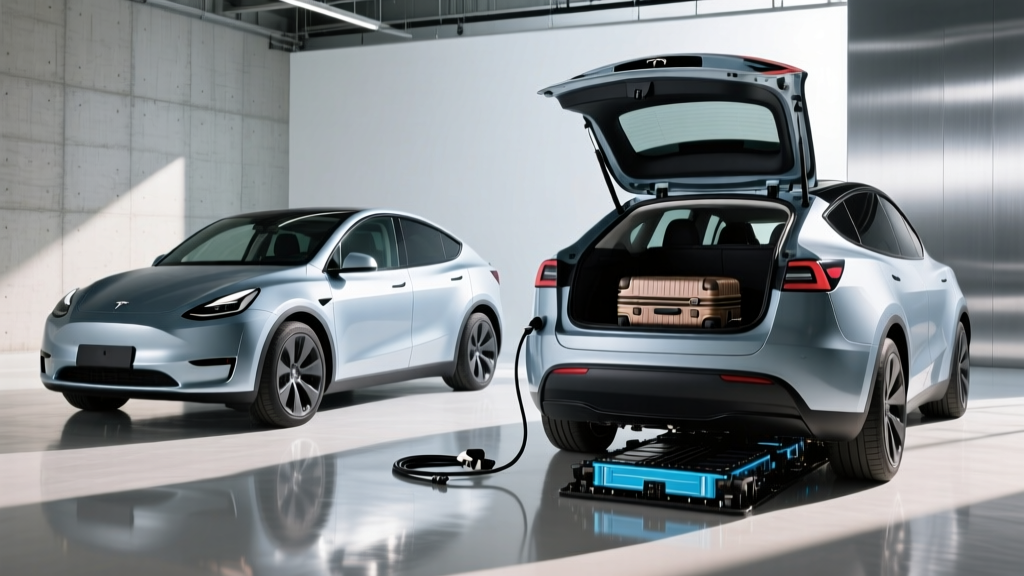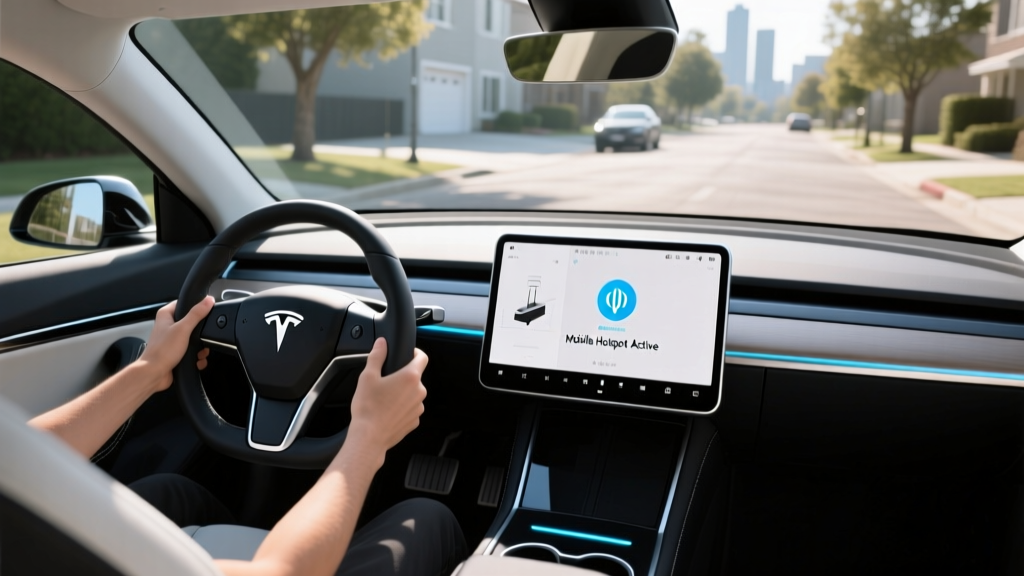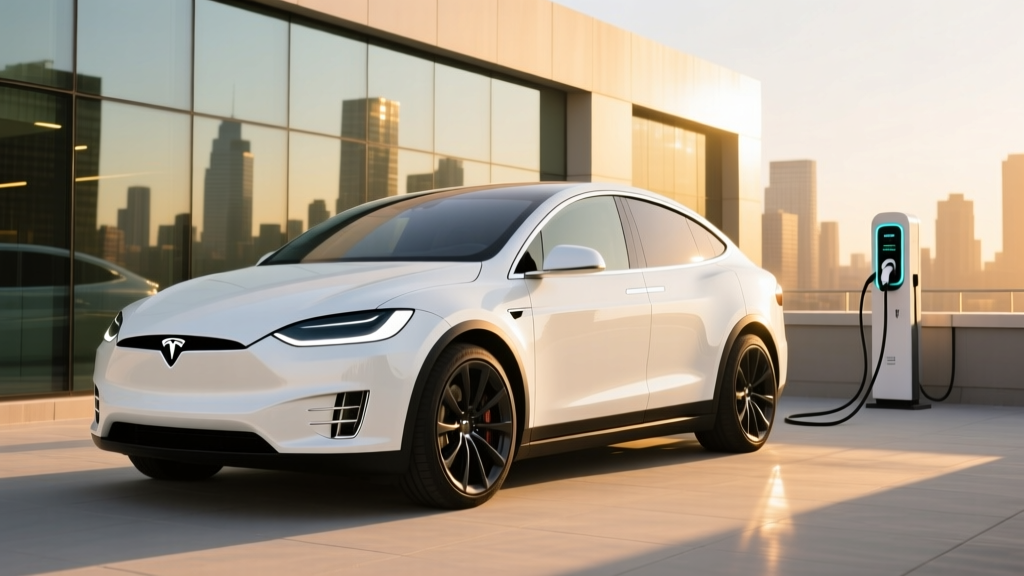
The Tesla Model X has always been the polarizing flagship of the EV SUV world — part luxury family hauler, part tech showcase, part rolling statement. For 2026, the Model X continues to offer falcon-wing rear doors, a massive glass canopy, and access to the Supercharger network, but it now competes against a field of capable electric SUVs from Rivian, BMW, Mercedes, and Hyundai-Kia that have closed the gap on range and interior quality. If you've been searching for a white Tesla X — whether drawn to the Pearl White Multi-Coat aesthetic or simply researching the platform — this review breaks down every number that matters: real-world range, charging speeds, ownership economics, and whether the 2026 Model X still earns its premium price.
2026 Tesla Model X: Quick Spec Overview
| Spec | Long Range AWD | Plaid (Tri-Motor AWD) |
|---|---|---|
| EPA Range | 348 miles | 326 miles |
| Battery (usable) | ~100 kWh, NMC | ~100 kWh, NMC |
| Drivetrain | Dual-Motor AWD | Tri-Motor AWD |
| Horsepower | 670 hp | 1,020 hp |
| 0–60 mph | 3.8 seconds | 2.5 seconds |
| Max DC Fast Charge | 250 kW (Supercharger V3) | 250 kW (Supercharger V3) |
| 10–80% DC Charge Time | ~32 minutes | ~32 minutes |
| Level 2 Home Charge | 11.5 kW (~34 mi/hr) | 11.5 kW (~34 mi/hr) |
| MPGe (combined) | 102 MPGe | 98 MPGe |
| Efficiency | 33 kWh/100 mi | 34 kWh/100 mi |
| Seating | 5, 6, or 7 passengers | 5 or 6 passengers |
| Cargo (behind 3rd row) | 15.0 cu ft / 88.1 cu ft max | 15.0 cu ft / 88.1 cu ft max |
| Towing Capacity | 5,000 lbs | 5,000 lbs |
| Base MSRP | $79,990 | $94,990 |
| Battery Warranty | 8 yr / 150,000 mi | 8 yr / 150,000 mi |
Source: Tesla Model X Design Studio, fueleconomy.gov. Prices exclude destination fee. Specs reflect 2026 model year.
Real-World Range: What the EPA Sticker Doesn't Tell You
Real-World Expectation: ~275–310 miles on highway road trips; ~240–270 miles in sub-freezing winter conditions; ~320+ miles in mild city/suburban driving with regen braking.
The Model X Long Range carries an EPA-rated 348 miles, which sounds commanding on paper. In practice, the large frontal area and heavy curb weight (~5,185 lbs) work against it at sustained highway speeds. On a 70–80 mph interstate run in 75°F weather, expect roughly 275–310 miles before needing a charge stop, depending on elevation changes and wind.
Cold weather hits the Model X harder than smaller EVs because there's simply more cabin and battery mass to heat. Tesla's standard heat pump helps mitigate losses compared to older resistive-heater EVs, but in temperatures below 32°F, real-world range drops to roughly 240–270 miles. Preconditioning the battery while plugged in — a feature Tesla handles automatically when you set a departure time or navigate to a Supercharger — recovers some of that loss by warming the pack before you drive.
The 100 kWh (usable) NMC battery pack provides substantial energy reserves, but NMC chemistry is more sensitive to extreme cold than LFP. If you live in a northern climate and lack a garage, budget for meaningful winter range reduction. The Plaid's tri-motor efficiency penalty costs you about 22 EPA miles compared to the Long Range.
Charging Speed and Network Access
| Charging Method | Power / Rate | Time or Miles Added |
|---|---|---|
| Level 1 (120V household) | ~1.4 kW | ~3–4 miles per hour |
| Level 2 (240V home, 48A Wall Connector) | 11.5 kW | ~34 miles per hour; full charge ~10 hr |
| DC Fast Charge (Supercharger V3) | Peak 250 kW | 10–80% in ~32 min; ~200 mi in 15 min |
| DC Fast Charge (CCS adapter, non-Tesla) | Up to ~150–175 kW typical | Varies by station; 10–80% ~40–50 min |
Tesla's Supercharger network remains the Model X's single strongest ownership advantage. At a V3 Supercharger (250 kW peak), the Model X can accept its fastest charge rate between roughly 10–30% state of charge, then tapers progressively. The 10–80% charge takes approximately 32 minutes — respectable for a 100 kWh pack, though smaller-pack competitors like the Hyundai Ioniq 5 (84 kWh, 350 kW peak) can complete that same window in about 18 minutes.
The charge curve matters more than the peak number. Above 80% SoC, the Model X slows dramatically to protect battery longevity — the final 20% can take as long as the first 60%. On road trips, plan to charge to 80% and go rather than wait for a full fill.
At home, the Tesla Wall Connector at 48 amps delivers 11.5 kW, adding roughly 34 miles of range per hour. A full overnight session from 20% to 100% takes about 10 hours, which is practical for most owners who plug in nightly. Home installation of a 60-amp circuit (required for 48A continuous draw) typically costs $800–$2,000 depending on panel proximity, according to industry estimates — factor in a potential $1,500–$3,000 panel upgrade if your home still has a 100-amp service panel.
Tesla now includes a CCS adapter with new vehicles, and the Supercharger network has opened to non-Tesla EVs at many locations. The Model X's native NACS port means you plug directly into Superchargers without an adapter — a convenience advantage over CCS-native vehicles that require an adapter for Tesla stalls.
Performance, Drivetrain, and Efficiency
The dual-motor Long Range produces 670 horsepower and reaches 60 mph in 3.8 seconds — genuinely quick for a three-row SUV weighing over 5,100 pounds. All-wheel drive is standard across the lineup, with independent front and rear motors providing torque vectoring and traction in adverse weather.
The Plaid variant's tri-motor setup (one front, two rear) generates 1,020 hp and a 2.5-second 0–60 time. It's absurd performance that few buyers will ever exploit, and it costs you 22 EPA miles plus roughly $15,000 in additional MSRP. For most families, the Long Range is the rational choice.
Efficiency sits at 102 MPGe combined (33 kWh/100 miles) for the Long Range, per fueleconomy.gov. That's less efficient than the Model Y (~122 MPGe) due to the X's larger dimensions and heavier weight, but competitive with the BMW iX and Rivian R1S in the luxury electric SUV segment. At the US average electricity rate of ~$0.17/kWh, fueling the Model X costs roughly $5.60 per 100 miles — about a third of what a comparable gas SUV burning 20 mpg would cost at $3.30/gallon.
Interior, Cargo, and Tech Highlights
The Model X interior remains dominated by the 17-inch center touchscreen (landscape orientation since the 2021 refresh) and a minimalist dashboard. The yoke steering wheel is standard, with a round wheel available as a no-cost option — most reviewers and owners prefer the round wheel for daily driving.
Seating configurations include 5-seat (two rows), 6-seat (captain's chairs in the second row), and 7-seat (bench second row with a small third row). The third row is best suited for children; legroom is tight at roughly 32.7 inches, and cargo behind it shrinks to 15.0 cubic feet. Fold the second and third rows and you get 88.1 cubic feet — competitive with large SUVs.
The falcon-wing rear doors are the Model X's signature feature. They open upward with double-hinged articulation, making it easy to load children into car seats in tight parking spaces — genuinely useful for parents. However, they add mechanical complexity and have historically been a source of maintenance issues, including sensor and seal problems. In rain, the doors channel water differently than conventional doors, which some owners find annoying.
Tech highlights include:
- Autopilot (standard): Adaptive cruise control, lane-keeping, automatic emergency braking — SAE Level 2 driver assistance
- Full Self-Driving (Supervised) ($8,000 option or $99/month): Enhanced city street navigation, automatic lane changes, traffic light response — still SAE Level 2, requires active driver supervision at all times
- 17-inch center display + 8-inch rear display
- 22-speaker audio system
- HEPA air filtration with Bioweapon Defense Mode
- Over-the-air updates continuously adding features
Pricing, Trims, and Federal Tax Credit Eligibility
| Trim | Base MSRP | Federal §30D Credit | Effective Price (if eligible) |
|---|---|---|---|
| Long Range AWD | $79,990 | Up to $7,500 | ~$72,490 |
| Plaid Tri-Motor AWD | $94,990 | Up to $7,500 | ~$87,490 |
Destination fee, Pearl White Multi-Coat paint ($0 on current Tesla configurator), and options not included. Tax credit eligibility is subject to IRS rules — see checklist below.
The Model X Long Range starts at $79,990 before any incentives. The Pearl White Multi-Coat paint — the subject of many a white Tesla X search — is currently a no-cost color option on Tesla's configurator, making it one of the more accessible exterior choices (other colors like Ultra Red or Quicksilver add $2,000–$3,000).
Federal tax credit eligibility under IRS §30D requires meeting several conditions simultaneously. The $7,500 credit is not guaranteed for every buyer:
- MSRP Cap: SUVs/vans/pickups must have an MSRP at or below $80,000. The Long Range qualifies; the Plaid at $94,990 does not.
- Buyer Income Cap: Modified adjusted gross income must not exceed $150,000 (single), $225,000 (head of household), or $300,000 (joint filers).
- Battery Component Sourcing: A percentage of battery components must be manufactured or assembled in North America, and critical minerals must be sourced from the US or free-trade-agreement countries. These thresholds tighten annually — verify current-year requirements on the IRS and DOE tax credit pages.
- Point-of-Sale Transfer: Since 2024, eligible buyers can transfer the credit to the dealer at purchase, reducing the upfront price rather than waiting to claim it on a tax return. Tesla supports this at delivery.
- Final Assembly: Vehicle must undergo final assembly in North America. The Model X is built in Fremont, California — this requirement is satisfied.
Key takeaway: The Long Range at $79,990 falls under the $80,000 SUV MSRP cap, making it potentially eligible for the full $7,500 credit if your income and the battery sourcing rules align. The Plaid exceeds the cap and does not qualify. Always confirm your specific eligibility with a tax professional before purchasing.
Warranty, Reliability, and Ownership Costs
Tesla provides a competitive warranty structure for the Model X:
- Basic Vehicle: 4 years / 50,000 miles
- Battery & Drive Units: 8 years / 150,000 miles (whichever comes first), with minimum 70% capacity retention guaranteed over the warranty period
The 150,000-mile battery warranty is generous and reflects confidence in the NMC pack's longevity. Real-world degradation data from Tesla's fleet indicates most Model X packs retain 90%+ capacity after 100,000 miles, though individual results vary with charging habits. Best practice: avoid frequent 100% charges for daily driving (set the charge limit to 80–90%) and use DC fast charging primarily for road trips.
Insurance is a real cost factor. The Model X consistently ranks among the more expensive EVs to insure, with average annual premiums in the $2,800–$4,200 range depending on state, driver profile, and coverage level. Tesla offers its own insurance product in many states, which uses real-time driving data to set rates — some owners save significantly, while others find it comparable to traditional carriers. Get quotes before committing to the purchase.
Maintenance costs are low relative to gas SUVs: no oil changes, no spark plugs, minimal brake wear thanks to regenerative braking. The main service items are cabin air filters, wiper blades, brake fluid checks, and tire rotations. Budget roughly $300–$500 per year for routine maintenance.
Pros, Cons, and the Competition
Pros
- 348-mile EPA range (Long Range) — one of the longest-range 3-row EVs
- Supercharger network access (native NACS, no adapter needed)
- Falcon-wing doors genuinely useful for car-seat loading
- 670 hp standard; 3.8-sec 0–60 with full AWD traction
- Continuous OTA updates add features over time
- HEPA air filtration best-in-class
- Eligible for up to $7,500 federal credit (Long Range, income permitting)
Cons
- Plaid exceeds $80K MSRP cap — no federal tax credit
- Interior materials lag behind BMW iX, Mercedes EQS SUV at this price
- Falcon-wing doors add maintenance complexity and sensor issues
- Third-row space limited to children
- High insurance premiums ($2,800–$4,200/yr average)
- Yoke steering standard (round wheel is a no-cost option)
- 250 kW peak DC charge is slower than 350 kW-capable competitors
Against the Rivian R1S (Dual-Motor, ~352-mile EPA, starting ~$79,900), the Model X offers more range and faster Supercharger access but a less adventurous off-road persona and a less refined interior. The BMW iX xDrive50 (~324 miles, ~$87,250) delivers a significantly more luxurious cabin and a smoother ride, but lacks Supercharger access and falls short on range. The Kia EV9 (~304 miles, ~$59,900) undercuts the Model X by $20,000+ and offers a practical three-row package, but with shorter range and less performance.
Who Should Buy the White Tesla Model X?
Choose the Model X Long Range if: You need a three-row electric SUV with maximum range, rely on frequent road trips where the Supercharger network matters, value falcon-wing doors for car-seat access, and your income qualifies for the §30D credit (bringing the effective price near $72,500).
Choose a competitor if: Interior luxury is your top priority (BMW iX), you want serious off-road capability (Rivian R1S), you need a more affordable three-row EV for daily commuting (Kia EV9), or you want the fastest possible DC charging in a smaller package (Hyundai Ioniq 5 / Kia EV6).
The white Tesla Model X — specifically in Pearl White Multi-Coat — remains one of the most recognizable EVs on the road. It's a compelling package for tech-forward families who prioritize range, charging infrastructure, and performance, but it's no longer the only strong option in the luxury electric SUV space. The 2026 Long Range at $79,990 (potentially ~$72,490 after the federal credit) is the value sweet spot; skip the Plaid unless the performance justifies the tax-credit sacrifice and the $15,000 premium.
Frequently Asked Questions
What is the real-world range of the 2026 Tesla Model X?
The EPA rates the Long Range at 348 miles and the Plaid at 326 miles. In real-world highway driving at 70–80 mph, expect roughly 275–310 miles. In freezing winter conditions, that drops to approximately 240–270 miles. City driving with regenerative braking can push closer to or slightly above the EPA estimate.
How fast does the Model X charge at home and on the road?
At a Tesla V3 Supercharger (250 kW peak), the Model X charges from 10–80% in about 32 minutes, adding roughly 200 miles in 15 minutes under ideal conditions. At home on a Level 2 Wall Connector (11.5 kW / 48A), it adds about 34 miles per hour, with a full charge taking approximately 10 hours. Level 1 (120V) adds only 3–4 miles per hour and is impractical as a primary charging method for a 100 kWh battery.
Does the 2026 Tesla Model X qualify for the federal EV tax credit?
The Long Range at $79,990 MSRP falls under the $80,000 SUV cap and is potentially eligible for up to $7,500 under IRS §30D, provided the buyer meets income limits ($150K single / $300K joint) and the battery sourcing requirements are satisfied. The Plaid at $94,990 exceeds the MSRP cap and does not qualify. Always verify current-year rules on IRS.gov and consult a tax professional.
Is the white Tesla Model X worth buying over competitors?
If Supercharger network access, maximum range in a three-row EV, and falcon-wing door convenience are your priorities, the Model X Long Range is difficult to beat. If interior quality, ride refinement, or off-road capability matter more, consider the BMW iX, Rivian R1S, or Kia EV9 respectively. The Model X's value proposition improves significantly if you qualify for the $7,500 federal credit.
How long will the Model X battery last?
Tesla warranties the battery and drive units for 8 years or 150,000 miles with a minimum 70% capacity retention guarantee. Fleet data suggests most Model X packs retain 90%+ capacity after 100,000 miles. Best practices include keeping daily charge limits at 80–90%, minimizing DC fast charging for non-trip use, and preconditioning the battery in cold weather. Full battery replacement, if ever needed outside warranty, currently runs $15,000–$22,000 depending on pack configuration.
Is Tesla Autopilot or FSD self-driving?
No. Both Autopilot (standard) and Full Self-Driving Supervised ($8,000 option) are SAE Level 2 driver-assistance systems. The driver must remain fully engaged, monitor the road, and be ready to take control instantly. FSD adds city-street navigation and automated lane changes, but it does not make the vehicle autonomous. Tesla's naming has drawn scrutiny from NHTSA and consumer advocates — treat these as advanced cruise control and lane-keeping, not self-driving.