Quick Verdict: The White Mustang Mach-E in 2026
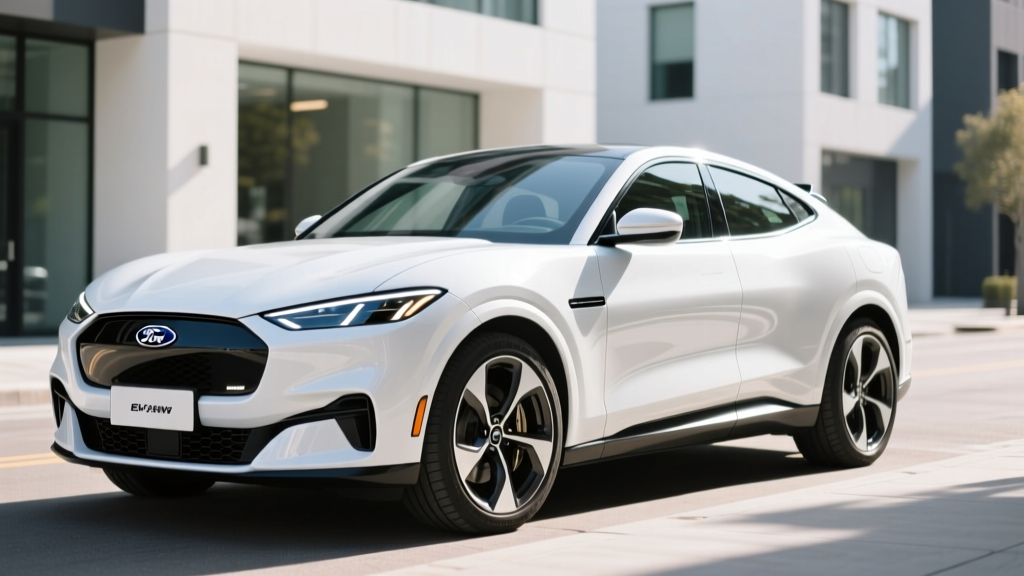
The Ford Mustang Mach-E remains one of the most well-rounded electric crossovers on the market, and in Oxford White or Star White Metallic Tri-Coat, it takes on a cleaner, more premium aesthetic that photographs well and hides minor road grime better than black. For 2026, Ford has streamlined the Mach-E lineup around the Select, Premium, and GT trims, with the Extended Range battery delivering up to an EPA-estimated 320 miles on rear-wheel-drive models. The white finish has become one of the most popular color choices among Mach-E buyers, pairing especially well with the panoramic fixed glass roof and black-painted roof option for a striking two-tone look.
But aesthetics aside, the Mach-E earns its place through competitive charging speeds, engaging driving dynamics, and a usable cargo footprint. Below, we break down every number that matters — from real-world range to federal tax credit eligibility — so you can decide if this is the right EV for your driveway.
Range and Efficiency: EPA Numbers vs. Real-World Driving
EPA Estimate: 250 mi (Standard Range RWD) / 320 mi (Extended Range RWD) / 290 mi (Extended Range AWD)
Real-World Expectation: Plan for 210–280 mi depending on trim. Highway driving at 70+ mph reduces range by roughly 10–15% versus the EPA combined figure. In cold weather (below 30°F), expect an additional 15–25% reduction due to battery chemistry and cabin heating demands. Extended Range RWD models typically deliver 260–290 mi in mixed real-world use during moderate temperatures.
The Mach-E's efficiency varies significantly by drivetrain configuration. The Standard Range battery (72 kWh usable, LFP chemistry) powers the Select trim and delivers an EPA-estimated 100 MPGe combined, translating to roughly 33 kWh per 100 miles. The Extended Range models (91 kWh usable, NMC chemistry) push efficiency to approximately 101 MPGe combined for RWD and 93 MPGe for AWD variants, according to fueleconomy.gov.
For buyers in northern climates, the heat pump — standard on Extended Range trims — helps mitigate winter range loss by efficiently managing cabin temperature without drawing heavily from the traction battery. Standard Range models rely on resistive heating, which consumes more energy in cold conditions.
| Specification | Select (SR RWD) | Premium (ER RWD) | Premium (ER AWD) | GT (ER AWD) |
|---|---|---|---|---|
| EPA Range | 250 mi | 320 mi | 290 mi | 280 mi |
| Battery (Usable) | 72 kWh (LFP) | 91 kWh (NMC) | 91 kWh (NMC) | 91 kWh (NMC) |
| Horsepower | 266 hp | 290 hp | 346 hp | 480 hp |
| 0–60 mph | 6.3 sec | 5.8 sec | 5.1 sec | 3.5 sec |
| Drivetrain | RWD | RWD | AWD (Dual Motor) | AWD (Dual Motor) |
| MPGe (Combined) | 100 | 101 | 93 | 84 |
| Base MSRP | $39,995 | $46,995 | $49,995 | $59,995 |
Charging Speed: DC Fast Charge and Home Level 2
Charging performance is where the Mach-E holds its own against rivals like the Hyundai Ioniq 5 and Tesla Model Y. The Extended Range battery supports a peak DC fast-charge rate of 150 kW, while the Standard Range LFP battery peaks at approximately 115 kW. Ford quotes a 10–80% charge time of roughly 36 minutes for the Extended Range pack at a capable 150 kW+ station.
One nuance worth understanding: the Mach-E's charge curve tapers noticeably above 80% state of charge (SoC). If you're road-tripping and need to charge beyond 80%, expect the rate to drop to under 50 kW, adding significant time. The practical advice is to charge to 80% and move on, unless you specifically need the extra range to reach your destination or a charger at that destination.
| Charging Level | Power / Rate | Approx. Speed | Notes |
|---|---|---|---|
| Level 1 (120V household) | ~1.4 kW | ~3–4 mi/hr | Emergency/top-up only |
| Level 2 (240V home, 48A) | 10.5 kW | ~27 mi/hr | Full charge in ~9–10 hrs (ER) |
| DC Fast Charge (SR) | Peak 115 kW | 10–80% in ~38 min | Tapers above 80% |
| DC Fast Charge (ER) | Peak 150 kW | 10–80% in ~36 min | Sustained rate ~100 kW avg |
At home, the Mach-E comes with a Ford Mobile Power Cord that handles both 120V and 240V outlets. For dedicated home charging, Ford recommends the Ford Charge Station Pro (48-amp, hardwired Level 2), which delivers up to 10.5 kW — enough to fully replenish the Extended Range battery overnight in roughly 9 to 10 hours. A professional Level 2 installation typically runs $800–$2,000 depending on your electrical panel capacity and run length, so factor that into your purchase budget.
The Mach-E uses the CCS1 connector for DC fast charging on non-Tesla networks. However, Ford has provided Tesla Supercharger access to Mach-E owners via a built-in NACS adapter (included with 2025+ models; earlier models can request one), opening up over 15,000 additional fast-charging stalls nationwide.
Performance and Driving Dynamics
The Mach-E has always prioritized driving engagement over pure straight-line speed (with the GT being the exception). The rear-wheel-drive models use a single permanent-magnet motor on the rear axle, delivering a planted, sporty feel that's unusual for an electric crossover. The dual-motor AWD configuration adds a front induction motor for all-weather traction and a meaningful bump in output.
The GT trim with the Performance Upgrade package produces 480 horsepower and 634 lb-ft of torque, achieving a 3.5-second 0–60 mph time — territory that rivals the Porsche Macan EV and undercuts many performance SUVs at twice the price. Even the base Select at 266 hp and 6.3 seconds to 60 mph feels responsive in daily driving, with instant torque delivery making highway merging effortless.
Ford's BlueCruise hands-free driving system is available on Premium and GT trims (and as an option on Select). It's a SAE Level 2 system — meaning the driver must remain attentive and ready to take over at any moment — that enables hands-free operation on over 130,000 miles of pre-mapped divided highways. A driver-facing camera monitors eye attention. BlueCruise is competitive with GM's Super Cruise but requires an active subscription after the initial trial period (typically $75/month or $800/year after the first year).
BlueCruise and Ford Co-Pilot360 are SAE Level 2 driver-assistance systems. They do not make the Mach-E self-driving. The driver must remain engaged, eyes on the road (or monitored by the cabin camera on BlueCruise hands-free sections), and prepared to steer or brake at all times.
Interior, Cargo, and Technology
Step inside a white Mach-E and the cabin feels airy, especially with the available fixed panoramic glass roof that floods the interior with light. The minimalist dashboard centers around a large 15.5-inch portrait touchscreen running Ford's SYNC 4A infotainment system, which supports wireless Apple CarPlay and Android Auto, over-the-air (OTA) updates, and integrated navigation.
Practical dimensions for daily life:
- Cargo volume (behind rear seats): 29.7 cu ft
- Cargo volume (rear seats folded): 59.7 cu ft
- Front trunk (frunk): 4.7 cu ft — drainable, useful for wet gear or groceries
- Front legroom: 43.3 inches
- Rear legroom: 38.9 inches
- Seating capacity: 5 passengers
The frunk is a standout feature that many competitors lack. Its drain plug makes it practical for tailgating, storing ice for coolers, or hauling muddy outdoor equipment. The rear cargo area is competitive with the Tesla Model Y's combined front-and-rear storage but falls short of the Hyundai Ioniq 5's flatter load floor.
On the technology front, the Mach-E includes a 10.2-inch digital instrument cluster, a B&O premium audio system (available on Premium and standard on GT), phone-as-a-key via the FordPass app, and Ford Co-Pilot360 2.0 as standard — featuring automatic emergency braking, blind-spot monitoring, lane-keeping assist, and rear cross-traffic alert.
Notable drawbacks: The absence of physical climate control buttons means everything routes through the touchscreen, which some drivers find distracting. Rear visibility is compromised by the sloping roofline, making the standard rearview camera essential. And while the interior materials are good for the price point, they don't quite match the premium feel of a Genesis GV60 or even higher-trim Tesla Model Y interiors.
Pricing, Tax Credits, and Ownership Costs
For 2026, the white Ford Mustang Mach-E starts at $39,995 for the Select trim (Standard Range, RWD) including destination charge. Oxford White is a no-cost standard color, while Star White Metallic Tri-Coat adds $495. The lineup tops out at $59,995 for the GT with the Performance Upgrade.
| Trim | Base MSRP | Est. §30D Credit | Effective Price |
|---|---|---|---|
| Select (SR RWD) | $39,995 | Up to $7,500* | ~$32,495 |
| Premium (ER RWD) | $46,995 | Up to $7,500* | ~$39,495 |
| Premium (ER AWD) | $49,995 | Up to $7,500* | ~$42,495 |
| GT (ER AWD) | $59,995 | Up to $7,500* | ~$52,495 |
*Federal tax credit eligibility under IRS §30D depends on multiple factors. Always verify current rules at irs.gov.
- MSRP Cap: SUVs/crossovers must have an MSRP at or below $80,000 (all Mach-E trims qualify)
- Buyer Income Cap: AGI must not exceed $150,000 (single), $225,000 (head of household), or $300,000 (joint filers)
- Battery Sourcing: Critical minerals and battery components must meet phased-in domestic/free-trade sourcing thresholds — Ford has worked to qualify the Mach-E, but verify the specific model year and build date
- Point-of-Sale Transfer: Buyers can transfer the credit to the dealer at purchase, reducing the upfront price rather than waiting for a tax refund
- Final Assembly: Vehicle must undergo final assembly in North America (the Mach-E is built in Cuautitlán, Mexico — which qualifies under USMCA)
Beyond the purchase price, ownership economics favor the Mach-E over comparable gas crossovers. At an average US electricity rate of $0.16/kWh, charging the Extended Range battery from empty to full costs roughly $14.50 — versus $50–$60 to fill a gas-powered Ford Edge's tank. Ford also provides complimentary scheduled maintenance for the first 2 years or 24,000 miles, and EVs eliminate oil changes, spark plugs, and transmission fluid entirely.
Warranty and Long-Term Battery Outlook
Ford backs the Mach-E with a competitive warranty package:
- Basic vehicle warranty: 3 years / 36,000 miles
- Powertrain warranty: 5 years / 60,000 miles
- High-voltage battery warranty: 8 years / 100,000 miles (retains at least 70% of original capacity)
The 70% capacity retention threshold is standard across the industry and aligns with what Hyundai, Tesla, and GM offer. Real-world degradation data from early 2021–2022 Mach-E owners suggests that NMC Extended Range packs lose approximately 5–8% capacity over the first 60,000 miles, with the curve flattening significantly thereafter. The LFP Standard Range packs are expected to show even slower degradation due to LFP chemistry's inherently longer cycle life, though long-term fleet data is still maturing.
If a battery replacement were ever needed out of warranty, current estimates for the Extended Range pack run $15,000–$22,000 including labor — a significant sum, but one that very few owners ever face given the warranty coverage and observed degradation curves.
Pros and Cons
- Competitive real-world range (260–290 mi on ER models)
- Tesla Supercharger access via NACS adapter
- Engaging driving dynamics, especially GT trim
- Drainable frunk adds genuine utility
- BlueCruise hands-free driving on 130,000+ highway miles
- All trims under the $80,000 MSRP tax credit cap
- OTA updates continue to improve the vehicle post-purchase
- 150 kW peak DC charging trails Hyundai/Kia's 800V architecture
- No physical climate buttons — touchscreen dependency
- BlueCruise requires ongoing subscription after trial
- Rear visibility limited by coupe-like roofline
- Standard Range LFP battery sacrifices range for cost savings
- Insurance premiums run 15–25% higher than gas equivalents
Who Should Buy the White Ford Mustang Mach-E?
The Mach-E is best suited for daily commuters and small families who want an engaging electric crossover without the Tesla ecosystem lock-in. The Extended Range RWD Premium trim at $46,995 (roughly $39,495 after the federal credit) is the value sweet spot — 320 miles of EPA range, heat pump efficiency, and BlueCruise eligibility.
If you regularly drive in snow or rain, the AWD Premium adds dual-motor traction for $3,000 more. The GT is the enthusiast pick, but its lower range (280 mi EPA) and higher price make it harder to justify purely on practical grounds.
For road-trippers who frequently drive 400+ miles in a day, the Mach-E's 150 kW charging is adequate but not class-leading. The Hyundai Ioniq 5 and Kia EV6, with their 800V architecture supporting 240+ kW peak charging, can shave 10–15 minutes off a road-trip charge stop. But with Supercharger access now in hand, the Mach-E's charging network advantage often outweighs the raw speed deficit.
- You want Supercharger access without buying a Tesla
- You prioritize driving dynamics alongside EV practicality
- You need a usable frunk and flexible cargo space
- Hands-free highway driving (BlueCruise) appeals to you
- Maximum DC charging speed is your top priority (look at Ioniq 5/EV6)
- You need three rows of seating (look at Kia EV9)
- You prefer physical buttons for climate controls
Frequently Asked Questions
What is the real-world range of the white Ford Mustang Mach-E?
For the most popular Extended Range RWD configuration, expect 260–290 miles in mixed driving at moderate temperatures. Highway-only driving at 75 mph reduces that to roughly 240–260 miles. In sub-freezing winter conditions, plan for 200–240 miles depending on how aggressively you use cabin heat. The heat pump on Extended Range trims helps, but cold weather always impacts lithium-ion battery performance.
How fast does the Mach-E charge at home and on the road?
At home on a 240V Level 2 charger (48 amps), the Mach-E adds approximately 27 miles of range per hour and fully charges the Extended Range battery in about 9–10 hours. On a DC fast charger, the Extended Range model peaks at 150 kW and reaches 10–80% in roughly 36 minutes. The Standard Range model peaks at 115 kW with a similar 10–80% time of about 38 minutes.
Does the Ford Mustang Mach-E qualify for the $7,500 federal tax credit?
The Mach-E has qualified for the full $7,500 federal tax credit under §30D in recent model years, but eligibility depends on your income (AGI caps apply), the vehicle's battery sourcing compliance, and current IRS rules. All trims fall under the $80,000 MSRP cap for SUVs. The credit can be transferred to the dealer at point of sale, reducing your purchase price directly. Always verify current eligibility at irs.gov and consult a tax professional.
Is the Mach-E worth buying versus the Tesla Model Y or Hyundai Ioniq 5?
It depends on your priorities. The Mach-E offers more engaging driving dynamics than the Model Y, a drainable frunk, and now shares Tesla's Supercharger network. The Ioniq 5 charges faster on DC (240 kW peak vs. 150 kW) and has a more spacious rear seat, but lacks Supercharger access. If driving feel and charging network breadth matter most, the Mach-E is a strong pick. If raw charging speed and interior space are paramount, the Ioniq 5 edges ahead.
What color white options are available on the 2026 Mach-E?
Ford typically offers Oxford White (a solid, no-cost standard white) and Star White Metallic Tri-Coat (a pearlescent premium white that adds $495). Oxford White is the most popular choice for fleet and personal use alike, offering a clean look that's easy to touch up. Star White has more depth in direct sunlight but requires more care to maintain the metallic flake finish.
How does the Mach-E handle in cold weather?
Extended Range trims include a heat pump that significantly improves cold-weather efficiency compared to resistive cabin heating. Expect 15–25% range reduction in temperatures below 30°F. Preconditioning the battery while plugged in (via the FordPass app) helps preserve range and ensures faster DC charging speeds when you start your trip. The AWD models provide confident traction in snow, and the low center of gravity from the under-floor battery pack contributes to stable handling.
Sources: EPA Fuel Economy, Ford Motor Company, IRS Clean Vehicle Credits, IIHS.