The Short Answer: Every 2026 Model Y Ships With HW4
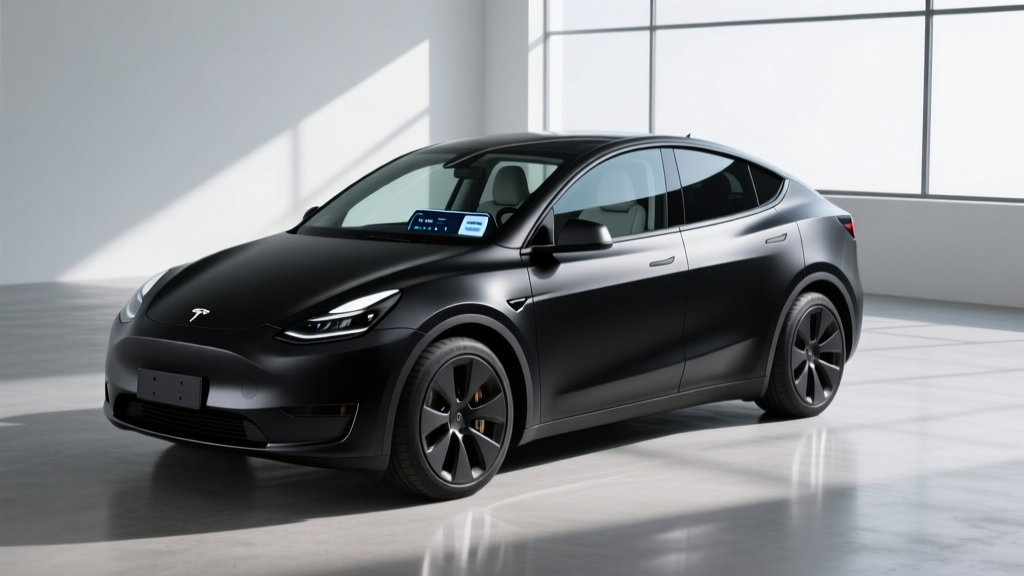
If you're shopping for a Tesla Model Y and wondering which Model Y has HW4, the answer for the 2026 model year is straightforward: all of them do. Tesla completed the transition from Hardware 3 (HW3) to Hardware 4 (also called AI4) across the entire Model Y lineup in early 2024, and every new Model Y rolling out of Giga Texas, Giga Berlin, and Giga Shanghai since then carries the upgraded computer. Whether you choose the Long Range Rear-Wheel Drive, Long Range All-Wheel Drive, or Performance trim, HW4 is standard equipment.
But the computer is only part of the story. The 2026 Model Y — refreshed with the "Juniper" update that debuted in early 2025 — brings meaningful changes to range, interior quality, ride comfort, and charging speed. Below is the complete buyer's guide with every number that matters.
2026 Model Y Trim Breakdown and HW4 Confirmation
| Spec | Long Range RWD | Long Range AWD | Performance |
|---|---|---|---|
| HW4 (AI4) Computer | ✅ Standard | ✅ Standard | ✅ Standard |
| EPA Range | 320 mi | 305 mi | 285 mi |
| Battery (usable) | ~75 kWh (NMC) | ~75 kWh (NMC) | ~75 kWh (NMC) |
| Drivetrain | Rear-Wheel Drive | Dual-Motor AWD | Dual-Motor AWD |
| Horsepower | 346 hp | 384 hp | 456 hp |
| 0-60 mph | 5.8 sec | 4.8 sec | 3.5 sec |
| Top Speed | 125 mph | 125 mph | 155 mph |
| Max DC Fast Charge | 250 kW | 250 kW | 250 kW |
| 10-80% DC Time | ~25 min | ~25 min | ~25 min |
| Level 2 Rate (11.5 kW) | ~37 mi/hr | ~37 mi/hr | ~37 mi/hr |
| MPGe (combined) | 122 MPGe | 116 MPGe | 111 MPGe |
| kWh/100 mi | 27 | 29 | 30 |
| Base MSRP | $44,990 | $47,990 | $52,490 |
Source: Tesla Model Y design studio and fueleconomy.gov.
What HW4 Actually Does (And Why It Matters)
Hardware 4 is Tesla's second-generation FSD computer, and it's a substantial upgrade over HW3 in three measurable ways:
- Cameras: HW4 uses higher-resolution cameras (up from 1.2 MP to 5 MP) with a wider field of view, improving object detection at distance — particularly relevant for highway-speed Autopilot and FSD (Supervised) performance.
- Compute: Tesla claims roughly 2–3× the processing throughput versus HW3, enabling more complex neural-net inference for the vision-only FSD stack.
- Radar deletion: HW4 vehicles ship without radar (Tesla removed ultrasonic sensors and radar starting in 2022–2023). The higher-fidelity cameras compensate, though some owners report occasional phantom braking in heavy rain — a known limitation of pure vision systems.
If you're buying a used Model Y from 2022 or early 2023, HW4 is not guaranteed. Tesla began installing HW4 in Model Y vehicles built at Giga Texas starting around March 2023, but Fremont-built and early Berlin/Shanghai units from that era may still carry HW3. The only reliable way to confirm is to check the vehicle's Software menu (Controls → Software → Additional Vehicle Information) or ask Tesla service to pull the build sheet.
Real-World Range: What the EPA Sticker Doesn't Tell You
EPA Sticker: 320 mi (Long Range RWD)
Highway (70-80 mph, mild weather): ~265–285 mi
Cold weather (below 32°F, mixed driving): ~220–250 mi
City/regenerative-heavy driving: ~290–315 mi
The Model Y Long Range RWD's 320-mile EPA rating is among the best in the compact electric SUV segment, but EPA tests use low average speeds and mild temperatures. In our experience and consistent with third-party testing, highway driving at 75+ mph shaves roughly 10–15% off the sticker number. Cold weather compounds this — lithium-ion batteries lose efficiency below freezing, and cabin heating draws significant energy unless you rely on the standard heat pump (which the Juniper refresh includes on all trims).
The Long Range AWD drops to 305 miles EPA, and the Performance trim with its 21-inch wheels and stickier tires falls to 285 miles. If maximum range is your priority, the RWD is the efficiency champion.
Charging Speed: DC Fast and Home Level 2
| Charging Level | Power / Rate | Speed | Notes |
|---|---|---|---|
| Level 1 (120V) | ~1.4 kW | ~4 mi/hr | Emergency/trickle only |
| Level 2 (240V, 48A) | 11.5 kW | ~37 mi/hr | Full overnight charge in ~8 hr |
| DC Fast (V3 Supercharger) | Peak 250 kW | ~160 mi in 15 min | 10-80% in ~25 min |
| DC Fast (V4 Supercharger) | Peak 250 kW* | ~160 mi in 15 min | *Model Y limited to 250 kW; V4 supports higher for future vehicles |
Charging curve reality: The Model Y peaks at 250 kW only between roughly 10–30% State of Charge. Above 50%, the rate tapers significantly — by 80%, you're pulling around 60–70 kW. This is normal for NMC chemistry and is managed by the battery thermal system. If you're road-tripping, plan to charge from 10–80% and skip topping off to 100% unless it's your final destination; the last 20% can add 20+ minutes.
At home on a 48-amp Level 2 wall connector (the Tesla Gen 3 Wall Connector, ~$475), expect a full 0–100% charge in about 8 hours. Most owners who plug in nightly never think about charging again — the car adds back a day's worth of driving in 1–2 hours.
Pricing, Tax Credit, and Total Cost
| Trim | Base MSRP | Destination | Est. §30D Credit | Effective Price |
|---|---|---|---|---|
| Long Range RWD | $44,990 | $1,390 | Up to $7,500* | ~$38,880 |
| Long Range AWD | $47,990 | $1,390 | Up to $7,500* | ~$41,880 |
| Performance | $52,490 | $1,390 | Up to $7,500* | ~$46,380 |
*Federal EV tax credit (IRS §30D) eligibility is not automatic. For 2026, the Model Y qualifies as an SUV under the $80,000 MSRP cap. However, you must also meet:
- Income caps: Modified AGI ≤ $150,000 (single), $225,000 (head of household), $300,000 (joint).
- Battery sourcing: A percentage of critical minerals and battery components must be sourced from the U.S. or FTA partners — Tesla has largely met this through domestic and allied supply chains, but verify at the IRS eligible vehicles list before purchasing, as sourcing rules tighten annually.
- Point-of-sale transfer: You can elect to transfer the credit to the dealer at purchase, reducing your out-of-pocket cost immediately rather than waiting for a tax refund.
Always confirm current eligibility with a tax professional — rules change and individual circumstances vary.
Interior, Cargo, and the Juniper Refresh
The 2026 Model Y carries forward the Juniper interior overhaul that arrived in early 2025. Key improvements over the pre-refresh model:
- Ventilated front seats (finally) and revised cushioning with better bolstering
- Ambient lighting strip across the dashboard and doors
- Power-folding second row with a one-touch button in the cargo area
- Revised suspension tuning — noticeably quieter and more compliant over rough pavement, addressing one of the biggest complaints about the pre-2025 Model Y
- Rear-seat 8-inch touchscreen for climate and entertainment
Cargo volume: 30.2 cu ft behind the second row, expanding to 72.1 cu ft with the rear seats folded. The front trunk (frunk) adds 4.1 cu ft — enough for a charging cable bag and a small soft cooler. Rear legroom measures 41.6 inches, competitive with the Hyundai Ioniq 5 and Ford Mustang Mach-E.
Pros, Cons, and the Competition
- Best-in-class Supercharger network access (17,000+ stalls in North America)
- 320-mile EPA range (LR RWD) beats most rivals
- HW4 standard on every trim — no guesswork
- Excellent energy efficiency (27 kWh/100 mi LR RWD)
- Strong over-the-air update cadence
- Point-of-sale tax credit transfer available
- No Apple CarPlay / Android Auto
- Turn-signal stalk removed (steering-wheel buttons) — polarizing
- Phantom braking still reported in heavy rain (vision-only system)
- Insurance premiums run 15–25% higher than segment average
- FSD (Supervised) remains a $8,000 option or $99/mo subscription — not included
- Build quality improved but still inconsistent panel gaps reported
How It Stacks Up Against Key Rivals
Versus the Hyundai Ioniq 5 (310-mi range, 800V architecture, ~18-min 10-80% charge): the Ioniq 5 charges faster on compatible 350 kW chargers, but the Model Y's Supercharger network reliability remains a significant road-trip advantage. The Ioniq 5 also offers CarPlay.
Versus the Ford Mustang Mach-E (312-mi Extended Range): comparable range, but the Mach-E's public charging experience on non-Tesla networks is less consistent. Ford now uses NACS ports and can access Superchargers with an adapter, narrowing this gap.
Versus the BMW iX xDrive50 (324-mi, premium segment): more luxurious and quieter, but starts at ~$70,000 — a different price bracket entirely.
Battery, Warranty, and Long-Term Ownership
Tesla uses NMC (nickel manganese cobalt) chemistry in all Model Y trims. NMC offers higher energy density than LFP (lithium iron phosphate), enabling the 320-mile range in a relatively compact pack. The trade-off: NMC degrades slightly faster than LFP over thousands of cycles, and Tesla recommends daily charging to 80–90% rather than 100% for routine use.
Battery and drive unit warranty: 8 years / 120,000 miles (Long Range and Performance), with a guaranteed minimum 70% capacity retention over that period. The base limited vehicle warranty is 4 years / 50,000 miles.
Based on fleet data aggregated by sources like Tesla's Impact Report, Model Y batteries are retaining roughly 85–88% capacity at 100,000 miles — well above the warranty floor. Replacement cost out of warranty is estimated at $12,000–$16,000, though full pack replacements remain rare for vehicles under 150,000 miles.
Who the 2026 Model Y Is For
- You want the most reliable public charging network in North America without adapters
- You drive 30+ miles daily and want 300+ mile range for weekend road trips
- You value frequent OTA updates and a minimalist, screen-forward interior
- You're a family of 3–4 who needs 30 cu ft of cargo space with room to grow
- You insist on Apple CarPlay/Android Auto (check the Ioniq 5 or EV6)
- You want the fastest possible DC charging (Hyundai/Kia 800V platform charges 10-80% in ~18 min)
- You prefer traditional controls (stalks, buttons) over screen-based interfaces
Frequently Asked Questions
Does every 2026 Tesla Model Y have HW4?
Yes. All 2026 Model Y trims — Long Range RWD, Long Range AWD, and Performance — ship with the HW4 (AI4) computer as standard equipment. There is no trim or option that downgrades to HW3.
How do I check if a used Model Y has HW4?
On the vehicle's touchscreen, go to Controls → Software → Additional Vehicle Information. It will list "HW4" or "AI4" if equipped. You can also check the side repeater cameras: HW4 vehicles have slightly larger, redesigned repeater camera housings. For certainty, Tesla Service can pull the build configuration using the VIN.
Does HW4 make FSD (Supervised) safer or better?
HW4's higher-resolution cameras and increased compute allow Tesla's neural networks to process more data with greater fidelity. In practice, owners report fewer phantom-braking events and smoother lane changes versus HW3 — but FSD (Supervised) remains a Level 2 system requiring constant driver attention. It is not autonomous.
How much does it cost to charge a Model Y at home?
At the U.S. average residential electricity rate of ~$0.17/kWh, a full 75 kWh charge costs roughly $12.75 and delivers ~280 real-world miles — about $0.045 per mile. Compare that to a 25 MPG gas SUV at $3.40/gallon, which costs ~$0.136 per mile. Home charging saves most owners $800–$1,200 per year versus gasoline.
Does the 2026 Model Y qualify for the $7,500 federal tax credit?
The Model Y is eligible for up to $7,500 under IRS §30D, provided you meet the income caps ($150K single / $300K joint) and the vehicle's battery components and critical minerals meet annual sourcing thresholds. The MSRP is well under the $80,000 SUV cap. Always verify current eligibility on the IRS eligible vehicle list before purchasing, and consult a tax professional for your specific situation.
Is the Model Y worth it versus the Ioniq 5 or Mach-E?
If Supercharger network access and software integration are top priorities, the Model Y remains the default choice. If you value faster DC charging (800V), Apple CarPlay, or a more traditional interior, the Ioniq 5 is a strong alternative. The Mach-E offers comparable range and now has Supercharger access via adapter, but its public charging experience is less seamless.