Where Is the Tesla Car Made? Every Global Factory Explained
Tesla operates a network of vertically integrated "Gigafactories" across three continents, each producing specific models for regional markets. If you've ever looked at a Tesla window sticker and wondered where your car was actually assembled, the answer depends entirely on which model you buy and where you live. Here's the complete 2026 breakdown before we dive into a detailed review of Tesla's best-selling model.
| Factory | Location | Models Produced | Primary Market |
|---|---|---|---|
| Fremont Factory | Fremont, California | Model S, Model X, Model Y (AWD), Model 3 (Performance) | North America |
| Gigafactory Texas | Austin, Texas | Model Y (RWD/AWD), Cybertruck | North America |
| Gigafactory Shanghai | Shanghai, China | Model 3, Model Y | China, Europe, Asia-Pacific |
| Gigafactory Berlin-Brandenburg | Grünheide, Germany | Model Y | Europe |
| Gigafactory Nevada | Sparks, Nevada | Electric motors, battery components, Semi | North America |
For US buyers, your Tesla Model Y or Model 3 was almost certainly built in Fremont, California, or Austin, Texas. Tesla shifted significant Model Y production to Giga Texas starting in 2022, and by 2026 both facilities supply the North American market. The Fremont plant — Tesla's original factory, acquired from Toyota and GM in 2010 — remains the sole source for Model S and Model X. Meanwhile, Giga Berlin serves European customers, and Giga Shanghai handles China plus export markets.
This matters beyond curiosity: US-built Teslas are the ones that must meet IRS §30D battery-sourcing and critical-minerals requirements to qualify for the federal tax credit. Vehicles assembled in Shanghai or Berlin for other markets follow different incentive structures.
2026 Tesla Model Y Long Range AWD: The Fremont/Austin Workhorse Reviewed
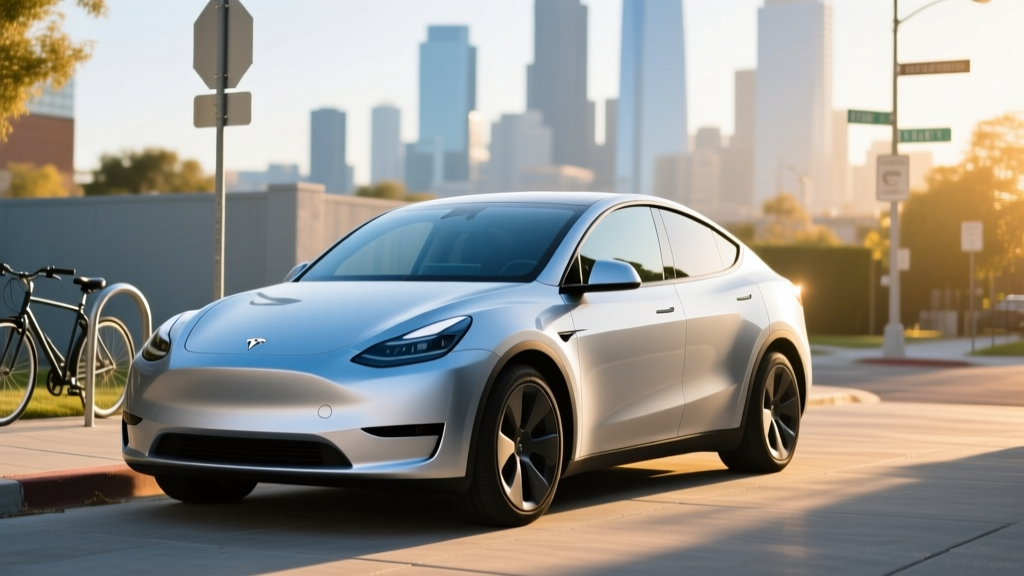
The Model Y remains Tesla's volume leader and one of the best-selling vehicles of any powertrain in the US. For 2026, the Long Range AWD variant continues as the sweet spot for most buyers — balancing range, performance, and price. Below is the complete spec breakdown for the US-market version assembled at Fremont or Giga Texas.
| Spec | Value |
|---|---|
| EPA Range | 310 miles |
| Battery Capacity | ~75 kWh usable (NMC chemistry) |
| Drivetrain | Dual-motor AWD |
| Horsepower | 384 hp (combined) |
| 0–60 mph | 4.8 seconds |
| Max DC Fast Charge | 250 kW peak |
| 10–80% DC Charge Time | ~27 minutes |
| Level 2 Home Charge Rate | 11.5 kW (44 mi/hr) |
| Efficiency | 122 MPGe combined / 28 kWh/100 mi |
| Cargo Volume | 30.2 cu ft (rear seats up) / 72.1 cu ft (folded) |
| Rear Legroom | 41.6 inches |
| Base MSRP | $44,990 (before destination) |
| Battery Warranty | 8 years / 120,000 miles (70% min retention) |
Real-World Range: What 310 EPA Miles Actually Means
EPA Sticker: 310 miles
Highway (70–75 mph, moderate temps): ~255–275 miles
City/Mixed (regenerative braking active): ~290–310 miles
Cold Weather (below 32°F, heater on): ~210–245 miles
The EPA's 310-mile estimate is achievable in mild conditions with mixed driving, but the Model Y's real-world range varies significantly based on speed, temperature, and terrain. At sustained highway speeds of 70–75 mph, aerodynamic drag pushes consumption higher — expect roughly 255–275 miles before needing a charger. In city driving where regenerative braking recaptures energy, you'll get closer to the sticker number.
Cold weather is the great equalizer for all EVs. In sub-freezing temperatures, the Model Y's heat pump (standard since 2021) helps, but battery chemistry slows and cabin heating draws significant energy. Plan for a 20–30% range reduction in deep winter. Tesla's preconditioning feature — which warms the battery when you navigate to a Supercharger — helps restore charging speed at your destination but doesn't recover lost range.
The Long Range AWD uses NMC (nickel manganese cobalt) chemistry, which offers higher energy density than LFP but is more sensitive to sustained 100% states of charge. Tesla recommends daily charging to 80–90% and saving 100% for road trips. This preserves long-term battery health.
Charging Speed: DC Fast Charge and Home Level 2 Breakdown
Charging speed is where the Model Y's 250 kW peak rate needs context. Like all EVs, the Model Y doesn't sustain peak power throughout the session — the charge curve tapers significantly above 50–60% state of charge to protect the battery.
| Charging Level | Power | Miles Added per Hour | Typical Use Case |
|---|---|---|---|
| Level 1 (120V outlet) | ~1.4 kW | ~4–5 mi/hr | Emergency/overnight trickle |
| Level 2 (240V, 48A) | 11.5 kW | ~44 mi/hr | Home daily charging (7–8 hr full charge) |
| DC Fast Charge (V3 Supercharger) | 250 kW peak | ~162 mi in 15 min | Road trips, 10–80% in ~27 min |
| DC Fast Charge (V4 Supercharger) | 250 kW (Model Y limited) | Same as V3 | Newer stations; car-side limit applies |
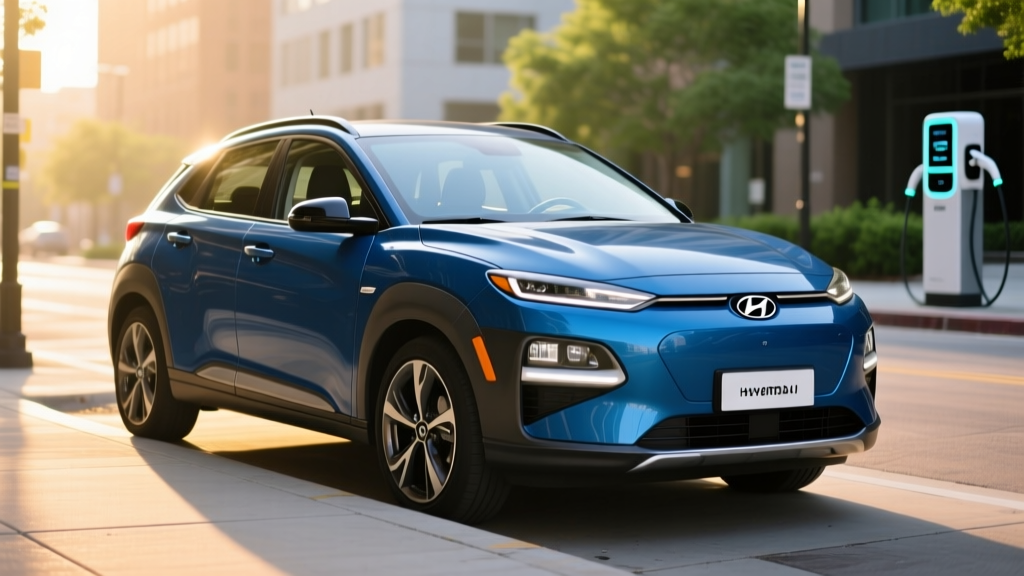
On a V3 or V4 Supercharger with a preconditioned battery, the Model Y peaks near 250 kW in the 10–30% state-of-charge window, then progressively tapers. The 10–80% session takes approximately 27 minutes — competitive but not class-leading. The Hyundai Ioniq 5, with its 800V architecture, achieves 10–80% in roughly 18 minutes at a 350 kW charger.
At home, a 48-amp Level 2 wall connector on a 60-amp circuit delivers 11.5 kW, adding roughly 44 miles of range per hour. A full overnight charge from 20% to 90% takes about 7–8 hours, which covers virtually any daily commute. Installation of a home Level 2 charger typically costs $500–$2,000 depending on electrical panel capacity and run distance — budget for a potential panel upgrade if your home has a 100-amp service.
Performance, Interior, and Technology
The dual-motor AWD powertrain produces 384 combined horsepower and launches the Model Y to 60 mph in 4.8 seconds — genuinely quick for a family crossover. The instant torque delivery makes highway merging effortless, and the low center of gravity (battery pack mounted under the floor) keeps body roll minimal through corners. Ride quality is firm but compliant; Tesla has softened the suspension tuning in recent refreshes compared to the harsh early models.
Inside, the minimalist cabin centers on a 15.4-inch touchscreen that handles virtually all vehicle functions — climate, mirrors, glovebox, and media. There's no traditional instrument cluster; speed and navigation appear in the top-left corner of the main display. Build quality from Fremont has improved substantially, though panel gaps and interior material quality still lag behind competitors like BMW and Mercedes at this price point.
Cargo space is generous: 30.2 cubic feet behind the second row and 72.1 cubic feet with seats folded flat. The front trunk (frunk) adds 4.1 cubic feet for charging cables or a small bag. Rear legroom of 41.6 inches accommodates adults comfortably, though the sloping roofline cuts into headroom for passengers over six feet.
Autopilot and FSD (Supervised): Every Model Y ships with basic Autopilot (traffic-aware cruise control and lane centering). Tesla's Full Self-Driving (Supervised) package adds automatic lane changes, traffic light recognition, and city-street navigation. Critically, FSD remains an SAE Level 2 driver-assist system — the driver must remain fully attentive with hands on the wheel at all times. It is not autonomous driving.
Pricing, Trim Levels, and Federal Tax Credit Eligibility
| Trim | Base MSRP | Est. After §30D Credit | Build Location |
|---|---|---|---|
| Long Range RWD | $42,990 | ~$35,490* | Giga Texas |
| Long Range AWD | $44,990 | ~$37,490* | Fremont / Giga Texas |
| Performance AWD | $48,990 | ~$41,490* | Fremont |
*Tax credit estimates assume full $7,500 eligibility under IRS §30D rules. Eligibility depends on buyer income caps ($150K single / $300K joint), vehicle MSRP caps ($80K for SUVs), battery critical-mineral sourcing, and North American assembly. The credit can now be transferred to the dealer at point of sale as an instant discount. Always verify current eligibility on the IRS website and with a tax professional before purchasing.
The Model Y qualifies as an SUV under IRS classification, which means the MSRP cap is $80,000 (vs. $55,000 for sedans) — all current trims clear this threshold comfortably. Tesla's North American assembly and ongoing battery-sourcing compliance have kept the Model Y eligible for the full $7,500 credit for most qualifying buyers through early 2026, though critical-mineral sourcing rules tighten annually.
Pros, Cons, and Who Should Buy the Model Y
- Best-in-class Supercharger network (20,000+ stalls in North America)
- Strong real-world efficiency (28 kWh/100 mi)
- Over-the-air updates continuously add features
- Spacious cargo area with flat load floor
- Eligible for full $7,500 federal tax credit
- Quick 4.8-second 0–60 time for the class
- Touchscreen-only controls frustrate some drivers
- DC fast-charge speed (250 kW peak) trails 800V rivals
- No Apple CarPlay or Android Auto support
- Insurance premiums run 20–40% higher than gas equivalents
- FSD package costs $8,000 extra — value is debatable
- Ride quality still firm on rough pavement
- Daily commuters with home charging access who want minimal fuel cost and low maintenance
- Young families needing crossover cargo space without stepping up to a larger, more expensive EV
- Road-trip enthusiasts who value Tesla's Supercharger network reliability over max charging speed
- Tech-forward buyers comfortable with a screen-centric interface and OTA feature updates
Consider alternatives if: you need third-row seating (look at the Kia EV9), want Apple CarPlay (Hyundai Ioniq 5), or need faster DC charging for frequent long highway runs.
Frequently Asked Questions
Where is the Tesla Model Y for the US market manufactured?
US-market Model Y vehicles are assembled at either the Fremont Factory in California or Gigafactory Texas in Austin. Your specific vehicle's build location appears on the window sticker (Monroney label) and in the VIN. Both US factories produce vehicles eligible for the federal §30D tax credit.
What is the real-world range of the 2026 Model Y Long Range AWD?
The EPA rates it at 310 miles. In real-world highway driving at 70–75 mph, expect 255–275 miles. City driving with regenerative braking gets you closer to 290–310 miles. In freezing temperatures, plan for 210–245 miles due to battery chemistry limitations and cabin heating demand.
How fast does the Model Y charge at home and on the road?
At home on a 240V Level 2 charger (48A), the Model Y adds about 44 miles of range per hour, fully charging overnight in 7–8 hours. On a V3 Supercharger at 250 kW peak, a 10–80% session takes approximately 27 minutes. The charge curve tapers above 50% SoC, so the last 20% takes disproportionately longer.
Does the 2026 Model Y qualify for the $7,500 federal EV tax credit?
Yes, for qualifying buyers. The Model Y is assembled in the US, is classified as an SUV (MSRP cap of $80,000), and Tesla's battery supply chain has met critical-mineral and component-sourcing thresholds. However, buyer income must not exceed $150,000 (single) or $300,000 (joint). The credit can be applied as a point-of-sale discount. Verify current eligibility at IRS.gov before purchase.
Is the Model Y worth buying over competitors like the Ioniq 5 or Equinox EV?
The Model Y wins on Supercharger network access, efficiency, cargo space, and software maturity. The Hyundai Ioniq 5 offers faster 800V charging (~18 min 10–80%), Apple CarPlay, and a more conventional interior. The Chevrolet Equinox EV undercuts on price but delivers less range and performance. If you road-trip frequently and value charging infrastructure above all, the Model Y remains the strongest choice. If you prioritize faster charging stops and traditional controls, test-drive the Ioniq 5.
What is the battery warranty on the Tesla Model Y?
Tesla covers the Long Range AWD battery and drive unit for 8 years or 120,000 miles, whichever comes first, with a minimum 70% capacity retention guarantee. If the battery degrades below 70% of original capacity within the warranty period, Tesla will repair or replace it. Real-world data from high-mileage Tesla owners suggests NMC packs typically retain 85–90% capacity at 100,000 miles under normal charging habits.