The Short Answer: Normal, Illinois
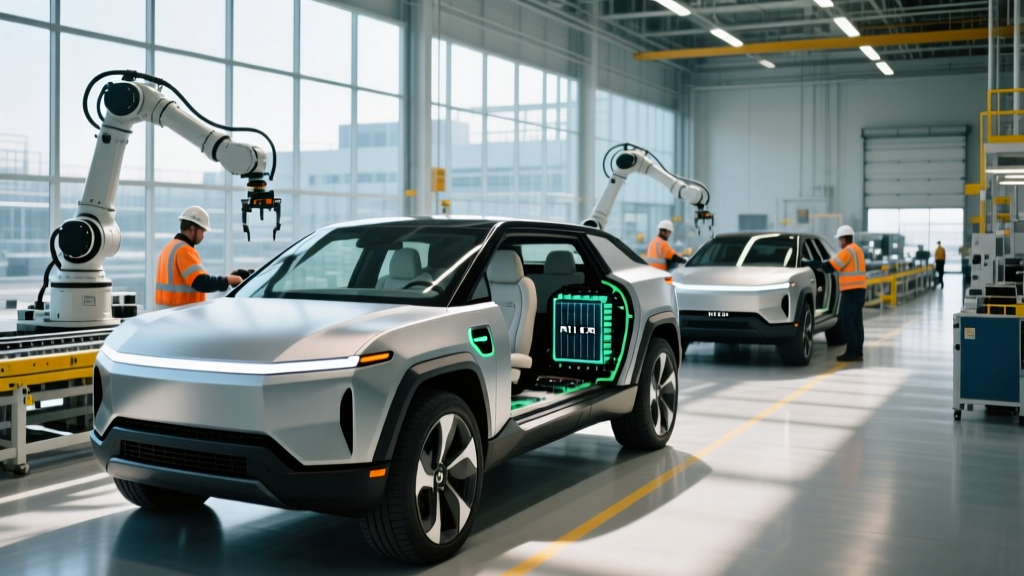
Every Rivian R1S SUV and R1T pickup sold today rolls off the same assembly line in Normal, Illinois — a 3.3-million-square-foot facility that Rivian acquired from Mitsubishi in 2017 and retooled into one of the most vertically integrated EV factories in North America. As of early 2026, the plant operates two shifts and produces roughly 60,000–70,000 vehicles per year, with capacity to scale toward 150,000 as demand and supply chains allow.
The choice of Illinois is strategic: central U.S. logistics, proximity to major rail lines, a workforce retrained from the former Mitsubishi operation, and state incentive packages that helped Rivian survive its cash-burn-heavy launch years. Rivian also operates a battery-pack assembly facility nearby and sources its Gen 2 LFP and NMC cells from partners including LG Energy Solution (South Korea/U.S.) and Samsung SDI, though final pack integration happens in-state.
Looking ahead, Rivian has announced a second U.S. manufacturing site — a $5 billion plant in Stanton, Georgia — expected to come online in 2028 to produce the midsize R2 crossover and R3 compact. Until then, every Rivian you can buy is a product of Normal, Illinois.
2026 Rivian Lineup at a Glance: R1T and R1S
Rivian's consumer lineup remains focused: the R1T midsize pickup and the R1S three-row SUV, both riding the same skateboard platform with shared battery, motor, and software architecture. Below is the core spec comparison for the current model year.
| Spec | R1T Dual-Motor AWD | R1T Tri-Motor AWD | R1S Dual-Motor AWD | R1S Tri-Motor AWD |
|---|---|---|---|---|
| EPA Range (Standard Battery) | 270 mi | — | 265 mi | — |
| EPA Range (Large Battery) | 352 mi | 328 mi | 352 mi | 328 mi |
| EPA Range (Max Battery, NMC) | 420 mi | 405 mi | 410 mi | 395 mi |
| Battery Capacity (usable) | 92 kWh (Standard, LFP) / 109 kWh (Large, NMC) / 149 kWh (Max, NMC) | |||
| Horsepower | 533 hp | 850 hp | 533 hp | 850 hp |
| 0–60 mph | 4.5 sec | 2.9 sec | 4.5 sec | 3.0 sec |
| Drivetrain | AWD (Dual- or Tri-Motor) | |||
| Max DC Fast Charge | 220 kW (NMC Large/Max) / ~180 kW (LFP Standard) | |||
| 10–80% DC Time | ~22 min (Large NMC) / ~28 min (Standard LFP) | |||
| Level 2 Home Charging | 11.5 kW onboard (~25–30 mi/hr) | |||
| Towing Capacity (R1T) | 11,000 lbs | N/A | ||
| Base MSRP | $69,900 | $99,900 | $75,900 | $104,900 |
Real-World Range: What the EPA Numbers Don't Tell You
Rivian's LFP Standard Battery pack (92 kWh usable) trades range for lower cost and superior cycle life. LFP chemistry tolerates daily 100% charging without meaningful degradation — a practical advantage for commuters who can charge at home overnight. The trade-off is roughly 80 fewer miles of range and slower DC charging above 80% SoC due to LFP's voltage curve.
The Max Battery (149 kWh, NMC) achieves its 400+ mile rating mostly in mixed city/suburban driving. On a sustained 75-mph highway run, the aerodynamic penalty of the R1T's flat front and open bed cuts efficiency to roughly 2.2–2.4 kWh/mi, yielding around 340–360 real-world miles. The R1S benefits from a slightly more aerodynamic closed roofline, gaining 5–10 miles of real-world range over the R1T in equivalent conditions.
Charging Speed: DC Fast, Level 2, and the Charge Curve
Rivian's NACS (Tesla-style) charge port is now standard on all 2026 models, giving R1T and R1S owners direct access to Tesla Supercharger V3 and V4 stations without an adapter — a significant network advantage. Here's what charging actually looks like in practice:
| Charging Level | Power | Speed | Notes |
|---|---|---|---|
| Level 1 (120V) | ~1.4 kW | ~3 mi/hr | Emergency/trickle only |
| Level 2 (240V, 48A) | 11.5 kW | ~25–30 mi/hr | Full charge in 10–13 hours (Large pack) |
| DC Fast (NMC Large) | Peak 220 kW | 10–80% in ~22 min | Tapers to ~80 kW above 80% |
| DC Fast (LFP Standard) | Peak ~180 kW | 10–80% in ~28 min | Slower taper; 100% charge OK daily |
| DC Fast (NMC Max) | Peak 220 kW | 10–80% in ~35 min | Larger pack = longer session at peak |
A critical ownership note: Rivian's thermal management system is robust, but repeated back-to-back DC fast charges in hot weather (>90°F) can trigger thermal throttling, reducing peak charge rate by 15–20%. Preconditioning the battery via the Rivian app before arriving at a charger is essential for hitting advertised peak kW — without it, expect 30–50 kW less in the first 5 minutes of the session.
For home charging, Rivian recommends a hardwired 60A circuit delivering 48A continuous to the vehicle. Installation costs typically range from $800–$2,500 depending on panel capacity and conduit run, on top of the $700–$1,200 cost of a quality Level 2 EVSE (ChargePoint, Emporia, or Wallbox).
Performance, Efficiency, and Practicality
The Dual-Motor AWD configuration (one motor per axle) delivers 533 horsepower and a 4.5-second 0–60 time — brisk for a vehicle weighing over 6,700 lbs. The Tri-Motor adds a rear-axle secondary motor, pushing output to 850 hp and dropping the 0–60 to under 3 seconds, rivaling a Porsche Taycan in a body that can tow 11,000 lbs.
Efficiency varies significantly by configuration. Per fueleconomy.gov, the R1S Dual-Motor Large Battery achieves approximately 73 MPGe combined (roughly 46 kWh/100 mi). The Tri-Motor drops to about 65 MPGe. For comparison, the Tesla Model X Long Range achieves 102 MPGe — a gap driven primarily by the Rivian's heavier curb weight, taller profile, and off-road-oriented tires.
Cargo and Passenger Space
- R1T bed length: 54 inches (4.5 ft) with tailgate up; 82 inches with tailgate down
- R1T Gear Tunnel: 11 cu ft lockable pass-through storage behind the rear seats — a Rivian-exclusive feature
- R1S cargo (behind 3rd row): 20 cu ft
- R1S cargo (2nd row folded): 57 cu ft
- R1S cargo (all rows folded): 104 cu ft
- Front trunk (frunk): 11 cu ft (both R1T and R1S)
- Rear legroom (R1S 2nd row): 38.5 inches
- 3rd row (R1S): Best suited for children; 29 inches of legroom
Pricing, Trims, and Federal Tax Credit Eligibility
Rivian prices its vehicles across four trim/equipment tiers: Adventure, Premium, Ascend (luxury), and the performance-oriented Tri-Motor variants. Here's where the lineup stands for 2026:
| Model / Config | Base MSRP | Est. As-Tested (Premium) | §30D Credit Eligible? |
|---|---|---|---|
| R1T Dual-Motor Standard (LFP) | $69,900 | $74,500 | Yes — up to $7,500 (see rules) |
| R1T Dual-Motor Large (NMC) | $75,900 | $82,000 | Yes — up to $7,500 |
| R1T Dual-Motor Max (NMC) | $85,900 | $93,000 | Yes — up to $7,500 |
| R1T Tri-Motor Large | $99,900 | $107,000 | Yes — up to $7,500 |
| R1S Dual-Motor Standard (LFP) | $75,900 | $80,500 | Yes — up to $7,500 |
| R1S Dual-Motor Large (NMC) | $81,900 | $88,000 | Yes — up to $7,500 |
| R1S Tri-Motor Large | $104,900 | $112,000 | Yes — up to $7,500 |
IRS §30D Federal Tax Credit Rules (2026)
All Rivian R1T and R1S models fall under the $80,000 MSRP cap for trucks/SUVs (the R1T qualifies as a pickup; the R1S as an SUV). However, several configurations — particularly Tri-Motor and Max Battery variants — exceed this cap, making them ineligible for the federal credit. Key eligibility requirements per IRS §30D guidelines:
- MSRP cap: ≤ $80,000 for SUVs and pickups (R1T Dual-Motor trims qualify; most Tri-Motor and Max Battery trims do not)
- Buyer income cap: Modified AGI ≤ $300,000 (joint) / $225,000 (head of household) / $150,000 (single)
- Battery sourcing: Must meet escalating critical-mineral and battery-component requirements (Rivian's LG Energy Solution and Samsung SDI supply chains have largely complied as of 2025, but verify at point of sale)
- Point-of-sale transfer: Eligible buyers can apply the credit as an immediate price reduction at delivery rather than waiting for tax filing
- VIN registration: The dealer must register the vehicle sale on the IRS Energy Credits Online portal before delivery
Because eligibility hinges on the specific trim, battery pack, and final MSRP — plus your personal tax situation — consult a tax professional and verify current rules at irs.gov before ordering.
Technology, Driver Assists, and Ownership Experience
Rivian runs a fully custom software stack — no Android Automotive, no CarPlay (wireless or wired). The 15.6-inch center touchscreen and 12.3-inch driver cluster are powered by Rivian's in-house OS, which has matured significantly since launch. Over-the-air updates arrive every 4–6 weeks, adding features like improved route planning, camp mode refinements, and enhanced regenerative braking profiles.
Driver Assistance
Rivian's Driver+ system is a Level 2 SAE driver-assistance suite combining adaptive cruise control, lane centering, and automatic lane changes on divided highways. It requires continuous driver supervision — hands on the wheel, eyes on the road. It is not a self-driving system. In practice, Driver+ performs comparably to Ford BlueCruise on highway routes but lacks the hands-free capability of GM's Super Cruise or Ford's hands-free BlueCruise zones. Rivian has signaled a hands-free highway feature is in development but has not announced a release date.
Standout Features
- Gear Tunnel (R1T): 11 cu ft lockable, climate-adjacent pass-through storage — ideal for camping gear, golf bags, or groceries
- Camp Kitchen (optional): Slide-out induction cooktop and sink integrated into the Gear Tunnel ($5,000 option)
- Powered tonneau cover (R1T): Lockable, weather-sealed, with integrated LED lighting
- Rivian Waypoints charger network: Proprietary Level 2 chargers at trailheads, parks, and adventure destinations across 40+ states
- Vehicle-to-load (V2L): Powers devices up to 1,500W from bed and cabin outlets — useful for job sites, camping, or emergency backup
Pros, Cons, and Who Should Buy
- Best-in-class adventure utility (Gear Tunnel, V2L, camp kitchen)
- NACS native — full Supercharger access without adapter
- U.S.-manufactured with strong domestic supply chain
- Tri-Motor performance rivals sports cars in a 6,700-lb body
- LFP option for daily 100% charging without degradation anxiety
- 11,000-lb towing (R1T) with integrated trailer brake controller
- No Apple CarPlay or Android Auto
- Efficiency lags Tesla Model X and Ford F-150 Lightning
- Tri-Motor and Max Battery trims exceed §30D MSRP cap
- Third row (R1S) is cramped for adults
- Service center network still expanding — wait times in some metros
- DC fast charging slower than Hyundai Ioniq 5 / Kia EV9 class
Who This EV Suits Best
The R1T is ideal for active-lifestyle buyers who need a daily-driver pickup with genuine off-road capability, towing capacity, and adventure features that no legacy truck offers. It's less suited for fleet/commercial buyers focused on lowest cost-per-mile — the F-150 Lightning undercuts it on price and efficiency for work-truck duty.
The R1S fits families who want three rows, AWD, and a premium cabin but find the Tesla Model X too polarizing and the BMW iX too small. Its trade-off is efficiency and charging speed versus the Kia EV9, which charges faster (peak 240 kW) and starts lower but lacks Rivian's adventure DNA.
Battery Warranty and Long-Term Ownership
Rivian provides an 8-year / 175,000-mile battery and powertrain warranty — one of the most generous in the segment. The warranty covers capacity degradation below 70% of original capacity during the coverage period. For context, Tesla covers its Model X battery for 8 years / 150,000 miles at the same 70% threshold.
Rivian's LFP Standard Battery pack is expected to outlast the vehicle itself, with cycle life exceeding 3,000 full cycles before reaching 80% capacity — roughly 800,000 miles of theoretical use. The NMC Large and Max packs use proven chemistries from LG and Samsung, with real-world degradation data from 2022–2024 launch vehicles showing approximately 5–8% loss over the first 50,000 miles, consistent with industry norms.
Maintenance costs are low: no oil changes, no transmission fluid, cabin air filter replacement every 2 years, and brake pad life extended significantly by regenerative braking (many owners report >80,000 miles on original pads). The primary ownership cost variables are insurance (averaging $2,800–$3,600/year nationally for the R1T) and electricity, which at the U.S. average of $0.16/kWh works out to roughly $0.07–$0.08 per mile for the Dual-Motor configuration.
Frequently Asked Questions
Are Rivian vehicles made in China?
No. All Rivian R1T and R1S vehicles are manufactured in Normal, Illinois, USA. Some battery cells are sourced from LG Energy Solution (South Korea, with U.S. cell production in Michigan and Ohio) and Samsung SDI, but final vehicle assembly and battery-pack integration occur entirely in Illinois.
Is Rivian building a second factory?
Yes. Rivian has announced a $5 billion manufacturing facility in Stanton, Georgia, expected to begin production in 2028. This plant will produce the upcoming R2 midsize crossover and R3 compact SUV. Until it opens, all production remains in Normal, Illinois.
Does the Rivian R1T qualify for the $7,500 federal tax credit?
It depends on the trim. Dual-Motor configurations with an MSRP at or below $80,000 (Standard and Large Battery) generally qualify, subject to buyer income limits (≤$300K joint) and battery-sourcing requirements. Tri-Motor and Max Battery variants often exceed the MSRP cap and are ineligible. Always verify current eligibility on IRS.gov and with your tax professional.
How does Rivian's range compare to the Ford F-150 Lightning?
The R1T Dual-Motor Large Battery (352 mi EPA) edges out the F-150 Lightning Extended Range (320 mi EPA). However, the Lightning is more efficient per mile (lower kWh/100mi) and charges at up to 150 kW — slower than Rivian's 220 kW peak, but the Lightning is priced $15,000–$20,000 lower in comparable trims. The Rivian wins on range and charge speed; the Lightning wins on value and commercial practicality.
Can I charge a Rivian at a Tesla Supercharger?
Yes. All 2025+ Rivian vehicles ship with a native NACS charge port, providing direct access to Tesla's Supercharger network (V3 and V4 stalls) without an adapter. Older 2022–2024 Rivians with CCS ports can use the Rivian-provided NACS adapter for Supercharger access.
What is Rivian's real-world highway range?
For the R1T Dual-Motor Large Battery (352 mi EPA), expect 290–315 miles at highway speeds (70–75 mph) in moderate weather. Cold weather (below 30°F) reduces this to approximately 240–270 miles. The LFP Standard Battery yields roughly 220–240 highway miles in moderate conditions.