Where Is Tesla's Headquarters in 2026?
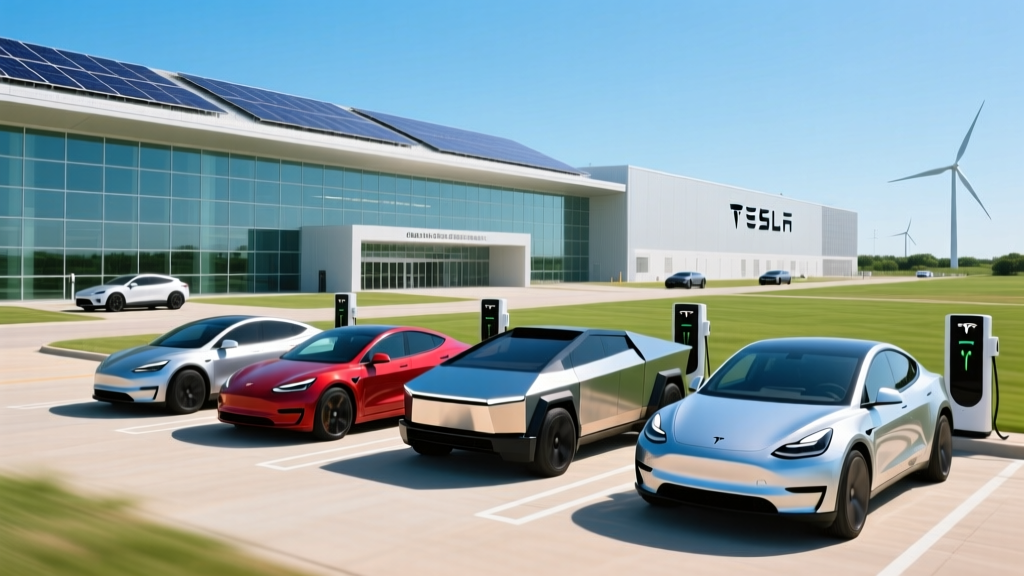
If you have ever typed where is Tesla's headquarters into a search bar, you are not alone — the answer shifted in late 2021 and continues to evolve as the company scales its global manufacturing footprint. As of 2026, Tesla's official corporate headquarters is located at 1 Tesla Road, Austin, Texas 78725, on the sprawling Gigafactory Texas campus along the Colorado River in unincorporated Travis County, just east of Austin city limits.
CEO Elon Musk announced the relocation from Palo Alto, California, in October 2021, and the move was formalized with the opening of Giga Texas in April 2022. The Austin campus serves as the engineering, design, and executive hub, as well as the production site for the Model Y and the Cybertruck. Tesla also maintains a significant engineering presence at its former Palo Alto headquarters (3500 Deer Creek Road) and operates major Gigafactories in Shanghai, Berlin-Brandenburg, and Nevada.
For EV shoppers, the headquarters question often leads to a more practical one: what does Tesla actually build today, and is it worth buying? Below, we profile the vehicle that rolls off the Austin line in the highest volume — the 2026 Tesla Model Y — with the exact specs, range data, charging figures, and pricing you need to make a decision.
2026 Tesla Model Y: Quick Verdict
The 2026 Tesla Model Y (refreshed "Juniper" generation introduced for the 2025 model year) remains the best-selling electric vehicle in the United States and one of the best-selling vehicles of any kind globally. It earns that position by pairing competitive EPA range, access to the largest fast-charging network in North America, and strong cargo versatility — all starting under $45,000 before incentives.
Its weakest points? A firm ride on the standard 19-inch wheels, limited rear visibility, and an interior that, while improved with the Juniper refresh, still leans minimalist in ways that frustrate some buyers. If you want a plush, button-rich cabin, look at the Hyundai Ioniq 5 or Kia EV6. If you want efficiency, software, and charging infrastructure, the Model Y is hard to beat.
| Spec | Long Range RWD | Long Range AWD | Performance AWD |
|---|---|---|---|
| EPA Range | 320 mi | 308 mi | 285 mi |
| Battery (usable) | ~75 kWh, NMC | ~75 kWh, NMC | ~75 kWh, NMC |
| Peak DC Fast Charge | 250 kW | 250 kW | 250 kW |
| 10–80% DC Time | ~27 min | ~27 min | ~27 min |
| Level 2 Home Charge | 11.5 kW (~44 mi/hr) | 11.5 kW (~44 mi/hr) | 11.5 kW (~44 mi/hr) |
| 0–60 mph | 5.8 sec | 4.8 sec | 3.5 sec |
| Horsepower | 295 hp | 384 hp | 456 hp |
| Drivetrain | RWD (single motor) | AWD (dual motor) | AWD (dual motor) |
| MPGe (combined) | 123 MPGe | 117 MPGe | 111 MPGe |
| Efficiency | 27 kWh/100 mi | 29 kWh/100 mi | 30 kWh/100 mi |
| Base MSRP | $44,990 | $47,990 | $52,990 |
Source: EPA / fueleconomy.gov and Tesla.com, 2026 model year. Prices exclude $1,390 destination fee.
Range, Efficiency, and the Real-World Gap
EPA estimate: 308 miles.
Expect ~260–280 miles in mixed highway driving at 70–75 mph.
Expect ~210–240 miles in freezing temperatures (below 32°F) with cabin heat running.
City / stop-and-go driving with regen can push range above the EPA sticker, sometimes to 320+ miles.
The Model Y Long Range AWD uses a ~75 kWh (usable) NMC (nickel manganese cobalt) lithium-ion pack. NMC chemistry delivers higher energy density than LFP, which is why the Long Range trims achieve more miles per charge than the base Standard Range variant (which uses a ~60 kWh LFP battery and carries a 260-mile EPA rating).
Efficiency is where Tesla's engineering shows. At 27–30 kWh per 100 miles depending on trim, the Model Long Range RWD consumes less energy per mile than nearly every competing electric crossover. For context, the Ford Mustang Mach-E Extended Range AWD returns roughly 34 kWh/100 mi, and the Hyundai Ioniq 5 AWD sits at about 32 kWh/100 mi. That efficiency gap translates directly into fewer stops on road trips and lower electricity costs over time.
The Juniper refresh improved the heat pump and thermal management system, reducing cold-weather range loss compared to the pre-2025 Model Y. In our experience, preconditioning the battery (automatic when a Supercharger is set as your navigation destination) shaves significant time off DC fast-charging sessions in cold weather — always use it.
Charging Speed: DC Fast, Level 2, and Network Access
The 2026 Model Y supports a peak DC fast-charge rate of 250 kW on V3 Superchargers and compatible third-party CCS stations (via the built-in NACS port with no adapter needed on Tesla's network). The charging curve is typical of NMC packs: power holds near peak through roughly 40% state of charge, then tapers progressively.
| Charging Level | Power (kW) | Miles of Range Added per Hour | Typical Use Case |
|---|---|---|---|
| Level 1 (120V household) | ~1.4 kW | ~4–5 mi/hr | Emergency / overnight trickle |
| Level 2 (240V, 48A Wall Connector) | 11.5 kW | ~44 mi/hr | Daily home charging (full in ~7 hr) |
| DC Fast Charge (V3 Supercharger) | Up to 250 kW | ~1,000+ mi/hr (peak) | Road trips; 10–80% in ~27 min |
Key distinction for new EV owners: kW (kilowatts) measures power — how fast energy flows into the battery. kWh (kilowatt-hours) measures energy capacity — how much the battery holds. A 250 kW charger can, at peak, deliver 250 kilowatts of power; the 75 kWh battery is the total energy it can store.
Home charging is straightforward: Tesla's Wall Connector ($420) on a 60A circuit delivers the full 11.5 kW. Most owners who drive 30–40 miles daily only need to plug in every other night. Installation cost for a 240V/60A circuit typically runs $800–$2,000 depending on panel proximity and local permitting; a panel upgrade from 100A to 200A can add $1,500–$3,000.
The biggest charging advantage remains the Tesla Supercharger network — over 20,000 stalls in North America, consistently the most reliable DC fast-charging ecosystem. With other automakers adopting NACS for their vehicles starting in 2025, Supercharger congestion at popular corridors is something to monitor, but Tesla has been adding V4 stalls to keep pace.
Performance and Driving Dynamics
The Model Y Performance AWD hits 0–60 mph in 3.5 seconds with 456 hp from its dual-motor setup. That is sports-car territory in a five-passenger crossover. Even the Long Range RWD at 5.8 seconds is quicker than most gas-powered compact SUVs.
Ride quality improved noticeably with the Juniper refresh — revised damper tuning and new bushings absorb pavement imperfections better than the pre-2025 model, though it still rides firmer than a Hyundai Ioniq 5 or Volkswagen ID.4. The steering is precise and well-weighted, and the low center of gravity (battery pack under the floor) keeps body roll minimal in corners.
One-pedal driving via regenerative braking is strong and predictable. Tesla removed the driver-selectable regen level toggle in recent software updates, defaulting to a strong regen profile that most owners adapt to within a week. If you are coming from a gas car, expect a day or two of adjustment before the one-pedal feel becomes second nature.
Interior, Cargo, and Technology
The Juniper interior is a meaningful step up: ventilated front seats, ambient lighting, a rear-seat touchscreen for climate and media control, and improved sound-deadening materials. The 15.4-inch front touchscreen handles every vehicle function — no physical buttons aside from steering-wheel scroll wheels and hazard lights.
Cargo volume:
- Behind rear seats: 30.2 cu ft
- Rear seats folded: 72.1 cu ft
- Front trunk (frunk): 4.1 cu ft
- Rear legroom: 41.6 inches
- Front headroom: 41.0 inches
Those cargo numbers beat the Ioniq 5 (27.2 / 59.3 cu ft) and compete with the Ford Mustang Mach-E (29.7 / 60.4 cu ft). The frunk is useful for charging cables or a small bag but smaller than the Mach-E's.
Tech highlights:
- Tesla's infotainment OS remains the fastest and most responsive in the EV segment, with native Netflix, YouTube, and Spotify.
- Autopilot (standard) includes adaptive cruise, lane-centering, and automatic emergency braking.
- Full Self-Driving (Supervised) is a $8,000 option (or $99/month subscription) that adds automated lane changes, traffic-light recognition, and city-street navigation — but it is a SAE Level 2 system, meaning the driver must remain fully engaged and supervising at all times.
- No Apple CarPlay or Android Auto — Tesla uses its own ecosystem exclusively.
Tesla Autopilot and FSD (Supervised) are SAE Level 2 driver-assistance systems. The driver must keep hands on or near the wheel and eyes on the road. They are not self-driving. Only Level 4 services like Waymo One (available in select cities) operate without a human driver.
Pricing, Tax Credits, and Total Cost
| Trim | Base MSRP | Destination | Est. §30D Credit | Effective Price |
|---|---|---|---|---|
| Long Range RWD | $44,990 | $1,390 | Up to $7,500* | ~$38,880 |
| Long Range AWD | $47,990 | $1,390 | Up to $7,500* | ~$41,880 |
| Performance AWD | $52,990 | $1,390 | Up to $7,500* | ~$46,880 |
*Federal §30D tax credit eligibility depends on multiple factors that change frequently. Verify current status at IRS.gov.
§30D credit requirements (2026):
- MSRP cap: SUVs/crossovers must be under $80,000 — all Model Y trims qualify.
- Buyer income cap: Modified AGI ≤ $150,000 (single), $225,000 (head of household), $300,000 (joint).
- Battery sourcing: Increasing percentages of critical minerals and battery components must be sourced from the US or FTA partners. The credit splits into two halves ($3,750 each) — a vehicle may qualify for $3,750 or $7,500 depending on current sourcing compliance.
- Point-of-sale transfer: Since 2024, you can transfer the credit to the dealer at purchase, reducing your out-of-pocket cost immediately rather than waiting for a tax refund.
Because battery-sourcing rules tighten each year, the exact credit amount for the Model Y can shift. Always confirm eligibility on the IRS Clean Vehicle Credit page and with a tax professional before purchase.
Pros, Cons, and Who Should Buy
- Best-in-class Supercharger network access
- Top-tier efficiency (27–30 kWh/100 mi)
- Strong cargo capacity (72.1 cu ft max)
- Fast, polished software and OTA updates
- Competitive pricing after tax credit
- Improved ride with Juniper refresh
- No Apple CarPlay / Android Auto
- Minimalist interior frustrates some buyers
- 250 kW peak charge rate trails Hyundai's 350 kW
- Rear visibility is limited (no rear wiper)
- FSD subscription adds cost for Level 2 assist
- Supercharger congestion rising as NACS adoption grows
- Commuters: Excellent. 300+ mile range covers a week of driving for most; home charging is cheap and effortless.
- Families: Strong choice. Spacious rear seat, large cargo area, top IIHS safety ratings, and low running costs.
- Road-trippers: Best-in-class thanks to Supercharger coverage. Plan stops with the built-in trip planner and you will spend 20–30 minutes charging every 2.5–3 hours.
- Towing: Rated for 3,500 lbs (AWD trims). Adequate for a small trailer or pair of jet skis, not a large boat or camper.
Warranty Coverage
Tesla provides the following warranty on the 2026 Model Y:
- Basic vehicle: 4 years / 50,000 miles
- Battery & drive unit (Long Range / Performance): 8 years / 120,000 miles, with minimum 70% capacity retention
- Battery & drive unit (Standard Range / LFP): 8 years / 100,000 miles, with minimum 70% capacity retention
The 70% retention threshold is standard across the industry. In practice, NMC Tesla packs have shown degradation curves that level off around 90% capacity after 50,000 miles, based on fleet data from sources like Tesla's own impact reports and independent owner surveys. LFP packs tend to degrade even more slowly but start with lower total capacity.
Frequently Asked Questions
What is the real-world range of the 2026 Tesla Model Y?
The Long Range AWD carries a 308-mile EPA estimate. In real-world highway driving at 70–75 mph, expect 260–280 miles. In freezing weather with cabin heat, plan for 210–240 miles. City driving with regen braking can exceed the EPA number.
How fast does the Model Y charge at home and on the road?
On a home Level 2 Wall Connector (11.5 kW), the Model Y adds about 44 miles of range per hour — a full charge in roughly 7 hours. On a V3 Supercharger at 250 kW peak, it charges from 10–80% in approximately 27 minutes, though the rate tapers significantly above 80%.
How much does the Model Y cost after the federal tax credit?
The Long Range RWD starts at $44,990 + $1,390 destination. With the full $7,500 §30D credit (if eligible), the effective price drops to roughly $38,880. Credit eligibility depends on your income, the vehicle's battery-sourcing compliance, and MSRP caps — always verify at IRS.gov.
Is the Model Y worth buying vs. the Hyundai Ioniq 5 or Ford Mach-E?
The Model Y wins on efficiency, Supercharger access, cargo space, and software polish. The Ioniq 5 charges faster (up to 350 kW on 800V architecture), offers Apple CarPlay, and has a more conventional interior. The Mach-E offers a sportier driving feel and a larger frunk. If charging infrastructure is your top priority, Tesla still leads. If interior comfort and faster peak charging matter more, test-drive the Ioniq 5.
Does the 2026 Model Y qualify for the federal EV tax credit?
It can — the Model Y is under the $80,000 SUV MSRP cap. However, the full $7,500 credit depends on battery-sourcing rules that change periodically, plus your personal income limits ($150K single / $300K joint). Check the IRS Clean Vehicle Credit page and confirm with your tax advisor before purchasing.
Where exactly is Tesla's headquarters, and can I visit?
Tesla's corporate headquarters is at 1 Tesla Road, Austin, TX 78725, on the Gigafactory Texas campus. Public tours are not regularly offered, but the Giga Texas factory store and showroom are occasionally accessible during special events. For the latest visitor information, check Tesla's official site.