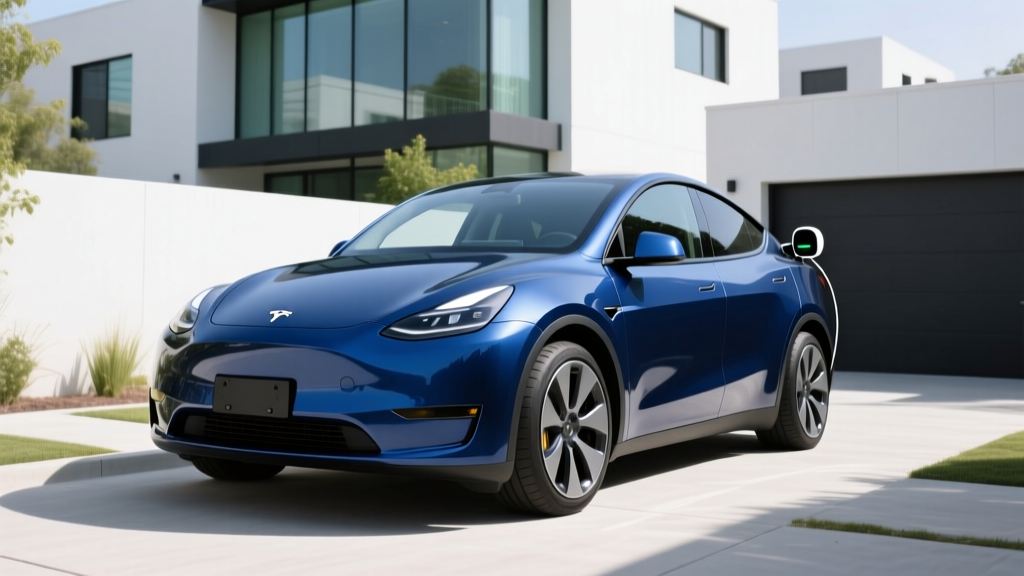
Tesla leases are back in a big way for 2026, and for many buyers, a lease is the smartest path into a Model Y, Model 3, or Model X. If you've been searching for where can I lease a Tesla, the short answer is: directly through Tesla's website and app, with availability depending on your state's leasing laws and current inventory allocation. This guide walks through exactly how Tesla leasing works in 2026, what you'll actually pay, and whether a Model Y lease makes financial sense compared to buying or choosing a competitor.
We'll use the 2026 Tesla Model Y Long Range AWD as our primary profile — it's Tesla's highest-volume lease vehicle and the benchmark compact electric SUV — then branch into how leasing applies across the lineup.
Tesla Leasing 101: How and Where It Works in 2026
Tesla handles leasing differently from legacy automakers. There are no dealer lots, no third-party lease brokers, and no haggling over money factors. Here's how the process actually works:
- Order online: Configure your vehicle at Tesla.com, select "Lease" as the payment method, and submit a soft credit pull.
- Delivery: Vehicles are delivered to your nearest Tesla Service Center or via touchless delivery, typically 2–8 weeks after order depending on allocation.
- State availability: Tesla leasing is not available in every state due to direct-sales and leasing regulations. As of 2026, states like Texas, Virginia, and a handful of others restrict or prohibit Tesla's direct lease model. Check Tesla's state-specific pages for confirmation before applying.
- No lease-end purchase option: Tesla removed the buyout option on most new leases starting in 2022, and this remains the case for 2026 models. You return the car or walk away. This is a critical difference from BMW, Hyundai, or Ford EV leases, where you can often buy at residual.
Monthly payments are fixed at order time based on your credit tier, term length (typically 24 or 36 months), and annual mileage allowance (10,000 or 12,000 miles/year are standard). Tesla's lease terms are non-negotiable — what you see in the app is what you get.
2026 Tesla Model Y Long Range AWD: Full Spec Breakdown
| Spec | 2026 Model Y Long Range AWD |
|---|---|
| EPA Range | 320 miles |
| Battery Capacity | ~78.1 kWh usable (NMC chemistry) |
| Drivetrain | Dual-Motor AWD |
| Horsepower | 384 hp (combined) |
| 0–60 mph | 4.8 seconds |
| MPGe (Combined) | 111 MPGe |
| Efficiency | 30 kWh/100 mi |
| Max DC Fast Charge | 250 kW peak (CCS via NACS adapter or native NACS) |
| 10–80% DCFC Time | ~25 minutes |
| Level 2 Home Charge | 11.5 kW (44 mi/hr on 48A circuit) |
| Cargo (rear seats up) | 30.2 cu ft |
| Cargo (rear seats folded) | 72.0 cu ft |
| Front Legroom | 41.8 in |
| Rear Legroom | 37.0 in |
| Battery Warranty | 8 years / 120,000 miles (70% capacity retention) |
| Base MSRP | $47,990 (before destination) |
Sources: fueleconomy.gov, Tesla Model Y specs
Real-World Range: What 320 EPA Miles Actually Means
EPA Sticker: 320 miles
Real-World Highway (70 mph, 75°F): ~270–285 miles
Real-World City/Mixed (moderate climate): ~295–310 miles
Cold Weather (30°F, highway, cabin heat): ~215–245 miles
The Model Y Long Range's 320-mile EPA rating is competitive, but EPA tests favor stop-and-go driving where regenerative braking recovers energy. On sustained highway runs at 75 mph, expect to lose roughly 10–15% from the sticker number. Cold weather is the real equalizer: without preconditioning the battery and using seat heaters instead of cabin air, you'll see 25–30% range reduction at freezing temperatures. Tesla's heat pump (standard on all 2026 Model Y trims) mitigates this better than resistive heating, but physics still wins in sub-20°F conditions.
For a 36-month lease at 12,000 miles/year, that's roughly 33 miles/day average — well within the Model Y's real-world envelope unless your commute regularly exceeds 150 miles one-way or you live in northern-tier states without garage charging.
Charging Speed: DC Fast Charge, Supercharger Network, and Home Setup
| Charging Level | Power | Miles Added per Hour | Typical Use Case |
|---|---|---|---|
| Level 1 (120V household) | ~1.4 kW | ~5 mi/hr | Overnight trickle, emergencies |
| Level 2 (240V, 48A Wall Connector) | 11.5 kW | ~44 mi/hr | Daily home charging, full overnight refill |
| DC Fast (Tesla Supercharger V3/V4) | 250 kW peak | Up to ~1,000 mi/hr at peak | Road trips; 10–80% in ~25 min |
| DC Fast (non-Tesla CCS stations) | Up to 250 kW (adapter required) | Varies by station | Expanding access via NACS/CCS adapter |
The Model Y's charging curve peaks at 250 kW between roughly 10–30% state of charge, then tapers progressively. Expect to spend about 25 minutes from 10% to 80% at a V3 Supercharger. Above 80%, the rate drops sharply to protect the NMC cells — a 10–90% session takes closer to 40 minutes. This is typical for NMC chemistry; LFP-equipped Model 3 RWD variants tolerate higher states of charge better but sacrifice some energy density.
At home, a Tesla Wall Connector on a 60-amp circuit (48A continuous) delivers 11.5 kW — enough to add ~44 miles per hour of charging. A full overnight session (8 hours) easily replenishes a daily commute. Installation costs for a 240V/60A circuit typically range from $800 to $2,500 depending on panel proximity and whether your home needs a service upgrade from 100A to 200A.
Tesla's Supercharger network remains the most reliable DC fast-charging ecosystem in the U.S., with over 20,000 stalls nationally. For leaseholders who road-trip 4+ times per year, this network advantage is a tangible ownership benefit over competitors relying on Electrify America or EVgo.
Pricing, Lease Payments, and Federal Tax Credit Impact
| Detail | Amount |
|---|---|
| 2026 Model Y Long Range AWD MSRP | $47,990 + $1,390 destination = $49,380 |
| Typical 36-Month Lease (10k mi/yr, Tier 1 credit) | ~$499–$589/month (est. based on 2025–2026 rates) |
| Due at Signing | ~$3,500–$5,500 (first payment + acquisition fee + reg) |
| §30D Federal Tax Credit (purchase only) | Up to $7,500 — not directly applicable to leases |
| Commercial Clean Vehicle Credit (§45W, lease workaround) | Up to $7,500 — may be passed through as lease discount by Tesla |
Here's where Tesla leasing gets nuanced. The IRS §30D clean vehicle credit applies to purchases, not leases. When you lease, the lessor (Tesla's financing arm) technically owns the vehicle, making it eligible for the Commercial Clean Vehicle Credit (§45W) instead. Some automakers pass this savings through as a capitalized-cost reduction (effectively lowering your monthly payment). Tesla has historically absorbed or partially passed through this credit on leases — the monthly payment you see in the configurator already reflects whatever discount Tesla applies.
Key §30D rules for buyers (if you choose to purchase instead):
- MSRP must not exceed $80,000 for SUVs (Model Y qualifies)
- Buyer AGI limits: $150,000 single / $300,000 married filing jointly
- Battery sourcing and critical-mineral requirements must be met (varies by build month — confirm on fueleconomy.gov)
- Credit can be transferred to the dealer at point of sale as a cash discount
For many buyers, leasing sidesteps the sourcing and income complexities entirely, since Tesla bakes any applicable credit into the lease rate. But you also forfeit equity — at lease end, you hand back the keys with nothing to show for three years of payments.
Driving, Tech, and Daily Ownership Experience
The 2026 Model Y Long Range drives like a sportier compact SUV should: responsive, planted, and deceptively quick at 4.8 seconds to 60 mph. The dual-motor AWD system provides confident traction in rain and light snow, and the regenerative braking (adjustable between standard and low modes) enables near one-pedal driving in city traffic.
Standout tech:
- 15.4-inch center touchscreen: Handles all vehicle controls, navigation, media, and Tesla's app ecosystem. No Apple CarPlay or Android Auto — Tesla's native infotainment is the only option.
- Autopilot (standard): SAE Level 2 driver assistance including adaptive cruise control and lane centering. Competent for highway use but requires hands-on-wheel attention at all times.
- Full Self-Driving Supervised ($8,000 option or $99/mo): Also SAE Level 2 — not autonomous. Adds automatic lane changes, traffic light recognition, and Navigate on Autopilot. Controversial value proposition; most leaseholders are better off skipping it since FSD doesn't transfer to the next vehicle.
- Over-the-air updates: Tesla pushes feature improvements, UI refinements, and efficiency tweaks regularly — a genuine advantage over competitors with static software.
- Sentry Mode & Dashcam: Uses the vehicle's external cameras for security recording, a feature owners consistently rate as high-value.
Notable drawbacks:
- No physical buttons for climate, volume, or glovebox — everything routes through the touchscreen, which frustrates some drivers.
- Rear visibility is compromised by the sloping roofline; the camera-based mirror helps but doesn't fully compensate.
- Ride quality on 20-inch wheels (optional) is noticeably firm on rough pavement; the standard 19-inch wheels provide a more compliant ride.
- No Apple CarPlay/Android Auto is a dealbreaker for some leaseholders accustomed to phone-mirrored interfaces.
Model Y vs. Key Competitors: Is the Tesla Lease Worth It?
Model Y Long Range AWD — Pros
- 320-mile EPA range leads the compact EV SUV segment
- Supercharger network reliability unmatched by competitors
- Strong OTA update cadence keeps the vehicle current
- 30.2 cu ft cargo space with seats up beats most rivals
- 4.8-second 0–60 provides genuine performance utility
Model Y Long Range AWD — Cons
- No lease-end buyout option — you return and walk away
- No Apple CarPlay or Android Auto
- Touchscreen-only controls alienate some drivers
- Insurance premiums run 15–30% higher than comparable gas SUVs
- FSD subscription adds cost without delivering true autonomy
Compared to the Hyundai Ioniq 5 (EPA 305 mi, ~$449/mo lease) or Ford Mustang Mach-E Extended Range (EPA 312 mi, ~$469/mo lease), the Model Y commands a premium but delivers more range, more cargo space, and the Supercharger advantage. The Ioniq 5 charges faster on paper (800V architecture, 10–80% in ~18 min at 350 kW), but real-world 350 kW station availability remains sparse compared to Tesla's 250 kW Supercharger density.
The BMW iX xDrive50 offers a more luxurious interior and a lease-end purchase option, but starts above $70,000 MSRP and targets a different buyer. For the mainstream compact EV SUV segment, the Model Y remains the reference point.
Who Should Lease the 2026 Tesla Model Y?
The Model Y lease is best suited for:
- Daily commuters driving 30–80 miles round-trip who can charge at home overnight on Level 2.
- Small families needing car-seat-friendly rear legroom (37.0 in) and stroller-capable cargo space (72.0 cu ft folded).
- Tech-forward buyers who value OTA updates and Tesla's software ecosystem over traditional infotainment.
- Road trippers who take 3–5 long trips per year and want Supercharger reliability.
It's a weaker fit for buyers who want lease-end equity (no buyout), those who need Apple CarPlay, or rural drivers without access to home Level 2 charging who would rely entirely on public infrastructure.
Frequently Asked Questions
Where can I lease a Tesla in 2026?
Directly through Tesla.com or the Tesla app. Configure your vehicle, select "Lease," and complete a credit application. Delivery is arranged through your nearest Tesla Service Center. Leasing is not available in all states — Texas, Virginia, and a few others restrict Tesla's direct lease model, so verify state eligibility before applying.
What is the real-world range of the 2026 Model Y Long Range?
The EPA rates it at 320 miles. Expect roughly 270–285 miles on sustained highway driving at 70 mph in mild weather, and 215–245 miles in freezing conditions with cabin heat. City and mixed driving in moderate temperatures typically yields 295–310 miles.
How fast does the Model Y charge at home and on the road?
At home on a Level 2 Wall Connector (11.5 kW / 48A), it adds ~44 miles per hour — a full overnight charge in 7–8 hours. On a Tesla V3 Supercharger, it peaks at 250 kW and charges from 10–80% in approximately 25 minutes, though the rate tapers significantly above 80%.
Does a Tesla lease qualify for the $7,500 federal tax credit?
Not directly for the lessee. The §30D credit applies to purchases. Leased vehicles may qualify under the §45W Commercial Clean Vehicle Credit, which Tesla (as lessor) can claim and potentially pass through as a lower capitalized cost. The monthly payment shown in Tesla's configurator already reflects any discount Tesla applies.
Can I buy the Model Y at the end of my lease?
No. Tesla eliminated lease-end purchase options on new vehicle leases. At the end of your 24- or 36-month term, you return the vehicle. If you want ownership equity, purchasing outright or financing is the better path.
Is the Model Y worth leasing over the Hyundai Ioniq 5 or Ford Mach-E?
If Supercharger network access, segment-leading range (320 vs. ~305–312 EPA miles), and cargo space are priorities, yes — the Model Y justifies its lease premium. If you want faster DC charging capability (Ioniq 5's 800V architecture), a lease-end buyout option, or Apple CarPlay, the competitors are stronger choices.