Where Are VinFast Cars Made in 2026?
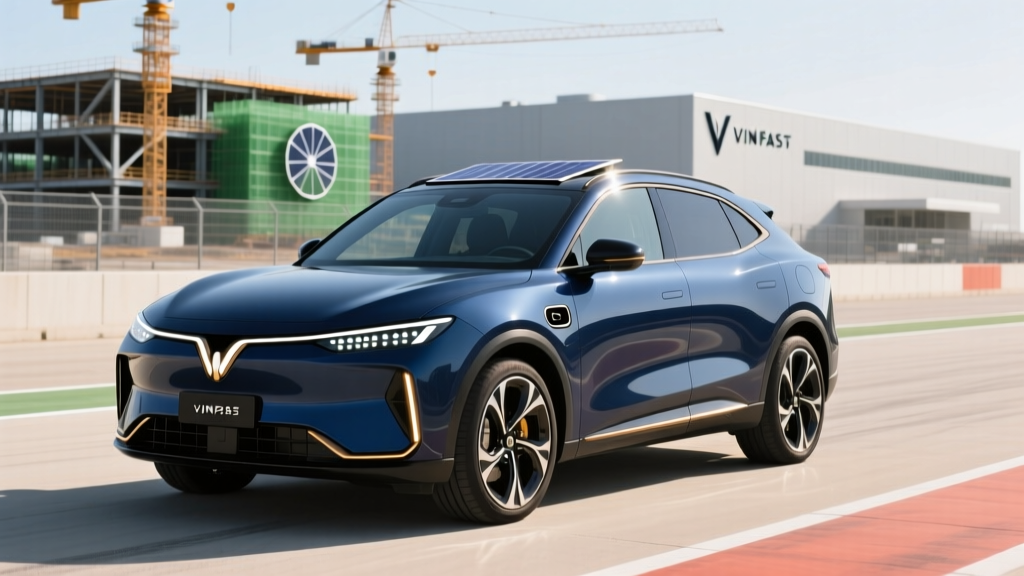
The short answer: every VinFast delivered to US customers in 2026 is still built in Hai Phong, Vietnam, at the company's 810-acre (335-hectare) manufacturing complex that opened in 2022. The much-publicized VinFast factory in Chatham County, North Carolina — initially announced in 2022 with a projected 2024 start — has faced repeated delays. As of early 2026, construction is underway but production has not begun, with the company targeting a phased ramp-up no earlier than late 2027 or 2028.
That matters to US buyers for several reasons. Vehicles imported from Vietnam are currently subject to standard US auto tariffs but do not benefit from the USMCA trade framework that Mexican-built EVs enjoy. More critically, Vietnam-assembled VinFast models do not qualify for the federal §30D new EV tax credit, because the credit requires final assembly in North America. VinFast's North Carolina plant is intended to solve this problem, but until it produces its first vehicle, US buyers are paying full MSRP with no federal credit offset.
This review focuses on the 2026 VinFast VF 8, the midsize electric SUV that serves as VinFast's volume model in the US market. We'll cover the real numbers — range, charging, pricing, and how it stacks up against the Tesla Model Y, Hyundai Ioniq 5, and Ford Mustang Mach-E.
2026 VinFast VF 8: Quick Specs at a Glance
| Spec | Value |
|---|---|
| EPA Range | 264 miles (Eco, 18" wheels) |
| Battery Capacity | 87.7 kWh (usable), NMC lithium-ion |
| Drivetrain | Dual-motor AWD |
| Horsepower | 348 hp (Eco) / 402 hp (Plus) |
| 0–60 mph | 5.3 sec (Eco) / 4.6 sec (Plus) |
| Max DC Fast Charge | 190 kW (peak) |
| 10–80% DC Charge Time | ~31 minutes |
| Level 2 Home Charging | 11 kW (onboard charger) |
| Efficiency | 92 MPGe combined / 36 kWh/100 mi |
| Cargo Volume | 38.1 cu ft (rear seats up) / 71.4 cu ft (folded) |
| Base MSRP (Eco) | $46,000 (before destination) |
| Federal Tax Credit | Not eligible (assembled in Vietnam) |
| Battery/Powertrain Warranty | 10 years / 125,000 miles |
Range and Efficiency: EPA vs the Real World
Real-World Expectation: ~210–230 miles highway at 70 mph; ~180–200 miles in sub-freezing winter conditions
The VF 8 Eco's 264-mile EPA rating places it well behind the Tesla Model Y Long Range (310+ miles) and the Hyundai Ioniq 5 Long Range (303 miles) in the midsize electric SUV segment. The Plus trim, which rides on 20-inch wheels and carries additional equipment, drops to roughly 243 miles EPA.
In real-world driving, the VF 8's efficiency of 36 kWh/100 mi is middling for the class. Highway driving at sustained 70–75 mph speeds typically yields 210–230 miles before you'll want to find a charger. In cold weather (below 32°F), expect a 20–30% reduction, landing somewhere around 180–200 miles of usable range. The VF 8 does come equipped with a heat pump, which helps mitigate winter range loss compared to EVs using resistive cabin heating, but the NMC battery chemistry still experiences measurable capacity reduction in deep cold.
For context, the EPA's fueleconomy.gov listing confirms the combined 92 MPGe figure. If your daily commute is under 50 miles round-trip, the range is adequate. For road trips exceeding 200 miles, you'll need at least one DC fast-charge stop — which brings us to charging speed.
Charging Speed: DC Fast and Home Level 2
| Charging Level | Power | Speed / Time |
|---|---|---|
| Level 1 (120V household) | 1.4 kW | ~4 miles per hour |
| Level 2 (240V home/public) | 11 kW (max onboard) | ~28 miles per hour; full charge ~8 hours |
| DC Fast Charge (CCS) | 190 kW (peak) | 10–80% in ~31 minutes |
The VF 8's peak DC fast-charge rate of 190 kW is respectable but not class-leading. Competitors like the Hyundai Ioniq 5 (which peaks around 240 kW on 800V architecture) can achieve 10–80% in roughly 18 minutes. The VF 8's ~31-minute 10–80% time means road-trip stops are noticeably longer.
As with all EVs, the VF 8's charge curve tapers significantly above 80% State of Charge. Charging from 80–100% can add another 25–35 minutes, so on road trips, plan your stops around the 10–80% sweet spot for maximum efficiency. The VF 8 uses the CCS1 connector standard, which is compatible with Electrify America, EVgo, and most non-Tesla DC fast-charging networks. Note that as the industry transitions to NACS (Tesla's connector), VinFast has not yet announced a NACS migration timeline for the VF 8, though an adapter solution is likely.
At home, the 11 kW onboard charger is competitive. On a 48-amp Level 2 circuit (the most common home installation), you'll add roughly 28 miles of range per hour of charging. A full overnight charge from near-empty takes about 8 hours, which is well within a normal sleep cycle.
Performance, Ride, and Drivetrain
Every VF 8 sold in the US comes with dual-motor all-wheel drive — there is no single-motor RWD option. The Eco trim produces 348 horsepower and 368 lb-ft of torque, reaching 0–60 mph in 5.3 seconds. The Plus trim bumps output to 402 hp and 457 lb-ft, dropping the 0–60 time to 4.6 seconds.
Acceleration is confident and typical of dual-motor EVs in this price range, but the VF 8 is not a performance-focused SUV. Ride quality has drawn mixed reviews from automotive journalists, with some noting firm suspension tuning and occasional ride harshness over rough pavement. The steering is precise but lacks the feedback enthusiasts might want.
Regenerative braking offers multiple levels, including a one-pedal driving mode that can bring the vehicle to a complete stop. The system is intuitive once you adjust to the initial grabbiness that some drivers report during the first few days of ownership.
Interior, Cargo, and Technology
The VF 8's cabin design is minimalist, dominated by a 15.6-inch central touchscreen. Notably, there is no traditional instrument cluster behind the steering wheel — all driving information is displayed on the center screen and an optional head-up display. This layout is polarizing: some owners adapt quickly, while others find the lack of a dedicated speedometer frustrating.
Cargo space measures 38.1 cubic feet behind the second row and 71.4 cubic feet with the rear seats folded. That's competitive with the Ford Mustang Mach-E (29.7/60.8 cu ft) but trails the Tesla Model Y (30.2/72.1 cu ft) and Hyundai Ioniq 5 (27.2/59.3 cu ft) in some configurations. Rear legroom is adequate at 38.4 inches, though taller passengers may find the sloping roofline limits headroom.
Standard driver-assistance features include adaptive cruise control, lane-keeping assist, blind-spot monitoring, and automatic emergency braking. VinFast's ADAS suite is SAE Level 2 — meaning the driver must remain fully engaged and keep hands on or near the wheel at all times. It is not a self-driving system. The infotainment system supports wireless Apple CarPlay and Android Auto, which helps offset some usability complaints about VinFast's proprietary interface.
Pricing, Trim Levels, and the Tax Credit Problem
| Trim | MSRP | Federal §30D Credit | Effective Price |
|---|---|---|---|
| VF 8 Eco (battery included) | $46,000 | $0 (Vietnam assembly) | $46,000 |
| VF 8 Plus (battery included) | $51,800 | $0 (Vietnam assembly) | $51,800 |
This is where the "where are VinFast cars made" question becomes financially consequential. The IRS §30D tax credit requires that a vehicle's final assembly occur in North America to qualify for up to $7,500. Because the VF 8 is assembled in Vietnam, it receives no federal tax credit, regardless of the buyer's income or the vehicle's MSRP.
The VF 8 also previously offered a battery-subscription model that lowered the base price by removing the battery cost, but VinFast discontinued that program in the US market. Current pricing includes the battery.
When you factor in the missing tax credit, the VF 8 Eco at $46,000 effectively costs as much as a Tesla Model Y Long Range (~$48,000 MSRP but potentially eligible for credits once US production fully qualifies) or a Hyundai Ioniq 5 (~$47,000, also not currently US-assembled). The VF 8's value proposition rests heavily on its 10-year/125,000-mile warranty and standard AWD, rather than on price.
Some states offer their own EV rebates that are not tied to North American assembly. Check your state's environmental or energy agency for local incentive programs, as these vary significantly by jurisdiction.
Warranty Coverage
VinFast offers one of the strongest warranty packages in the EV segment:
- Battery & Powertrain: 10 years / 125,000 miles
- Bumper-to-Bumper: 7 years / 75,000 miles
- Roadside Assistance: 7 years / 75,000 miles
The battery warranty guarantees that capacity will not fall below 70% of original capacity during the warranty period. If it does, VinFast will repair or replace the battery at no cost. For comparison, most competitors offer 8 years / 100,000 miles on the battery and powertrain. The VF 8's extra two years and 25,000 miles of coverage is a genuine differentiator — particularly relevant given the brand's limited track record and the uncertainty some buyers feel about a newer automaker.
VF 8 vs Key Competitors: How Does It Compare?
| Spec | VinFast VF 8 Eco | Tesla Model Y LR | Hyundai Ioniq 5 LR | Ford Mustang Mach-E Premium |
|---|---|---|---|---|
| EPA Range | 264 mi | ~320 mi | 303 mi | ~290 mi |
| Battery | 87.7 kWh NMC | ~78 kWh NMC | 77.4 kWh NMC | 91 kWh NMC |
| Peak DC Charge | 190 kW | 250 kW | 240 kW | 150 kW |
| 0–60 mph | 5.3 sec | 4.8 sec | 5.1 sec (AWD) | 5.1 sec (AWD) |
| Base MSRP | $46,000 | ~$48,000 | ~$47,000 | ~$43,000 |
| Federal Credit | Not eligible | Check IRS eligibility | Not eligible (Korea) | Check IRS eligibility |
| Battery Warranty | 10 yr / 125k mi | 8 yr / 120k mi | 10 yr / 100k mi | 8 yr / 100k mi |
The VF 8 trails its main competitors on range and charging speed while matching or exceeding them on warranty coverage. If you prioritize maximum range or the fastest possible road-trip charging, the Model Y or Ioniq 5 are stronger choices. If long-term peace of mind and standard AWD at a mid-$40K price matter more, the VF 8 makes a reasonable case.
Pros and Cons
- Industry-leading 10-year/125,000-mile battery warranty
- Standard dual-motor AWD on all trims
- Competitive cargo space for the segment
- Heat pump standard (better cold-weather efficiency)
- Distinctive design that stands out from the crowd
- No federal tax credit (Vietnam assembly)
- Below-average EPA range for the class (264 mi)
- DC fast-charging speed (190 kW) trails rivals
- No instrument cluster — polarizing interface
- Limited US service center network
- Brand-new automaker with short track record
Who Should Buy the VinFast VF 8?
Best for: Budget-conscious AWD seekers who value warranty coverage over maximum range, have reliable home charging, and primarily drive in urban/suburban settings with occasional road trips under 250 miles.
Look elsewhere if: You need the longest possible range for frequent road trips, want access to the Tesla Supercharger network natively, need the federal tax credit to make the math work, or prefer an established dealer/service network.
The North Carolina Factory: What It Means for Future VinFast Buyers
VinFast's planned Chatham County, North Carolina facility represents a $4 billion investment with a target capacity of 150,000 vehicles per year in its first phase. Once operational, VinFast vehicles assembled there would meet the §30D final-assembly requirement — potentially unlocking the federal tax credit for US buyers, subject to the credit's other rules around battery sourcing, critical minerals, MSRP caps ($80,000 for SUVs), and buyer income limits ($300,000 joint / $150,000 individual AGI).
However, battery component and critical mineral sourcing requirements add another layer of complexity. Even with US assembly, the battery cells and their raw materials must meet evolving IRS sourcing thresholds that increase each year. VinFast has not publicly detailed its battery supply chain's compliance with these requirements, so the full $7,500 credit is not guaranteed even after the NC plant opens.
For now, if you're considering a VF 8 in 2026, you're buying a Vietnam-built vehicle at full MSRP. Whether that's a deal or a deal-breaker depends on how you weigh the VF 8's warranty advantage against its range and charging deficits.
Frequently Asked Questions
Where are VinFast cars made for the US market?
All VinFast vehicles currently sold in the US are manufactured in Hai Phong, Vietnam. VinFast's planned North Carolina factory is under construction but not yet producing vehicles as of 2026.
Does the VinFast VF 8 qualify for the $7,500 federal EV tax credit?
No. Under current IRS §30D rules, the vehicle must undergo final assembly in North America. Since the VF 8 is assembled in Vietnam, it does not qualify for the federal new clean vehicle credit, regardless of buyer income.
What is the real-world range of the VinFast VF 8?
The EPA rates the VF 8 Eco at 264 miles. In real-world highway driving at 70 mph, expect approximately 210–230 miles. In cold weather (below 32°F), range can drop to 180–200 miles. The VF 8's heat pump helps mitigate but does not eliminate cold-weather range loss.
How fast does the VF 8 charge at home and on the road?
On a Level 2 home charger (240V, 48A), the VF 8 charges at up to 11 kW, adding roughly 28 miles per hour. On a DC fast charger, it peaks at 190 kW and charges from 10–80% in approximately 31 minutes.
Is the VinFast VF 8 worth buying over a Tesla Model Y or Hyundai Ioniq 5?
The VF 8 offers a stronger warranty (10yr/125k mi vs 8yr/120k mi) and standard AWD, but trails on range (264 vs 303–320 mi), charging speed (190 vs 240–250 kW), and federal tax credit eligibility. If warranty peace of mind is your top priority, the VF 8 is competitive. If range and charging speed matter more, the Model Y or Ioniq 5 are stronger picks.
Will VinFast cars made in North Carolina qualify for the tax credit?
Potentially, yes — final assembly in the US would satisfy one key §30D requirement. However, the vehicle must also meet battery component and critical mineral sourcing rules, MSRP caps, and the buyer must fall within income limits. Full eligibility is not guaranteed even after the NC plant opens.