Where Are Teslas Made? A Complete Factory Map
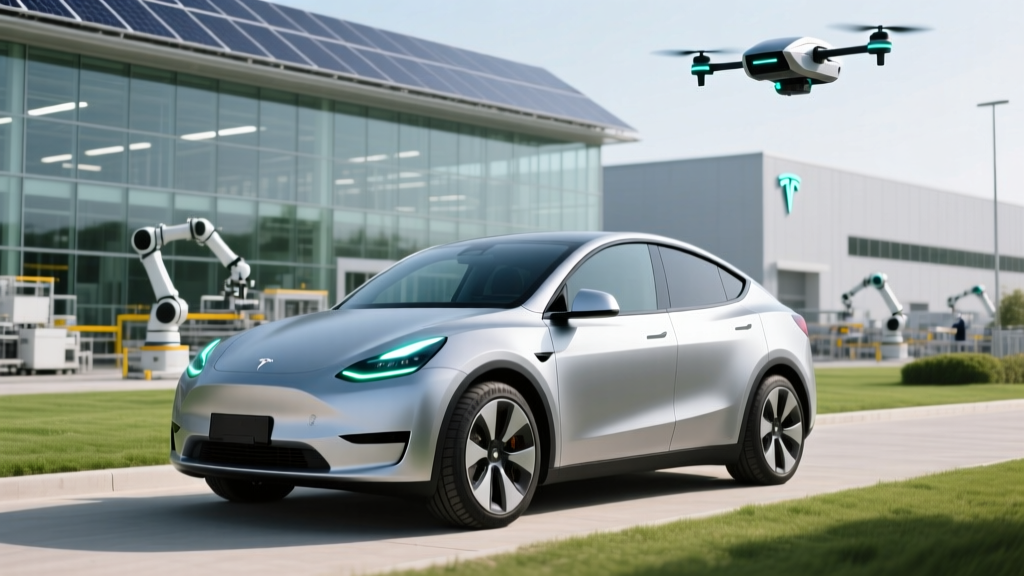
If you've ever looked at the window sticker on a Tesla and wondered where are Teslas made, the answer depends on the model, the trim, and even the battery chemistry inside the pack. Tesla operates five major vehicle assembly plants across three continents, and each factory specializes in specific models. For US buyers, understanding which plant built your Tesla matters for everything from delivery timelines to battery sourcing — which directly affects federal tax credit eligibility under IRS §30D rules.
Here's a complete breakdown of every Tesla vehicle factory operating in 2026, followed by a detailed review of the Fremont-built Model Y Long Range AWD — still Tesla's highest-volume vehicle and the one most US buyers will encounter.
Tesla's Global Manufacturing Footprint
| Factory | Location | Models Produced | Annual Capacity (est.) |
|---|---|---|---|
| Fremont Factory | Fremont, California, USA | Model S, Model 3, Model X, Model Y | ~650,000 |
| Giga Texas | Austin, Texas, USA | Model Y, Cybertruck | ~500,000+ |
| Giga Shanghai | Shanghai, China | Model 3, Model Y | ~950,000+ |
| Giga Berlin | Grünheide, Germany | Model Y | ~375,000+ |
| Giga Nevada | Sparks, Nevada, USA | Powertrain/battery components (not full vehicles) | N/A |
For US buyers: Your Tesla was almost certainly built in Fremont, California, or Austin, Texas. Model S and Model X are exclusively Fremont-built. Cybertruck is exclusively Austin-built. Model 3 and Model Y can come from either US plant depending on configuration and order timing, though Tesla has increasingly shifted Model Y production for the North American market to Giga Texas using the structural battery pack design.
Giga Shanghai and Giga Berlin primarily serve their regional markets (Asia-Pacific and Europe, respectively). US-spec vehicles do not come from these factories, though the Shanghai plant is Tesla's highest-output facility globally and sets the pace for manufacturing efficiency across all plants.
2026 Tesla Model Y Long Range AWD: Full Review
With the manufacturing question answered, let's look at the vehicle most US Tesla shoppers actually buy. The 2026 Model Y Long Range AWD remains the brand's volume leader and a benchmark in the compact electric SUV segment. Here's everything you need to know with exact numbers.
Core Specifications
| Spec | 2026 Model Y Long Range AWD |
|---|---|
| EPA Range | 320 miles |
| Battery Capacity | 78.1 kWh usable (NMC chemistry) |
| Drivetrain | Dual-motor AWD |
| Horsepower | 384 hp combined |
| 0-60 mph | 4.8 seconds |
| Top Speed | 135 mph |
| Efficiency | 122 MPGe / 27 kWh/100mi |
| Max DC Fast Charge | 250 kW peak |
| 10-80% DC Charge Time | ~27 minutes |
| Level 2 Home Charge Rate | 11.5 kW (~44 mi/hr) |
| Cargo Volume (rear seats up) | 30.2 cu ft |
| Cargo Volume (rear seats folded) | 72.1 cu ft |
| Rear Legroom | 38.4 inches |
| Battery/Drive Unit Warranty | 8 years / 120,000 miles |
| Base MSRP | $47,990 (before destination) |
| Destination Fee | $1,390 |
Real-World Range: What the EPA Sticker Doesn't Tell You
Real-World Expectation: Plan for ~270-290 miles on highway road trips at 70-75 mph. In freezing temperatures (below 30°F), expect 230-260 miles depending on cabin heating demand and whether you precondition the battery. City driving with regenerative braking can push actual range close to or slightly above the EPA figure — Tesla's efficiency in stop-and-go traffic is among the best in the segment.
The 320-mile EPA figure is competitive, but real-world range depends heavily on driving style, temperature, and terrain. Tesla's heat pump (standard on all 2026 Model Y trims) significantly reduces cold-weather range loss compared to resistive heating systems used by some competitors. On a 75°F day at 65 mph on flat terrain, you can realistically expect to see 300+ miles from a full charge. Push to 80 mph or climb mountain grades, and that number drops quickly — aerodynamic drag scales with the square of speed, and the Model Y's crossover profile creates more drag than a sedan like the Model 3.
For daily commuting with home charging, range is rarely a practical concern. A 40-mile round-trip commute uses roughly 12-15% of battery, meaning you'll charge every 4-5 nights at most. Range matters most for road trips, and the Model Y's combination of 320 EPA miles plus access to Tesla's Supercharger network remains the strongest long-distance proposition in the EV market.
Charging Speed and Infrastructure
| Charging Level | Power | Speed | Typical Use Case |
|---|---|---|---|
| Level 1 (120V) | ~1.4 kW | ~5 miles/hour | Emergency / overnight trickle |
| Level 2 (240V, 48A) | 11.5 kW | ~44 miles/hour | Home / workplace daily charging |
| DC Fast (Supercharger V3) | 250 kW peak | ~162 miles in 15 min | Road trips |
| DC Fast (Supercharger V4) | Up to 350 kW* | Faster above 50% SoC | Newer Tesla stations |
*V4 Supercharger capability depends on vehicle hardware; the 2026 Model Y Long Range peaks at approximately 250 kW on current hardware.
The Model Y's 250 kW peak DC fast-charging rate is adequate but no longer class-leading. Competitors like the Hyundai Ioniq 5 and Kia EV6 (both on 800V architectures) can peak at 350 kW, shaving 5-8 minutes off a 10-80% charge. However, Tesla's advantage is infrastructure: the Supercharger network has over 6,000 US stalls with exceptional uptime, and the Model Y's native NACS connector means no adapter is needed.
The charge curve matters more than peak rate. The Model Y holds strong charging speed from 10% to roughly 55% state of charge, then tapers progressively. A 10-80% session takes about 27 minutes at a V3 Supercharger, but 80-100% adds another 20+ minutes — plan your road-trip stops around the 10-80% window for efficiency.
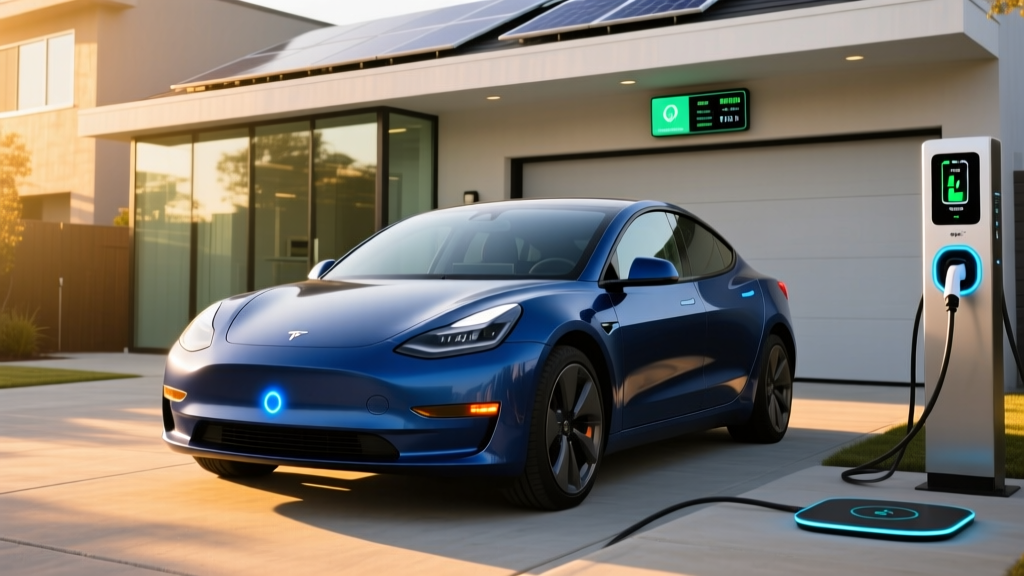
For home charging, a 48-amp Level 2 wall connector on a 60-amp circuit delivers the full 11.5 kW, adding roughly 44 miles of range per hour. An overnight 8-hour charge easily replenishes a full battery. Installation costs typically run $800-$2,000 depending on panel capacity and run length — consult a licensed electrician for a site-specific quote.
Pricing, Trims, and Federal Tax Credit Eligibility
| Trim | MSRP (incl. destination) | Est. After §30D Credit |
|---|---|---|
| Model Y Long Range AWD | $49,380 | ~$41,880* |
| Model Y Performance AWD | $54,380 | ~$46,880* |
*Tax credit estimates assume full $7,500 eligibility under IRS §30D rules. Actual eligibility depends on buyer income, battery sourcing, and MSRP caps. Point-of-sale transfer is available from participating dealers.
The federal EV tax credit is not a blanket $7,500 for every buyer. Under current §30D rules, eligibility requires:
- MSRP Cap: SUVs/vans/pickups must be priced at or below $80,000 (the Model Y qualifies)
- Income Cap: Modified AGI must not exceed $150,000 (single), $225,000 (head of household), or $300,000 (joint filers)
- Battery Sourcing: Critical minerals and battery components must meet phased-in domestic-content thresholds that tighten each year — Tesla's North American battery supply chain gives the Model Y an advantage here
- Point-of-Sale Transfer: As of 2024+, buyers can transfer the credit to the dealer at purchase, reducing the upfront price rather than waiting for a tax refund
Tesla's vertical integration and US manufacturing footprint generally position the Model Y favorably for credit eligibility, but sourcing requirements shift annually. Always verify current-year eligibility on the IRS website or with a tax professional before relying on the credit in your purchase budget.
Tech, Interior, and Daily Ownership
The Model Y interior is defined by minimalism — a single 15.4-inch touchscreen handles navigation, media, climate, and vehicle settings. There is no traditional instrument cluster; speed and range information appears in the upper corner of the center display. This is polarizing: some owners find it clean and distraction-free, while others miss physical buttons for climate and audio controls.
Notable tech features:
- Tesla Autopilot (standard) — adaptive cruise + lane centering, SAE Level 2
- Full Self-Driving Supervised ($8,000 option) — adds automated lane changes, traffic light recognition, and navigation-on-autopilot; still requires driver supervision at all times
- Over-the-air updates that add features post-purchase
- Sentry Mode dashcam surveillance when parked
- Dog Mode climate control for pets left in the vehicle
- Phone-as-key with Bluetooth proximity unlock
Notable drawbacks:
- No physical buttons for common controls — everything routes through the touchscreen
- Ride quality on the firm side, especially with 20-inch wheels
- Panel gap quality has improved but still varies unit to unit
- Rear visibility is compromised by the sloping roofline — the camera-based mirror option helps
- Insurance costs tend to run 15-30% higher than comparable non-Tesla EVs in many markets
Pros and Cons at a Glance
Pros
- 320-mile EPA range covers most use cases comfortably
- Supercharger network access (best public charging reliability in the US)
- Strong efficiency at 122 MPGe / 27 kWh/100mi
- Practical cargo space (72.1 cu ft folded) with available 7-seat config
- OTA updates keep the vehicle current
- US-built (Fremont/Austin) with strong §30D credit positioning
Cons
- 250 kW peak charge rate trails 800V competitors
- Touchscreen-only controls are a dealbreaker for some
- FSD option is expensive and remains Level 2, not autonomous
- Firm ride on larger wheel options
- Insurance premiums above segment average
- Interior material quality doesn't match luxury-badge competitors at this price
Who Should Buy the Model Y?
The Model Y Long Range AWD is best suited for buyers who want a single vehicle that handles daily commuting, family duties, and cross-country road trips without compromise on charging convenience. If you have access to home Level 2 charging and your typical road trips fall within the Supercharger network's coverage (which is nearly all major US corridors), the Model Y's combination of range, efficiency, and infrastructure remains hard to beat.
It's less ideal for buyers who prioritize ride comfort over efficiency, want physical dashboard controls, or need the fastest possible DC charging for frequent long-distance driving in areas with sparse Supercharger coverage. In those cases, the Hyundai Ioniq 5 (faster charging, more buttons) or the Ford Mustang Mach-E (more conventional interior layout) are worth cross-shopping.
Frequently Asked Questions
Where are Teslas made for the US market?
US-market Teslas are built at the Fremont Factory in California or Giga Texas in Austin. Model S and Model X come exclusively from Fremont. Cybertruck comes exclusively from Austin. Model 3 and Model Y can come from either plant, with Tesla increasingly routing Model Y production through Austin for North American delivery.
What is the real-world range of the 2026 Model Y Long Range?
Expect 270-290 miles on highway road trips in mild weather, dropping to 230-260 miles in freezing conditions. City driving with regenerative braking can approach or exceed the 320-mile EPA estimate.
How fast does the Model Y charge at home and on road trips?
At home on a 48-amp Level 2 charger, the Model Y adds about 44 miles of range per hour (11.5 kW). On a V3 Supercharger, a 10-80% session takes approximately 27 minutes at a peak rate of 250 kW.
Does the 2026 Model Y qualify for the federal EV tax credit?
The Model Y Long Range AWD at $49,380 MSRP falls under the $80,000 SUV cap. Eligibility for the full $7,500 credit depends on your income (AGI caps apply) and current-year battery sourcing requirements. Tesla's domestic supply chain generally positions the Model Y favorably, but verify at irs.gov or with a tax professional before purchase.
Is the Model Y worth buying over competitors in 2026?
If Supercharger network access and proven efficiency are your priorities, yes. If you want faster DC charging (800V architecture), a more traditional interior with physical controls, or a softer ride, cross-shop the Hyundai Ioniq 5, Kia EV6, and Ford Mustang Mach-E. The Model Y wins on charging infrastructure and efficiency; competitors are closing the gap on range and surpass it in charge speed.
What battery chemistry does the Model Y Long Range use?
The Long Range AWD uses an NMC (nickel manganese cobalt) lithium-ion pack with 78.1 kWh of usable capacity. NMC offers higher energy density than LFP, which is why the Long Range achieves 320 EPA miles. Tesla's base RWD Model Y in some markets uses LFP chemistry, which is heavier but offers longer cycle life and can be charged to 100% daily without degradation concerns.