The Short Answer: Where Are Teslas Made?
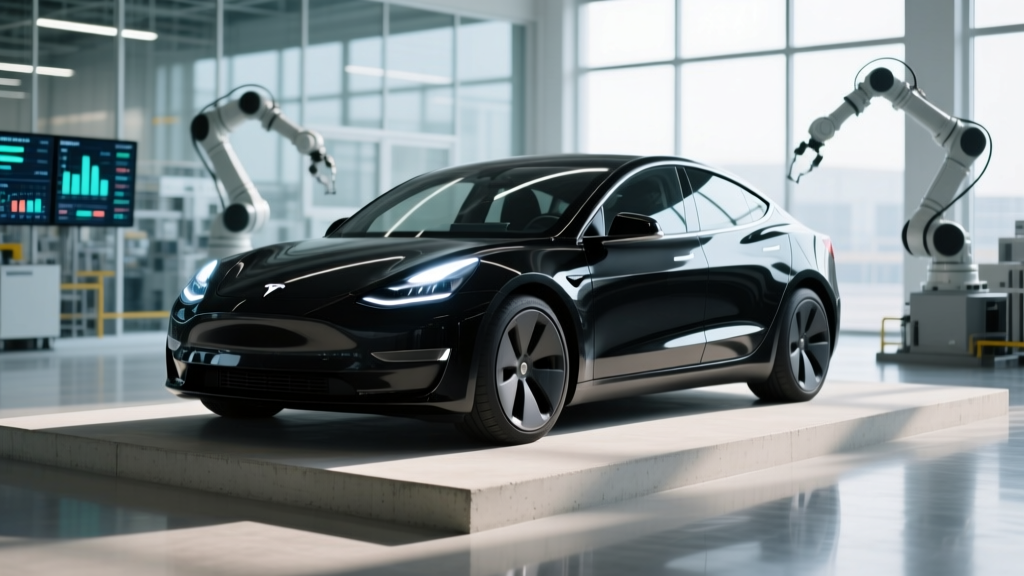
If you've ever looked at a Tesla window sticker and wondered where your car was actually assembled, the answer depends on the model, your region, and the year. As of 2026, Tesla operates four vehicle-producing gigafactories, each serving distinct markets and building specific nameplates:
- Fremont, California — Model S, Model X, Model 3, Model Y (North America)
- Austin, Texas (Giga Texas) — Model Y, Cybertruck (North America)
- Shanghai, China (Giga Shanghai) — Model 3, Model Y (Asia-Pacific, Europe, and Canada)
- Berlin-Brandenburg, Germany (Giga Berlin) — Model Y (Europe and Middle East)
A fifth facility, Giga Mexico (Nuevo León), was announced but as of early 2026 is not yet producing vehicles — Tesla has publicly described it as a next-generation platform plant, timeline TBD. Don't let speculative headlines fool you: no customer cars are coming out of Monterrey yet.
For U.S. buyers, that means a new Model 3 or Model Y was almost certainly built in Fremont or Austin. A Cybertruck is Austin-only. And if you take delivery of a European-spec Model Y, it's overwhelmingly Berlin-built.
Why Tesla's Factory Locations Matter to Buyers
Manufacturing location isn't just trivia — it influences three things that affect your ownership experience:
1. Build Consistency and Panel Fit
Tesla's Fremont plant is the oldest and, frankly, historically the most variable in panel-gap consistency. Giga Shanghai has earned a reputation among reviewers and owners for tighter fit-and-finish, which is why Canadian-market Model 3s and Model Ys have been sourced from Shanghai in recent years. Giga Berlin's Model Y introduced the structural battery pack and revised rear casting, which also changed repair procedures and curb weight.
2. Battery Chemistry by Source
This is the hidden variable most buyers miss. Tesla sources cells from multiple suppliers (CATL, Panasonic, LG Energy Solution, BYD), and the chemistry often correlates with build location and trim:
- LFP (Lithium Iron Phosphate): Standard Range RWD models, predominantly CATL cells. LFP is heavier, has lower energy density per kg, but offers longer cycle life, less degradation, and can safely be charged to 100% daily. Shanghai-built cars dominate LFP supply globally.
- NMC/NCA (Nickel-based): Long Range and Performance trims use nickel-rich chemistries from Panasonic (Fremont/Austin) or LG (Berlin). Higher energy density, better cold-weather range retention, but Tesla recommends a daily charge limit of 80% to preserve longevity.
If you plan to charge to 100% every night at home, an LFP-equipped RWD is the chemically correct choice. If you need maximum highway range and live somewhere with real winters, NMC in a Long Range AWD is the better tool.
3. Federal Tax Credit Eligibility (IRS §30D)
Under current 2026 rules, the IRS §30D clean vehicle credit is a point-of-sale transfer of up to $7,500, but eligibility hinges on three moving targets: final assembly in North America, battery-component sourcing thresholds, and critical-mineral sourcing thresholds that tighten each year. A Shanghai- or Berlin-built Tesla delivered outside the U.S. is irrelevant to §30D, but a U.S.-buyer must confirm the VIN's plant code maps to Fremont or Austin to clear the "North America final assembly" gate. Always verify your specific VIN on fueleconomy.gov before signing — sourcing rules have disqualified previously eligible trims mid-year before.
2026 Tesla Lineup: Specs by Model
Below is a consolidated spec reference for every vehicle Tesla currently sells in the U.S. Range figures are EPA-estimated; real-world notes follow.
| Model / Trim | Build Location | EPA Range | Battery (usable kWh) | Chemistry | 0-60 mph | HP | Drivetrain | Base MSRP |
|---|---|---|---|---|---|---|---|---|
| Model 3 RWD | Fremont, CA | 272 mi | ~57.5 kWh | LFP | 5.8 s | 283 | RWD | $38,990 |
| Model 3 Long Range AWD | Fremont, CA | 341 mi | ~75 kWh | NMC | 4.2 s | 346 | Dual-motor AWD | $45,740 |
| Model 3 Performance | Fremont, CA | 315 mi | ~75 kWh | NMC | 2.9 s | 510 | Dual-motor AWD | $52,990 |
| Model Y Long Range AWD | Fremont / Austin | 320 mi | ~75 kWh | NMC | 4.8 s | 384 | Dual-motor AWD | $46,630 |
| Model Y Performance | Austin, TX | 285 mi | ~75 kWh | NMC | 3.5 s | 510 | Dual-motor AWD | $51,490 |
| Cybertruck AWD | Austin, TX | 340 mi | ~123 kWh | NMC (4680) | 4.1 s | 600 | Dual-motor AWD | $79,990 |
| Cybertruck Cyberbeast | Austin, TX | 320 mi | ~123 kWh | NMC (4680) | 2.6 s | 845 | Tri-motor AWD | $99,990 |
| Model S Long Range | Fremont, CA | 402 mi | ~95 kWh | NMC | 3.1 s | 670 | Dual-motor AWD | $79,990 |
| Model X Long Range | Fremont, CA | 335 mi | ~95 kWh | NMC | 3.8 s | 670 | Dual-motor AWD | $84,990 |
Source: fueleconomy.gov, Tesla.com order pages, model-year 2025–2026.
EPA numbers are measured on a mixed city/highway cycle with mild temperatures. Expect highway-only driving at 75 mph to knock 10–15% off the sticker range on any trim. In sub-freezing weather (below 32°F), plan for 20–30% range loss on LFP models and 15–25% on NMC, primarily from cabin heating and cell impedance. A Model 3 Long Range rated at 341 mi EPA will realistically deliver ~280 mi on a 70°F highway run and ~240 mi on a 20°F winter highway run. Preconditioning the battery while plugged in recovers some of that loss and is critical for fast-charge speed.
Charging Speed: DC Fast, Level 2, and the Curve You Actually See
Tesla's Supercharger network (NACS connector, now the industry standard adopted by Ford, GM, Rivian, and others through 2025–2026) is the single strongest ownership advantage the brand still holds. But "peak 250 kW" on a spec sheet is not what you experience at the stall. Here's what real sessions look like:
| Model | Max DC Peak (kW) | 10–80% Time | Level 2 Home (kW / mi per hr) | Notes |
|---|---|---|---|---|
| Model 3 RWD (LFP) | 170 kW | ~25 min | 11.5 kW / ~44 mi/hr | Lower peak due to LFP C-rate; flat curve holds well to ~60% |
| Model 3 Long Range / Performance | 250 kW | ~22 min | 11.5 kW / ~44 mi/hr | Peak only below ~50% SoC; tapers hard past 80% |
| Model Y LR / Perf | 250 kW | ~24 min | 11.5 kW / ~40 mi/hr | Same pack as Model 3, slightly heavier = fewer mi/hr |
| Cybertruck | 350 kW (800V arch) | ~18 min (est.) | 17 kW / ~52 mi/hr | Largest pack; V4 Supercharger needed for full peak |
| Model S / X | 250 kW | ~27 min | 11.5 kW / ~35 mi/hr | Large pack = longer tail above 80% |
Charging-curve reality check: Peak kW is a headline number. On a V3 Supercharger (250 kW), a Model 3 Long Range will see ~250 kW only between roughly 10% and 35% SoC, then step down to ~180 kW, then ~120 kW, then ~60 kW above 80%. That's why Tesla quotes 10–80% times rather than 0–100% — the final 20% can take as long as the first 70%. Always plan road-trip stops to 80%, not 100%.
Home Level 2: A Tesla Wall Connector on a 60A circuit delivers up to 11.5 kW (48A continuous). That's roughly 40–44 miles of range per hour of charging, which overnight (10 hours) refills any Model 3/Y from 20% to 100%. Budget $600–$1,400 for a licensed electrician install if your panel has capacity; a 200A panel upgrade adds $1,500–$3,500. Always defer final specs to a licensed electrician — older homes may need service upgrades.
Performance, Efficiency, and Daily-Drivability Numbers
Beyond 0-60 bragging rights, the efficiency figure that matters for your wallet is kWh per 100 miles (lower is better). Tesla remains the class leader here thanks to aggressive thermal management, low-drag design, and the heat pump that comes standard on every current model.
- Model 3 RWD: ~25 kWh/100 mi combined, 132 MPGe
- Model 3 Long Range AWD: ~26 kWh/100 mi, 130 MPGe
- Model Y Long Range AWD: ~28 kWh/100 mi, 120 MPGe
- Cybertruck AWD: ~47 kWh/100 mi, 72 MPGe (aerodynamics and 6,800+ lb curb weight)
- Model S Long Range: ~28 kWh/100 mi, 120 MPGe
At a national average of $0.16/kWh (home electricity) and $0.35/kWh (public DC fast charging), a Model 3 Long Range costs roughly $4.16 to drive 100 miles at home and $9.10 on the road — versus ~$12–$14 for a 30-MPG gas sedan at $3.60/gal.
Cargo and Passenger Space
- Model 3: 23 cu ft trunk + frunk; rear legroom 35.3 in. Tight for tall rear passengers.
- Model Y: 30 cu ft behind rear seats, 72 cu ft with seats folded; 40.5 in rear legroom. Genuine family crossover.
- Cybertruck: 6.5-ft bed, ~120 cu ft with tonneau; rear legroom 41.1 in. Towing rated at 11,000 lb (AWD/Cyberbeast).
- Model S: 28 cu ft (frunk + rear hatch); 40.9 in rear legroom. Luxury sedan space.
- Model X: Up to 88 cu ft with seats folded; optional 7-seat layout; 39.8 in third-row legroom (best reserved for kids).
Pricing, Tax Credits, and What You Actually Pay
Tesla's MSRP has settled down after years of volatility, but the tax-credit picture is where buyers get tripped up. The §30D credit in 2026 remains up to $7,500 as a point-of-sale transfer, contingent on:
- Final assembly in North America — U.S.-sold Teslas clear this (Fremont/Austin).
- MSRP caps: $55,000 for sedans (Model 3), $80,000 for SUVs/trucks (Model Y, Cybertruck, Model X). Model S at $79,990 scrapes under the SUV cap only when classified correctly — confirm at purchase.
- Buyer income caps: $150k single / $225k HOH / $300k joint MAGI.
- Battery-component and critical-mineral sourcing thresholds that ratchet tighter each calendar year. This is the rule that has disqualified and re-qualified specific trims mid-year.
Always verify the exact VIN on fueleconomy.gov's credit-eligibility tool before signing paperwork. The dealer's verbal assurance is not binding.
| Model | Base MSRP | As-Tested (typical options) | Potential §30D Credit | Effective Price |
|---|---|---|---|---|
| Model 3 RWD | $38,990 | $40,490 (paint + wheels) | Up to $7,500 | ~$32,990 |
| Model 3 Long Range | $45,740 | $48,240 | Up to $7,500 | ~$40,740 |
| Model Y Long Range | $46,630 | $49,130 | Up to $7,500 | ~$41,630 |
| Cybertruck AWD | $79,990 | $83,490 | Up to $7,500 | ~$75,990 |
| Model S LR | $79,990 | $85,490 | Verify VIN eligibility | Varies |
Warranty, Tech, and the Ownership Fine Print
Warranty: Tesla covers the basic vehicle for 4 years / 50,000 miles. The battery and drive units get 8 years / 100,000 miles on Model 3/Y (120,000 mi on Model S/X) with a guaranteed minimum 70% capacity retention over that term. In practice, NMC packs in Teslas average roughly 10–12% degradation over 100,000 miles based on aggregated fleet data; LFP degrades slower but has a slightly steeper early-calendar-life drop before flattening.
Driver assistance: Every Tesla ships with basic Autopilot (lane-keep + adaptive cruise, SAE Level 2). Full Self-Driving (Supervised) is an $8,000 option or $99/month subscription as of 2026. FSD is not self-driving — it remains a Level 2 system requiring continuous driver supervision per NHTSA's SAE-aligned framework. Hands-off-the-wheel disengagements still trigger escalating warnings and lockouts. Treat it as a very good co-pilot, not a chauffeur.
Tech highlights: 15.4-inch center touchscreen (Model 3/Y refreshed), 17-inch on S/X, native NACS Supercharger access (25,000+ stalls in North America), over-the-air updates, Sentry Mode dashcam recording, and Phone-as-a-Key. Notable drawbacks: no Apple CarPlay/Android Auto (still), no physical speedometer in the refreshed Model 3 (relies on the touchscreen), and insurance premiums on Teslas run 15–30% higher than comparable non-Tesla EVs in most states due to repair-cost data.
- Best-in-class Supercharger network reliability
- Segment-leading efficiency (kWh/100 mi)
- LFP option allows daily 100% charging without guilt
- OTA updates add features post-purchase
- Strong resale value vs. non-Tesla EVs
- No CarPlay/Android Auto
- Insurance premiums above class average
- Repair costs and wait times post-collision
- FSD subscription is costly for a Level 2 system
- Cybertruck efficiency is genuinely poor
Who Should Buy a Tesla in 2026?
- Choose Model 3 RWD if you commute under 60 miles daily, can charge at home, and want the lowest total cost of ownership in the EV market.
- Choose Model 3 Long Range if you take regular 250+ mile road trips or live in a cold climate where NMC's winter retention matters.
- Choose Model Y if you need family cargo space and a practical crossover; it remains the best-selling vehicle in the U.S. for a reason.
- Choose Cybertruck if you need genuine truck towing (11,000 lb) and accept the efficiency penalty and polarizing styling.
- Look at Hyundai Ioniq 5 / Kia EV6 instead if you want CarPlay, 800V charging on non-Tesla networks, and a more traditional dealership service experience.
Frequently Asked Questions
What is the real-world range of a Tesla?
Expect 85–90% of EPA on temperate highway trips and 70–80% in freezing weather. A Model 3 Long Range (341 EPA) delivers roughly 280 mi highway at 70°F and 240 mi at 20°F. LFP models lose slightly more in cold than NMC.
How fast does a Tesla charge at home and on the road?
At home on a Tesla Wall Connector (11.5 kW, Level 2), expect 40–44 miles of range per hour — enough to fully refill overnight. On a V3 Supercharger (250 kW DC), 10–80% takes 22–25 minutes on Model 3/Y. Cybertruck peaks at 350 kW on V4 stalls, 10–80% in ~18 minutes.
How much does a Tesla cost after tax credits?
A Model 3 RWD can land around $32,990 after the full $7,500 §30D credit. A Model Y Long Range around $41,630. Eligibility requires North American assembly, buyer income under the cap, and current-year battery-sourcing compliance — verify your VIN before signing.
Is a Tesla still worth buying vs. competitors?
For Supercharger access, efficiency, and software polish, yes — especially Model 3 and Model Y. For buyers prioritizing CarPlay, dealership service, or 800V charging on third-party networks, the Hyundai Ioniq 5, Kia EV6, and Ford Mustang Mach-E are credible alternatives that now also use NACS.
What are the biggest pros and cons?
Pros: Supercharger network, efficiency, LFP daily-charge flexibility, OTA updates, resale value. Cons: no phone integration, elevated insurance costs, collision repair timelines, FSD cost vs. its Level 2 capability, and Cybertruck's poor efficiency.
Does Tesla qualify for the federal EV tax credit?
U.S.-built Model 3, Model Y, and Cybertruck currently qualify for up to $7,500 under §30D, subject to MSRP caps, buyer income limits, and battery-sourcing thresholds that tighten annually. Confirm your specific VIN on fueleconomy.gov and consult a tax professional — rules can change mid-year.
Are Teslas made in China sold in the U.S.?
No. U.S.-market Teslas are built in Fremont, California, or Austin, Texas. Giga Shanghai supplies Asia-Pacific, Europe, and Canada. The "China-made Tesla" concern applies to Canadian and European buyers, not American ones.