Tesla's Global Manufacturing Footprint in 2026
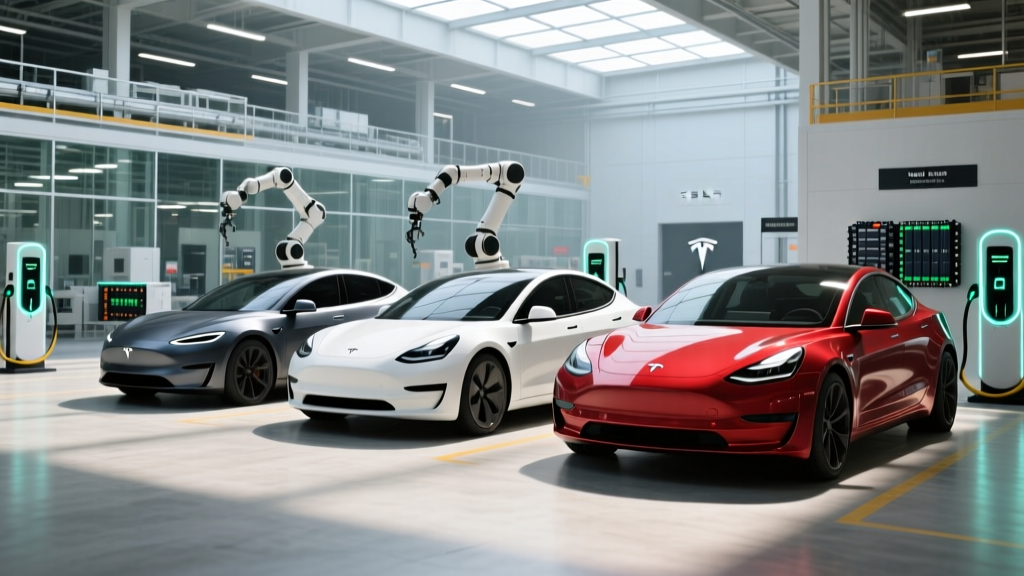
If you've ever wondered where are Tesla cars built, the answer spans four continents and five major vehicle assembly plants as of the 2026 model year. Tesla's vertically integrated manufacturing strategy means the company doesn't just assemble cars — it produces battery cells, drive units, and even seats in-house at many of its facilities. Understanding where your Tesla was built matters for more than curiosity: it affects battery chemistry, federal tax credit eligibility under IRS §30D, and even delivery timelines.
Here's a complete breakdown of every Tesla vehicle factory, followed by a detailed review of the current 2026 lineup — including real-world range, charging speeds, pricing, and which models qualify for the federal EV tax credit.
Every Tesla Vehicle Factory: Location, Models, and Battery Chemistry
| Factory | Location | Models Produced | Primary Battery Chemistry | Status (2026) |
|---|---|---|---|---|
| Fremont Factory | Fremont, California | Model S, Model X, Model 3, Model Y | NMC (Long Range/Performance) | Operational |
| Giga Texas | Austin, Texas | Model Y, Cybertruck | LFP (RWD), NMC (LR/Perf), 4680 cells (Cybertruck) | Operational |
| Giga Shanghai | Shanghai, China | Model 3, Model Y (export markets) | LFP (Standard/RWD) | Operational |
| Giga Berlin | Grünheide, Germany | Model Y | NMC (primarily) | Operational |
| Giga Nevada | Sparks, Nevada | Powertrain/battery components (not full vehicle assembly) | N/A | Operational |
For U.S. buyers, the two factories that matter most are Fremont and Giga Texas. Vehicles built at these facilities are most likely to meet the domestic assembly and battery-component requirements of the IRS §30D federal tax credit. Model 3 and Model Y units sold in the U.S. are primarily sourced from Fremont and Giga Texas, though some LFP-equipped RWD variants have historically used cells from Giga Shanghai's supply chain — which can affect critical-mineral sourcing requirements.
2026 Tesla Model Lineup: Specs, Range, and Pricing at a Glance
| Spec | Model 3 RWD | Model 3 Long Range AWD | Model Y Long Range AWD | Model S Long Range | Cybertruck AWD |
|---|---|---|---|---|---|
| EPA Range | 272 mi | 363 mi | 320 mi | 402 mi | 340 mi |
| Battery (usable kWh) | ~57.5 kWh (LFP) | ~75 kWh (NMC) | ~75 kWh (NMC) | ~95 kWh (NMC) | ~123 kWh (4680 NMC) |
| Max DC Charge Rate | 170 kW | 250 kW | 250 kW | 250 kW | 250 kW |
| 10-80% DC Time | ~30 min | ~22 min | ~22 min | ~25 min | ~28 min |
| Level 2 Rate | 11.5 kW (~37 mi/hr) | 11.5 kW (~44 mi/hr) | 11.5 kW (~44 mi/hr) | 11.5 kW (~44 mi/hr) | 11.5 kW (~34 mi/hr) |
| 0-60 mph | 5.8 sec | 4.2 sec | 4.8 sec | 3.1 sec | 3.9 sec |
| Horsepower | 283 hp | 510 hp | 384 hp | 670 hp | 600 hp |
| Drivetrain | RWD | Dual-Motor AWD | Dual-Motor AWD | Dual-Motor AWD | Dual-Motor AWD |
| MPGe (combined) | 132 MPGe | 125 MPGe | 120 MPGe | 120 MPGe | 70 MPGe |
| Base MSRP | $38,990 | $47,740 | $48,990 | $79,990 | $79,990 |
| Battery Warranty | 8 yr / 100,000 mi | 8 yr / 120,000 mi | 8 yr / 120,000 mi | 8 yr / 150,000 mi | 8 yr / 120,000 mi |
Charging Speed Deep-Dive: What You Actually Get at the Plug
Tesla's Supercharger network remains the most reliable DC fast-charging ecosystem in North America, and the adoption of the NACS connector as the industry standard has only reinforced this advantage. But peak kW ratings don't tell the full story — charge curves matter.
| Charging Level | Power | Typical Miles Added per Hour | Use Case |
|---|---|---|---|
| Level 1 (120V household) | ~1.4 kW | 3-5 miles | Emergency / overnight trickle |
| Level 2 (240V home wall connector) | 11.5 kW | 34-44 miles | Daily home charging |
| DC Fast Charge (Supercharger V3/V4) | Up to 250 kW | ~1,000 miles/hr (peak) | Road trips, 10-80% in 22-28 min |
The 250 kW peak rate on Long Range and Performance models is only sustained at low states of charge (roughly 10-30% SoC). Above 50%, the charge rate tapers significantly — you'll see ~100 kW around 60% and ~50 kW above 80%. This is why Tesla's navigation system preconditions the battery when you route to a Supercharger: warming the pack to optimal temperature enables faster initial charge rates. Skip preconditioning and your 10-80% time could stretch from 22 minutes to 35+.
For home charging, Tesla's Wall Connector at 48 amps (11.5 kW) adds enough range overnight for virtually any commute. Installation typically costs $500-$2,000 depending on your electrical panel's proximity to the garage and whether a panel upgrade to 200A is needed — a licensed electrician should assess your setup.
Federal Tax Credit Eligibility: Which Teslas Qualify in 2026?
The IRS §30D clean vehicle credit remains one of the most complex incentives in the auto industry. Here's where the 2026 Tesla lineup stands:
- Model 3 RWD ($38,990): Potentially eligible for up to $7,500. The LFP battery's critical minerals and component sourcing must meet annual thresholds that tighten each year. The MSRP is under the $55,000 sedan cap.
- Model 3 Long Range AWD ($47,740): Eligible for up to $7,500. NMC battery with U.S.-assembled packs at Giga Texas/Fremont helps meet domestic content requirements. Under the $55,000 sedan MSRP cap.
- Model Y Long Range AWD ($48,990): Eligible for up to $7,500. Built at Fremont and Giga Texas. Under the $80,000 SUV/truck MSRP cap.
- Model S ($79,990): Under the $55,000 sedan cap? No. The Model S exceeds the MSRP limit for sedans and does not qualify for the new-vehicle credit.
- Cybertruck ($79,990): Under the $80,000 truck cap — qualifies on price. However, 4680 cell sourcing and critical-mineral requirements may reduce the credit to $3,750 or eliminate it depending on the production quarter's battery supply chain. Check the fueleconomy.gov tax credit lookup for the specific VIN.
Income caps apply: Modified adjusted gross income must not exceed $150,000 (single), $225,000 (head of household), or $300,000 (joint). The credit can now be transferred to the dealer at point of sale, reducing your purchase price directly. Always verify current eligibility on fueleconomy.gov before purchasing — battery sourcing rules shift quarterly.
Interior, Tech, and Driver Assistance: The Tesla Ownership Experience
Tesla's cabin philosophy remains minimalist to a fault. The Model 3 Highland refresh (introduced for 2024, continuing into 2026) improved material quality with ventilated front seats, acoustic glass, and ambient lighting — addressing the most common criticism of earlier models. The Model Y Juniper refresh follows the same playbook.
Cargo and passenger space:
- Model 3: 23 cu ft trunk + rear seats folded; 42.3 in front legroom, 35.3 in rear
- Model Y: 30 cu ft behind rear seats, 72 cu ft with seats folded; 41.8 in front, 37.0 in rear legroom
- Model S: 28 cu ft trunk + 5.3 cu ft frunk; 42.4 in front, 35.4 in rear
- Cybertruck: 6-foot bed with 67 cu ft volume; 41.5 in front, 36.0 in rear legroom
Driver assistance: Every Tesla ships with Basic Autopilot (lane centering, adaptive cruise). Full Self-Driving (Supervised) remains a $8,000 add-on or $99/month subscription. Despite the name, FSD is SAE Level 2 — the driver must remain fully attentive, hands on or near the wheel, and eyes on the road at all times. It is not autonomous driving. Tesla's camera-only vision system handles most highway scenarios competently but can struggle with construction zones, faded lane markings, and unprotected left turns. Competitors like GM's Super Cruise (hands-free on mapped highways) and Ford's BlueCruise offer comparable Level 2 functionality with different supervision models.
Pros, Cons, and Who Should Buy a Tesla in 2026
Pros
- Supercharger network — 6,000+ stalls in North America, highest uptime
- Industry-leading efficiency (kWh/mile) across the lineup
- Over-the-air updates continuously add features
- Strong resale value relative to most EV competitors
- Model 3 offers best value-to-range ratio in the segment
- Extensive service center and mobile service coverage
Cons
- No Apple CarPlay or Android Auto — Tesla-only infotainment
- Panel gaps and paint quality still inconsistent vs. legacy luxury brands
- FSD (Supervised) promises often exceed delivery
- Service wait times can stretch weeks in high-demand metro areas
- Model S/X pricing hard to justify vs. Lucid Air, BMW iX
- LFP batteries lose more range in cold weather than NMC
Who Should Buy Which Tesla?
- Model 3 RWD: Budget-conscious commuters with home charging. Best cost-per-mile EV under $40K.
- Model 3 Long Range: Daily drivers who take regular road trips and want AWD security. The sweet-spot Tesla sedan.
- Model Y Long Range: Families needing cargo space, car-seat room, and road-trip range. The best-selling EV in America for a reason.
- Model S: Luxury/performance buyers who want 400+ miles of range and don't need the newest interior. Declining value proposition vs. rivals.
- Cybertruck: Truck buyers who want EV performance and don't mind polarizing design. Towing capacity (11,000 lb) is competitive, but real-world towing range drops sharply.
How Tesla Compares to Key Competitors
The Model 3 and Model Y don't exist in a vacuum. The Hyundai Ioniq 6 (361 mi EPA, $39,000) undercuts the Model 3 Long Range on price while offering comparable range, though it lacks Supercharger access without adapters. The Ford Mustang Mach-E (320 mi, $42,995) competes directly with Model Y on space and performance, with BlueCruise hands-free driving on 130,000+ miles of mapped highways. The BMW i4 (307 mi, $52,200) offers a more premium interior at a higher price point.
Tesla's enduring advantages are the Supercharger network (now open to other brands via NACS adapters, but still optimized for Teslas), software integration, and efficiency. Its disadvantages are increasingly about interior refinement, service accessibility, and the gap between FSD marketing and Level 2 reality.
Frequently Asked Questions
What is the real-world range of a Tesla?
Expect 85-90% of EPA range in mixed driving, 75-80% on sustained highway trips at 75+ mph, and 65-75% in freezing temperatures. The Model 3 Long Range's 363 mi EPA rating translates to roughly 290-310 mi on a highway road trip in mild weather, and 250-270 mi in winter conditions. Always plan charging stops with a 15-20% buffer.
How fast does a Tesla charge at home and on the road?
At home on a Level 2 Wall Connector (11.5 kW), a Model Y Long Range gains roughly 44 miles of range per hour — enough to fully charge overnight from any daily driving. On a V3 Supercharger (250 kW peak), expect 10-80% in about 22 minutes with proper battery preconditioning. Without preconditioning, add 10-15 minutes.
How much does a Tesla cost after the federal tax credit?
A Model 3 Long Range AWD at $47,740 MSRP drops to approximately $40,240 after the full $7,500 §30D credit (if you meet income caps and the vehicle's battery sourcing qualifies for the current quarter). A Model Y Long Range at $48,990 drops to ~$41,490. The Model S does not qualify. Always verify on fueleconomy.gov before purchasing.
Does the Tesla Model Y qualify for the federal EV tax credit?
Yes — the Model Y Long Range AWD ($48,990) is under the $80,000 SUV MSRP cap and is assembled in the U.S. Eligibility for the full $7,500 depends on your income (≤$300,000 joint) and the specific vehicle's battery component and critical-mineral sourcing meeting 2026 thresholds. The credit can be transferred to the dealer at point of sale.
Are Teslas built in the USA?
Yes. For the U.S. market, Tesla vehicles are primarily assembled at the Fremont Factory in California and Giga Texas in Austin. The Model S, Model X, Model 3, and Model Y for North American delivery are built at these two facilities. Cybertruck is exclusively built at Giga Texas. Giga Shanghai serves Asian and some European markets; Giga Berlin serves the European market.
Is it worth buying a Tesla vs. competitors in 2026?
For buyers who prioritize charging infrastructure, software, and efficiency, Tesla remains the default choice — especially the Model 3 and Model Y, which offer unmatched value in their segments. If interior luxury, Apple CarPlay, or hands-free highway driving matter more, the BMW i4/iX, Hyundai Ioniq 5/6, or Ford Mach-E are strong alternatives. Test-drive both before deciding.