The Short Answer: Where Are Lucid Cars Made?
Every Lucid Air sedan rolling off the line today is built in the United States — specifically at Lucid's Casa Grande, Arizona manufacturing facility, which the company calls AMP-1 (Advanced Manufacturing Plant 1). The 590-acre campus began limited production in late 2021 and has since expanded to support Lucid's growing lineup, including the Air sedan and the upcoming Gravity SUV. Lucid's headquarters and engineering operations are based in Newark, California, but the physical assembly of every customer vehicle happens on Arizona soil.
That U.S. assembly matters for more than patriotic pride. It directly impacts federal EV tax-credit eligibility under IRS §30D, influences parts sourcing, and gives Lucid tighter quality control over its vertically integrated powertrain. Let's break down what that means for the 2026 Air lineup — and whether this American-made luxury EV deserves a spot in your garage.
2026 Lucid Air Lineup at a Glance
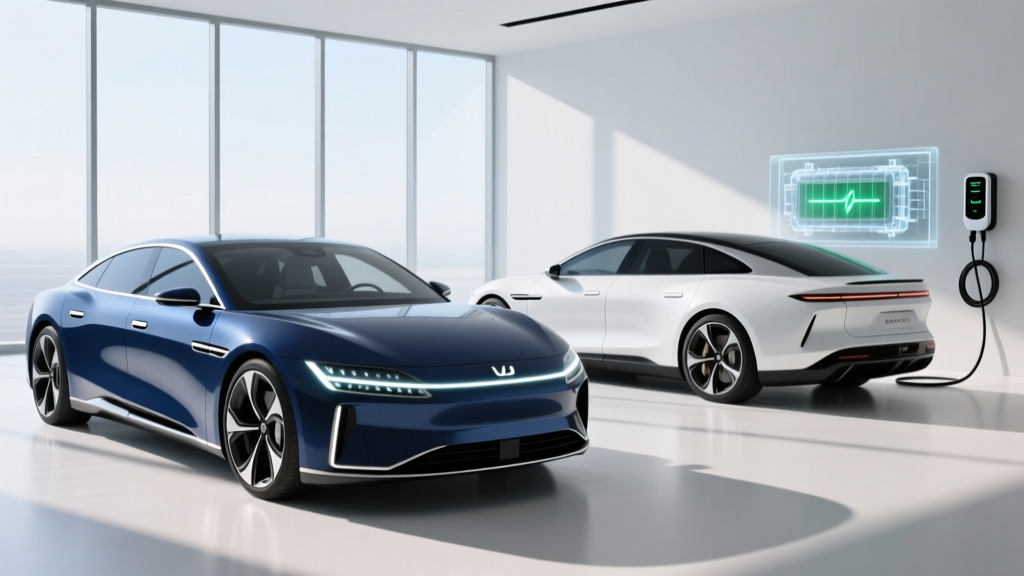
Lucid has streamlined the Air for 2026 into four primary trims. The Pure remains the entry point, the Touring sits in the sweet spot, the Grand Touring delivers maximum range, and the Sapphire occupies the hypercar-sedan apex. Here are the numbers that matter:
| Spec | Pure | Touring | Grand Touring | Sapphire |
|---|---|---|---|---|
| EPA Range | 419 mi | 406 mi | 512 mi | 427 mi |
| Battery (usable) | 88 kWh | 112 kWh | 112 kWh | 118 kWh |
| Chemistry | NMC | NMC | NMC | NMC |
| Drivetrain | RWD (single motor) | AWD (dual motor) | AWD (dual motor) | AWD (tri-motor) |
| Horsepower | 430 hp | 620 hp | 819 hp | 1,234 hp |
| 0–60 mph | 5.0 sec | 3.4 sec | 3.0 sec | 1.89 sec |
| MPGe (combined) | 137 MPGe | 130 MPGe | 131 MPGe | 110 MPGe |
| Base MSRP | $71,400 | $87,400 | $110,900 | $250,500 |
All trims use nickel-manganese-cobalt (NMC) lithium-ion cells. Lucid has not adopted LFP chemistry for the Air, prioritizing energy density over cost reduction — a deliberate choice that enables the class-leading range figures.
Real-World Range: What the EPA Sticker Doesn't Tell You
EPA Estimate: 512 miles
Real-World Highway (70 mph, mild weather): ~410–440 miles
Real-World City / Mixed Driving: ~460–490 miles
Cold-Weather (25°F, highway, heater on): ~340–370 miles
The Lucid Air Grand Touring's 512-mile EPA figure is the highest of any production sedan sold in the U.S. But as with every EV, the EPA test cycle includes generous low-speed and city segments that favor regenerative braking and don't reflect sustained highway driving.
In real-world testing at 70–75 mph on flat terrain in moderate temperatures, expect roughly 410 to 440 miles before hitting a charger. That's still extraordinary — enough to drive from Los Angeles to Las Vegas on a single charge with a small buffer. City and suburban driving, where regen recaptures energy at every stop, pushes closer to the EPA number.
Cold weather is the great equalizer for all EVs. At 25°F with cabin heating active, the Air's range drops roughly 25–30%, landing around 340–370 miles. Lucid's standard heat pump (which scavenges waste heat from the drivetrain rather than relying solely on resistive heating) mitigates some of this loss, but physics is physics. If you live in northern climates, plan your winter road trips around ~350 miles of usable range.
The Pure RWD, with its lighter weight and single motor, delivers efficiency closer to its 419-mile sticker in mixed driving — roughly 370–390 highway miles real-world. The Sapphire's tri-motor setup and performance tuning reduce efficiency to around 350 real-world highway miles.
Charging Speed: DC Fast Charging and Home Setup
The Air's 900-volt electrical architecture is one of the highest in any production EV, enabling faster charging at compatible stations. Here's what the numbers look like across charging levels:
| Charging Level | Power / Voltage | Speed (Grand Touring) | Notes |
|---|---|---|---|
| Level 1 (120V household) | ~1.4 kW | ~3–4 miles/hour | Emergency/top-up only |
| Level 2 (240V home) | 11.5 kW (48A) | ~37 miles/hour | Full charge in ~10–12 hours |
| DC Fast Charge (350 kW station) | Peak ~250 kW (900V) | 10–80% in ~20 min | Adds ~300 mi in 20 min |
| DC Fast Charge (150 kW station) | Peak ~150 kW | 10–80% in ~35 min | More common in real world |
A critical nuance for Air buyers: the 900V architecture delivers its fastest charging at 350 kW chargers like Electrify America's newest stations. At the more common 150 kW DC fast chargers, the Air charges at a perfectly respectable but not class-leading pace. The charge curve tapers noticeably above 80% state of charge — this is normal and protects battery longevity, but plan to charge to 80% on road trips rather than waiting for 100%.
For home charging, the Air's onboard charger accepts up to 11.5 kW on a 48-amp Level 2 circuit. A full charge from near-empty takes roughly 10–12 hours for the 112 kWh battery packs. Most owners who charge nightly at home will never need to think about this — you plug in at 60% and wake up at 100%.
Lucid uses the CCS1 connector for DC fast charging. The company has not yet announced a NACS (Tesla Supercharger) adapter timeline for the Air, though an adapter is expected as the industry transitions. For now, Air owners rely on Electrify America, EVgo, ChargePoint, and other CCS networks. According to fueleconomy.gov, CCS infrastructure continues to expand, with over 5,000 DC fast-charging stations nationwide.
Performance and Driving Dynamics
The Air's powertrain is where Lucid's Formula E racing heritage shows. Even the base Pure RWD delivers 430 horsepower and a 5.0-second 0–60 time — quicker than most V6 luxury sedans. The Touring's dual-motor AWD bumps output to 620 hp with a 3.4-second sprint.
The Grand Touring's 819 hp and 3.0-second 0–60 place it firmly in supercar territory while seating four adults in comfort. And the Sapphire? Its 1,234 hp tri-motor layout and 1.89-second 0–60 make it one of the quickest accelerating production cars ever built, regardless of powertrain.
Every Air features a multi-link front and rear suspension with available air springs (standard on Grand Touring and Sapphire). The ride quality is genuinely impressive — compliant over rough pavement, composed at highway speed, and surprisingly agile given the sedan's 4,700–5,200 lb curb weight. Lucid's in-house-developed motors are physically smaller than competitors' yet produce more power per kilogram, freeing up cabin and cargo space.
Interior, Cargo, and Technology
The Air's cabin is defined by a massive 34-inch curved glass cockpit display that spans the dashboard, blending a digital instrument cluster and infotainment into a single panel. A lower retractable touchscreen handles climate and secondary controls. Wireless Apple CarPlay and Android Auto are standard across all trims.
Lucid's driver-assistance suite, branded DreamDrive Pro, includes adaptive cruise control, lane-centering assist, automatic emergency braking, and a 3D sensor array with lidar (on Grand Touring and Sapphire). This is a SAE Level 2 system — meaning the driver must remain fully engaged and hands-on or hands-ready at all times. It is not autonomous driving.
Passenger space is generous for a luxury sedan:
- Front legroom: 41.0 inches
- Rear legroom: 37.6 inches
- Cargo (trunk): 22.1 cubic feet
- Frunk (front trunk): 9.6 cubic feet
- Total enclosed cargo: 31.7 cubic feet
The frunk-plus-trunk layout gives the Air more total cargo volume than many midsize SUVs, a direct benefit of EV packaging. A full-size suitcase fits easily in the frunk, and the rear trunk swallows golf bags or a week's worth of luggage for four.
Pricing, Tax Credits, and Ownership Cost
| Trim | Base MSRP | §30D Credit Eligible? | Effective Price (w/ max credit) |
|---|---|---|---|
| Pure RWD | $71,400 | Potential (see rules below) | ~$63,900 |
| Touring AWD | $87,400 | No — exceeds MSRP cap | $87,400 |
| Grand Touring | $110,900 | No — exceeds MSRP cap | $110,900 |
| Sapphire | $250,500 | No — exceeds MSRP cap | $250,500 |
Under current IRS §30D rules, the federal EV tax credit has a hard MSRP cap of $55,000 for sedans (and $80,000 for SUVs/vans/pickups). Because every 2026 Lucid Air trim exceeds $55,000, no Air currently qualifies for the $7,500 federal purchase credit. Buyers may still benefit from:
- State/local incentives — check your state's EV rebate program (amounts vary by jurisdiction)
- Utility rebates — some electric utilities offer $500–$1,500 for home charger installation
- Lease loophole — if Lucid offers a lease structure that passes through the commercial EV credit (§45W), lessees may see a reduction; confirm with your dealer
Additional §30D eligibility factors (income caps, battery sourcing, critical mineral requirements) are moot here since the MSRP cap alone disqualifies the Air, but these rules apply to any EV purchase — always verify with a tax professional before relying on credit eligibility.
5-year ownership economics favor the Air over comparable ICE luxury sedans (BMW 5 Series, Mercedes E-Class) primarily through fuel savings. At $0.13/kWh (national average home electricity) and 3.5 miles/kWh, the Air costs roughly $0.037 per mile to fuel at home versus $0.14–$0.17 per mile for a 25 MPG gas sedan on $3.50/gallon fuel. Over 75,000 miles, that's a fuel savings of approximately $8,000–$10,000. Insurance premiums, however, run 15–25% higher than gas equivalents — factor in ~$2,400–$3,200/year depending on your profile.
Battery Warranty and Longevity
Lucid backs the Air's battery pack and electric powertrain with an 8-year / 100,000-mile warranty, covering defects and capacity loss below 70% of original capacity. This aligns with industry standards set by Tesla, Hyundai, and BMW.
Lucid has not published long-term degradation data for its NMC packs, but based on industry averages for liquid-cooled NMC batteries with active thermal management, owners can expect approximately 85–90% state of health (SoH) at 100,000 miles under normal use. Best practices for longevity:
- Charge to 80–90% for daily use; reserve 100% for road trips
- Avoid repeated DC fast-charging sessions in extreme heat without preconditioning
- Use the car's scheduled-departure preconditioning feature to warm/cool the battery before driving
Battery replacement cost, if needed out of warranty, is estimated at $15,000–$25,000 depending on pack size — comparable to other luxury EV platforms. However, modern NMC packs with active thermal management rarely require full replacement within the first decade.
Pros, Cons, and the Verdict
- Class-leading EPA range (512 mi Grand Touring)
- 900V architecture enables ~20-min 10–80% DC charging
- Massive cargo volume (31.7 cu ft total)
- Exceptional ride quality with available air suspension
- U.S.-assembled in Casa Grande, AZ
- Frunk adds practical daily storage
- No trim qualifies for §30D federal tax credit (MSRP cap)
- CCS-only for now; no native NACS/Supercharger access
- Dealer network still limited vs. legacy luxury brands
- Infotainment learning curve (glass cockpit takes adjustment)
- Premium pricing even before options
- Service center availability varies by region
Who Should Buy the 2026 Lucid Air?
- You want the longest-range EV sedan available and frequently drive 300+ miles between stops
- You value a spacious rear seat and sedan cargo versatility over SUV ride height
- You have home Level 2 charging and can benefit from overnight top-ups
- You prioritize ride comfort and quiet cruising over track-focused dynamics
- Federal tax-credit eligibility is a dealbreaker (consider the Tesla Model S or BMW i5, which also face MSRP-cap challenges, or step down to the Hyundai Ioniq 6 for credit eligibility)
- You rely heavily on Tesla Supercharger access and cannot wait for a NACS adapter
- You need a third row or serious towing capacity (wait for the Lucid Gravity SUV)
The Lucid Air is a compelling luxury EV sedan that happens to be built in the Arizona desert. Its Casa Grande manufacturing roots give it domestic assembly credibility, and the engineering that comes out of that facility — particularly the efficiency, range, and powertrain packaging — is genuinely world-class. If the pricing aligns with your budget and you can charge at home, the Air rewards with an ownership experience that's hard to match.
Frequently Asked Questions
Where exactly are Lucid cars manufactured?
All Lucid vehicles are assembled at AMP-1 in Casa Grande, Arizona. The facility handles body-in-white, paint, final assembly, and quality testing. Lucid's engineering, design, and corporate headquarters remain in Newark, California.
What is the real-world range of the Lucid Air?
The Grand Touring's 512-mile EPA estimate translates to roughly 410–440 highway miles in mild weather, 460–490 in city driving, and 340–370 in cold weather. The Pure RWD delivers approximately 370–390 real-world highway miles.
How fast does the Lucid Air charge at home and on the road?
At home on a 240V Level 2 circuit, the Air charges at up to 11.5 kW, adding roughly 37 miles per hour. On a 350 kW DC fast charger, the 900V architecture enables a 10–80% charge in approximately 20 minutes. At the more common 150 kW chargers, expect 10–80% in about 35 minutes.
Does the Lucid Air qualify for the $7,500 federal EV tax credit?
No. Under current IRS §30D rules, sedans must have an MSRP at or below $55,000 to qualify. Every 2026 Air trim starts above $71,000, making none eligible for the federal purchase credit. State incentives and utility rebates may still apply.
Is the Lucid Air worth buying over the Tesla Model S or Mercedes EQE?
The Air wins on range (512 mi vs. Model S's ~402 mi and EQE's ~300 mi), cargo volume, and ride comfort. The Model S wins on Supercharger network access and software polish. The EQE wins on dealership service network breadth. If range and interior space are your top priorities, the Air is the strongest pick in the luxury EV sedan segment.
What connector does the Lucid Air use?
The Air currently uses CCS1 for DC fast charging and J1772 for Level 2 AC charging. A NACS adapter for Tesla Supercharger access has not been announced as of early 2026 but is anticipated as the industry standardizes on NACS.