What Is Tesla HW4 and Why It Matters for Your Next Tesla
If you've been researching a new Tesla purchase, you've likely encountered the term "HW4" — Tesla's fourth-generation Autopilot hardware suite. But what is Tesla HW4 exactly, and how does it differ from the HW3 system that powered millions of miles of Autopilot and Full Self-Driving (Supervised) operation? The answer matters more than most buyers realize, because the hardware generation on your vehicle's window sticker directly determines which driver-assistance features you'll get, how well they perform, and whether your car can support future autonomy updates.
HW4 (sometimes referred to by Tesla as "AI4") represents a significant generational leap in onboard compute, camera resolution, and sensor architecture. It debuted on the refreshed Model S and Model X in early 2023, rolled out to the new-generation Model 3 "Highland" refresh later that year, and is now standard across all new Tesla vehicles sold in 2026 — including the current Model Y "Juniper" refresh, Model 3, Model S, Model X, and Cybertruck.
HW4 vs. HW3: The Hardware Differences That Matter
Understanding what Tesla HW4 actually is requires looking at the physical components. Here's where the generational gap becomes tangible:
| Component | HW3 (Legacy) | HW4 (Current) |
|---|---|---|
| Cameras | 8 cameras, 1.2 MP each | 8 cameras, up to 5 MP (higher-res front and key surround) |
| Front Camera | Single tri-camera module (narrow, main, wide) | Dual high-res camera module with improved low-light sensor |
| Onboard Computer | FSD Computer (dual-chip, ~144 TOPS) | HW4/AI4 Computer (~3–5x processing throughput) |
| Radar | Front radar (removed in late HW3 builds) | No radar — pure vision (Tesla Vision) |
| Ultrasonic Sensors | 12 ultrasonic sensors (removed in late HW3 builds) | None — replaced by vision-based occupancy network |
| Camera Heater | Limited | Enhanced camera de-icing/heating for cold weather |
The most impactful change is the jump from 1.2-megapixel to 5-megapixel cameras. Higher resolution means the neural network can detect objects — pedestrians, lane markings, debris, stopped vehicles — at greater distances and in more challenging lighting. The front-facing camera system, critical for highway driving, benefits the most: where HW3 might identify a stopped truck at 150 meters, HW4's higher-resolution sensors extend reliable detection to 250+ meters, giving the system more reaction time at highway speeds.
The onboard compute upgrade is equally important. Tesla's HW4 computer processes camera feeds faster, runs more complex neural network models simultaneously, and supports higher-fidelity occupancy network mapping. In practical terms, this means FSD (Supervised) on HW4 vehicles handles complex intersections, unprotected left turns, and construction zones with fewer interventions than the same software running on HW3.
Which 2026 Tesla Models Include HW4?
As of the 2026 model year, every new Tesla sold in the United States ships with HW4. If you're buying new from Tesla's website or a Tesla store, you will receive HW4 hardware regardless of model or trim. The breakdown:
- Model 3 (Highland refresh, 2024+): HW4 standard across all trims
- Model Y (Juniper refresh, 2025+): HW4 standard across all trims
- Model S (2023+ refresh): HW4 standard
- Model X (2023+ refresh): HW4 standard
- Cybertruck (2024+): HW4 standard
The critical caveat applies to used Tesla buyers. Vehicles built before approximately March 2023 may carry HW3. Tesla stopped offering free HW3-to-HW4 retrofits, and as of 2026, the company has not announced a paid upgrade path from HW3 to HW4. If you're shopping the used market, check the vehicle's build date and confirm hardware generation in the car's software menu under Controls → Software → Additional Vehicle Information.
How HW4 Affects FSD (Supervised) and Autopilot Performance
The hardware matters because Tesla's driver-assist software — particularly FSD (Supervised) — is compute-bound and data-bound. Higher-resolution cameras generate richer input; faster processors run more sophisticated models. In our experience and consistent with third-party testing, HW4-equipped vehicles demonstrate:
- Fewer phantom braking events on highways, thanks to better depth estimation from higher-res cameras
- Improved lane-centering precision, especially on roads with faded or conflicting lane markings
- Better low-light and rain performance, where HW3 cameras often struggled with glare and reduced contrast
- Faster recognition of traffic signal states (red/yellow/green, arrow vs. round) at complex intersections
- More confident unprotected left turns, where the system must track cross-traffic, pedestrians, and signal state simultaneously
Tesla's FSD (Supervised) subscription costs $99/month or can be purchased outright for $8,000 (pricing as of early 2026). Both HW3 and HW4 vehicles can run FSD software, but the experience gap is meaningful — enough that we recommend HW4 as a hard requirement for anyone considering the FSD purchase.
Spec Snapshot: HW4 in the 2026 Model Y Long Range AWD
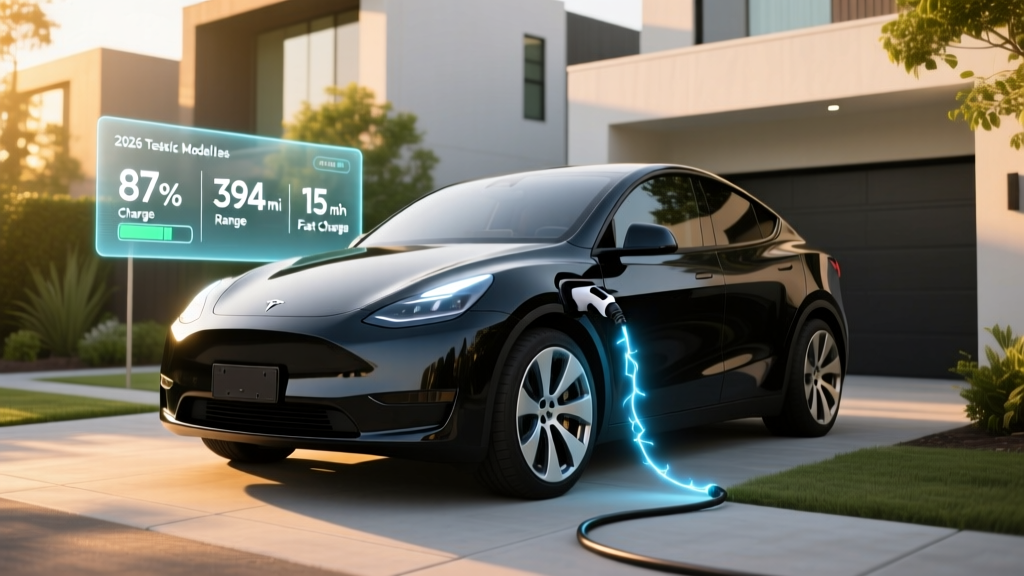
Since the Model Y is Tesla's highest-volume vehicle and the most common context where buyers ask about HW4, here's a full spec profile of the 2026 Model Y Long Range AWD — the most popular configuration:
| Specification | 2026 Model Y Long Range AWD |
|---|---|
| EPA Range | 320 miles |
| Battery | ~78 kWh usable, NMC (2170 cells) |
| Efficiency | 122 MPGe combined / 27 kWh/100mi |
| Max DC Fast Charge | 250 kW peak (V3 Supercharger) |
| 10–80% DC Charge | ~27 minutes (with preconditioning) |
| Level 2 Home Charging | 11.5 kW / ~44 miles per hour |
| 0–60 mph | 4.8 seconds |
| Horsepower | 384 hp (dual motor) |
| Drivetrain | AWD (dual motor) |
| Cargo Volume | 30.2 cu ft (rear seats up) / 72.1 cu ft (folded) |
| Rear Legroom | 38.4 inches |
| Autopilot Hardware | HW4 (AI4) |
| Base MSRP | $47,990 (before incentives) |
| Battery Warranty | 8 years / 120,000 miles (70% retention) |
Pricing, Trims, and Federal Tax Credit Eligibility
Tesla's pricing shifts frequently, but as of early 2026, here's where the key models with HW4 sit:
| Model / Trim | Base MSRP | Est. After §30D Credit* | HW4 Included |
|---|---|---|---|
| Model 3 RWD | $38,990 | ~$31,490 | Yes |
| Model 3 Long Range AWD | $45,990 | ~$38,490 | Yes |
| Model Y Long Range AWD | $47,990 | ~$40,490 | Yes |
| Model Y Performance | $52,990 | ~$45,490 | Yes |
| Model S Long Range | $79,990 | Ineligible (MSRP cap) | Yes |
| Model X Long Range | $84,990 | Ineligible (MSRP cap) | Yes |
| Cybertruck AWD | $79,990 | Ineligible (MSRP cap) | Yes |
*Federal tax credit estimates assume buyer eligibility. Actual credit amount varies.
- MSRP Caps (IRS §30D): SUVs, vans, and pickups must have an MSRP ≤ $80,000; sedans and other vehicles ≤ $55,000. This is why the Model S, Model X, and most Cybertruck trims are ineligible.
- Buyer Income Caps: Modified adjusted gross income (MAGI) must not exceed $150,000 (single), $225,000 (head of household), or $300,000 (joint filing).
- Battery Sourcing Requirements: The full $7,500 credit requires meeting both critical-minerals and battery-component sourcing thresholds. Tesla's US-built vehicles with US-sourced battery cells generally qualify, but supply chain changes can affect eligibility mid-year. Always verify current status at fueleconomy.gov before purchasing.
- Point-of-Sale Transfer: Eligible buyers can transfer the credit to the dealer (Tesla) at purchase, reducing the purchase price directly rather than waiting for a tax refund. Confirm this option at checkout.
For the latest IRS guidance on qualified vehicles and income rules, consult IRS.gov's clean vehicle credits page or speak with a tax professional.
Charging Speed and Infrastructure: What HW4 Owners Get
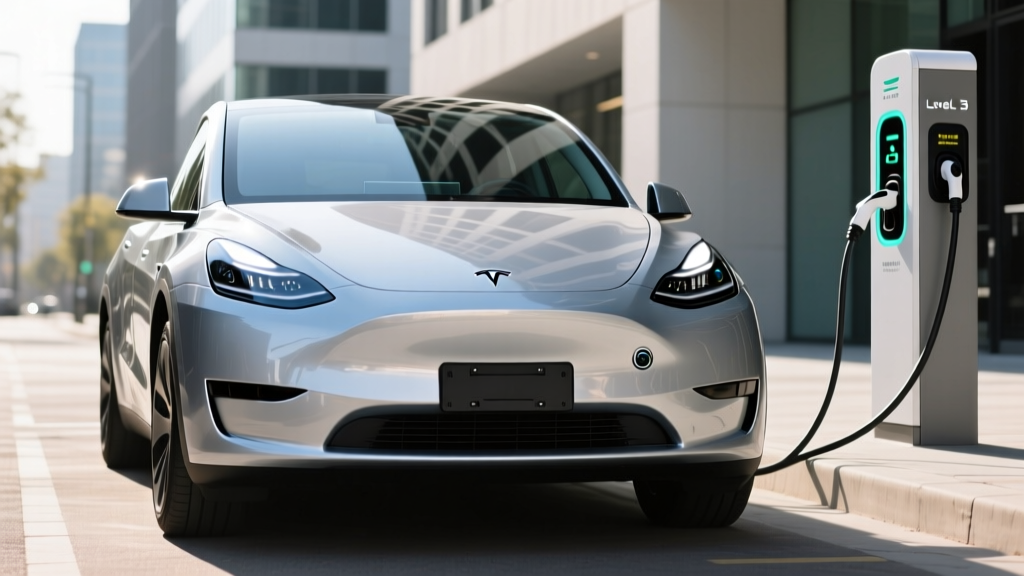
HW4 is about driver-assistance hardware, not charging hardware — but since most HW4 buyers are also evaluating the complete ownership picture, here's how charging works on current Tesla vehicles:
| Charging Level | Power | Speed (Model Y LR) | Use Case |
|---|---|---|---|
| Level 1 (120V) | ~1.4 kW | ~4 miles/hour | Emergency / overnight trickle |
| Level 2 (240V, Wall Connector) | 11.5 kW | ~44 miles/hour | Daily home charging |
| DC Fast (V3 Supercharger) | 250 kW peak | 10–80% in ~27 min | Road trips |
| DC Fast (V4 Supercharger) | Up to 325 kW (vehicle-limited) | Similar to V3 (car caps at ~250 kW) | Future-proofing |
A critical nuance: Tesla's peak 250 kW charge rate is not sustained. The charge curve peaks near 250 kW only between roughly 10–30% state of charge, then tapers progressively. From 50–80%, you'll see rates closer to 80–120 kW. This is why the 10–80% time of ~27 minutes is more meaningful than the peak kW number. Always precondition your battery (the car does this automatically when you navigate to a Supercharger) to achieve maximum charge speed.
Tesla's NACS (North American Charging Standard) connector is now the industry standard, with Ford, GM, Rivian, Volvo, and others adopting it. HW4 Tesla owners have full access to the Supercharger network — over 6,500 stations and 60,000+ connectors in North America — which remains the most reliable DC fast-charging network by a wide margin, according to J.D. Power EV experience studies.
Pros and Cons of Buying a HW4-Equipped Tesla
Pros
- Significantly improved camera resolution for better FSD (Supervised) performance
- Access to the Supercharger network — still the gold standard for reliability
- Over-the-air updates continuously improve driver-assist capabilities
- Strong efficiency (kWh/100mi) relative to competitors in each segment
- Comprehensive battery warranty (8 years / 120,000 miles)
- Point-of-sale federal tax credit transfer reduces upfront cost
Cons
- No radar or ultrasonic sensors — pure-vision approach still struggles in heavy fog, snow, and some parking scenarios
- FSD (Supervised) remains SAE Level 2 — not self-driving, despite the name
- No HW3-to-HW4 retrofit path for used-car buyers
- Panel gap and interior material quality still lag legacy luxury competitors
- Insurance premiums on Teslas remain higher than segment averages
- Service center wait times can be lengthy in some metro areas
Is a HW4 Tesla Worth It vs. Competitors?
The question of whether HW4 justifies choosing a Tesla over competitors depends on what you prioritize:
Decision Framework
Choose a HW4 Tesla if: You value the best available driver-assist hardware, want Supercharger network access, prioritize efficiency and software updates, and plan to keep the vehicle 4+ years as FSD capabilities evolve.
Consider a competitor (Hyundai Ioniq 5, Ford Mustang Mach-E, BMW iX) if: You prefer traditional build quality and materials, want a dealer service network, need features Tesla doesn't offer (Apple CarPlay, heads-up display, physical controls), or are uncomfortable with Tesla's pure-vision approach to driver assists.
On pure driver-assist hardware, HW4 Teslas lead the consumer market in camera resolution and compute throughput. But competitors like GM's Super Cruise (which uses lidar-mapped highways for hands-free driving on 750,000+ miles of compatible roads) and Ford's BlueCruise offer different — and in some specific scenarios, more relaxed — Level 2 experiences. The trade-off is network access, update cadence, and hardware ceiling.
Frequently Asked Questions About Tesla HW4
Can I upgrade my HW3 Tesla to HW4?
As of 2026, Tesla does not offer a paid or free upgrade path from HW3 to HW4. Tesla previously offered free HW3 upgrades to early FSD purchasers who were promised "full self-driving" capability, but that program has ended. If you want HW4, you need a vehicle built with it — generally any Tesla manufactured after March 2023.
Does HW4 make my Tesla self-driving?
No. HW4 enables more capable SAE Level 2 driver assistance. The driver must remain engaged, monitor the road, and be prepared to take control at all times. Tesla's FSD (Supervised) is not a Level 3, 4, or 5 autonomous system. Only geofenced robotaxi services like Waymo operate at Level 4 without a human driver.
How do I check if a used Tesla has HW4?
On the vehicle's touchscreen, navigate to Controls → Software → Additional Vehicle Information. The Autopilot hardware version will be listed. You can also check the build date — vehicles built after approximately March 2023 should have HW4, though the transition varied slightly by model and factory.
Is HW4 necessary to use FSD (Supervised)?
No — FSD (Supervised) software runs on both HW3 and HW4. However, the experience is noticeably better on HW4 due to higher-resolution camera input and faster processing. Tesla's own development focus has shifted to HW4, meaning HW3 vehicles may receive fewer meaningful FSD improvements over time. If you're spending $8,000 or $99/month on FSD, HW4 hardware is strongly recommended.
Does HW4 include radar or ultrasonic sensors?
No. HW4 Teslas use a pure-vision architecture — cameras only, with no radar or ultrasonic sensors. Tesla's "Tesla Vision" system replaces ultrasonic parking sensors with a vision-based occupancy network. This approach works well in most conditions but can be less reliable than sensor-fused systems in heavy precipitation, fog, or very tight parking situations.
What's the real-world range impact of running FSD on HW4?
Running FSD (Supervised) or Autopilot has a negligible direct impact on energy consumption — the onboard computer draws minimal power. However, FSD's driving style (smoother acceleration, more conservative speeds in some modes) can marginally improve efficiency compared to aggressive manual driving. The bigger range variables remain speed, temperature, terrain, and tire pressure.