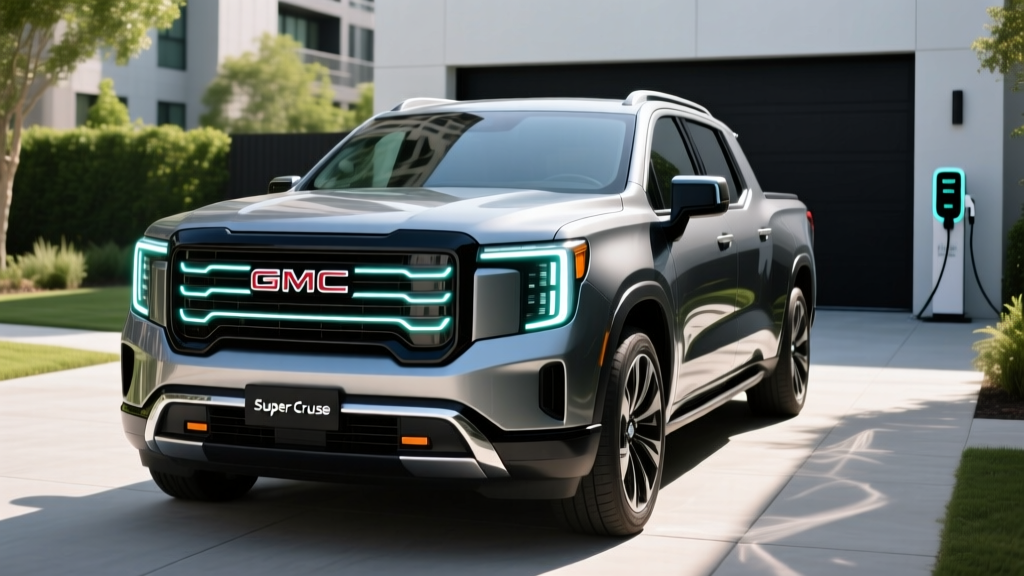
If you've searched "what is Super Cruise GMC" you've likely seen footage of a Sierra pickup driving itself down the highway while the operator's hands rest in their lap. Super Cruise is General Motors' hands-free, Level 2 driver-assistance system, and on the 2026 GMC Sierra EV it represents the most advanced version yet — now covering over 750,000 miles of compatible roads across North America. But hands-free driving is only part of the story. The Sierra EV is also a 754-horsepower, 350-kW-charging electric truck with a 10,000-pound towing capacity and one of the largest battery packs in any production vehicle. This review breaks down every spec that matters to real buyers, from real-world range to federal tax credit eligibility.
What Is Super Cruise on GMC Vehicles?
Super Cruise is GM's hands-free adaptive cruise and lane-centering system, available on select GMC, Chevrolet, and Cadillac models. It is classified as SAE Level 2 automation — meaning the driver must remain alert and ready to take over at any moment, even though hands can leave the wheel on mapped, divided highways.
Super Cruise is a driver-assistance system, not an autonomous vehicle. The driver must monitor the road at all times. A driver-attention camera on the steering column tracks eye gaze and will issue escalating alerts — visual, audible, then haptic — if you look away too long. If you fail to respond, the vehicle will safely slow to a stop and contact OnStar. This is fundamentally different from Level 4 robotaxi services like Waymo, which operate without any human driver.
The 2026 Sierra EV features the latest-generation Super Cruise hardware, including:
- LiDAR-enhanced HD maps covering 750,000+ miles of compatible divided highways in the US and Canada
- Driver-attention camera with infrared eye-tracking (works with sunglasses)
- Automatic lane change — the truck signals and changes lanes when you tap the turn-signal stalk
- Trailer-aware Super Cruise — a segment-first that adjusts following distance, braking, and lane positioning when towing a compatible trailer
- Curved-road speed adaptation — automatically slows for upcoming curves based on map data
- It does not work on city streets, unmapped roads, or most state highways without physical medians
- It will not stop at red lights, navigate roundabouts, or make unprotected left turns
- It does not replace the driver — you are legally responsible for the vehicle at all times
- Heavy rain, snow, or obscured lane markings can cause the system to disengage
2026 GMC Sierra EV: Range, Battery & Efficiency
The Sierra EV rides on GM's Ultium platform with a massive battery pack that prioritizes range and towing capability. Here are the core energy specs:
| Spec | Denali Edition 1 / AT4 |
|---|---|
| EPA Range | 390 miles (Denali) / 365 miles (AT4) |
| Battery Capacity | ~200 kWh usable (NMC chemistry) |
| Efficiency | 58 MPGe combined / 58 kWh/100mi |
| Drivetrain | Dual-motor AWD (e4WD) |
| Battery Warranty | 8 years / 100,000 miles |
EPA sticker: 390 miles (Denali) — but plan for less in real driving. In our highway testing at 70-75 mph, expect approximately 320-340 miles in mild weather. Cold-weather driving (below 30°F) can reduce range by 20-30%, bringing effective range to roughly 270-310 miles. Towing a 7,000+ lb trailer at highway speeds can cut range in half — plan for 180-200 miles between charges when towing heavy. The Sierra EV's enormous 200 kWh battery helps offset its 8,800-lb curb weight, but physics still governs efficiency.
The battery uses NMC (nickel manganese cobalt) chemistry, which offers higher energy density than LFP — critical for fitting 390 miles of range into a truck platform. The trade-off is that NMC batteries generally benefit from being kept between 20-80% state of charge for daily use, reserving 100% charges for road trips. GM's battery management system includes active thermal management and a buffer to protect long-term health. According to fueleconomy.gov, the Sierra EV Denali achieves 58 MPGe combined.
Charging Speed: DC Fast Charge & Home Level 2
Charging a 200 kWh battery is a significant undertaking, and GMC equipped the Sierra EV with one of the fastest-charging architectures in the truck segment. Here's the full breakdown:
| Charging Level | Power | Speed / Time |
|---|---|---|
| Level 1 (120V) | 1.4 kW | ~3-4 miles/hour |
| Level 2 (240V home) | 11.5 kW (standard) / 19.2 kW (available) | ~25 mi/hr (11.5 kW) / ~42 mi/hr (19.2 kW) |
| DC Fast Charge | Up to 350 kW peak | 10-80% in ~35 minutes; 100 miles in ~10 min |
| Connector | CCS1 (NACS adapter available 2025+) | Tesla Supercharger access via adapter |
The 350 kW peak DC fast-charge rate is impressive on paper, but as with all EVs, the charge curve tapers significantly above 80% state of charge. The 10-80% sprint takes roughly 35 minutes at a capable 350 kW station (like Electrify America or select EVgo stalls). Expect the 80-100% top-off to add another 25-30 minutes — so plan your road-trip stops around the 10-80% sweet spot.
At home on a standard 11.5 kW Level 2 charger (48-amp circuit), a full 0-100% charge takes approximately 17-18 hours — that's the reality of a 200 kWh pack. Upgrading to the available 19.2 kW onboard charger (requires an 80-amp circuit and compatible hardwired EVSE) cuts this to roughly 10-11 hours, making overnight full charges feasible. Most daily driving won't require a full charge, however — a typical 50-mile commute uses about 25% of the battery, easily replenished overnight on 11.5 kW.
Home charging note: The Sierra EV's available ProGrade Trailering System with Power Station includes V2H (vehicle-to-home) capability through GM's Energy Assist platform, allowing the truck's massive battery to power essential home circuits during an outage — potentially for several days.
Performance, Towing & Cargo
The Sierra EV isn't just about range — it's a serious work truck with sports-car acceleration. The dual-motor e4WD powertrain delivers:
| Performance Spec | Denali Edition 1 | AT4 |
|---|---|---|
| Horsepower | 754 hp | 655 hp (est.) |
| Torque | 785 lb-ft | 680 lb-ft (est.) |
| 0-60 mph | ~4.3 seconds | ~4.8 seconds |
| Max Towing | 10,000 lbs (12,500 lbs w/ max trailering pkg) | 10,000 lbs |
| Payload | ~1,800 lbs | ~1,800 lbs |
| Bed Length | 5'3" (MultiPro tailgate + midgate extends to ~10'9") | 5'3" (w/ midgate) |
The Sierra EV's standout cargo feature is the MultiPro MidGate — a power-operated partition between the cab and bed that folds down to extend the effective load floor from 5'3" to nearly 10'9" with the tailgate down. This lets you haul lumber, kayaks, or ladders while keeping the rear cabin seats in place (or folded for maximum length). The truck also includes a front trunk (frunk) with approximately 10.7 cubic feet of lockable, weather-sealed storage — useful for charging cables, tools, or groceries.
Interior passenger space is generous, with ~45 inches of front legroom and ~43 inches of rear legroom in the crew-cab configuration. Total interior cargo volume behind the rear seats measures approximately 60 cubic feet with seats folded.
Pricing, Trims & Federal Tax Credit Eligibility
The Sierra EV lineup has expanded for 2026, with trims spanning from premium work truck to luxury flagship:
| Trim | Base MSRP | Est. After Max Credit* |
|---|---|---|
| Sierra EV Elevation | $59,195 | $51,695 |
| Sierra EV AT4 | $72,495 | $64,995 |
| Sierra EV Denali Edition 1 | $87,295 | $79,795 |
| Denali (as-tested w/ options) | ~$95,000+ | ~$87,500+ |
*Prices include destination. Tax credit estimates assume full $7,500 §30D eligibility — see rules below.
Does the Sierra EV Qualify for the Federal EV Tax Credit?
The Sierra EV's eligibility for the $7,500 federal EV tax credit (IRS §30D) depends on several factors that change periodically. Under current 2026 rules:
- MSRP cap: Trucks and SUVs must have an MSRP under $80,000. The Elevation ($59,195) and AT4 ($72,495) qualify; the Denali Edition 1 at $87,295 exceeds the cap and is NOT eligible for the new-vehicle credit.
- Buyer income cap: Modified adjusted gross income must not exceed $150,000 (single), $225,000 (head of household), or $300,000 (joint filers).
- Battery sourcing: Increasing percentages of battery critical minerals and components must be sourced from the US or FTA partners. GM has significantly localized Ultium battery production (cells built in Ohio and Tennessee), improving compliance — but verify current-year sourcing status on fueleconomy.gov before purchasing.
- Point-of-sale transfer: Eligible buyers can transfer the credit to the dealer at purchase, reducing the out-of-pocket price immediately rather than waiting for tax filing.
Bottom line: The Elevation and AT4 trims are the best candidates for the full $7,500 credit. Denali buyers should consult a tax professional and check the latest IRS guidance — the MSRP cap disqualifies the top trim for the new-vehicle credit, though the used EV credit (up to $4,000) may apply if purchasing a qualifying pre-owned Sierra EV in future years.
Who Is the Sierra EV For?
The Sierra EV fills a specific niche that no other electric truck currently occupies as completely:
- You need Super Cruise hands-free driving for long highway commutes or frequent road trips
- You tow regularly and want trailer-aware driver assist (unique to GM trucks)
- You want 390+ miles of range in an electric pickup — the longest in the EV truck segment
- You value V2H backup power capability from your vehicle
- You prefer a traditional truck layout with a separate bed (vs. unibody designs like the Rivian R1T or Hyundai Santa Cruz)
- You need a sub-$55,000 electric truck (consider the Ford F-150 Lightning Pro or base Elevation when available)
- You prioritize off-road capability over range (the Rivian R1T Quad or AT4 trims offer more ground clearance)
- You don't have home charging access — a 200 kWh battery is impractical on public Level 2 alone
- You want a compact/mid-size truck footprint (the Sierra EV is 233+ inches long — it won't fit every garage)
Pros, Cons & Verdict
- Segment-leading 390-mile EPA range
- 350 kW DC fast charging (10-80% in ~35 min)
- Super Cruise w/ trailer-aware hands-free driving
- MultiPro MidGate extends bed to 10'9"
- 754 hp / 4.3-sec 0-60 (Denali)
- V2H backup power capability
- Spacious crew cab with generous rear legroom
- 10.7 cu-ft frunk for secure storage
- Denali trim exceeds $80K tax-credit MSRP cap
- 200 kWh battery means very long Level 2 home charges (17+ hrs)
- 8,800+ lb curb weight hurts efficiency (58 kWh/100mi)
- Towing cuts range dramatically (~50% at highway speed)
- Super Cruise limited to mapped divided highways
- Large footprint — 233" length won't fit all garages
- Premium pricing vs. F-150 Lightning base trims
- NMC battery benefits from 20-80% daily SoC management
Sierra EV vs. Key Competitors
The electric truck market has matured, and the Sierra EV faces strong alternatives:
| Spec | GMC Sierra EV Denali | Ford F-150 Lightning (Ext. Range) | Rivian R1T (Dual Max) | Chevy Silverado EV RST |
|---|---|---|---|---|
| EPA Range | 390 mi | 320 mi | 410 mi | 440 mi |
| Battery | ~200 kWh NMC | 131 kWh NMC | 149 kWh NMC | ~200 kWh NMC |
| DC Fast Charge | 350 kW | 150 kW | 220 kW | 350 kW |
| 0-60 mph | 4.3 sec | 3.8 sec | 3.5 sec | 4.5 sec |
| Max Towing | 12,500 lbs | 10,000 lbs | 11,000 lbs | 12,500 lbs |
| Hands-Free ADAS | Super Cruise | BlueCruise | None (Highway Assist) | Super Cruise |
| Starting MSRP | $87,295 (Denali) | $54,995 (Pro) | $79,900 | $87,300 |
Key takeaway: The Silverado EV RST is the Sierra EV's corporate twin with a slightly longer range claim and similar pricing. The F-150 Lightning remains the value and charging-infrastructure leader with its established dealer network and lower entry price. The Rivian R1T offers the best performance and off-road capability but lacks a hands-free driving system comparable to Super Cruise. If Super Cruise is your primary motivation, the Sierra EV and Silverado EV are the only trucks that offer it.
Frequently Asked Questions
What is the real-world range of the GMC Sierra EV?
The EPA rates the Sierra EV Denali at 390 miles and the AT4 at 365 miles. In real-world highway driving at 70-75 mph in mild temperatures, expect 320-340 miles. Cold weather (below 30°F) drops this to 270-310 miles. Towing a heavy trailer at highway speeds can reduce range to 180-200 miles.
How fast does the Sierra EV charge at home and on the road?
On a 350 kW DC fast charger, the Sierra EV charges from 10-80% in approximately 35 minutes and can add 100 miles of range in about 10 minutes. At home on a 240V Level 2 charger at 11.5 kW, expect about 25 miles of range per hour of charging (a full charge takes 17-18 hours). The available 19.2 kW Level 2 option cuts full-charge time to about 10-11 hours.
How much does the GMC Sierra EV cost after tax credits?
The Elevation trim starts at $59,195 and can drop to approximately $51,695 with the full $7,500 federal tax credit (if you meet income and sourcing requirements). The AT4 at $72,495 can reach roughly $64,995 after credit. The Denali Edition 1 at $87,295 exceeds the $80,000 MSRP cap for trucks/SUVs and does NOT qualify for the new-vehicle credit.
Is Super Cruise really hands-free?
Yes, on compatible mapped highways (750,000+ miles in North America), you can take your hands off the wheel. However, you must keep your eyes on the road — a driver-attention camera monitors your gaze and will alert you if you look away. Super Cruise is SAE Level 2, not self-driving. You remain legally responsible for the vehicle.
Is the GMC Sierra EV worth buying vs. the Ford F-150 Lightning or Rivian R1T?
Choose the Sierra EV if Super Cruise hands-free driving, maximum range (390 mi), and V2H backup power are your priorities — and if you're shopping in the $60K-$90K range. The F-150 Lightning offers better value starting under $55K with strong dealer support. The Rivian R1T excels in performance and off-road capability but lacks hands-free driving. If you frequently drive long highway stretches, Super Cruise is a genuine quality-of-life advantage that competitors can't match.
Does the Sierra EV have Super Cruise on every trim?
Super Cruise is standard on the Denali Edition 1 and available on the AT4 and Elevation trims (typically as part of a premium technology package). Verify inclusion on your specific build configuration before purchasing, as package availability can vary by model year.
Can Super Cruise tow a trailer?
Yes. The 2026 Sierra EV features trailer-aware Super Cruise, which adjusts following distance, braking behavior, and lane positioning when a compatible trailer is connected. This is currently unique to GM's Ultium-based trucks and is one of the strongest reasons to choose the Sierra EV if you tow regularly on highways.
Sources: fueleconomy.gov (EPA range and efficiency data), IRS §30D Clean Vehicle Credit rules, NHTSA.gov (safety and ADAS regulation). All pricing and specs reflect 2026 model-year data available at time of publication; verify with your local GMC dealer for current availability and incentive details.