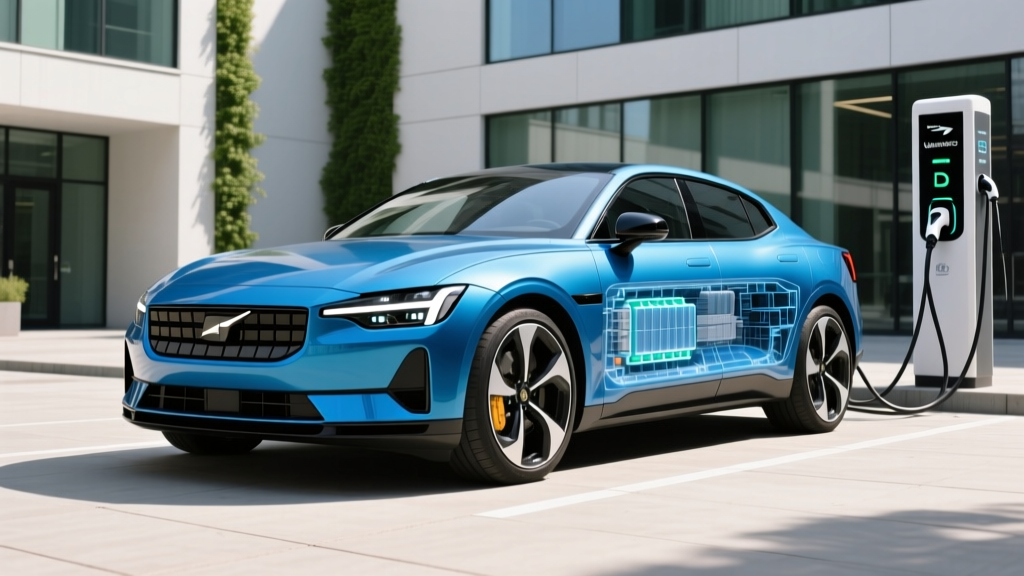
If you've been researching electric vehicles, you've likely encountered the question: what is Polestar? Born from Volvo's performance division and now a standalone Swedish-Chinese EV brand backed by Geely, Polestar positions itself as the design-forward, driving-dynamics alternative to mainstream electric cars. But beneath the minimalist Scandinavian styling lies a lineup with specific range figures, charging curves, and ownership realities that matter far more than brand mystique.
For 2026, Polestar's U.S. lineup centers on three core models: the Polestar 2 (compact liftback sedan), the Polestar 3 (midsize luxury SUV), and the Polestar 4 (coupe-style SUV). Each rides on different Geely-developed platforms, uses distinct battery chemistries, and targets different buyer profiles. This guide breaks down every critical spec — EPA range, real-world efficiency, DC fast-charging curves, home charging rates, pricing, and federal tax credit eligibility — so you can decide if a Polestar belongs in your driveway.
Polestar at a Glance: 2026 U.S. Model Specs
| Spec | Polestar 2 (LRDM) | Polestar 3 (LRDM) | Polestar 4 (LRDM) |
|---|---|---|---|
| EPA Range | 320 miles | 315 miles (est.) | 300 miles (est.) |
| Battery (usable) | 79 kWh, NMC | 107 kWh, NMC | 100 kWh, NMC |
| Drivetrain | Dual-motor AWD | Dual-motor AWD | Dual-motor AWD |
| Horsepower | 421 hp | 489 hp | 544 hp |
| 0–60 mph | 4.3 sec | 4.7 sec | 3.8 sec |
| Max DC Charge Rate | 200 kW | 250 kW | 200 kW |
| 10–80% DC Time | ~28 min | ~30 min | ~28 min |
| Level 2 Home Rate | 11 kW (~37 mi/hr) | 11 kW (~37 mi/hr) | 11 kW (~37 mi/hr) |
| Base MSRP | $51,300 | $69,900 | $62,900 |
| Battery Warranty | 8 yr / 100,000 mi | 8 yr / 100,000 mi | 8 yr / 100,000 mi |
Note: Polestar 3 and 4 figures reflect announced/estimated U.S. specs for initial deliveries. Polestar 2 figures reflect the refreshed long-range dual-motor trim. Single-motor RWD variants exist for the Polestar 2 with slightly higher range and lower pricing.
Real-World Range: What the EPA Sticker Doesn't Tell You
EPA Estimate: 320 miles
Real-World Highway (70 mph, moderate temps): ~265–280 miles
Real-World Cold Weather (below 30°F, mixed driving): ~220–245 miles
City/Commuter Driving (with regen): ~300–320 miles
The Polestar 2's 79 kWh usable NMC (nickel manganese cobalt) battery delivers its EPA-rated 320 miles most reliably in city and suburban driving, where regenerative braking recaptures energy and speeds stay below 55 mph. On sustained highway runs at 70–75 mph, expect a 12–17% reduction from the sticker figure. This is typical for a sedan in this class — the Hyundai Ioniq 6 and Tesla Model 3 show similar highway losses.
Cold weather is the bigger variable. NMC chemistry loses efficiency in freezing temperatures, and while the Polestar 2 includes a heat pump for cabin heating (which helps preserve range compared to resistive heaters), battery chemistry itself becomes less efficient below 32°F. Plan for a 25–30% range reduction in sustained sub-freezing conditions. If your commute is 40 miles round-trip in a Minnesota winter, you'll still have ample buffer. If you're planning a 280-mile highway drive in January, you'll need at least one charging stop.
The larger Polestar 3 and Polestar 4, with 107 kWh and 100 kWh batteries respectively, offer more absolute range buffer but face similar percentage losses. Their heavier curb weights (roughly 5,500+ lbs) also mean slightly steeper efficiency penalties at highway speeds compared to the lighter Polestar 2.
Charging Speed: DC Fast Charging and Home Level 2
| Charging Level | Power / Rate | Miles Added per Hour | Notes |
|---|---|---|---|
| Level 1 (120V household) | ~1.4 kW | ~4–5 mi/hr | Emergency/top-up only; full charge takes days |
| Level 2 (240V home/public) | 11 kW (48A) | ~37 mi/hr | Full charge in ~7–9 hours depending on model |
| DC Fast Charge (Polestar 2) | Peak 200 kW | ~150–180 mi in 15 min | 10–80% in ~28 min; tapers above 80% |
| DC Fast Charge (Polestar 3) | Peak 250 kW | ~180–210 mi in 15 min | 10–80% in ~30 min; sustained rate higher |
| DC Fast Charge (Polestar 4) | Peak 200 kW | ~150–180 mi in 15 min | 10–80% in ~28 min |
Polestar uses the CCS1 connector for DC fast charging across its U.S. lineup. As of 2026, Polestar has not announced a transition to the Tesla NACS connector, meaning you'll rely on Electrify America, EVgo, ChargePoint, and other CCS-equipped networks for public fast charging. Adapters for Tesla Superchargers (CCS-to-NACS) are available from third-party manufacturers but check compatibility before relying on them.
The critical detail most spec sheets omit is the charging curve. The Polestar 2's peak 200 kW rate is only sustained between roughly 10–40% state of charge. From 40–60%, the rate drops to approximately 150 kW, and from 60–80% it falls further to around 100–110 kW. This is why the 10–80% time of 28 minutes is slower than you might expect from a "200 kW" headline figure. The Polestar 3's 250 kW peak and larger battery give it a slightly flatter curve, but the physics of NMC charging still apply — expect meaningful taper above 60% SoC.
For home Level 2 charging, all three models accept up to 11 kW (48 amps on a 240V/60A circuit). This means a full overnight charge is easily achievable. A typical installation of a 48-amp hardwired Level 2 charger runs $800–$2,200 including electrician labor and permits, depending on whether your electrical panel needs an upgrade. Consult a licensed electrician for a site-specific quote.
Performance and Driving Dynamics
Polestar's Volvo motorsport heritage shows in its tuning philosophy. The Polestar 2 dual-motor AWD produces 421 hp and 487 lb-ft of torque, hitting 0–60 mph in 4.3 seconds. With the optional Performance Pack ($5,000 on prior model years, availability varies for 2026), output rises and suspension damping tightens via manually adjustable Öhlins dampers — a rarity in this price segment that appeals to enthusiasts willing to trade some ride comfort for cornering precision.
The Polestar 4 is the performance flagship, with 544 hp and a 3.8-second 0–60 time, aided by its coupe-SUV weight distribution. The Polestar 3, despite being the largest and heaviest model, still manages 4.7 seconds with 489 hp — respectable for a 5,500-lb luxury SUV.
All models feature one-pedal driving with adjustable regenerative braking levels. The regen is strong enough for most city driving but not as aggressive as a Nissan LEAF or Chevrolet Bolt, meaning you'll still use the friction brakes in stop-and-go traffic more than in some competitors. The steering is weighted and direct — a deliberate contrast to the numb, video-game-feel steering in some rivals — but road feedback is filtered rather than raw.
Pricing, Trims, and Federal Tax Credit Eligibility
| Model / Trim | Base MSRP | As-Tested (typical) | Est. §30D Credit | Effective Price |
|---|---|---|---|---|
| Polestar 2 SM (single-motor) | $46,800 | $49,500 | Up to $7,500* | ~$42,000 |
| Polestar 2 LRDM | $51,300 | $56,000 | Up to $7,500* | ~$48,500 |
| Polestar 4 LRDM | $62,900 | $68,500 | Varies* | ~$55,400–$68,500 |
| Polestar 3 LRDM | $69,900 | $78,000 | Varies* | ~$62,400–$78,000 |
*Federal tax credit eligibility under IRS §30D depends on multiple factors that change frequently. Always verify current rules with a tax professional.
- MSRP Cap: Sedans/wagons ≤ $55,000; SUVs/pickups/vans ≤ $80,000
- Buyer Income Cap: AGI ≤ $150,000 (single) / $225,000 (head of household) / $300,000 (joint)
- Battery Sourcing: Critical minerals and battery components must meet phased-in percentage thresholds from U.S. or FTA-partner countries
- Assembly: Final assembly must occur in North America
- Point-of-Sale Transfer: Eligible buyers can transfer the credit to the dealer for an upfront price reduction
The Polestar 2 single-motor, at $46,800 base, sits under the $55,000 sedan MSRP cap and may qualify for the full $7,500 credit — if its battery sourcing meets the 2026 critical-mineral and component thresholds and if final assembly qualifies. This is the critical variable: Polestar manufactures the Polestar 2 in China (Luqiao), which has historically complicated §30D eligibility under the North American assembly requirement. Always check the latest fueleconomy.gov listings for the specific model year and trim before assuming credit eligibility.
The Polestar 3 (assembled in Chengdu, China, with a planned South Carolina production line for later units) and Polestar 4 face similar sourcing and assembly questions. The SUV MSRP cap of $80,000 gives more pricing headroom, but battery-sourcing compliance determines whether you see $3,750, $7,500, or $0 at the point of sale. This is not a brand you should buy assuming the credit is guaranteed.
Interior, Tech, and Cargo Practicality
The Polestar 2's interior reflects its Scandinavian roots: a 12.3-inch digital instrument cluster, an 11.2-inch center touchscreen running Android Automotive OS with Google Maps, Google Assistant, and the Google Play Store built in. Navigation via Google Maps is genuinely excellent — it integrates real-time traffic, charging station availability, and battery preconditioning for DC fast-charging stops. If you're an Android user, the ecosystem integration is seamless. iPhone users will find Apple CarPlay available but less deeply integrated.
Cargo space is where the Polestar 2's "liftback sedan" body style pays dividends: 14.4 cubic feet behind the rear seats (with a wide, practical hatch opening) plus a 1.4 cu ft frunk. That hatch opening makes loading bulkier items easier than in a traditional trunk sedan like the Tesla Model 3, though the Model 3 offers slightly more total volume (23 cu ft with seats folded).
Rear-seat legroom measures 34.0 inches — adequate for adults under 6 feet but tighter than a Hyundai Ioniq 5 or Kia EV6. The transmission tunnel hump (a carryover from the CMA platform's ICE compatibility) intrudes on the middle passenger's foot space, making the Polestar 2 most comfortable as a four-seater.
The Polestar 3 and 4 offer substantially more interior volume, with the Polestar 3 providing an estimated 30+ cu ft of cargo space behind the second row and the Polestar 4 offering a similar figure with its coupe-SUV hatch. Both feature larger frunks suitable for charging cables and small bags.
Driver assistance comes via Polestar's Pilot Pack, which includes adaptive cruise control, lane-centering, blind-spot monitoring, and a 360-degree camera. This is an SAE Level 2 system — it assists with steering and speed but requires the driver to remain fully engaged and hands on or near the wheel at all times. It is not autonomous driving.
Who Should Buy a Polestar (and Who Shouldn't)
- You value distinctive Scandinavian design and want to stand out from the Tesla ubiquity
- You prioritize steering feel and chassis tuning over maximum range-per-dollar
- You're an Android/Google ecosystem user who wants deep OS integration
- You want a premium interior with sustainable materials (vegan upholstery, recycled textiles)
- You're buying a Polestar 2 as a commuter/urban vehicle with occasional road trips
Look Elsewhere If:
- Maximum range-per-dollar is your top priority (Hyundai Ioniq 6, Tesla Model 3 offer more miles/$)
- You need best-in-class rear-seat space for tall teenagers or car seats (Kia EV6, Ioniq 5 are roomier)
- You rely heavily on Tesla Supercharger access and don't want adapter workarounds
- You want guaranteed federal tax credit eligibility without sourcing uncertainty
- You need towing capacity (Polestar 2 is rated for 0 lbs towing; Polestar 3/4 specs TBD for U.S.)
The Polestar 2 is best understood as a premium compact EV for design-conscious commuters and urban professionals who drive 30–60 miles daily and charge at home. Its 320-mile EPA range handles weekend road trips with one planned charging stop, and its Google-based infotainment is among the best in the industry. The Polestar 3 and 4 target luxury SUV buyers who want something other than a BMW iX or Mercedes EQB — but at $63,000–$78,000, they compete in a segment where buyers expect flawless public charging access and clear incentive eligibility.
Ownership Costs and Warranty Coverage
Polestar provides an 8-year/100,000-mile battery and powertrain warranty, with a capacity retention threshold of 70% — meaning if your battery drops below 70% of original capacity within that period, Polestar will repair or replace it. This matches the industry standard set by most mainstream EV makers and aligns with IIHS-recommended ownership expectations.
The limited vehicle warranty covers 4 years/50,000 miles, which is competitive with BMW and Mercedes but shorter than Hyundai/Kia's 5-year/60,000-mile basic coverage. Scheduled maintenance is minimal (cabin air filter, brake fluid, tire rotation), and Polestar includes 2 years of complimentary scheduled maintenance on new purchases.
Insurance premiums for the Polestar 2 tend to run 15–25% higher than a comparably priced gasoline sedan, which is typical for EVs in this performance and price bracket. Get a quote from your insurer before purchase — premiums vary significantly by zip code, driving record, and coverage level.
Frequently Asked Questions
What is Polestar's relationship to Volvo?
Polestar originated as Volvo's performance tuning division (similar to AMG for Mercedes). In 2017, it was spun off as a standalone electric performance brand, jointly owned by Volvo Cars and Geely Holding. Polestar vehicles share platforms, powertrain components, and some technology with Volvo's EV lineup (e.g., the EX30, EX90), but feature distinct design, tuning, and software.
Does the Polestar 2 qualify for the $7,500 federal tax credit?
Eligibility under IRS §30D depends on the model year, battery sourcing compliance, and the North American final assembly requirement. Because the Polestar 2 is manufactured in China, its eligibility has been inconsistent across model years. Always verify the specific VIN on fueleconomy.gov and consult a tax professional before relying on the credit for your purchase decision.
How long does it take to charge a Polestar at home?
On a Level 2 home charger (11 kW / 48A, 240V), a Polestar 2 with its 79 kWh battery charges from empty to full in approximately 7–8 hours. Most owners plug in overnight and wake to a full charge. If you drive 50 miles per day, you'll replenish that in roughly 1.5 hours of Level 2 charging.
Is Polestar a reliable brand?
Polestar shares Volvo's strong safety engineering reputation, and its CMA and SPA2 platforms are proven. However, as a newer brand, long-term reliability data is still accumulating. Early Polestar 2 owners have reported occasional software glitches (infotainment reboots, phantom warnings) typical of first-generation EV software, most addressed via over-the-air updates. Check NHTSA for recall status on any specific model year.
Can I use Tesla Superchargers with a Polestar?
Polestar uses the CCS1 connector, while Tesla Superchargers use NACS. As of 2026, Tesla has opened some Supercharger stations to non-Tesla EVs via the Magic Dock adapter at select locations, but coverage is limited. Third-party CCS-to-NACS adapters exist, but Polestar has not officially endorsed a specific adapter. For reliable fast-charging access, plan around CCS networks like Electrify America and EVgo.