Understanding Tesla Hardware 3: The FSD Computer Explained
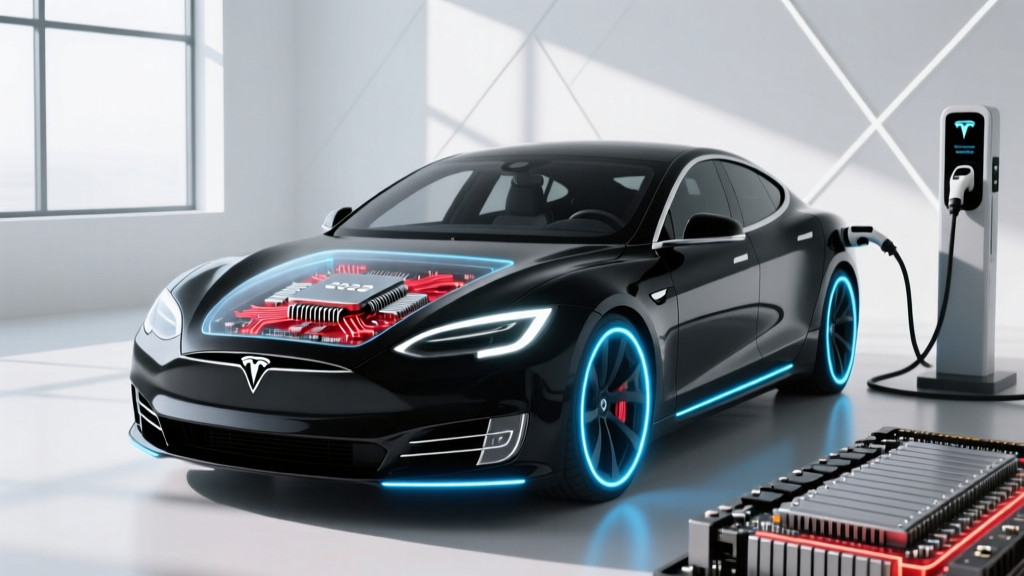
If you've been researching Tesla's Autopilot and Full Self-Driving (Supervised) capabilities, you've likely encountered the term "Hardware 3" — but what exactly is it, and does it still matter in 2026? Hardware 3 (officially designated HW3, also known as "FSD Computer" or "Autopilot Hardware 3.0") is Tesla's third-generation onboard computing platform designed to power its advanced driver-assistance systems. Introduced in April 2019 as a replacement for the Nvidia Drive PX2-based Hardware 2.5, HW3 marked Tesla's first fully custom silicon deployment across the Model S, Model 3, Model X, and Model Y fleets.
As of 2026, Tesla has transitioned all new production vehicles to Hardware 4 (HW4), which features upgraded cameras, higher-resolution sensors, and a more powerful neural-network processor. However, hundreds of thousands of Tesla vehicles on US roads still run Hardware 3, and understanding what it can — and cannot — do is critical for both current owners and used-EV shoppers evaluating pre-2023 models.
Hardware 3 vs Hardware 4: Spec-by-Spec Breakdown
The leap from HW3 to HW4 wasn't just a chip swap — it involved a complete sensor-suite overhaul. Here's how the two platforms compare across the metrics that actually affect your daily driving experience:
| Specification | Hardware 3 (HW3) | Hardware 4 (HW4) |
|---|---|---|
| Processor | Tesla FSD Chip (dual NPU, ~144 TOPS combined) | Tesla FSD Chip Gen 2 (dual NPU, estimated 300+ TOPS) |
| Camera Count | 8 cameras (1.2 MP resolution) | 7–8 cameras (5 MP resolution) |
| Camera Range | ~250 meters (main forward) | ~420 meters (main forward) |
| Ultrasonic Sensors (USS) | 12 sensors (removed Oct 2022+) | None (Tesla Vision only) |
| Radar | 1 forward radar (removed ~2021) | None (early HW4); HD radar reintroduced in some markets |
| Production Era | April 2019 – early 2023 | Early 2023 – present |
| FSD (Supervised) Support | Yes — full support through 2026 | Yes — primary development target |
The practical takeaway: HW3's dual neural-network processors deliver roughly 144 trillion operations per second (TOPS), which Tesla has confirmed is sufficient for its current FSD (Supervised) software stack. The HW4 chip approximately doubles that throughput and pairs it with significantly higher-resolution cameras, giving the perception system more data to work with at greater distances. For city-street FSD use, both platforms run the same core neural-net software, but HW4's sensor suite provides a wider and sharper field of view — particularly beneficial at highway speeds and in low-light conditions.
Which Tesla Models Shipped With Hardware 3?
Hardware 3 was installed across Tesla's entire consumer fleet for roughly four years. If you're evaluating a used Tesla, here's the production window to check:
- Model 3: April 2019 through early 2023 (pre-Highland refresh)
- Model Y: All units from launch (March 2020) through early 2023
- Model S: April 2019 through early 2023 (pre-Plaid/refresh HW4 transition)
- Model X: April 2019 through early 2023
Important for used buyers: Some vehicles built in late 2018 and early 2019 shipped with Hardware 2.5 (HW2.5). Tesla offered a free retrofit program to upgrade eligible HW2.5 vehicles to HW3 — but only for owners who had purchased the FSD package. If you're buying a 2018–2019 Model S or X, verify the hardware version in the vehicle's Software menu under "Additional Vehicle Information."
As of 2026, all new Tesla vehicles — including the refreshed Model 3 Highland, the updated Model Y Juniper, and current Model S/X — ship exclusively with HW4. Hardware 3 is no longer in new-vehicle production.
FSD (Supervised) Performance on Hardware 3 in 2026
Tesla's FSD (Supervised) software continues to receive over-the-air updates for HW3 vehicles as of 2026. The current FSD v13.x stack uses an end-to-end neural network architecture that processes camera input directly into driving decisions, replacing the older hand-coded rules-based approach. In practical terms, this means smoother lane changes, better intersection handling, and fewer phantom-braking events compared to earlier FSD versions.
However, there are real-world limitations to understand:
- It does not drive the car autonomously without supervision. You are the driver, legally and functionally.
- It does not handle all construction zones, unmapped roads, or severe weather reliably.
- It does not eliminate the need for attention — Tesla's cabin camera monitors driver engagement and will issue warnings and eventually disengage if you look away.
- It is not rated or approved as a Level 3+ system by NHTSA or any US regulator.
On HW3 specifically, FSD (Supervised) performs well in suburban and city environments where speeds are moderate and the camera's 250-meter range is sufficient. The most noticeable gap versus HW4 appears at highway speeds above 70 mph, where the lower-resolution cameras and shorter effective range can result in slightly later detection of stopped vehicles or debris. Tesla has continued to optimize the HW3 neural-net pipeline, but the physical sensor limitations are inherent to the hardware.
According to NHTSA's automated driving systems guidance, all current consumer-available driver-assist systems — including Tesla's — require active driver supervision regardless of hardware generation.
Should You Buy a Used HW3 Tesla in 2026?
With HW4 now standard on all new Teslas, the used market is saturated with HW3-equipped vehicles at significant discounts. Here's a decision framework:
- You want a Model 3 or Model Y at a steep discount (2020–2022 models often $10,000–$15,000 below new)
- Your primary driving is city/suburban where HW3's camera range is adequate
- You don't plan to purchase FSD (Supervised) — basic Autopilot works identically on HW3 and HW4
- You want to take advantage of the IRS §25E used-EV tax credit (up to $4,000 on vehicles under $25,000)
- You plan to purchase and actively use FSD (Supervised) daily
- You frequently drive on high-speed highways where HW4's extended camera range matters
- You want the latest safety sensor suite and longest software-support horizon
- You value the updated interior, suspension, and NVH improvements in the Highland/Juniper refreshes
Tesla Model 3 (2026 HW4) Quick Specs for Comparison
Since HW3 is now exclusively a used-market proposition, here's how the current 2026 Model 3 Long Range AWD (HW4) stacks up — giving you a baseline for what you'd be upgrading to:
| Spec | 2026 Model 3 Long Range AWD |
|---|---|
| EPA Range | 363 miles |
| Battery | ~79 kWh usable, NMC (LG M50 cells) |
| DC Fast Charge | Peak 250 kW; 10–80% in ~25 min |
| Level 2 Home Charge | 11.5 kW (~44 mi/hr) |
| 0–60 mph | 4.2 seconds |
| Horsepower | 384 hp (dual motor AWD) |
| MPGe | 132 MPGe combined (fueleconomy.gov) |
| Base MSRP | $47,740 (before incentives) |
| Federal Tax Credit | Up to $7,500 via §30D (subject to income, MSRP, and battery-sourcing rules — see IRS) |
| Battery Warranty | 8 years / 120,000 miles (70% capacity retention) |
| Hardware Platform | HW4 (5 MP cameras, 7-camera array) |
Tax Credits and Used-HW3 Purchase Economics
If you're considering a used HW3 Tesla, the federal incentive landscape looks different than buying new:
| Scenario | Credit Type | Max Credit | Key Rules |
|---|---|---|---|
| New 2026 Model 3/Y | §30D New Clean Vehicle Credit | $7,500 | MSRP ≤ $55K (sedan) / $80K (SUV); AGI caps ($150K single / $300K joint); critical mineral + battery component sourcing requirements |
| Used HW3 Model 3 (2020–2022) | §25E Used Clean Vehicle Credit | $4,000 (or 30% of sale price, whichever is less) | Sale price ≤ $25,000; AGI caps ($75K single / $150K joint); must purchase from a licensed dealer; first transferred sale after Aug 16, 2022 |
The used-EV credit makes late-model HW3 Teslas particularly attractive: a 2021 Model 3 Standard Range Plus selling for $22,000 at a licensed dealer could net a $4,000 point-of-sale credit, bringing the effective price to $18,000 — an extraordinary entry point into the EV market with full FSD hardware capability.
Pros, Cons, and the Bottom Line on Hardware 3
✅ HW3 Pros
- Full FSD (Supervised) support continues in 2026
- Massive used-market availability at steep discounts
- Eligible for §25E used-EV tax credit (up to $4,000)
- Same core neural-net software as HW4 for city driving
- Proven reliability — millions of miles of real-world deployment
❌ HW3 Cons
- Lower-resolution 1.2 MP cameras vs HW4's 5 MP
- Shorter effective camera range (~250m vs ~420m)
- No longer in production — no new-vehicle purchase option
- Future FSD feature parity not guaranteed long-term
- Older HW3 vehicles may have higher battery degradation
Frequently Asked Questions
Can Hardware 3 be upgraded to Hardware 4?
As of 2026, Tesla has not offered an official HW3-to-HW4 retrofit program. The camera array, wiring harness, and compute unit are all different between the two platforms, making a field upgrade complex and costly. Tesla previously offered free HW2.5-to-HW3 upgrades for FSD purchasers, but no equivalent program exists for HW3 owners. If you want HW4, you would need to purchase a newer vehicle.
Does FSD work the same on HW3 and HW4?
The core FSD (Supervised) neural-network software runs on both platforms, and day-to-day city and suburban driving performance is similar. The difference is in the sensor input: HW4's 5 MP cameras and extended range provide the neural net with higher-quality data, which can translate to earlier obstacle detection, better low-light performance, and more confident highway-speed decisions. Think of it as the same brain with better eyes.
Is it safe to buy a used Tesla with Hardware 3 in 2026?
Yes, with caveats. HW3 fully supports Tesla's current Autopilot and FSD (Supervised) software, and Tesla continues to ship OTA updates for the platform. The main risks are typical used-EV concerns: check battery State of Health (SoH) via the vehicle's energy app, verify the hardware version in the Software menu, and confirm whether the vehicle still has USS (ultrasonic sensors) or was built after October 2022 when Tesla removed them in favor of Tesla Vision-only parking assist.
Will Tesla drop FSD support for HW3?
Tesla has not announced any end-of-support date for HW3 FSD as of early 2026. Given that hundreds of thousands of vehicles still run this hardware — and given Tesla's regulatory obligations around software support for sold features — a near-term cutoff appears unlikely. However, as FSD algorithms grow more compute-hungry, HW3 may eventually receive a reduced feature set or slower update cadence compared to HW4. This is a long-term ownership risk worth factoring in.
What's the cheapest way to get a Tesla with FSD hardware today?
The most affordable path in 2026 is a used 2020–2022 Model 3 Standard Range Plus with HW3, purchased from a licensed dealer for under $25,000 to qualify for the $4,000 §25E used-EV credit. These vehicles typically sell for $18,000–$24,000 after the credit. Just remember: the FSD hardware is present, but the FSD software license is a separate purchase (currently $8,000 or $99/month) unless the previous owner included it in the sale.