The Short Answer: What Is Fisker?
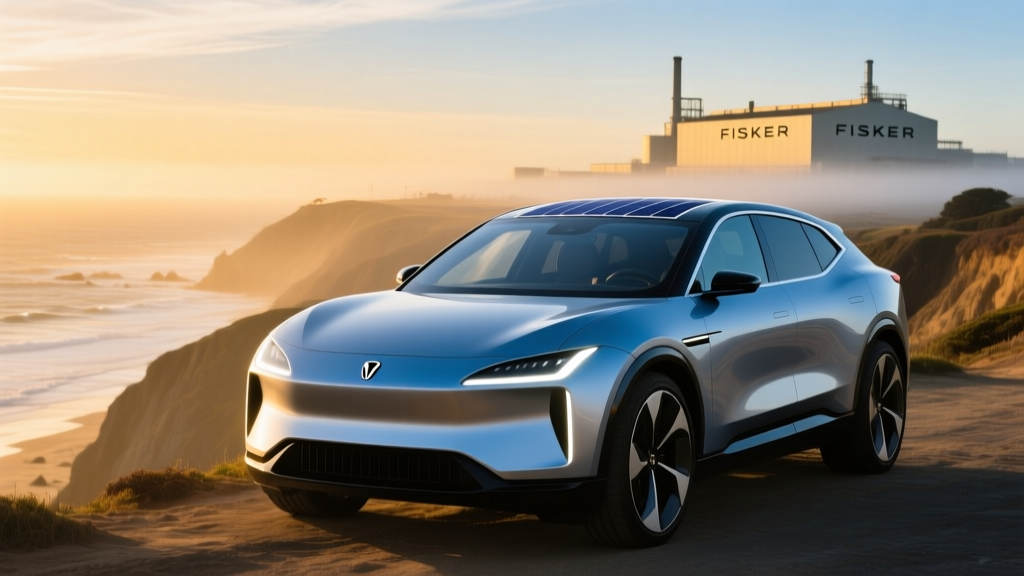
If you've been searching "what is Fisker" in 2026, you're likely encountering the name in used-EV listings, news headlines about bankruptcies, or social-media debates about stranded owners. Here's the essential context: Fisker Inc. was an American electric-vehicle startup founded by automotive designer Henrik Fisker. Its only production vehicle, the Fisker Ocean, was a midsize all-electric SUV that began deliveries in late 2023 before the company collapsed into bankruptcy in mid-2024.
Fisker Inc. is not currently operating, is not producing vehicles, and has no active dealer or service network as of 2026. The Fisker Ocean exists only on the used market. This article reviews the Ocean's specifications, real-world ownership realities, and whether buying one today makes financial or practical sense.
Fisker Ocean Specifications at a Glance
Before evaluating whether a used Ocean is worth the risk, here are the hard numbers from the vehicle's production run (2023–2024 model years).
| Specification | Ocean Sport (FWD) | Ocean Ultra / Extreme (AWD) |
|---|---|---|
| EPA Range | 250 miles | 360 miles (Extreme) / 340 mi (Ultra) |
| Battery Capacity (Usable) | ~71 kWh (LFP) | ~113 kWh (NMC) |
| Battery Chemistry | LFP (Lithium Iron Phosphate) | NMC (Nickel Manganese Cobalt) |
| Drivetrain | Single-motor FWD | Dual-motor AWD |
| Horsepower | 275 hp | 540 hp |
| 0–60 mph | 6.9 seconds | 3.7 seconds |
| Max DC Fast Charge | ~115 kW peak | ~250 kW peak |
| 10–80% DC Charge Time | ~44 minutes | ~30 minutes |
| Level 2 Home Charge Rate | 10.5 kW (~30 mi/hr) | 10.5 kW (~30 mi/hr) |
| MPGe (Combined) | ~97 MPGe | ~85 MPGe |
| Cargo Volume (rear seats up) | 32.7 cu ft | 32.7 cu ft |
| Cargo Volume (rear seats folded) | 65.3 cu ft | 65.3 cu ft |
| Original Base MSRP | $37,499 | $61,499 (Ultra) / $68,999 (Extreme) |
| Warranty (Original) | 6 yr / 60,000 mi basic; 10 yr / 100,000 mi battery (now void) | |
Real-World Range: What the EPA Sticker Doesn't Tell You
The Fisker Ocean Extreme's EPA-estimated 360 miles was one of the highest of any production EV at launch. But as with every EV, real-world results diverge based on driving conditions.
EPA Sticker: 360 miles
Real-World Highway (70 mph, mild weather): ~280–310 miles
Real-World City/Mixed (moderate climate): ~310–340 miles
Cold Weather (below 32°F, highway): ~220–260 miles (30–40% reduction)
Cold Weather + Cabin Heat (city): ~250–280 miles
The Ocean Sport with its smaller LFP pack delivers a more modest ~200–220 miles real-world highway, dropping to ~160–180 in freezing temps.
The Ocean Extreme's large 113 kWh NMC pack gave it impressive range in temperate, low-speed driving. However, the SUV's boxy aerodynamics and substantial curb weight (~5,400 lbs for AWD trims) penalized highway efficiency. Owners reported consumption of 33–38 kWh/100mi at sustained 75+ mph speeds, which erodes range faster than the EPA cycle suggests.
The LFP-equipped Ocean Sport fared worse on range but offered one chemistry advantage: LFP cells tolerate regular 100% charging without accelerated degradation, meaning Sport owners could use the full pack daily. NMC owners were advised to charge to 80% for daily use, effectively reducing usable daily range to ~270–280 miles.
Charging Speed: DC Fast Charging and Home Setup
Charging infrastructure compatibility is one of the biggest concerns for any used EV, and the Fisker Ocean presents specific challenges in 2026.
| Charging Level | Power / Rate | Ocean Sport (71 kWh) | Ocean Ultra/Extreme (113 kWh) |
|---|---|---|---|
| Level 1 (120V household) | ~1.4 kW | ~3 mi/hr | ~3 mi/hr |
| Level 2 (240V home) | 10.5 kW | ~30 mi/hr (full in ~7 hr) | ~30 mi/hr (full in ~11 hr) |
| DC Fast Charge (peak) | 115 kW (Sport) / 250 kW (Ultra/Extreme) | 10–80% in ~44 min | 10–80% in ~30 min |
The Ocean's DC fast-charging performance was competitive at launch, particularly for the Ultra and Extreme trims with their ~250 kW peak rate. However, real-world charging curves told a more nuanced story. The Ocean's peak rate was sustained only between roughly 10–35% state of charge. Above 50% SoC, the curve tapered significantly, and charging from 80–100% could add another 25–35 minutes. This is standard for NMC packs but frustrated owners expecting linear charge speeds.
The connector situation is a 2026 pain point. The Ocean shipped with a CCS1 connector. With the industry's mass migration to NACS (Tesla's charging standard), most new EVs now use NACS natively. Ocean owners need a CCS-to-NACS adapter to access Tesla Supercharger stalls, which now constitute the largest DC fast-charging network in the U.S. These adapters are available from third-party suppliers (~$150–$250), but compatibility isn't guaranteed and Fisker never issued an official adapter or software update for Supercharger handshake protocols.
For home charging, the Ocean's 10.5 kW onboard charger is adequate for overnight replenishment. A typical Level 2 home installation (240V/48A circuit) costs $800–$2,000 including equipment and electrician labor, per U.S. Department of Energy guidelines. Panel upgrades can add $1,500–$4,000 if your home's electrical service is below 200 amps.
What Happened to Fisker? The Bankruptcy and Aftermath
Understanding the Fisker Ocean's ownership reality in 2026 requires knowing how the company failed.
Fisker Inc. pursued an asset-light manufacturing model: the Ocean was built by Magna Steyr at its facility in Graz, Austria. This avoided the capital cost of building a factory but left Fisker dependent on a contract manufacturer it couldn't pay. Key timeline:
- 2020: Fisker Inc. announces the Ocean SUV via a SPAC merger.
- Late 2022: Production begins at Magna Steyr.
- Mid-2023: U.S. deliveries start; early reviews praise design and range but note software bugs.
- Early 2024: Fisker slashes prices by up to $24,000 in a desperate bid to move inventory, devastating resale values for early buyers.
- March 2024: NYSE delists Fisker shares.
- June 2024: Fisker files Chapter 11 bankruptcy. Magna Steyr halts production over unpaid bills.
- Late 2024–2025: Bankruptcy court oversees liquidation of remaining assets. No buyer emerges to restart production or assume warranty obligations.
- 2026: Fisker Inc. is effectively defunct. Remaining Oceans circulate only on the used market.
The practical consequences for 2026 buyers are severe:
- No warranty coverage. The original 10-year/100,000-mile battery warranty and 6-year/60,000-mile basic warranty are void with no entity honoring claims.
- No OTA updates. Software bugs, connectivity features, and the digital key system are frozen in their last-deployed state.
- Parts scarcity. Body panels, proprietary trim pieces, and the Ocean's unique solar roof (California Mode on Extreme trims) are nearly impossible to source. Collision repair is a major gamble.
- Insurance challenges. Some insurers refuse to write comprehensive/collision policies on Fisker Oceans due to parts unavailability, or charge steep premiums.
- Resale value freefall. Oceans that originally MSRP'd at $61,000–$69,000 routinely sell for $18,000–$30,000 on the used market in 2026, depending on mileage and condition.
Technology, Interior, and Standout Features
The Ocean was designed to compete on visual drama and sustainability branding. Here's what the vehicle actually delivered:
What Worked
- California Mode (Extreme trim): All glass surfaces — roof, rear quarter windows, and rear window — could retract or open electronically, creating a convertible-like open-air experience unique among EV SUVs.
- Solar roof (Extreme): A photovoltaic panel on the roof could theoretically add up to 1,500 miles of range per year in ideal conditions. Real-world gains were closer to 500–800 miles/year in most U.S. climates — a nice supplement but not transformative.
- Sustainable interior materials: Fisker used recycled plastics, reclaimed rubber, and vegan materials throughout. Build quality was mixed but design was distinctive.
- Spacious cabin: 41.2 inches of front legroom, 38.4 inches rear, with a flat floor. The 32.7 cu ft cargo area (65.3 with seats folded) was competitive with the Tesla Model Y and Ford Mustang Mach-E.
- Rotating center screen: A 17.1-inch center display could rotate from portrait to landscape mode — a gimmick, but one that passengers enjoyed.
What Didn't
- Software instability: Infotainment freezes, phantom warning messages, and connectivity drops were widely reported during the production run and were never patched post-bankruptcy.
- Driver assistance limitations: The Ocean shipped with a basic Level 2 ADAS suite (adaptive cruise, lane-keeping, automatic emergency braking). It lacked the sophistication of Tesla Autopilot, GM Super Cruise, or Ford BlueCruise. No hands-free driving capability was ever delivered.
- No Apple CarPlay or Android Auto: Fisker opted for a proprietary infotainment system, a decision that aged poorly given the software team's dissolution.
- Build-quality inconsistencies: Panel gaps, trim rattles, and water-sealing issues were documented in owner forums, particularly on early-build vehicles.
Fisker Ocean vs. Competitors: A 2026 Used-Market Comparison
At its fire-sale used-market prices, the Ocean competes with several proven alternatives. Here's how it stacks up against models you can actually get serviced:
| Attribute | Fisker Ocean Extreme | Tesla Model Y LR AWD | Hyundai Ioniq 5 LR AWD | Ford Mustang Mach-E ER AWD |
|---|---|---|---|---|
| Used Price Range (2026) | $22,000–$30,000 | $28,000–$38,000 | $27,000–$35,000 | $25,000–$34,000 |
| EPA Range | 360 mi | 303–330 mi | 290–320 mi | 290–312 mi |
| DC Fast Charge Peak | ~250 kW | ~250 kW | ~240 kW | ~150 kW |
| 10–80% Time | ~30 min | ~25 min | ~18 min | ~45 min |
| Manufacturer Support | ❌ None | ✅ Full | ✅ Full | ✅ Full |
| Warranty Remaining | ❌ Void | ✅ Transferable | ✅ Transferable | ✅ Transferable |
| Parts Availability | ❌ Critical shortage | ✅ Widely available | ✅ Available | ✅ Available |
| NACS Native / Adapter | CCS1 (adapter needed) | NACS native | CCS1 (adapter avail.) | CCS1 (adapter avail.) |
The Ocean wins on EPA range and used-price-per-mile-of-range. But the competitors offer something the Ocean cannot: a functioning support ecosystem. Tesla, Hyundai, and Ford all maintain active service networks, warranty coverage, parts supply chains, and ongoing software development.
Does the Fisker Ocean Qualify for the Federal EV Tax Credit?
No. The Fisker Ocean does not qualify for the IRS §30D new clean vehicle credit in 2026, for several reasons:
- The §30D credit applies only to new vehicles purchased from a manufacturer. Fisker Inc. is defunct and is not selling new vehicles.
- The used EV credit (up to $4,000 or 30% of sale price, whichever is less, under IRC §25E) technically applies to used EVs sold by a licensed dealer for $25,000 or less. However, the vehicle must meet battery-sourcing requirements, and the buyer must meet income caps ($75,000 single / $150,000 joint). Some Oceans may qualify under this provision if sold below the $25,000 threshold by a participating dealer — but verify with a tax professional before counting on it.
- Even during its production run, the Ocean's eligibility for the new-vehicle credit was uncertain due to battery-component and critical-mineral sourcing rules that phased in during 2023–2024. Fisker never publicly confirmed full §30D compliance for any trim.
Bottom line: do not purchase a used Fisker Ocean expecting any federal tax credit. If a dealer claims otherwise, request written documentation and confirm independently with a CPA.
Who Should (and Shouldn't) Buy a Fisker Ocean in 2026?
Consider a used Fisker Ocean if:
- You're an EV-savvy buyer who can absorb the risk of zero warranty and limited parts.
- You want maximum range per dollar and find an Extreme trim below $25,000.
- You have a reliable independent EV mechanic and access to a CCS1-compatible charger or adapter.
- You treat the purchase as a depreciating asset you'll drive into the ground, not as a long-term keeper.
- You need reliable daily transportation with service-network backing.
- You live in an area with limited independent EV repair options.
- You want active warranty coverage or expect OTA improvements.
- You're a first-time EV buyer still learning charging and ownership logistics.
- Collision repair access matters to you (it should).
The Biggest Pros and Cons
- Class-leading 360-mile EPA range (Extreme)
- Striking design with unique open-air California Mode
- Spacious cabin with generous cargo volume
- Fire-sale used prices: extreme value per range-mile
- Strong dual-motor performance (3.7s 0–60)
- Sustainable interior materials
- Manufacturer is bankrupt — no support, warranty, or OTA updates
- Parts are critically scarce; collision repair may be impossible
- Software bugs are permanent and unpatchable
- Insurance may be expensive or unavailable
- CCS1 connector requires adapter for Tesla Superchargers
- No Apple CarPlay or Android Auto
- Resale value likely to continue declining
Frequently Asked Questions
Is Fisker still in business in 2026?
No. Fisker Inc. filed for Chapter 11 bankruptcy in June 2024 and moved toward liquidation. No entity has acquired the brand or resumed production. The company is defunct.
Can I still buy a Fisker Ocean?
Only on the used market. No new Fisker Oceans are being produced or sold. Used examples appear on platforms like Autotrader, Cars.com, and private-party listings, typically priced between $18,000 and $30,000 depending on trim and mileage.
What is the real-world range of the Fisker Ocean?
The Ocean Extreme (AWD, 113 kWh) achieves approximately 280–310 miles on the highway and 310–340 miles in mixed city driving in moderate temperatures. In freezing weather, expect a 30–40% reduction, dropping highway range to roughly 220–260 miles. The Sport trim (FWD, 71 kWh LFP) delivers about 200–220 miles real-world highway.
How fast does the Fisker Ocean charge?
The Ultra and Extreme trims peak at approximately 250 kW on DC fast chargers, achieving 10–80% in roughly 30 minutes, though the charge curve tapers significantly above 50% SoC. The Sport trim peaks around 115 kW with a 10–80% time of about 44 minutes. Home Level 2 charging at 10.5 kW adds roughly 30 miles per hour of charging.
Does the Fisker Ocean qualify for any EV tax credit?
Not the new-vehicle §30D credit, since Fisker is defunct. The used-EV credit (§25E, up to $4,000) may apply if you purchase from a licensed dealer for $25,000 or less and meet income caps, but battery-sourcing rules and dealer participation are uncertain. Consult a tax professional before relying on this credit.
Is it worth buying a Fisker Ocean vs. a Tesla Model Y or Hyundai Ioniq 5?
For most buyers, no. The Ocean's used price is tempting, but the absence of warranty, parts, software support, and reliable service makes it a high-risk purchase. A slightly more expensive used Model Y or Ioniq 5 from a supported manufacturer offers far lower ownership risk. The Ocean may suit mechanically inclined buyers who prioritize range-per-dollar and accept the gamble.
Will Fisker ever come back?
As of 2026, there is no credible indication that the Fisker brand will be revived. The bankruptcy process has moved toward asset liquidation, and no automotive company has announced plans to acquire the Fisker name, tooling, or intellectual property for vehicle production.
Sources: EPA range and efficiency data via fueleconomy.gov; IRS §30D and §25E credit rules via irs.gov; home charging guidance via energy.gov.