Quick Answer: What Is an EV?
An electric vehicle (EV) is a car powered entirely by a rechargeable battery pack and one or more electric motors — no gasoline engine, no tailpipe, no oil changes. You plug it in to refuel, either at home or at a public charging station. A typical 2026 EV delivers 250–350 miles of EPA-rated range, recharges from 10–80% in 18–30 minutes at a DC fast charger, and costs roughly $0.04–$0.06 per mile to fuel at home (versus $0.12–$0.16 per mile for a 30-MPG gas car at $3.50/gallon). EVs also include plug-in hybrids (PHEVs), which pair a smaller battery with a gas engine for backup.
How an Electric Vehicle Actually Works
Strip away the marketing, and an EV is mechanically simpler than a gas car. Instead of a combustion engine, fuel tank, exhaust system, and multi-speed transmission, an EV uses:
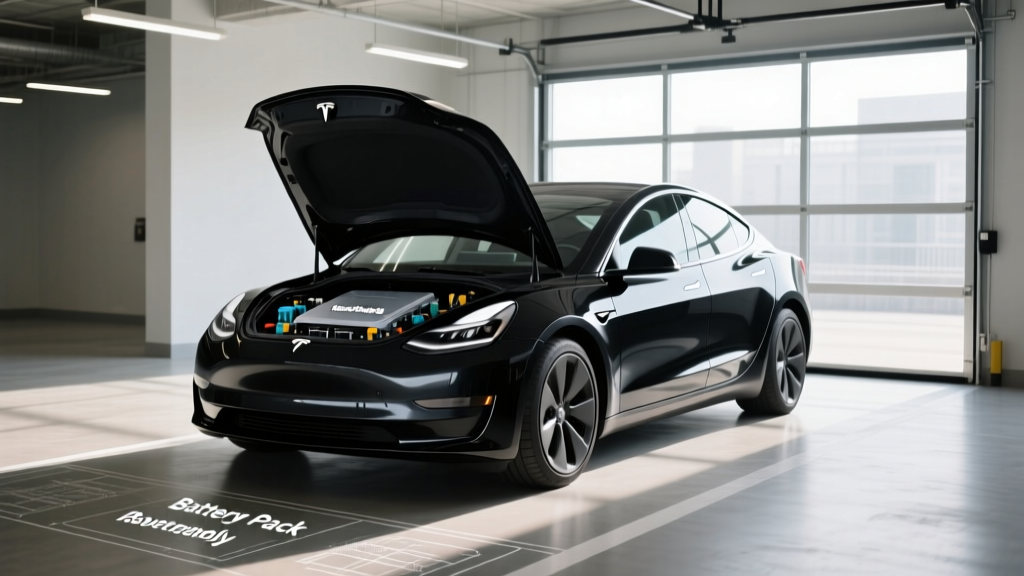
- A battery pack (measured in kilowatt-hours, or kWh) that stores electrical energy. Think of kWh like the size of a gas tank — a larger number means more stored energy and typically more range. Most 2026 EVs carry 60–100 kWh usable battery capacity.
- One or two electric motors that convert electrical energy into motion instantly. Electric motors produce maximum torque from 0 RPM, which is why EVs accelerate briskly without needing to "rev up."
- An onboard charger that converts AC power from your home outlet or Level 2 station into DC power the battery can store. This is different from DC fast charging, which bypasses the onboard charger and feeds DC directly to the battery at much higher power levels.
- Regenerative braking that captures kinetic energy during deceleration and sends it back into the battery, extending range and reducing brake wear.
The critical distinction for new buyers: kW (kilowatts) measures power — how fast energy flows, like water pressure from a hose. kWh (kilowatt-hours) measures energy — the total amount stored or consumed, like gallons in a tank. A 250-kW DC fast charger can theoretically deliver energy very quickly, but your battery's capacity (say, 77 kWh) determines how far you can drive.
EV vs. Gas Car vs. Hybrid: The Numbers Compared
The most common question from first-time EV shoppers is how electric vehicles stack up against what they already drive. Here's a data-driven look at three popular 2026 models across powertrain types:
| Spec | Hyundai Ioniq 5 (BEV) | Toyota RAV4 Hybrid (HEV) | Honda CR-V (Gas) |
|---|---|---|---|
| Powertrain | Battery Electric | Hybrid (gas + electric) | Gasoline only |
| EPA Range / Tank Range | 318 miles | ~580 miles (14.5 gal × 40 MPG) | ~437 miles (14 gal × 31 MPG) |
| Efficiency | 117 MPGe combined | 40 MPG combined | 31 MPG combined |
| Fuel/Energy Cost per Mile | $0.045 (home charging, $0.14/kWh) | $0.088 ($3.50/gal) | $0.113 ($3.50/gal) |
| 0–60 mph | 5.1 sec (AWD Long Range) | 7.4 sec | 8.3 sec |
| Base MSRP | $43,975 | $33,875 | $32,450 |
| Federal Tax Credit (potential) | Up to $7,500 (§30D, if eligible) | None | None |
| Annual Maintenance (est.) | ~$300 | ~$550 | ~$650 |
A few things jump out. The EV has a higher sticker price, but the federal §30D tax credit can narrow that gap substantially — up to $7,500 if the vehicle meets battery-sourcing, critical-mineral, MSRP cap ($55,000 for SUVs), and buyer income requirements (under $150,000 single / $300,000 joint). The credit can now be transferred to the dealer at point of sale, reducing your out-of-pocket cost on delivery day.
The fuel savings compound. At 12,000 miles per year, the Ioniq 5 costs about $540/year to charge at home, versus $1,350/year for the gas CR-V. Over five years, that's roughly $4,000 in fuel savings alone — before factoring in lower maintenance (no oil changes, fewer brake replacements thanks to regen, no transmission fluid).
The Real Costs of EV Ownership
EV evangelism often stops at "you'll save on gas." The reality is more nuanced. Here's a complete five-year cost breakdown comparing a typical EV against a comparable gas car, assuming 12,000 miles/year:
| Category | EV (e.g., Ioniq 5 SEL) | Gas Crossover (e.g., CR-V EX) |
|---|---|---|
| Purchase Price (after credit) | $36,475 ($43,975 − $7,500) | $35,450 |
| Fuel / Charging (5 years) | $2,700 (home + occasional DCFC) | $6,750 ($3.50/gal, 31 MPG) |
| Maintenance (5 years) | $1,500 | $3,250 |
| Insurance (5 years, est.) | $9,500 (EVs cost ~15–20% more to insure) | $8,000 |
| Home Charger Install (Level 2) | $1,200 (one-time) | $0 |
| Estimated Depreciation (5 yr) | $16,500 (EVs depreciate faster currently) | $14,000 |
| Total 5-Year Cost | $67,875 | $67,450 |
The five-year totals are remarkably close — and that's before state or utility rebates, which can further tip the scales. The EV wins on fuel and maintenance, but loses on insurance premiums (higher repair costs and battery replacement risk) and depreciation (the used EV market has softened as newer, cheaper models flood in). Your personal numbers depend heavily on local electricity rates, whether you can charge at home, how far you drive, and whether you qualify for the full federal credit.
Charging an EV: What First-Time Buyers Need to Know
Charging is where new EV buyers have the most questions — and where honest information matters most. There are three charging levels, and understanding them prevents unpleasant surprises:
| Level | Power (kW) | Speed (miles of range/hour) | Where You'll Use It |
|---|---|---|---|
| Level 1 (120V outlet) | 1.0–1.4 kW | 3–5 miles/hour | Emergency or very low daily mileage (<30 mi/day) |
| Level 2 (240V, home or public) | 7.2–19.2 kW | 25–65 miles/hour | Daily charging at home, workplace, or shopping centers |
| DC Fast Charging | 50–350 kW | 150–1,000+ miles/hour (peak) | Road trips; 10–80% in 18–30 minutes at modern stations |
The home charging reality: Roughly 80% of EV charging happens at home. If you have a garage or driveway with access to a 240V outlet (like a dryer outlet) or can have an electrician install a Level 2 wall connector, daily EV life is effortless — plug in at night, wake up with a full battery. A typical Level 2 installation (40-amp circuit, 50-amp breaker) costs $800–$2,000 depending on your panel's proximity to the garage and whether your electrical panel needs an upgrade to 200 amps.
If you can't charge at home — apartment dwellers, street parkers — an EV is still possible but requires planning. You'll rely on public Level 2 chargers at workplaces, grocery stores, or municipal lots, plus DC fast chargers for quick top-ups. This adds time and cost (public DCFC rates of $0.35–$0.50/kWh are 3–4× more expensive than home electricity). Be honest with yourself: if you can't install or reliably access a charger near where you park overnight, a PHEV or hybrid may be a better fit.
DC fast charging and the charge curve: Manufacturers advertise peak charge rates (e.g., "up to 240 kW"), but batteries don't sustain peak speed the entire session. A typical charge curve starts at peak power around 10–20% state of charge, holds near-peak through ~50–60%, then tapers significantly above 80% to protect battery health. That 10–80% time is the metric that matters for road trips. Above 80%, charging slows dramatically — it can take as long to go from 80–100% as it did from 10–80%. On road trips, plan to charge to 80% and drive on.
Common EV Misconceptions — Fact-Checked
| Myth | Fact (with data) |
|---|---|
| "EV batteries need replacing every few years and cost $20,000." | Modern EV batteries are designed to last 15–20 years. Federal law mandates an 8-year/100,000-mile battery warranty (10 years/150,000 miles in CARB states). Real-world data shows most batteries lose 5–10% capacity over 100,000 miles, not catastrophic failure. Full replacement is rare and typically $5,000–$15,000 if out of warranty. |
| "EVs don't work in cold weather." | Cold reduces range — expect 15–30% loss at 20°F due to battery chemistry and cabin heating demands. A 300-mile EPA EV might deliver 210–255 real-world miles in deep cold. Heat pumps (standard on many 2026 models) recover some of that loss. EVs start reliably in cold — better than gas cars in many cases — and preconditioning while plugged in warms the battery before you drive. |
| "The power grid can't handle EVs." | Most EV charging happens overnight during off-peak hours when grid capacity is underutilized. A single EV adds roughly the equivalent load of a central air conditioner. Utilities are upgrading distribution transformers in high-adoption neighborhoods, and smart charging (scheduled or utility-managed) spreads demand. |
| "EVs are worse for the environment because of battery mining." | Lifecycle analyses consistently show EVs produce fewer total emissions than gas cars over their lifetime, even accounting for battery manufacturing. The break-even point is typically 1–2 years of driving, after which the EV's zero tailpipe emissions (and increasingly clean grid) widen the gap. Source: EPA Green Vehicles. |
| "There aren't enough charging stations." | The U.S. has over 200,000 public charging ports as of 2026 (AFDC). The Tesla Supercharger network — now open to most non-Tesla EVs via NACS adapters — adds over 25,000 reliable DC fast ports. Rural gaps remain real, but interstate corridors are well-covered. |
What First-Time EV Buyers Should Know Before Purchasing
After testing dozens of EVs and helping readers navigate the transition, here are the practical considerations that separate satisfied EV owners from regretful ones:
Battery chemistry matters. Most 2026 EVs use either NMC (nickel manganese cobalt) or LFP (lithium iron phosphate) batteries. NMC offers higher energy density (more range per pound) and faster charging in cold weather. LFP is heavier and slightly lower range but can be charged to 100% daily without degradation concerns, lasts longer in cycle life, uses no cobalt, and costs less. Tesla's standard-range Model 3 and Y, plus several Ford and Hyundai models, now use LFP. If you plan to keep your car 10+ years, LFP's longevity is a genuine advantage.
EPA range vs. real-world range. The EPA range sticker is a useful comparison tool but not a guarantee. In our testing, highway driving at 75+ mph typically yields 85–90% of EPA range in mild weather. In cold weather (below 30°F), expect 70–85% of EPA. If your daily commute is 60 miles round-trip, a 250-mile EPA-rated EV provides a comfortable buffer — but if you regularly drive 200+ miles in winter, aim for 320+ EPA miles.
Connector standards are consolidating. The North American Charging Standard (NACS), pioneered by Tesla, is now the dominant connector for 2026 models. Ford, GM, Hyundai, Rivian, Volvo, and others have adopted NACS. If you're buying a vehicle with the older CCS1 port, adapters are available to access Tesla Superchargers, but native NACS is simpler for new purchases.
Insurance costs more. EV insurance premiums run 15–25% higher than equivalent gas cars, driven by higher repair costs (specialized body shops, battery safety protocols) and total-loss thresholds. Get quotes from your insurer before committing — some companies now offer EV-specific discounts.
Test the charging, not just the car. During your test drive, ask the dealer to walk you through the charging process. Download the vehicle's companion app. Try plugging into a public charger. The software experience — route planning with charging stops, preconditioning the battery, monitoring charge sessions from your phone — is a huge part of daily EV life and varies significantly between brands.
Should You Buy an EV, Hybrid, or Stick With Gas?
Use this framework to match your situation to the right powertrain:
Choose a full EV (BEV) if:
- You can install a Level 2 charger at home or have reliable workplace/overnight charging access
- Your daily driving is under 100 miles round-trip (covers 90%+ of Americans)
- You take road trips 2–4 times per year (plannable with DC fast charging)
- You qualify for the §30D federal credit (check IRS eligibility for income, MSRP, and battery-sourcing rules)
- You want the lowest per-mile fuel cost and minimal maintenance
Choose a plug-in hybrid (PHEV) if:
- You can charge at home but regularly drive beyond electric-only range (30–50 miles for most PHEVs)
- You want EV-like commuting with gas-engine flexibility for longer trips without charging planning
- Your household has one vehicle that needs to do everything
- You don't qualify for the full EV tax credit but may qualify for a smaller PHEV credit
Choose a conventional hybrid (HEV) or gas car if:
- You have no access to home or workplace charging and public infrastructure is sparse in your area
- You regularly tow heavy loads (EVs lose 30–50% range when towing)
- Your budget is tight and upfront cost is the primary constraint
- You live in extreme cold (-20°F regularly) and drive long distances where range loss compounds
Frequently Asked Questions
How long does it take to charge an EV at home?
On a Level 2 home charger (typically 7.7–11.5 kW), expect to add roughly 30–45 miles of range per hour of charging. A full charge from 10% to 100% on a 77-kWh battery takes about 7–10 hours. Most owners plug in overnight and wake up fully charged — you rarely need a "full" charge from empty, since you're topping up daily usage of 30–60 miles, which takes 1–2 hours.
How long do EV batteries last?
Modern EV batteries are engineered for 1,500–3,000 full charge cycles before reaching 70–80% of original capacity. At an average of 300 miles per cycle, that's 450,000–900,000 miles — far beyond the life of most vehicles. Real-world fleet data from sources like Recurrent Auto shows most EVs retain 90–95% battery capacity at 100,000 miles. The federal warranty mandates coverage if capacity drops below 70% within 8 years/100,000 miles.
Can I take an EV on a road trip?
Yes, with planning. Modern EVs with 250+ miles of range and 150+ kW DC fast charging can cover 200 miles, stop for a 20-minute charge (10–80%), and repeat. Built-in route planners (Tesla, Hyundai, Ford) automatically suggest charging stops and precondition the battery for faster charging. Apps like A Better Routeplanner and PlugShare help plan trips across networks including Electrify America, EVgo, and Tesla Superchargers.
Do EVs qualify for tax credits in 2026?
Many do, but eligibility depends on several factors under §30D. The vehicle must have an MSRP under $55,000 (SUVs, vans, trucks) or $25,000 (sedans). Your modified adjusted gross income must be under $150,000 (single), $225,000 (head of household), or $300,000 (joint). The battery must meet critical-mineral and component-sourcing requirements that tighten annually. The credit can be applied at point of sale through a registered dealer. Always verify current eligibility on the IRS website and consult a tax professional for your specific situation.
What happens if an EV runs out of charge on the road?
The same thing as a gas car running out of fuel — you'll need a tow to a charging station. However, EVs provide extensive range warnings, reduce power to preserve remaining charge, and navigation systems route you to chargers proactively. Running out is rare with modern 250+ mile EVs and route-planning software. Many roadside assistance programs now offer mobile charging or flatbed towing to the nearest station.