Quick Answer: What Is Electric Vehicle Technology?
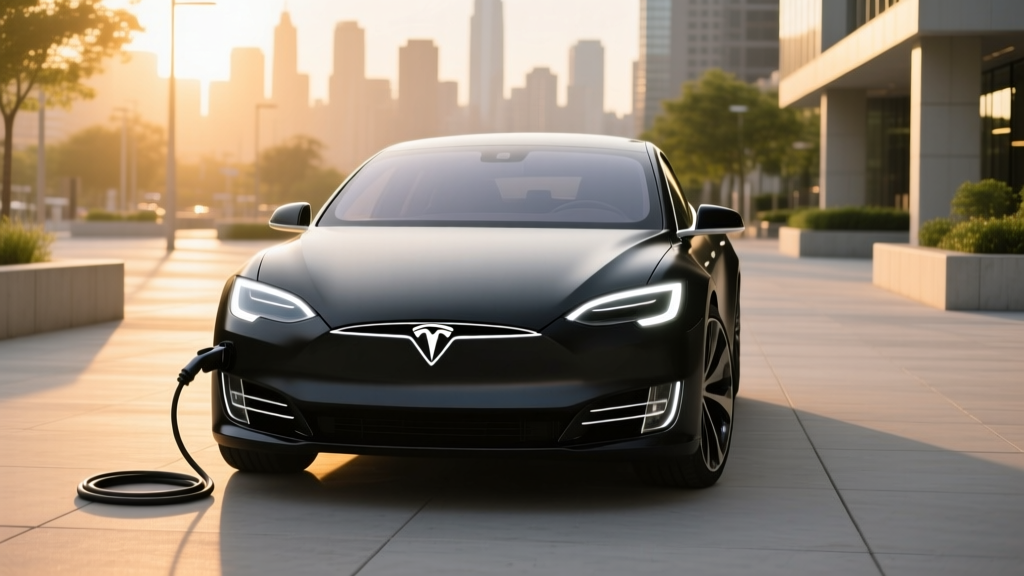
Electric vehicle (EV) technology replaces the internal combustion engine with an electric motor powered by a high-voltage lithium-ion battery pack. Instead of burning gasoline, an EV draws energy stored in its battery (measured in kilowatt-hours, or kWh) to spin one or more electric motors that drive the wheels. The battery is recharged by plugging into an external power source — a standard wall outlet (Level 1), a dedicated home or public charger (Level 2), or a high-speed DC fast charger. Modern 2026 EVs offer EPA-estimated ranges from roughly 230 to over 400 miles on a single charge, with battery capacities spanning 58 kWh to 131 kWh depending on the model.
For anyone considering an electrified purchase, understanding the core technology isn't academic — it directly shapes how far you can drive, how quickly you can recharge, what you'll pay to own the vehicle, and whether the car fits your daily routine. This guide cuts through the marketing noise and gives you the exact numbers and decision frameworks you need.
The Core Components: Battery, Motor, and Power Electronics
Every battery-electric vehicle (BEV) is built around three primary systems:
The Traction Battery Pack
The battery is the single most expensive component in an EV and the primary determinant of range. Most 2026 EVs use one of two lithium-ion chemistries:
- NMC (Nickel Manganese Cobalt) / NCA (Nickel Cobalt Aluminum): Higher energy density, enabling longer range in a smaller, lighter pack. Common in vehicles like the Tesla Model Y, Hyundai Ioniq 5, and Ford Mustang Mach-E. Trade-off: more expensive, slightly faster degradation, and greater thermal sensitivity.
- LFP (Lithium Iron Phosphate): Lower energy density but longer cycle life, greater thermal stability, and lower cost. Used in the Tesla Model 3 RWD, some BYD models entering global markets, and base-trim variants of several brands. Trade-off: heavier per kWh, shorter range for a given pack size.
Battery capacities in current models range from approximately 58 kWh (e.g., base Hyundai Kona Electric) to 131 kWh (e.g., GMC Hummer EV). Usable capacity is typically 90–95% of the gross figure, as manufacturers reserve a buffer at the top and bottom to protect long-term battery health.
The Electric Motor(s)
EVs use permanent-magnet synchronous motors (PMSM) or induction motors, often one per axle in all-wheel-drive configurations. Power output spans from around 150 horsepower in entry-level models to over 1,000 hp in performance variants. Electric motors deliver peak torque instantly from zero RPM, which is why even modestly powered EVs feel brisk off the line — a 200-hp EV often feels quicker in city driving than a 200-hp gas car.
Power Electronics and Thermal Management
The inverter converts DC battery power to AC for the motor, while the onboard charger converts incoming AC power (from Level 1 or Level 2 sources) to DC for the battery. A liquid thermal management system heats or cools the battery to keep it in its optimal operating window (roughly 20–40°C / 68–104°F), which is critical for both range and longevity.
EV vs. Gas vs. Hybrid: The Numbers Compared
Understanding electric vehicle technology means understanding how it stacks up against the alternatives. Here's a data-driven comparison using representative 2026 models:
| Metric | BEV (Tesla Model 3 Long Range AWD) | PHEV (Toyota RAV4 Prime) | Gas (Toyota RAV4 AWD) |
|---|---|---|---|
| Powertrain | Dual motor, 79 kWh NMC battery | 2.5L 4-cyl + electric motors, 18.1 kWh battery | 2.5L 4-cylinder |
| EPA Range / MPG | 341 mi range; 132 MPGe combined | 42 mi electric-only; 38 MPG combined (gas) | 30 MPG combined |
| 0–60 mph | 4.2 seconds | 5.7 seconds | 8.1 seconds |
| Starting MSRP | $42,380 | $43,690 | $30,445 |
| Fuel/Energy Cost per Mile | ~$0.045 (home charging at $0.16/kWh) | ~$0.04 electric / ~$0.13 gas | ~$0.13 (at $3.50/gal) |
| Federal Tax Credit (§30D) | Up to $7,500 (subject to eligibility) | Up to $7,500 (subject to eligibility) | None |
| Maintenance Cost (5 yr) | ~$1,500–$2,000 | ~$3,000–$4,000 | ~$3,500–$4,500 |
Key takeaway: BEVs offer the lowest per-mile energy cost and maintenance burden, but require the highest upfront investment and access to charging. PHEVs bridge the gap with 30–45 miles of electric commuting and a gas engine for longer trips. Gas vehicles remain the cheapest to buy but the most expensive to fuel and maintain over time. Source: fueleconomy.gov.
Charging Technology Explained: Levels, Speeds, and Real-World Times
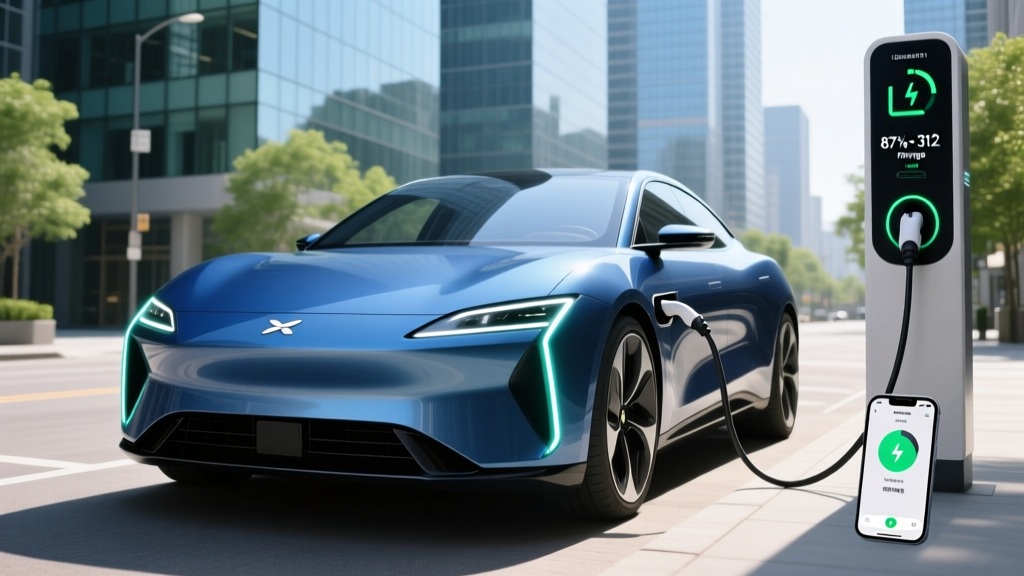
Charging is where EV technology diverges most sharply from the gas-station model. There are three charging levels, and understanding the difference between kW (power — the rate of energy delivery) and kWh (energy — the battery's capacity) is essential. Think of kW as how fast water flows from a hose, and kWh as the size of the bucket you're filling.
| Level | Power (kW) | Miles of Range Added per Hour | Typical Use Case | 10–80% Time (75 kWh Battery) |
|---|---|---|---|---|
| Level 1 (120V household outlet) | 1.0–1.4 kW | 3–5 miles | Overnight top-up for low-mileage drivers; PHEVs | Not practical (50+ hours) |
| Level 2 (240V home/public charger) | 7.2–19.2 kW | 25–60 miles | Daily home charging; workplace; shopping centers | ~5–8 hours (overnight) |
| DC Fast Charging (public stations) | 50–350 kW | 150–1,000+ miles | Road trips; rapid top-ups | ~15–35 minutes (varies by vehicle and charger) |
The Charging Curve Reality
Manufacturer-advertised peak charge rates (e.g., "250 kW max") are just that — peak rates, not sustained rates. A typical charging curve delivers peak power only between roughly 10–50% State of Charge (SoC), then tapers progressively. Above 80%, charging slows dramatically to protect battery health. A vehicle advertising a 240 kW peak may average closer to 130–160 kW across a full 10–80% session. This is why 10–80% charge times are a more honest metric than peak kW alone.
Preconditioning Matters
Most modern EVs allow you to precondition the battery — warming it to optimal temperature before arriving at a DC fast charger. This can reduce a 10–80% charge from 40 minutes (cold battery) to 18 minutes (preconditioned). If your EV has a "Navigate to Charger" feature, use it — the car will automatically begin preconditioning when it detects an upcoming fast-charge stop.
Real Costs of EV Ownership: Purchase, Charging, Maintenance, and Insurance
EV technology promises lower operating costs, but the full picture requires examining every line item. Here's a realistic 5-year total cost of ownership (TCO) comparison for a driver covering 12,000 miles annually:
| Cost Category | BEV ($42,000 MSRP) | Gas Vehicle ($30,000 MSRP) |
|---|---|---|
| Purchase Price (after incentives) | $34,500 (assuming $7,500 §30D credit) | $30,000 |
| Energy/Fuel (60,000 mi) | $2,700 (home charging avg) | $7,800 ($3.50/gal, 30 MPG) |
| Maintenance | $1,800 (tire rotations, cabin filter, fluid top-ups) | $4,200 (oil changes, brakes, belts, filters) |
| Insurance (5-yr avg) | $9,500 (EVs typically 15–25% higher) | $7,600 |
| Home Charger Installation | $800–$2,000 (Level 2, one-time) | $0 |
| Depreciation (est. 5-yr) | $18,000–$22,000 | $14,000–$17,000 |
| Estimated 5-Year Total | $67,300–$72,500 | $63,600–$66,600 |
Analysis: The BEV narrows the gap primarily through fuel savings (~$5,100 over 5 years) and lower maintenance (~$2,400 saved). However, higher insurance premiums (~$1,900 more) and potentially steeper depreciation partially offset those gains. The break-even point depends heavily on your local electricity rates, driving volume, and whether you qualify for the full §30D federal tax credit.
Federal Tax Credit: Current §30D Rules
The §30D Clean Vehicle Credit offers up to $7,500 for qualifying new EVs and up to $4,000 for qualifying used EVs. However, eligibility is far from universal. Key requirements for 2026 include:
- MSRP caps: Vans, SUVs, and pickups must be under $80,000; sedans and other body styles under $55,000.
- Buyer income limits: Modified AGI must not exceed $300,000 (joint), $225,000 (head of household), or $150,000 (single).
- Battery sourcing requirements: A percentage of critical minerals and battery components must be sourced from the U.S. or free-trade-agreement partners — these thresholds increase annually and disqualify several models.
- Point-of-sale transfer: Buyers can transfer the credit to the dealer at purchase, reducing the sale price directly rather than waiting for a tax refund.
Always verify current eligibility on the IRS website and consult a tax professional, as these rules are subject to legislative change.
Real-World Ownership: What First-Time Buyers Need to Know
Range in the Real World vs. the EPA Sticker
EPA range estimates are a useful baseline, but real-world results depend heavily on conditions. In our experience and consistent testing data:
- Highway driving at 70–80 mph: Expect 80–90% of EPA range. Aerodynamic drag is the dominant energy consumer at speed.
- Cold weather (below 32°F / 0°C): Expect 60–75% of EPA range, depending on severity. Battery chemistry slows, and cabin heating draws significant energy (EVs don't have waste heat from an engine like gas cars). A heat pump — standard on most 2026 EVs — recovers some of this loss.
- City / stop-and-go driving: Often exceeds EPA range thanks to regenerative braking recapturing energy.
A 341-mile EPA-rated EV might realistically deliver 280 miles on a cold-weather highway trip. Plan road trips around that number, not the sticker.
Home Charging Access: The Make-or-Break Factor
Home Level 2 charging is the backbone of convenient EV ownership. If you can install a 240V charger at home, you'll start every morning with a full "tank" and rarely need public charging for daily use. However, not every situation supports this:
- Single-family home with garage/driveway: Ideal. A 48-amp Level 2 charger on a NEMA 14-50 outlet or hardwired circuit costs $800–$2,000 installed (equipment + electrician + permit). You may need a panel upgrade ($1,500–$3,000) if your electrical service is below 100 amps.
- Apartment/condo without dedicated parking: Challenging. Rely on workplace charging, public Level 2 networks (ChargePoint, EVgo, Electrify America), or DC fast chargers. This adds time and cost — public DC charging can be $0.30–$0.50/kWh, roughly double the home rate.
- Street parking only: The hardest scenario. Some cities are installing curbside Level 2 chargers, but availability remains limited. A PHEV may be more practical here.
Climate and Driving Pattern Considerations
Your local climate and typical driving patterns significantly affect whether EV technology works well for you:
- Mild climates (California, Southeast): Best-case scenario. Minimal cold-weather range loss, and battery longevity is maximized.
- Cold climates (Upper Midwest, Northeast): Viable but requires planning. Budget 25–35% extra range for winter, prioritize models with heat pumps, and consider a larger battery pack.
- Mostly short commutes (<40 mi/day): Even a modest-range EV or a PHEV covers your needs easily.
- Frequent long road trips (>300 mi): Prioritize DC fast-charge capability (look for 10–80% times under 25 minutes) and check NHTSA-adjacent route-planning tools or apps like PlugShare for charger density along your routes.
Common EV Misconceptions: Myth vs. Fact
| Myth | Fact (with Data) |
|---|---|
| "EV batteries need replacing every few years and cost $20,000." | Modern lithium-ion packs are designed to last the life of the vehicle. Most manufacturers warrant the battery for 8 years/100,000 miles with a capacity-retention threshold of 70%. Real-world degradation data shows most packs lose only 8–15% capacity over 100,000–150,000 miles. Full replacements are rare and typically covered under warranty during the coverage period. |
| "EVs are worse for the environment because of battery mining." | Lifecycle analyses from the EPA and independent researchers consistently show that even on coal-heavy grids, EVs produce fewer lifetime greenhouse gas emissions than comparable gas cars. On cleaner grids (wind, solar, nuclear), the advantage is substantial. Battery recycling infrastructure is also scaling rapidly. |
| "The electrical grid can't handle mass EV adoption." | Most EV charging happens overnight during off-peak hours when grid capacity is underutilized. Utilities are deploying managed-charging programs and time-of-use rates to distribute load. A single EV charging at Level 2 draws roughly the same power as an electric clothes dryer. |
| "Charging takes too long for road trips." | At a 250 kW DC fast charger, a 2026 EV with good charge-curve management can add 150–200 miles of range in 15–20 minutes. Most drivers combine charging with rest stops, meals, or bathroom breaks. Plan for one 20-minute stop every 2.5–3 hours of highway driving. |
| "EVs are unreliable and break down constantly." | EVs have far fewer moving parts than gas vehicles — no engine, transmission, exhaust system, or timing belt. Consumer Reports and J.D. Power data consistently show BEVs have lower rates of major mechanical failure. Most service visits involve software updates, tire rotations, and cabin air filter changes. |
Your Decision Framework: Should You Buy an EV, PHEV, or Stick with Gas?
Choose a BEV (Battery Electric Vehicle) If:
- You have reliable access to home Level 2 charging (garage, driveway, or workplace).
- Your daily driving is under 200 miles round-trip.
- You want the lowest per-mile fuel cost and minimal maintenance.
- You qualify for the §30D tax credit, narrowing the upfront price gap.
- You're willing to plan charging stops on road trips 2–4 times per year.
Choose a PHEV (Plug-In Hybrid) If:
- You can charge at home but frequently take trips exceeding electric-only range.
- You want electric commuting (30–45 mi) without any range anxiety on long drives.
- You live in an area with sparse DC fast-charging infrastructure.
- You want to start electrifying your driving without a full commitment.
Stick with a Gas Vehicle (for now) If:
- You have no access to home or workplace charging and public infrastructure is limited in your area.
- You regularly tow heavy loads (towing dramatically reduces EV range — often by 40–50%).
- Your budget is firmly under $28,000 and you can't wait for the used-EV market to mature further.
- You drive over 400 miles daily in remote areas with no charging network.
Frequently Asked Questions
How long do EV batteries actually last?
Based on current degradation data from manufacturers and fleet operators, most modern EV batteries retain 85–92% of original capacity at 100,000 miles and 75–85% at 200,000 miles. Federal regulations require battery warranties of at least 8 years/100,000 miles (10 years/150,000 miles in CARB states) with a minimum 70% capacity retention threshold. LFP chemistry batteries tend to degrade more slowly than NMC, making them attractive for high-mileage drivers.
Can I charge an EV from a regular household outlet?
Yes, but slowly. A standard 120V outlet (Level 1) delivers about 1.0–1.4 kW, adding roughly 3–5 miles of range per hour. For a 75 kWh battery going from 20–80%, that's approximately 35–45 hours. Level 1 works for PHEVs with smaller batteries or BEV owners who drive under 30 miles daily and can top up overnight. For anything more, a 240V Level 2 installation is strongly recommended.
Are EVs safe in a crash?
Yes. EVs undergo the same NHTSA crash testing and IIHS evaluations as gas vehicles. The battery pack is typically mounted low in the chassis within a reinforced enclosure, which also lowers the center of gravity and reduces rollover risk. Multiple EVs have earned IIHS Top Safety Pick+ designations. Post-crash fire risk from battery damage exists but is statistically lower than fuel-fed fires in gas-vehicle collisions.
What happens if I run out of charge on the road?
The same thing that happens if you run out of gas — you need a tow or a mobile charge. However, modern EVs provide extensive range warnings, low-power "limp" modes, and built-in navigation to the nearest charger. Running out is almost always preventable with basic trip planning. Most roadside-assistance programs now offer mobile charging or flatbed towing to the nearest station.
Do I need to worry about the EV tax credit rules changing?
The §30D credit has undergone multiple revisions since 2023, with battery-sourcing thresholds tightening annually and legislative proposals to modify or sunset the credit. If you're shopping now, verify current eligibility on irs.gov and factor the credit into your budget as a bonus rather than a guarantee — particularly if your purchase timeline extends more than a few months out.