What Does "Dual Motor" Mean in a Tesla?
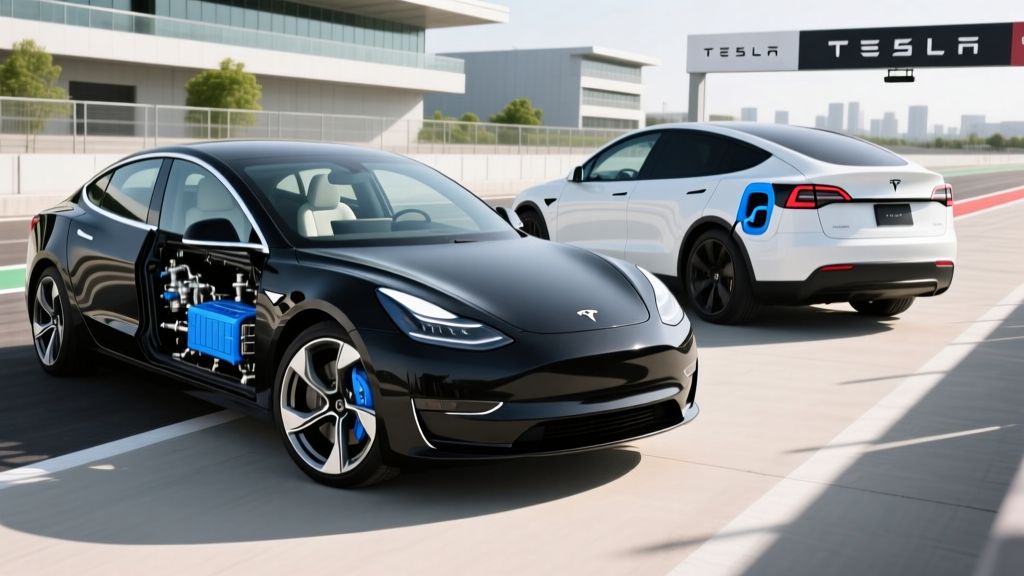
When Tesla badges a vehicle as "Dual Motor," it means the car uses two independent electric motors — one on the front axle and one on the rear — to deliver all-wheel drive (AWD). Unlike a single-motor Tesla, which sends torque to only the rear wheels (RWD), a dual-motor configuration allows the vehicle's software to precisely and instantaneously distribute power between both axles. This improves traction in rain and snow, enhances cornering stability, and typically boosts both acceleration and total horsepower.
In practical terms, a dual motor Tesla is Tesla's AWD offering. It is not the same as Tesla's "Performance" trims, though every Performance variant is also dual motor. The dual motor setup adds weight, cost, and a slight efficiency penalty compared to RWD, but the trade-off is better all-weather capability and quicker 0-60 times.
The 2026 Dual Motor Tesla Lineup at a Glance
As of the 2026 model year, dual motor (AWD) configurations are available across five Tesla vehicles. Below is a side-by-side spec comparison to help you quickly evaluate each model.
| Spec | Model 3 LR AWD | Model Y LR AWD | Model S LR | Model X LR | Cybertruck AWD |
|---|---|---|---|---|---|
| EPA Range | 341 mi | 311 mi | 402 mi | 335 mi | 318 mi |
| Battery (usable) | ~75 kWh, NMC | ~75 kWh, NMC | ~95 kWh, NMC | ~95 kWh, NMC | ~123 kWh, NMC |
| Horsepower | ~346 hp | ~384 hp | ~670 hp | ~670 hp | ~600 hp |
| 0-60 mph | 4.2 sec | 4.8 sec | 3.1 sec | 3.8 sec | 3.9 sec |
| Peak DC Charge | 170 kW | 250 kW | 250 kW | 250 kW | 250 kW |
| 10-80% DC Time | ~27 min | ~25 min | ~30 min | ~32 min | ~35 min |
| MPGe (combined) | 134 MPGe | 122 MPGe | 120 MPGe | 109 MPGe | 67 MPGe |
| Base MSRP | $47,740 | $48,990 | $79,990 | $84,990 | $79,990 |
Sources: EPA fueleconomy.gov, Tesla.com 2026 configurator. Prices exclude destination fee.
Range and Efficiency: What to Expect in the Real World
Tesla's EPA range numbers are among the most accurate in the EV industry, but they still represent a controlled-cycle estimate. In real-world driving, expect the following adjustments for any dual motor Tesla:
- Highway driving at 70+ mph: Expect ~10-15% less than EPA. A Model 3 LR AWD rated at 341 miles will deliver roughly 290-305 miles at sustained highway speeds.
- Cold weather (below 32°F): Range drops 15-30% depending on severity. A Model Y LR AWD at 311 EPA miles may show 220-265 miles in single-digit temperatures, even with the heat pump running.
- City / mixed driving in moderate temps: You'll typically meet or slightly exceed the EPA number thanks to regenerative braking recapturing energy in stop-and-go traffic.
All current dual motor Teslas use NMC (nickel manganese cobalt) battery chemistry, which offers higher energy density than LFP but benefits from being kept between 20-80% state of charge for daily use. Tesla recommends charging to 100% only for road trips. This is different from the RWD Model 3 and Model Y, which use LFP chemistry and can be charged to 100% daily.
Efficiency varies significantly by vehicle. The Model 3 LR AWD leads the pack at 134 MPGe combined (~25 kWh/100mi), while the Cybertruck AWD's heavy stainless-steel exoskeleton and poor aerodynamics drop it to 67 MPGe (~50 kWh/100mi). That efficiency gap translates directly into charging costs: the Cybertruck costs roughly twice as much per mile to charge as the Model 3.
Charging Speed: DC Fast Charging and Home Level 2
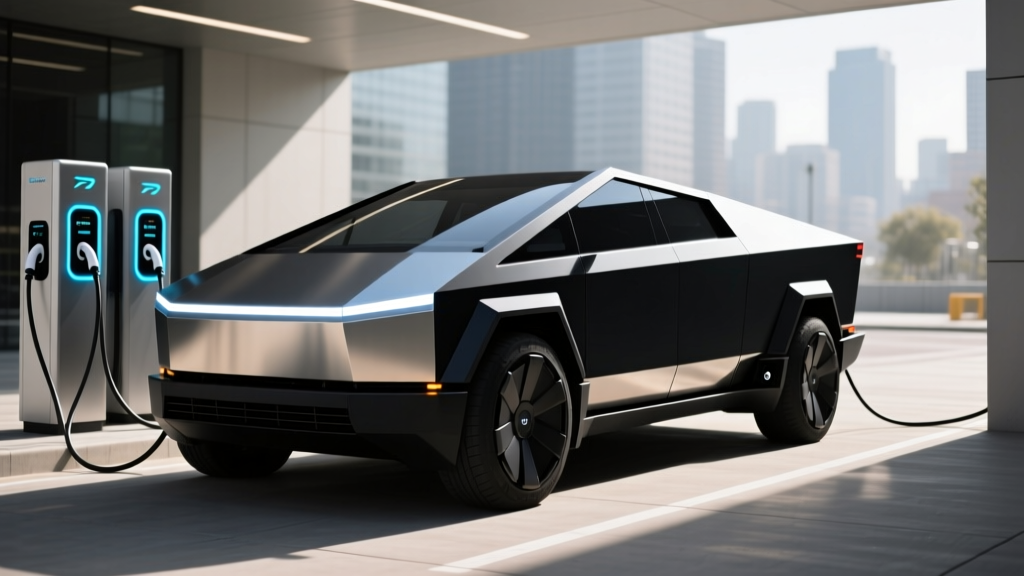
Charging speed is one of the most practical differentiators across the dual motor lineup. Tesla uses the NACS (North American Charging Standard) connector natively on all vehicles, which is now the industry standard adopted by Ford, GM, Rivian, and others.
| Charging Level | Model 3 LR AWD | Model Y LR AWD | Model S / X LR | Cybertruck AWD |
|---|---|---|---|---|
| Level 1 (120V, 1.4 kW) | ~4 mi/hr | ~4 mi/hr | ~3 mi/hr | ~3 mi/hr |
| Level 2 (240V, 11.5 kW) | ~37 mi/hr | ~37 mi/hr | ~34 mi/hr | ~30 mi/hr |
| DC Fast Charge (peak kW) | 170 kW | 250 kW | 250 kW | 250 kW |
| 10-80% DC Time | ~27 min | ~25 min | ~30-32 min | ~35 min |
A few important nuances about Tesla charging:
- Peak kW is not sustained kW. A Model Y peaking at 250 kW will only hold that rate for roughly the first 15-20% of the charge session. The charge curve tapers progressively above 50% SoC, which is why 10-80% time is a more useful metric than peak rate alone.
- Preconditioning matters. Navigate to a Supercharger using the Tesla's built-in navigation, and the battery thermal management system will warm or cool the pack to optimal temperature before arrival. Skipping this step (e.g., using a third-party app to navigate) can add 5-10 minutes to your charge session, especially in cold weather.
- Home Level 2 is the ownership sweet spot. A Tesla Wall Connector installed on a 60A circuit delivers up to 11.5 kW (48A continuous), which fully replenishes a Model 3 LR AWD overnight in roughly 7 hours. Installation costs range from $500-$2,500 depending on panel proximity and whether a panel upgrade is needed.
- The Model 3 LR AWD's 170 kW peak is notably lower than the rest of the lineup. On a road trip, that means roughly 5-8 extra minutes per charge stop compared to the Model Y.
Performance and Drivetrain: Why Dual Motor Matters
The dual motor setup provides measurable performance advantages beyond all-wheel-drive traction. Here's how the powertrain works in practice:
- Front motor: Typically an induction motor optimized for efficiency. During light-load cruising, the front motor can disconnect to reduce drag losses.
- Rear motor: A permanent-magnet synchronous motor providing the majority of propulsion and regenerative braking force.
- Torque vectoring: Software controls torque distribution between axles hundreds of times per second, improving cornering grip and stability control far beyond what a mechanical AWD system can achieve.
For towing, dual motor Teslas offer meaningful capacity. The Cybertruck AWD tows up to 11,000 lbs, the Model X LR tows 5,000 lbs, and the Model Y LR AWD tows 3,500 lbs. However, towing cuts range roughly in half — plan charging stops accordingly.
Pricing, Trims, and Federal Tax Credit Eligibility
Tesla's dual motor pricing spans from the relatively accessible Model 3 LR AWD to the premium Model S and Model X. Understanding the IRS §30D federal tax credit is essential, because not every dual motor Tesla qualifies.
| Model | Base MSRP | §30D Credit | Effective Price* | MSRP Cap? |
|---|---|---|---|---|
| Model 3 LR AWD | $47,740 | Up to $7,500 | ~$40,240 | ✅ Under $55K |
| Model Y LR AWD | $48,990 | Up to $7,500 | ~$41,490 | ✅ Under $80K |
| Model S LR | $79,990 | $0 | $79,990 | ❌ Over $55K cap |
| Model X LR | $84,990 | $0 | $84,990 | ❌ Over $80K cap |
| Cybertruck AWD | $79,990 | $0 | $79,990 | ❌ Over $80K cap |
*Effective price assumes full $7,500 credit eligibility. Actual credit depends on battery sourcing and buyer income. Consult a tax professional.
- MSRP caps: Sedans must be under $55,000; SUVs and trucks under $80,000.
- Buyer income caps: AGI ≤ $150,000 (single), $225,000 (head of household), $300,000 (joint).
- Battery sourcing: The full $7,500 requires meeting both critical-mineral and battery-component requirements. Partial credit ($3,750) may apply if only one requirement is met.
- Point-of-sale transfer: Eligible buyers can transfer the credit to the dealer at purchase for an immediate price reduction rather than waiting to claim it on their tax return.
- Assembly: Vehicle must undergo final assembly in North America (all Teslas qualify — Fremont, CA and Austin, TX).
The practical takeaway: only the Model 3 LR AWD and Model Y LR AWD are eligible for the federal tax credit. The Model S, Model X, and Cybertruck AWD all exceed their respective MSRP caps and receive no federal credit. State and local incentives may still apply — check your state's energy office or AFDC incentive database.
Cargo, Passenger Space, and Daily Practicality
Dual motor Teslas range from compact sedan to full-size SUV and pickup, so practicality varies enormously:
- Model 3 LR AWD: 23 cu ft trunk + ~3.1 cu ft frunk. Rear legroom is 35.2 inches — adequate for adults but tighter than midsize competitors. Best for couples and small families.
- Model Y LR AWD: 30 cu ft cargo behind second row (76 cu ft folded) + ~4.1 cu ft frunk. Optional third row adds two small seats. Rear legroom is 41.6 inches. The most versatile dual motor Tesla for families.
- Model S LR: 28 cu ft rear cargo (hatchback) + ~3.1 cu ft frunk. Spacious rear seat with 39.6 inches of legroom. Premium comfort for long-distance commuters.
- Model X LR: Up to 91 cu ft cargo (five-seat config) + ~6.7 cu ft frunk. Falcon-wing rear doors ease car-seat loading. Available in 5-, 6-, or 7-seat layouts.
- Cybertruck AWD: 6.5-foot bed with ~67 cu ft volume + lockable frunk. Tows 11,000 lbs. Best for truck utility rather than passenger comfort.
Warranty and Long-Term Ownership
Tesla's warranty structure is consistent across the dual motor lineup:
- Basic vehicle warranty: 4 years / 50,000 miles
- Battery and drive unit warranty: 8 years / 120,000 miles (Model 3 and Model Y) or 8 years / 150,000 miles (Model S, Model X, Cybertruck)
- Capacity retention threshold: Tesla warrants that the battery will retain at least 70% of its original capacity during the warranty period. If degradation exceeds 30%, Tesla will repair or replace the pack.
NMC batteries in dual motor Teslas typically degrade 8-12% in the first 100,000 miles based on fleet data, then the curve flattens significantly. With proper care (avoiding frequent 100% charges, minimizing DC fast charging when Level 2 is available, preconditioning in cold weather), reaching 200,000 miles with 80%+ state of health is common.
Standout Tech and Notable Drawbacks
- Supercharger network — still the most reliable DC fast-charging ecosystem in North America
- Over-the-air updates continuously add features and improve efficiency
- Class-leading energy efficiency (especially Model 3 and Model Y)
- Strong resale value relative to non-Tesla EVs
- Integrated ecosystem: navigation, preconditioning, and Supercharger routing in one system
- Heat pump standard on all models — minimizes cold-weather range loss vs. resistive heating
- No Apple CarPlay or Android Auto — Tesla's proprietary infotainment is the only option
- Build quality inconsistency remains a concern, though improving with newer Fremont and Austin output
- Service center wait times can stretch weeks in some metro areas
- Model S and X are aging platforms (2012/2015 origins, refreshed 2021) with interior quality below their price class
- Phantom braking incidents reported with Autopilot — requires attentive driving
- Insurance costs 15-30% higher than equivalent gas vehicles on average
On the tech front, every dual motor Tesla includes a 15.4-inch touchscreen (Model 3/Y) or 17-inch screen (Model S/X), Tesla's latest HW4 Autopilot computer, and access to Sentry Mode, Dashcam, and the Tesla app for remote climate control and monitoring. The Cybertruck adds a unique steer-by-wire system and 48-volt electrical architecture.
Who Should Buy a Dual Motor Tesla?
- Choose Model 3 LR AWD if: You want the most efficient, affordable dual motor Tesla for commuting and road trips. Best value after the $7,500 tax credit. Ideal for singles and couples.
- Choose Model Y LR AWD if: You need family space, cargo versatility, and the fastest DC charging in the lineup. The best-selling EV in America for good reason — it does everything well.
- Choose Model S LR if: You want 400+ mile range, luxury sedan comfort, and supercar acceleration — and you don't need the federal credit. Best for high-mileage executives and long-distance commuters.
- Choose Model X LR if: You need three rows of seating, falcon-wing doors for tight parking, and 5,000-lb towing. A niche pick for large families who want EV performance.
- Choose Cybertruck AWD if: You need truck utility, 11,000-lb towing, and don't mind being conspicuous. Efficiency is poor, and the $80K+ price is steep for a pickup.
Frequently Asked Questions
Is a dual motor Tesla the same as all-wheel drive?
Yes. "Dual Motor" is Tesla's branding for its all-wheel-drive system. One motor powers the front axle and one powers the rear, with software controlling torque distribution to all four wheels independently.
Does a dual motor Tesla use more energy than a single motor?
Slightly. The second motor adds weight (~100-150 lbs) and some drivetrain complexity, reducing efficiency by roughly 5-10% compared to the RWD equivalent. For example, the Model 3 RWD achieves 142 MPGe combined vs. 134 MPGe for the LR AWD. However, the dual motor's ability to disconnect the front induction motor during cruising minimizes this penalty.
Do I need dual motor if I live in a warm climate?
Not necessarily. If you rarely encounter snow or rain, the RWD variants offer lower cost, better efficiency, and LFP battery chemistry (on Model 3/Y) that tolerates daily 100% charging. Dual motor's main advantages — AWD traction and faster acceleration — matter most in slippery conditions or if you value performance driving.
Can a dual motor Tesla tow?
Yes. The Model Y LR AWD tows up to 3,500 lbs, the Model X LR tows 5,000 lbs, and the Cybertruck AWD tows 11,000 lbs. Expect range to drop roughly 40-50% while towing at highway speeds, and plan Supercharger stops accordingly.
How long do Tesla dual motor batteries last?
Tesla's NMC batteries are designed for 1,500+ charge cycles before significant degradation. In real-world fleet data, most dual motor Teslas retain 85-90% of original battery capacity at 100,000 miles. The battery warranty guarantees 70% retention at 120,000 miles (Model 3/Y) or 150,000 miles (S/X/Cybertruck). Full battery replacement out of warranty costs approximately $12,000-$20,000 depending on the model.
Which dual motor Tesla qualifies for the $7,500 tax credit?
As of 2026, only the Model 3 LR AWD and Model Y LR AWD fall under the IRS §30D MSRP caps ($55,000 for sedans, $80,000 for SUVs/trucks). The Model S, Model X, and Cybertruck all exceed their caps and are ineligible. Buyer income limits and battery-sourcing rules also apply — verify eligibility at IRS.gov.