What Is a BEV — And How Does It Differ From Other Electrified Vehicles?
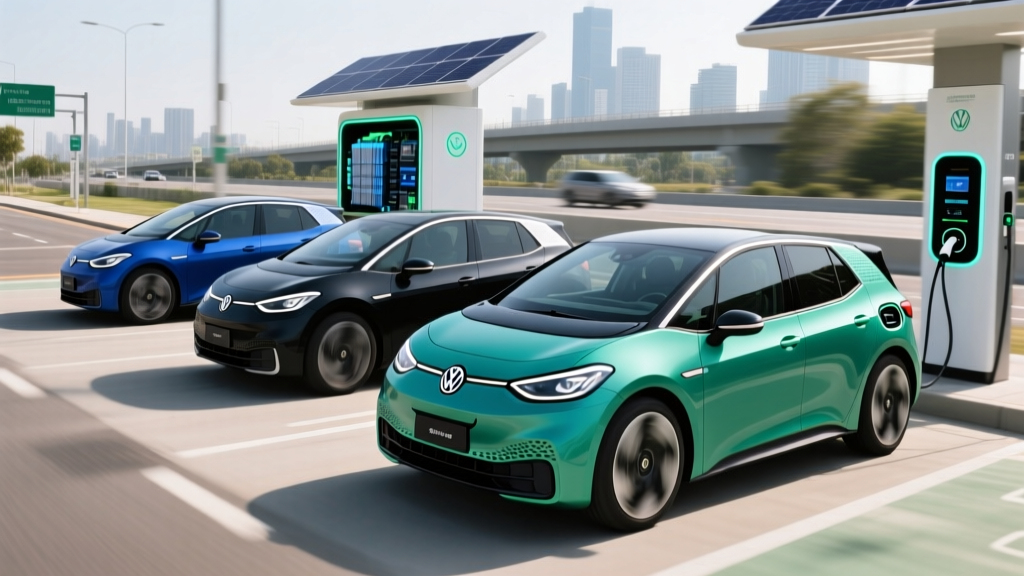
A BEV — Battery Electric Vehicle — is a car powered entirely by an onboard lithium-ion battery pack and one or more electric motors. There is no gasoline engine, no fuel tank, and no tailpipe. You plug it in to recharge, drive on stored electricity, and repeat. In 2026, BEVs span every major segment: compact hatchbacks, luxury sedans, three-row SUVs, and full-size pickups.
The term "BEV" exists to distinguish pure-electric vehicles from other electrified options on dealer lots:
- HEV (Hybrid Electric Vehicle): Small battery recharged by the gas engine and regenerative braking. No plug. Think Toyota Prius.
- PHEV (Plug-in Hybrid): Medium battery offering 25–45 miles of electric-only range, plus a gas engine for longer trips. Think Toyota RAV4 Prime.
- EREV (Extended-Range EV): Primarily electric drive with a small gas generator that charges the battery but never drives the wheels. Think the latest Ramcharger architecture.
- BEV: 100% electric. Larger battery (typically 55–130 kWh). Examples include the Tesla Model Y, Hyundai Ioniq 5, Ford F-150 Lightning, and Chevrolet Equinox EV.
If you're asking "what is a BEV?" you're likely weighing whether to skip gas entirely. The answer depends on your daily mileage, charging access, budget, and tolerance for route planning on road trips. This guide breaks down exactly what BEV ownership looks like in 2026.
How a BEV Works: Battery, Motor, and Charging Basics
At its core, a BEV replaces the internal combustion engine with three main systems:
- Traction Battery Pack: Stores electrical energy measured in kilowatt-hours (kWh). A larger kWh figure generally means more range. Most 2026 BEVs use either NMC (nickel manganese cobalt) chemistry for higher energy density or LFP (lithium iron phosphate) chemistry for longer cycle life and lower cost.
- Electric Motor(s): Converts stored electricity into rotational force. BEVs may have a single motor (RWD or FWD) or dual/tri motors (AWD). Instant torque delivery means strong acceleration without a multi-speed transmission.
- Onboard Charger & Inverter: Converts incoming AC power (from a home outlet or Level 2 station) to DC for battery storage, and converts battery DC to AC for the motor(s).
Regenerative braking recaptures kinetic energy during deceleration, sending it back into the battery. This is why BEVs achieve their best efficiency in stop-and-go city driving — the opposite of gas cars, which are least efficient in traffic.
Real-World BEV Range: What the EPA Sticker Doesn't Tell You
EPA range estimates are standardized laboratory figures. They're useful for comparison shopping but rarely match your daily experience exactly. Here's how 2026 BEVs stack up across popular models, along with real-world expectations:
| Model | Battery (kWh) | EPA Range | MPGe (Combined) | kWh/100mi |
|---|---|---|---|---|
| Tesla Model Y Long Range AWD | 78 (NMC) | 320 mi | 111 | 30 |
| Hyundai Ioniq 5 SEL AWD | 77.4 (NMC) | 290 mi | 110 | 30 |
| Chevrolet Equinox EV RS AWD | 85 (NMC) | 319 mi | 97 | 34 |
| Ford F-150 Lightning Lariat | 131 (NMC) | 320 mi | 70 | 48 |
| Tesla Model 3 RWD | 57.5 (LFP) | 272 mi | 132 | 25 |
Source: fueleconomy.gov, EPA estimates for 2025–2026 model year vehicles.
- Sustained highway driving (70–80 mph): Subtract 10–15%. Aerodynamic drag rises with the square of speed. A 320-mile EPA BEV may deliver 270–290 miles at interstate speeds.
- Cold weather (below 30°F): Subtract 15–30% depending on cabin heating demand and whether the vehicle has a heat pump. LFP batteries tend to lose slightly more range in extreme cold than NMC.
- Mountain/towing use: Subtract 25–40%. Climbing grades and trailer weight dramatically increase energy consumption, though downhill regenerative braking partially offsets this.
BEV Charging Speeds: Home, Public, and the Charge Curve Explained
Charging speed is where many first-time BEV buyers get tripped up. A vehicle's advertised "peak" DC fast-charge rate (say, 250 kW) is not sustained for the entire session. Lithium-ion batteries accept charge fastest at low states of charge and taper significantly above 80% to protect cell health. This pattern is called the charge curve.
| Level | Power (kW) | Miles Added/Hour | 10–80% Time (Typical) | Use Case |
|---|---|---|---|---|
| Level 1 (120V household) | 1.0–1.4 kW | 3–5 mi/hr | 48–72+ hours | Overnight top-ups, low-mileage drivers |
| Level 2 (240V home/public) | 7.2–19.2 kW | 25–65 mi/hr | 4–10 hours | Daily home charging, workplace, hotels |
| DC Fast Charge | 50–350 kW | 150–1,000+ mi/hr* | 15–45 minutes | Road trips, quick top-ups |
*Miles-per-hour figures at DC fast chargers apply only at peak SoC (typically 10–40%) and vary by vehicle efficiency.
Home Level 2 Charging: What You Need
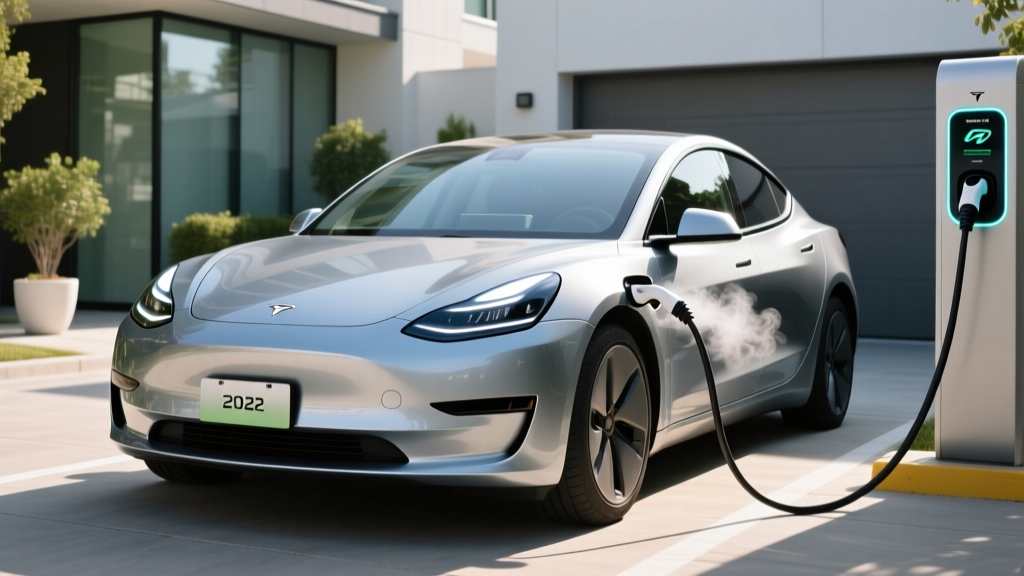
Most BEV owners do 80–90% of their charging at home on a Level 2 station. A typical 48-amp (11.5 kW) home charger on a NEMA 14-50 or hardwired 60-amp circuit adds roughly 35–45 miles of range per hour, enough to replenish a full day's driving overnight. Installation costs range from $500 (simple outlet near the panel) to $2,500+ (panel upgrade, long conduit runs).
DC Fast Charging on the Road
Modern BEVs in 2026 commonly support 150–350 kW peak DC charging. The Hyundai Ioniq 5 and Kia EV6 (800V architecture) can peak near 240 kW, achieving 10–80% in approximately 18 minutes under ideal thermal conditions. The Tesla Model Y peaks around 250 kW on V3 Superchargers. However, sustained average power matters more than peak: a vehicle that holds 180 kW from 10–60% then tapers to 60 kW will often beat a vehicle with a 250 kW peak that drops sharply after 40%.
Preconditioning — warming the battery before arriving at a charger — is essential for hitting advertised charge speeds in cool weather. Vehicles that navigate to a charger (Tesla, Rivian, GM Ultium models) automatically precondition; others require manual activation.
BEV Pricing, Trims, and Federal Tax Credit Eligibility
BEV pricing in 2026 ranges from roughly $30,000 for compact models to $100,000+ for luxury and performance variants. The federal EV tax credit under IRS §30D can reduce effective cost by up to $7,500, but eligibility is far from universal.
| Model | Base MSRP | As-Tested Price | Est. Credit | Effective Price |
|---|---|---|---|---|
| Tesla Model 3 RWD | $38,990 | $41,490 | $7,500 | ~$33,990 |
| Hyundai Ioniq 5 SEL AWD | $48,600 | $52,800 | $7,500* | ~$45,300 |
| Chevrolet Equinox EV RS AWD | $43,900 | $47,200 | $7,500 | ~$39,700 |
| Ford F-150 Lightning Lariat | $69,995 | $76,500 | $7,500 | ~$69,000 |
*Credit eligibility varies. Always confirm via IRS guidance and your tax professional.
- MSRP cap: Vans/SUVs/pickups ≤ $80,000; sedans/hatchbacks ≤ $55,000
- Buyer income cap: Modified AGI ≤ $150,000 (single) / $225,000 (head of household) / $300,000 (joint)
- Battery sourcing: Increasing percentages of critical minerals and battery components must be sourced from the US or FTA partners — rules tighten annually through 2029
- Point-of-sale transfer: Eligible buyers can transfer the credit to the dealer for an immediate price reduction rather than waiting for tax filing
- Assembly: Final assembly must occur in North America
Rules are subject to change. Verify current requirements at irs.gov and consult a tax professional before purchasing.
Performance, Interior Space, and Standout Technology
BEVs deliver performance characteristics fundamentally different from gas vehicles. Electric motors produce maximum torque from 0 RPM, resulting in strong off-the-line acceleration. The low-mounted battery pack lowers the center of gravity, improving handling dynamics. And without a transmission tunnel, many BEVs offer flat floors and generous interior volume relative to their exterior footprint.
| Model | 0–60 mph | HP | Drivetrain | Cargo (cu ft) | Rear Legroom |
|---|---|---|---|---|---|
| Tesla Model Y LR AWD | 4.8s | 384 | Dual-motor AWD | 30.2 (rear) + 4.1 (frunk) | 41.6 in |
| Hyundai Ioniq 5 SEL AWD | 5.1s | 320 | Dual-motor AWD | 27.2 + 0.85 (frunk) | 39.4 in |
| Chevy Equinox EV RS AWD | 5.9s | 288 | Dual-motor AWD | 26.4 + 0 (no frunk) | 38.7 in |
| Ford F-150 Lightning Lariat | 4.5s | 580 | Dual-motor AWD | 52.8 (bed) + 14.1 (frunk) | 43.6 in |
Tech and Driver Assistance
Most 2026 BEVs come equipped with large central touchscreens (12–17 inches), over-the-air software updates, and SAE Level 2 driver-assistance suites. Key systems include:
- Tesla Autopilot / FSD (Supervised): Vision-based lane centering, adaptive cruise, and supervised intersection navigation. Requires continuous driver attention — this is not autonomous driving.
- Hyundai/Kia Highway Driving Assist 2: Combines adaptive cruise with lane centering and machine-learning speed adjustment for curves.
- GM Super Cruise: Hands-free driving on over 400,000 miles of mapped highways, with driver monitoring via steering-column camera.
- Ford BlueCruise: Hands-free on qualified highway sections, with eyes-on monitoring in non-mapped zones.
Notable Drawbacks Across BEVs
- No frunk on some platforms: GM Ultium-based crossovers (Equinox EV, Blazer EV) omit a front trunk, reducing total storage.
- Charging network fragmentation: While NACS adoption is expanding, CCS1 and CHAdeMO connectors still exist in 2026. Adapter availability and reliability vary by network.
- Insurance costs: BEV insurance premiums run 15–25% higher than comparable gas vehicles, driven by higher repair costs and battery replacement exposure.
- Weight: Large battery packs add 1,000–2,000 lbs, increasing tire wear and reducing payload/towing margins.
Warranty Coverage: Battery and Powertrain Protection
Federal law mandates that BEV battery packs carry a minimum warranty of 8 years / 100,000 miles (10 years / 150,000 miles in California and states that follow CARB standards). Most manufacturers meet or exceed this baseline:
| Manufacturer | Battery Warranty | Capacity Retention Threshold | Powertrain |
|---|---|---|---|
| Tesla | 8 yr / 120,000 mi (Model Y) | 70% | 8 yr / 120,000 mi |
| Hyundai / Kia | 10 yr / 100,000 mi | 70% | 10 yr / 100,000 mi |
| General Motors | 8 yr / 100,000 mi | 70% (60% for LFP) | 8 yr / 100,000 mi |
| Ford | 8 yr / 100,000 mi | 70% | 8 yr / 100,000 mi |
Battery degradation in 2026 BEVs typically runs 1–2% per year under normal use. After 8 years, most NMC packs retain 85–92% of original capacity; LFP packs often retain more due to their superior cycle life, though they may show slightly steeper degradation in extreme cold. Replacement costs for a full battery pack range from $8,000 to $20,000+ depending on the vehicle — a significant out-of-warranty expense, though full replacements are rare.
Who Should Buy a BEV — And Who Should Consider a PHEV Instead?
- You have reliable home or workplace Level 2 charging
- Your daily driving is under 200 miles round-trip
- You want the lowest per-mile fuel cost (electricity averages $0.04–$0.06/mile vs. $0.12–$0.18/mile for gas)
- You want minimal maintenance (no oil changes, fewer brake replacements due to regen)
- You're comfortable planning DC fast-charge stops on road trips 2–4 times per year
- You lack home charging access (apartment, street parking)
- You frequently drive 300+ miles in a single day through areas with sparse DC charging
- You tow heavy loads regularly (trailer range loss can exceed 40%)
- You want one vehicle for both electric commuting and unlimited gas-engine range
Pros and Cons of BEV Ownership in 2026
- Lowest fuel cost per mile of any vehicle type
- Strong, instant acceleration with no gear shifts
- Minimal scheduled maintenance (no oil, spark plugs, or emissions equipment)
- Eligible for up to $7,500 federal tax credit (with eligibility caveats)
- Quieter, smoother ride quality
- OTA updates add features post-purchase
- Home charging means a "full tank" every morning
- Higher upfront purchase price vs. comparable gas vehicles
- Home charger installation may require panel upgrade ($1,500–$3,000)
- Road trips require route planning around DC fast chargers
- Range drops 15–30% in extreme cold
- Insurance premiums 15–25% higher than gas equivalents
- Public charging reliability still inconsistent outside major networks
- Battery replacement cost ($8K–$20K+) out of warranty
Frequently Asked Questions
What is the real-world range of a typical BEV?
Most 2026 BEVs with EPA ratings of 280–320 miles deliver 240–280 miles in mixed real-world driving at moderate temperatures. Highway-only driving at 75+ mph reduces this to 220–270 miles. Cold weather (below 30°F) can drop range to 190–250 miles depending on heat pump availability and cabin heating demand.
How fast does a BEV charge at home and on the road?
At home on a 48-amp Level 2 charger (11.5 kW), expect 35–45 miles of range per hour — a full overnight charge for most daily drivers. On DC fast chargers, modern BEVs achieve 10–80% in 18–35 minutes depending on peak charge rate and battery preconditioning. Charging above 80% slows dramatically to protect battery health.
How much does a BEV cost after tax credits?
After applying the $7,500 federal credit (where eligible), popular BEVs range from approximately $27,000 (base compact models) to $60,000+ (mid-size SUVs and trucks). Eligibility depends on MSRP caps, buyer income, battery sourcing requirements, and North American assembly. Always verify at irs.gov before purchasing.
Is a BEV worth buying vs. a hybrid or gas car?
If you have home charging, a BEV typically saves $4,000–$8,000 in fuel and maintenance over 5 years compared to a gas equivalent, offsetting the higher purchase price. Total cost of ownership favors BEVs most for high-mileage commuters in states with low electricity rates. If you lack charging access or frequently take long trips through charging-sparse regions, a PHEV may be the better bridge.
Does a BEV qualify for the federal EV tax credit?
Many do, but not all. Under IRS §30D rules, the vehicle must have final assembly in North America, meet MSRP caps ($55,000 for cars, $80,000 for SUVs/trucks/vans), and satisfy battery sourcing requirements that tighten annually. Buyer income must also fall below $150K–$300K depending on filing status. The credit can be transferred to the dealer at point of sale for an instant price reduction. Check current eligibility at irs.gov.
How long will a BEV battery last?
Based on current degradation data, most NMC battery packs retain 85–92% capacity after 8 years of normal use. LFP packs often retain more due to higher cycle life. Full battery failure is rare; gradual capacity loss is the norm. Federal warranty minimums require 8 years/100,000 miles with at least 70% capacity retention. Many BEV batteries outlast 150,000–200,000 miles before reaching the 70% threshold.
What happens if I run out of charge on the road?
Modern BEVs provide accurate range predictions and route-based charge warnings. If you do deplete the battery, the vehicle will coast to a stop and require a flatbed tow to the nearest charger — you cannot use a portable gas can as a backup. Roadside assistance programs from Tesla, Hyundai, Ford, and others sometimes offer limited emergency charge tows. The practical solution is planning: keep a 10–15% buffer on long trips and precondition for every DC fast-charge stop.