What Is an Electric Vehicle?
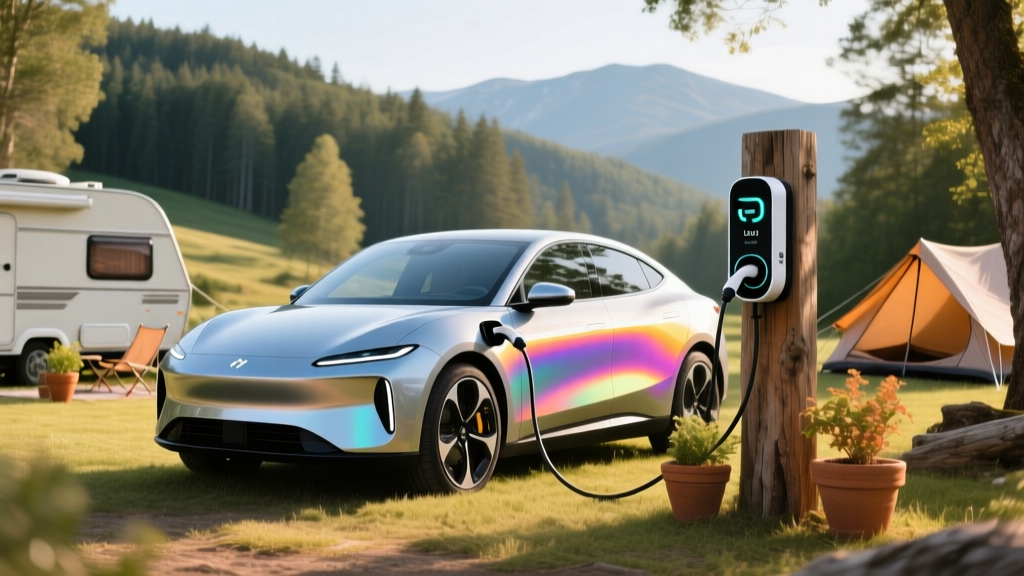
An electric vehicle (EV) — specifically a battery electric vehicle (BEV) — is a car powered entirely by a rechargeable lithium-ion battery pack that drives one or more electric motors. Unlike gas cars, EVs have no internal combustion engine, no exhaust system, and no fuel tank. You charge them by plugging into a wall outlet, a home Level 2 charger, or a public DC fast charger. As of the 2026 model year, mainstream EVs deliver between 220 and 400+ miles of EPA-estimated range, accelerate from 0–60 mph in as little as 3.1 seconds, and cost roughly $0.04–$0.06 per mile to charge at home versus $0.12–$0.16 per mile for gasoline.
How an EV Actually Works: Battery, Motor, and Energy Flow
At its core, an EV stores electrical energy in a battery pack measured in kilowatt-hours (kWh) — think of kWh as the size of the "fuel tank." A 2026 Hyundai Ioniq 6 SE, for example, carries a 77.4 kWh usable battery. That energy feeds an electric motor rated in kilowatts (kW) of power output — the Ioniq 6's single rear motor produces 168 kW (225 horsepower).
When you press the accelerator, the inverter converts DC battery power to AC motor power with roughly 90–95% efficiency. When you lift off or brake, regenerative braking reverses the motor into a generator, recapturing kinetic energy back into the battery. This one-pedal driving feel is a signature EV trait and reduces brake wear dramatically — many EV owners go 100,000+ miles on original brake pads.
The two dominant battery chemistries in 2026 are:
- NMC (Nickel Manganese Cobalt): Higher energy density, lighter weight, used in most long-range models (e.g., Tesla Model 3 Long Range, Ford Mustang Mach-E Extended Range). Best charged to 80% daily, 100% only for road trips.
- LFP (Lithium Iron Phosphate): Slightly heavier but longer cycle life, more thermally stable, and can be charged to 100% daily without degradation concerns. Found in the Tesla Model 3 RWD and several base-trim models.
EV vs. Gas Car vs. Hybrid: The Numbers Side by Side
Understanding where EVs fit among electrified options requires hard data. Here's how a representative 2026 BEV, a plug-in hybrid (PHEV), a conventional hybrid (HEV), and a gas-only sedan compare:
| Metric | 2026 Tesla Model 3 RWD (BEV) | 2026 Toyota Prius Prime (PHEV) | 2026 Toyota Prius (HEV) | 2026 Honda Civic 2.0L (Gas) |
|---|---|---|---|---|
| Powertrain | Battery Electric | Plug-in Hybrid | Hybrid | Gasoline ICE |
| EPA Range / MPG | 363 mi / 132 MPGe | 44 mi EV + 50 MPG gas | 57 MPG combined | 35 MPG combined |
| Energy Cost per Mile (home/national avg) | ~$0.046 | ~$0.05 EV / ~$0.11 gas | ~$0.105 | ~$0.12 |
| Annual Fuel/Energy (15k mi) | ~$690 | ~$1,100 (mixed) | ~$1,575 | ~$1,800 |
| Base MSRP | $38,990 | $33,975 | $28,350 | $24,950 |
| Federal Tax Credit (§30D) | Up to $7,500 (eligibility varies) | Up to $3,750 | None | None |
| Maintenance (annual avg) | ~$300 | ~$550 | ~$450 | ~$650 |
Sources: fueleconomy.gov, manufacturer MSRP pages. Energy costs based on U.S. average residential electricity rate of ~$0.17/kWh and gasoline at ~$3.40/gallon. Tax credit eligibility depends on income, MSRP caps, and battery sourcing — see IRS §30D guidelines.
The Real Cost of Owning an EV: Purchase, Charging, Maintenance, and Insurance
Sticker price tells only part of the story. A realistic five-year total cost of ownership (TCO) factors in energy, maintenance, insurance, depreciation, and incentives:
| Cost Category (5-Year / 75,000 mi) | BEV (e.g., Model 3 RWD) | Gas Sedan (e.g., Civic) |
|---|---|---|
| Purchase Price (after $7,500 credit) | ~$31,490 | $24,950 |
| Energy/Fuel | $3,450 | $9,000 |
| Maintenance | $1,500 | $3,250 |
| Insurance (avg) | $9,500 | $7,500 |
| Estimated Depreciation | $14,000 | $11,000 |
| Total 5-Year Cost | ~$59,940 | ~$55,700 |
Key takeaways from real ownership data:
- Energy savings are substantial: Home charging saves roughly $5,500 over five years versus gasoline.
- Maintenance is minimal: No oil changes, no transmission fluid, no spark plugs, no exhaust repairs. Cabin air filter, tire rotation, and washer fluid are the routine items.
- Insurance runs 15–30% higher: EVs cost more to repair after collisions (battery safety protocols, specialized parts, certified technicians). Shop quotes before buying.
- Depreciation is stabilizing but still a wildcard: Aggressive price cuts by Tesla in 2023–2024 hammered used-EV values. By 2026, depreciation has normalized but remains slightly higher than Toyota/Honda gas sedans.
- Home charger installation adds $500–$2,000: A Level 2 (240V, 48-amp) home charger costs $300–$700 for equipment plus $200–$1,300 for electrician labor, depending on panel capacity and wiring distance.
Charging in the Real World: Home, Public, and What You Need to Know
Charging access is the single most important factor in EV satisfaction. Here's what the three charging levels actually deliver:
| Level | Voltage / Power | Miles Added per Hour | Typical Use Case |
|---|---|---|---|
| Level 1 (120V) | 1.4 kW | 3–5 mi/hr | Overnight top-up, PHEVs, low-mileage drivers |
| Level 2 (240V) | 7.7–11.5 kW | 25–44 mi/hr | Home primary charging, workplace, shopping centers |
| DC Fast Charge | 50–350 kW | 150–1,000+ mi/hr (peak) | Road trips, highway corridors, quick top-ups |
The charging curve reality: When manufacturers advertise "peak 250 kW" charging, that rate applies only between roughly 10–40% State of Charge (SoC). Above 80%, charging slows dramatically to protect the battery — a 10–80% session might take 18 minutes, but 80–100% can take another 25 minutes. Plan road-trip stops around 10–80% charges for the fastest throughput.
Home charging is the backbone: Over 80% of EV charging happens at home. If you have a garage or driveway with access to a 240V outlet (like a dryer outlet) or can have one installed, an EV integrates seamlessly into daily life. Wake up every morning with a "full tank."
Public charging gaps remain: While the Tesla Supercharger network (now open to NACS-equipped vehicles from Ford, GM, Rivian, and others) is broadly reliable, rural corridors and apartment-dweller access are still pain points in 2026. If you can't charge at home, weigh a PHEV seriously.
Cold Weather, Range Reality, and Other Misconceptions
| Myth | Fact |
|---|---|
| "EVs can't handle cold weather." | Range drops 20–30% in sub-freezing temps due to battery chemistry and cabin heating demands. A 300-mile EPA car may deliver 210–240 miles at 20°F. Preconditioning while plugged in mitigates this significantly. Heat pumps (standard on most 2026 models) reduce the penalty. |
| "EV batteries need replacing every few years." | Federal law mandates 8-year/100,000-mile battery warranties (10 years/150,000 miles in CARB states). Average degradation is 10–15% over 200,000 miles based on fleet data. Most batteries outlast the car. |
| "EVs are worse for the environment because of electricity generation." | Even on the dirtiest U.S. grids, EVs produce fewer lifetime emissions than comparable gas cars (EPA analysis). On cleaner grids or with home solar, the advantage widens dramatically. |
| "The power grid can't handle mass EV adoption." | Most charging occurs overnight during off-peak hours. Utilities are upgrading distribution infrastructure incrementally. Smart charging and V2G (vehicle-to-grid) technology will further ease demand. |
| "All EVs qualify for the $7,500 tax credit." | Eligibility under IRS §30D requires meeting MSRP caps ($55,000 sedans / $80,000 SUVs and trucks), buyer income limits ($150K single / $300K joint), and critical-mineral/battery-component sourcing rules. Many popular models qualify for partial or full credits, but it varies by model year and trim. |
Decision Framework: Is an EV Right for You?
Choose a Battery Electric Vehicle (BEV) if:
- You have reliable home or workplace Level 2 charging access.
- Your daily driving is under 100 miles round-trip (covers ~95% of U.S. commutes).
- You want the lowest per-mile energy cost and minimal maintenance.
- You take road trips 2–4 times per year and can plan DC fast-charger stops.
- You qualify for federal or state tax incentives that offset the higher MSRP.
Choose a Plug-in Hybrid (PHEV) if:
- You can charge at home but frequently drive beyond electric-only range (30–50 miles).
- You live in an area with sparse DC fast-charging infrastructure.
- You want EV-like daily commuting with zero range anxiety on road trips.
- You're not ready to fully commit to battery-only driving.
Choose a Conventional Hybrid (HEV) if:
- You have no access to any charging (apartment, street parking, no workplace charger).
- You want maximum MPG without changing your fueling habits at all.
- Your budget is under $30,000 and you want proven long-term reliability.
First-Time EV Buyer Checklist
Before you sign a purchase agreement, work through these practical steps:
- Audit your charging situation. Can you install a 240V Level 2 outlet? Get a quote from a licensed electrician — panel upgrades (100A to 200A) can add $1,500–$3,000 if your home's electrical service is older.
- Check your commute and driving patterns. If your daily round-trip is 60 miles, a 250-mile-range EV gives you 4+ days between charges even with cold-weather losses.
- Verify tax credit eligibility. Use the IRS's qualified vehicle list and confirm your income falls under §30D caps. Many dealers now offer point-of-sale credit transfers, reducing the purchase price directly.
- Get insurance quotes before buying. EV premiums vary widely by insurer and model. A Tesla Model Y might cost 25% more to insure than a comparable RAV4; a Chevrolet Equinox EV might be nearly identical.
- Test-drive with regen in mind. Ask the dealer to demonstrate one-pedal driving. Most new EV owners adapt within a week and prefer it.
- Download the charging apps. PlugShare, A Better Routeplanner, and your vehicle's native navigation will be your road-trip co-pilots.
Frequently Asked Questions
How long do EV batteries last?
Most EV batteries are warrantied for 8 years/100,000 miles to retain at least 70% of original capacity. Real-world fleet data shows average degradation of roughly 1–2% per year for NMC chemistry and even less for LFP. Many EVs reach 200,000+ miles with 85–90% of original range intact.
What happens if I run out of charge on the road?
The same thing as running out of gas — you need a tow to the nearest charger. However, EV navigation systems (and apps like A Better Routeplanner) actively manage your route around charging stations with real-time availability data. Running out requires actively ignoring multiple low-battery warnings.
Can I charge an EV from a regular wall outlet?
Yes — Level 1 charging from a standard 120V household outlet delivers about 3–5 miles of range per hour. For a PHEV with 40 miles of electric range, an overnight charge is sufficient. For a BEV with a large battery, Level 1 is impractical as a primary strategy (a full charge could take 40+ hours) but works as an emergency top-up.
Are EVs safe in a crash?
EVs consistently earn top ratings from the IIHS and NHTSA. Battery packs are mounted low in the chassis, giving EVs a lower center of gravity and excellent rollover resistance. High-voltage systems automatically disconnect in a collision. Fire risk from EV batteries is statistically lower than gasoline vehicle fires per vehicle-mile traveled.
Do EVs cost more to insure?
Typically 15–30% more than comparable gas cars, primarily due to higher repair costs after collisions (specialized parts, battery safety protocols, and fewer certified body shops). However, insurance costs vary significantly by model, driver profile, and insurer. Always get a quote before committing.