The Short Answer: Still Announced, Still Not On Sale
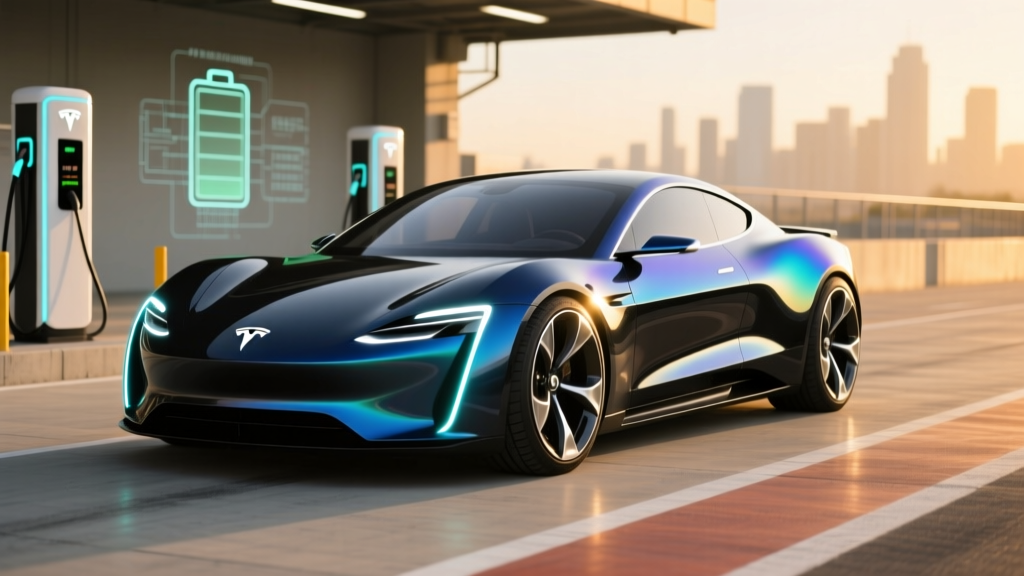
If you've been following Tesla for more than a few years, the question what happened to the Tesla Roadster is practically a rite of passage. First unveiled in November 2017 alongside the Tesla Semi, the second-generation Roadster was originally promised for 2020 production. As of early 2026, it remains an announced vehicle — not available for purchase, not in production, and without a firm delivery date.
Elon Musk has periodically updated the timeline. In mid-2023, he stated the Roadster's design was "done" and that it would ship in 2024. That target slipped. By late 2024 and into 2025, Tesla's focus pivoted heavily toward the Cybertruck production ramp, the more affordable next-generation platform, Optimus robotics, and AI/FSD development. The Roadster has been repeatedly deprioritized in favor of products with higher volume potential.
This article breaks down everything we know about the Tesla Roadster as of 2026 — including preliminary specs, estimated pricing, tax credit implications, and whether it makes sense to wait or look at alternatives that actually exist today.
Preliminary Tesla Roadster Specifications (Announced)
Tesla has shared target figures at various unveiling events and earnings calls. The table below compiles the most frequently cited numbers. Treat these as aspirational targets, not confirmed production specifications.
| Specification | Tesla's Stated Target |
|---|---|
| EPA Range (est.) | 620 miles |
| Battery Capacity | ~200 kWh (announced; chemistry unconfirmed) |
| 0–60 mph | 1.9 seconds (base); 1.1 sec w/ SpaceX package (claimed) |
| Top Speed | 250+ mph |
| Drivetrain | Tri-motor AWD (1 front, 2 rear) |
| Horsepower | Not officially disclosed; estimated 1,000+ hp at wheels |
| Quarter Mile | 8.8 seconds (claimed) |
| Seating | 2+2 (two front, two small rear seats) |
| Roof | Removable glass roof panel |
| Base MSRP (estimated) | $200,000 (announced in 2017; subject to change) |
| Founders Series | $250,000 (limited run, first 1,000 units) |
Sources: Tesla Roadster page; Tesla Q3 2023 earnings call transcript.
The 620-Mile Range Claim: Real-World Reality Check
A 620-mile EPA range would shatter every production EV record. For context, the Lucid Air Grand Touring currently leads at 516 miles EPA with a 118 kWh battery. Achieving 620 miles would require either a massive battery pack (~200 kWh), extreme aerodynamic efficiency, or both.
Announced EPA Target: 620 miles
Real-World Highway Expectation: ~430–500 miles at 70 mph (highway speeds reduce efficiency by 20–30% vs. city driving)
Cold-Weather Expectation: ~370–440 miles (LFP/NMC packs typically lose 20–30% range below 32°F)
Key Factor: A 200 kWh pack would weigh approximately 1,200–1,400 lbs alone, significantly impacting handling and tire wear.
Tesla has not confirmed the battery chemistry. A 200 kWh pack almost certainly requires NMC (nickel manganese cobalt) or a next-generation cell — LFP's lower energy density makes it impractical for this capacity in a sports car form factor. Tesla's partnership with Panasonic on 4680 cells could theoretically deliver the energy density needed, but scaling 4680 production has been one of Tesla's persistent challenges.
Charging Speed: The 200 kWh Problem
Here's the engineering tension that may explain some of the Roadster's delays: a 200 kWh battery is enormous, and charging it quickly requires extraordinary power delivery.
| Charging Method | Power | 10–80% Time (est.) | Notes |
|---|---|---|---|
| Level 1 (120V) | 1.4 kW | ~100+ hours | Essentially unusable for a pack this size |
| Level 2 (240V, 48A) | 11.5 kW | ~12–14 hours | Overnight charge; feasible for daily use |
| Tesla V3 Supercharger | 250 kW peak | ~45–55 minutes | Charge curve taper above 50% SoC extends time |
| Tesla V4 Supercharger (est.) | 350+ kW peak | ~30–40 minutes | Would require new battery architecture to sustain |
Even at 250 kW, filling 140 kWh (10% to 80% of 200 kWh) takes roughly 34 minutes at peak rate — but charging curves taper significantly above 50–60% state of charge. Real-world 10–80% times will likely land in the 45–55 minute range on current V3 Superchargers, considerably longer than a Model 3 Long Range (~25 minutes).
This is a fundamental physics problem: more energy storage means more time to fill it, unless you increase charge power proportionally. Tesla would need a pack capable of sustaining 350+ kW charge rates — demanding advanced thermal management and likely a cell design not yet proven at scale.
Performance: 1.9 Seconds Is Plausible, but at What Cost?
A 1.9-second 0–60 mph time would make the Roadster the quickest production car in history. The current record holder among production vehicles is the Rimac Nevera at 1.85 seconds, costing over $2 million.
Tesla's tri-motor AWD layout — one motor up front, two in the rear — provides the torque vectoring needed to put power down without excessive wheelspin. The Plaid powertrain in the Model S Plaid already achieves 1.99 seconds with roughly 1,020 horsepower, so a slightly lighter, more aerodynamic Roadster could plausibly hit 1.9 seconds.
The SpaceX thruster package (cold gas thrusters mounted around the vehicle) was claimed to enable a 1.1-second 0–60 time. This remains highly speculative for a street-legal production vehicle and raises serious regulatory questions with NHTSA.
Expected horsepower for the standard tri-motor setup: approximately 1,000–1,200 hp at the wheels, based on the Plaid architecture scaled for a lighter chassis.
Pricing, Tax Credits, and the $200,000 Question
When announced in 2017, Tesla priced the Roadster at $200,000 base, with a $250,000 Founders Series for the first 1,000 units (requiring full payment upfront). Reservations were $50,000. In 2021, Tesla briefly raised the reservation to $50,000 and listed a $250,000 base price before removing the configurator entirely.
If the Roadster launches in 2026 or 2027, inflation, battery costs, and supply-chain realities will push pricing well above original targets. A realistic 2026 estimate:
| Trim | Original 2017 Price | 2026 Estimated Price |
|---|---|---|
| Roadster (base) | $200,000 | $250,000–$300,000 |
| Founders Series | $250,000 | $300,000–$350,000 |
Does the Tesla Roadster Qualify for the Federal EV Tax Credit?
No. Under current IRS §30D rules, the federal clean vehicle credit has a strict MSRP cap: $80,000 for SUVs, pickups, and vans; $55,000 for sedans and all other vehicles. The Roadster, as a sports car, would fall under the $55,000 cap. At any price above $55,000 — let alone $250,000+ — it is categorically ineligible for the $7,500 federal credit.
Additionally, the §30D credit has buyer income caps ($150,000 single / $300,000 joint modified AGI) and critical-mineral/battery-component sourcing requirements. But for the Roadster, the MSRP cap alone disqualifies it entirely. Buyers should not factor any federal incentive into their purchase decision for this vehicle.
- MSRP Cap: $55,000 for passenger cars — Roadster exceeds this by 4–5x
- Federal Credit: $0 — not eligible under §30D
- State Incentives: Vary by jurisdiction; some states offer credits without MSRP caps (check your state's EV incentive program)
- Consult a tax professional for personalized guidance on EV incentives
Interior, Cargo, and Daily Usability
The Roadster is a 2+2 sports car, meaning two front seats and two small rear seats suitable for children or luggage. Tesla showed a minimalist interior at the 2017 unveiling with a horizontal touchscreen, but production interior details remain scarce.
Expected practical dimensions (based on concept and comparable sports cars):
- Front legroom: ~42 inches (estimated, comparable to Porsche Taycan)
- Rear legroom: ~28–30 inches (very limited; children or bags only)
- Cargo volume: ~8–12 cu ft (rear trunk area; no frunk expected due to front motor)
- Roof: Removable glass panel stored in the trunk (reduces cargo space when stowed)
This is not a practical daily driver. It is a halo performance vehicle. If you need cargo space, rear-seat usability, or road-trip comfort, the Model S, Lucid Air, or Porsche Taycan Cross Turismo are far more livable.
Driver-Assist Technology and Warranty
The Roadster will almost certainly ship with Tesla's full hardware suite for Autopilot and FSD (Supervised). However, it's critical to understand: Tesla FSD is a Level 2 driver-assist system per SAE classification. The driver must remain fully engaged, hands on the wheel (or attentive to prompts), and eyes on the road at all times. It is not autonomous driving.
Level: SAE Level 2 (partial automation)
Driver Required: Yes — full attention and supervision at all times
Capability: Steering, acceleration, and braking assistance on highways and city streets
NOT: Self-driving, autonomous, or Level 4. Only services like Waymo operate at Level 4 (driverless in geofenced areas).
Warranty (Projected)
Tesla has not published Roadster-specific warranty terms. Based on current Tesla warranties for the Model S:
- Basic Vehicle: 4 years / 50,000 miles
- Battery & Drive Unit: 8 years / 150,000 miles (with minimum 70% capacity retention)
For a $250,000+ vehicle, buyers should push for extended or enhanced warranty coverage at the point of sale. High-performance use may accelerate battery degradation, and a 200 kWh pack replacement would likely cost $30,000–$50,000+ out of warranty.
Why Has the Roadster Been Delayed So Long?
Several converging factors explain the Roadster's perpetual "next year" status:
- Cybertruck consumed all bandwidth. The Cybertruck's unconventional stainless-steel exoskeleton, 48-volt architecture, and steer-by-wire system demanded massive engineering resources from 2021 through 2025.
- The affordable platform took priority. Tesla's long-promised lower-cost vehicle (targeting ~$25,000–$35,000) represents far greater revenue potential than a niche $250,000 sports car.
- Battery cell constraints. A 200 kWh pack requires either a huge number of 4680 cells or next-gen chemistry that Tesla hasn't yet scaled.
- The business case is weak. Low-volume halo cars are loss leaders. Tesla's margins come from volume models. The Roadster's purpose — brand prestige and engineering showcase — may already be served by the Model S Plaid.
- Regulatory complexity. A 250+ mph vehicle with optional rocket thrusters faces significant NHTSA and international homologation hurdles.
Should You Wait or Buy Something Else?
If you've been holding a Roadster reservation (or considering one), here's a practical decision framework:
- You want a high-performance EV you can actually drive in 2026
- You need a vehicle with practical cargo space, rear seats, or daily comfort
- You want federal tax credit eligibility (MSRP under $55K/$80K)
- You value confirmed warranty, service infrastructure, and real-world range data
- You already own a daily driver and want a weekend halo car
- Budget exceeds $250,000 and you don't need the vehicle for daily transportation
- You're willing to accept a 2027–2028 (or later) delivery with potential spec changes
- You value being an early adopter of a potential record-breaking vehicle
Competitors You Can Actually Buy Today
| Vehicle | 0–60 mph | EPA Range | Base MSRP | Status |
|---|---|---|---|---|
| Tesla Model S Plaid | 1.99 sec | 396 mi | ~$89,990 | Available now |
| Lucid Air Sapphire | 1.89 sec | 427 mi | ~$249,000 | Available now |
| Porsche Taycan Turbo GT | 2.1 sec | 269 mi | ~$230,000 | Available now |
| Rimac Nevera | 1.85 sec | ~340 mi (WLTP) | ~$2,200,000 | Limited production |
| Tesla Roadster | 1.9 sec (claimed) | 620 mi (claimed) | $250,000+ (est.) | Not available |
The Verdict: A Fascinating "What If"
The Tesla Roadster remains one of the most ambitious EV concepts ever announced. If it ships with anything close to its claimed specifications — 620 miles of range, 1.9-second 0–60, a removable glass roof — it would redefine what a production electric sports car can be.
But "if" is doing enormous work in that sentence. After eight years of delays, shifting corporate priorities, and no confirmed production timeline, the Roadster's status is best described as indefinitely postponed. Tesla has not canceled it, but it has not meaningfully advanced it either.
For buyers with $250,000+ to spend on a performance EV today, the Lucid Air Sapphire, Model S Plaid, and Porsche Taycan Turbo GT are real, tested, warrantied, and deliverable. The Roadster is a promise — one that may yet be kept, but not on any timeline you should plan your life around.
Frequently Asked Questions
Is the Tesla Roadster canceled?
No. Tesla has not officially canceled the Roadster. However, it has been repeatedly delayed since its 2017 announcement, and as of 2026, there is no confirmed production start date. Elon Musk has periodically reaffirmed that it will eventually be built, but Tesla's engineering focus has consistently shifted to higher-priority programs.
Can I still reserve a Tesla Roadster?
Tesla removed the Roadster reservation page from its website in 2021. Previous reservation holders may still have claims on early production, but new reservations are not currently being accepted. Check Tesla's website or contact a Tesla advisor for the most current status.
What is the real-world range of the Tesla Roadster?
Since the Roadster is not yet in production, there is no real-world range data. Tesla's announced target is 620 miles EPA. Based on typical highway and cold-weather losses (20–30%), real-world highway range could land in the 430–500 mile range, with cold-weather driving potentially dropping to 370–440 miles. These are projections, not measurements.
How fast does the Tesla Roadster charge?
Tesla has not published official charging specs. Based on a ~200 kWh battery and current Supercharger infrastructure (250 kW V3 peak), expect 10–80% charging in approximately 45–55 minutes. Future V4 Superchargers at 350+ kW could reduce this to 30–40 minutes, but sustained charge rate and battery thermal limits will be the determining factors.
Does the Tesla Roadster qualify for the federal EV tax credit?
No. Under IRS §30D rules, the Roadster far exceeds the $55,000 MSRP cap for passenger cars. It is categorically ineligible for the $7,500 federal clean vehicle credit regardless of buyer income or battery sourcing.
Will the Roadster have self-driving capability?
The Roadster will likely include Tesla Autopilot and FSD (Supervised) hardware. However, FSD is an SAE Level 2 driver-assist system — the driver must remain fully engaged at all times. It is not autonomous or self-driving.
What's the best high-performance EV I can buy right now?
The Tesla Model S Plaid (1.99 sec 0–60, ~$89,990) offers the best combination of performance, range, and accessibility. For similar exclusivity to the Roadster's promised positioning, the Lucid Air Sapphire (1.89 sec, ~$249,000) delivers supercar performance with 427 miles of real EPA range and actual availability.