The Short Answer: Fisker Filed for Bankruptcy in 2024
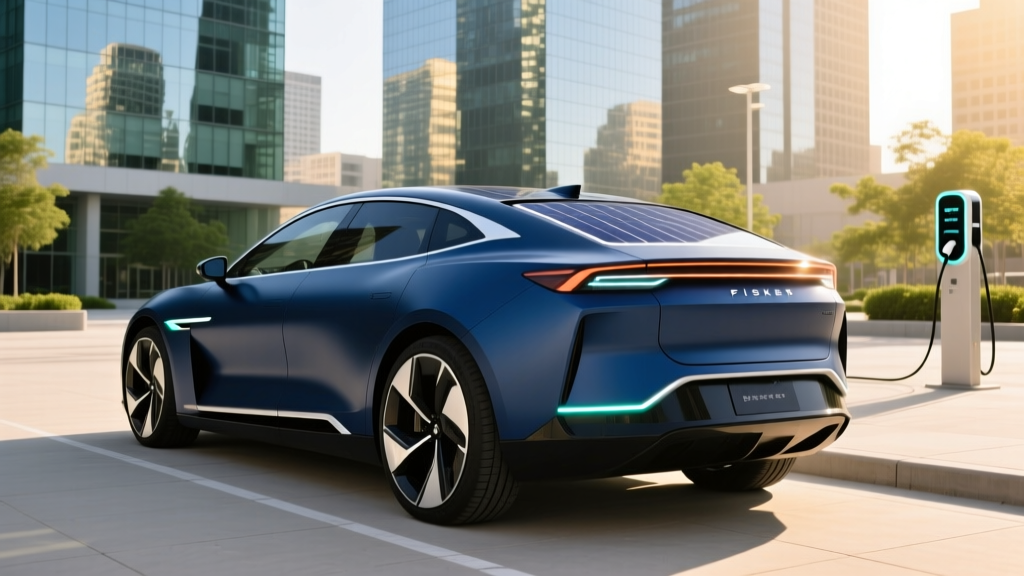
If you've been searching for what happened to Fisker, the timeline is stark. Fisker Inc. — the Henrik Fisker-led EV startup behind the Fisker Ocean SUV — filed for Chapter 11 bankruptcy in June 2024, ceasing all vehicle production and laying off nearly its entire workforce. The company sold off remaining inventory at steep discounts, leaving early adopters with a capable but orphaned electric SUV and uncertain long-term support.
As of 2026, Fisker Inc. no longer manufactures or sells vehicles. The Fisker Ocean exists only on the used market, where remaining units trade well below their original MSRP. This profile examines the Ocean's specifications, what ownership looks like post-bankruptcy, and whether a used Ocean makes sense compared to supported competitors like the Hyundai Ioniq 5, Tesla Model Y, and Ford Mustang Mach-E.
Fisker Ocean Specs at a Glance
| Specification | Fisker Ocean Sport (Base) | Fisker Ocean Ultra / Extreme |
|---|---|---|
| EPA Range | 250 miles | 360 miles |
| Battery Capacity | ~74 kWh usable (LFP) | ~113 kWh usable (NMC) |
| Drivetrain | FWD, single motor | AWD, dual motor |
| Horsepower | 275 hp | 564 hp |
| 0-60 mph | 6.9 seconds | 3.7 seconds |
| Max DC Fast Charge | ~150 kW peak | ~250 kW peak |
| 10-80% DCFC Time | ~35 minutes | ~30 minutes |
| Level 2 Home Charge | 11 kW (~30 mi/hr) | 11 kW (~30 mi/hr) |
| Efficiency (MPGe) | ~97 MPGe combined | ~95 MPGe combined |
| Cargo Volume | 32.5 cu ft (rear seats up) | 32.5 cu ft (rear seats up) |
| Original Base MSRP | $38,999 | $52,999 (Ultra) / $69,999 (Extreme) |
Real-World Range: What the EPA Sticker Doesn't Tell You
EPA Estimated Range: 250 miles (Sport FWD) / 360 miles (Ultra/Extreme AWD)
Real-World Expectation: Owners and independent testers reported highway range closer to 210-230 miles for the Sport trim at sustained 70 mph speeds, and approximately 290-320 miles for the Ultra/Extreme. In cold weather (below 32°F / 0°C), expect a 20-30% reduction — dropping the Sport to roughly 175-200 miles and the Ultra to 220-260 miles. The Ocean's large frontal area and SUV weight work against highway efficiency.
The Fisker Ocean Ultra's 360-mile EPA rating was one of the highest of any production EV at launch, thanks to its massive 113 kWh NMC battery pack. However, that capacity comes with trade-offs: the Ultra/Extreme trims weigh over 5,800 lbs, which increases tire wear and reduces efficiency in stop-and-go driving compared to lighter competitors. The Sport's LFP chemistry is heavier per kWh but offers better long-term cycle life and less degradation — a relevant consideration for a vehicle with no active manufacturer support.
The Ocean's heat pump (standard on Ultra/Extreme, optional on Sport) helps mitigate cold-weather range loss during cabin heating, but it does not eliminate it. Preconditioning the battery while plugged in — a feature available via the Ocean's app when Fisker's servers were operational — improved DC fast-charging speeds in cold conditions. Post-bankruptcy, app connectivity and remote preconditioning have been unreliable or non-functional for many owners.
Charging Speed: DC Fast and Home Level 2
| Charging Method | Power | Speed / Time | Notes |
|---|---|---|---|
| DC Fast Charge (Sport) | ~150 kW peak | 10-80% in ~35 min | Tapers significantly above 80%; CCS connector |
| DC Fast Charge (Ultra/Extreme) | ~250 kW peak | 10-80% in ~30 min | Sustains higher rate longer; CCS connector |
| Level 2 Home (240V) | 11 kW | ~30 miles of range per hour | Full charge: ~7 hrs (Sport), ~11 hrs (Ultra) |
| Level 1 (120V) | ~1.4 kW | ~4 miles of range per hour | Emergency/trickle only |
The Ocean uses the CCS1 connector for DC fast charging, which remains widely supported at Electrify America, EVgo, and ChargePoint stations — though the industry is rapidly transitioning to NACS (Tesla's connector). Fisker never implemented a NACS port, and no official adapter program exists post-bankruptcy. Third-party CCS-to-NACS adapters are available but add cost and potential reliability concerns.
On a 350 kW Electrify America station, the Ultra's charge curve peaks near 250 kW from roughly 10-30% SoC, then tapers to ~150 kW by 50%, and drops sharply above 80%. The 10-80% time of approximately 30 minutes is competitive with vehicles like the Ford Mustang Mach-E Extended Range but falls short of the Hyundai Ioniq 5's 18-minute 10-80% time on its 800V architecture. The Sport's LFP pack charges more slowly overall, with a flatter but lower charge curve.
For home charging, the Ocean's 11 kW onboard charger is adequate but not exceptional. On a 48-amp Level 2 home charger (the most common hardwired setup), you'll add roughly 30 miles of range per hour. Overnight charging easily replenishes a full day's driving for most commuters.
Interior, Cargo, and Standout Tech
The Fisker Ocean's interior was one of its strongest selling points — and one of its most polarizing. The 17.1-inch rotating center touchscreen (which toggles between portrait "Control Mode" and landscape "Hollywood Mode") is visually striking, but the custom software layer has been plagued by bugs, slow response times, and post-bankruptcy server disconnections that disabled features like navigation, remote climate control, and OTA updates.
Cargo and passenger space:
- 32.5 cubic feet behind the second row (competitive with the Model Y's ~30 cu ft)
- ~67 cubic feet with rear seats folded
- Front trunk (frunk): approximately 7.5 cubic feet on Ultra/Extreme (Sport lacks a frunk due to FWD motor packaging)
- Rear legroom: ~38.5 inches — generous for the segment
Notable tech features:
- California Mode: A one-touch feature that simultaneously lowers all windows, opens the rear hatch glass, and retracts the solar roof shade — creating an open-air driving experience unique in the EV segment.
- Solar Roof (Extreme trim): Integrated photovoltaic panels claimed to add up to 1,500 miles of range per year under ideal conditions. Real-world gains are significantly lower — typically 2-5 miles per day in full sun.
- Force-E (Extreme trim): A performance mode unlocking the full 564 hp and 3.7-second 0-60 time.
- Fisker Intelligent Pilot: The Ocean's Level 2 ADAS suite (adaptive cruise, lane centering, auto emergency braking). Competent but not class-leading — it lacks the hands-free highway capability of GM's Super Cruise or Ford's BlueCruise.
Key drawbacks: Build quality inconsistencies (panel gaps, interior rattles reported by early owners), software instability, no Apple CarPlay/Android Auto at launch (added later via OTA, now unreliable post-bankruptcy), and a firm ride quality on the 22-inch wheels standard on Ultra/Extreme trims.
Pricing, Tax Credits, and the Used-Market Reality
When new, the Fisker Ocean was positioned aggressively on price:
| Trim | Original MSRP | Federal Tax Credit (when active) | 2026 Used Market Est. |
|---|---|---|---|
| Sport | $38,999 | Not eligible (below critical-mineral thresholds at time) | $18,000 – $24,000 |
| Ultra | $52,999 | Up to $7,500 (if buyer met income/sourcing rules) | $28,000 – $36,000 |
| Extreme (One) | $69,999 | Not eligible (exceeded $80k SUV MSRP cap) | $38,000 – $48,000 |
Federal Tax Credit Status (IRS §30D): The Fisker Ocean's eligibility was always complicated. The Ultra trim potentially qualified for up to $7,500 under IRS §30D rules, provided the buyer met income caps ($150k single / $300k joint AGI), the vehicle met critical-mineral and battery-component sourcing requirements, and the MSRP stayed under the $80,000 SUV cap. The Sport trim's battery sourcing often fell short of the evolving critical-mineral thresholds, and the Extreme exceeded the MSRP cap. As of 2026, the Ocean is no longer sold new, making the new-vehicle credit moot. Buyers purchasing a used Ocean from a dealer may qualify for the used EV credit (up to $4,000 or 30% of sale price, whichever is lower) under separate §25E rules, subject to income caps ($75k single / $150k joint), vehicle price cap ($25,000), and vehicle age requirements (at least 2 model years old).
Warranty and Long-Term Ownership Risk
This is where the Fisker Ocean's post-bankruptcy reality becomes most acute. When Fisker was operational, the Ocean came with:
- Basic vehicle warranty: 6 years / 60,000 miles
- Battery and powertrain warranty: 10 years / 100,000 miles (targeting ≥70% capacity retention)
- Roadside assistance: 6 years / 60,000 miles
As of 2026, none of these warranties are actively honored. Fisker's bankruptcy liquidation means there is no manufacturer to process claims, source replacement parts, or provide authorized service. Some third-party service centers may perform basic maintenance (brake pads, tires, cabin filters), but high-voltage battery diagnostics, motor repairs, and proprietary electronics work are extremely difficult to source.
The battery itself — particularly the LFP pack in the Sport — is chemically robust and likely to outlast the vehicle's useful life in terms of cycle degradation. NMC packs in the Ultra/Extreme are also proven technology. The real risk is physical damage, BMS (battery management system) faults, or thermal management system failures, for which replacement parts may be unavailable.
Fisker Ocean vs. Competitors: Should You Buy Used?
Choose a used Fisker Ocean if:
- You're getting an Ultra/Extreme at a steep discount ($30k-$40k for a 360-mile AWD SUV is exceptional value on paper)
- You have reliable home charging and rarely need public DC fast charging
- You're comfortable with the risk of no warranty, limited parts availability, and degraded software functionality
- You value the Ocean's unique design, open-air California Mode, and cargo space
Choose a supported competitor instead if:
- You need active warranty coverage and dealer service access
- You rely on over-the-air updates, app connectivity, and navigation
- You want a proven DC fast-charging network experience (NACS access, reliable CCS)
- You plan to own the vehicle for 5+ years and want predictable resale value
Key competitors at similar used-market prices:
- Hyundai Ioniq 5 (used, 2022-2024): ~$28k-$38k. Superior 800V charging (18 min 10-80%), active warranty, NACS adapter available. Less cargo space, no open-air mode.
- Tesla Model Y Long Range (used, 2022-2024): ~$30k-$42k. Best Supercharger network access, strong software, active support. Tighter rear seat, no frunk on AWD.
- Ford Mustang Mach-E Extended Range (used, 2022-2024): ~$27k-$38k. Good dealer network, BlueCruise hands-free option, competitive range. Smaller cargo area.
The Bottom Line: What Happened to Fisker and What It Means for Buyers
Fisker Inc. ran out of capital before it could scale production, fix software issues, and build the service infrastructure that EV buyers require. The Ocean was a genuinely compelling vehicle on paper — class-leading range, distinctive design, and an aggressive price point — but the company's cash burn, manufacturing delays (production was handled by Magna Steyr in Austria), and inability to deliver on software promises led to insolvency.
For bargain-hunters willing to accept orphaned-vehicle risk, a used Fisker Ocean Ultra at $30,000-$36,000 represents one of the most range-per-dollar propositions on the 2026 used market. For everyone else, the lack of warranty, uncertain parts supply, and degraded connectivity make supported alternatives the rational choice.
✓ Pros
- Class-leading 360-mile EPA range (Ultra/Extreme)
- Distinctive design and California Mode open-air experience
- Generous cargo and passenger space
- Steep used-market discounts make it a value proposition
- LFP battery in Sport offers excellent cycle longevity
✗ Cons
- No active manufacturer — no warranty, no guaranteed parts
- Software/connectivity features degraded or non-functional
- CCS-only charging; no native NACS or official adapter program
- Build quality inconsistencies reported by early owners
- Resale value highly uncertain
Frequently Asked Questions
What is the real-world range of the Fisker Ocean?
The EPA rates the Ocean Sport at 250 miles and the Ultra/Extreme at 360 miles. In real-world highway driving at 70 mph, expect roughly 210-230 miles (Sport) and 290-320 miles (Ultra). Cold weather (below freezing) reduces these figures by 20-30%.
How fast does the Fisker Ocean charge?
The Ultra/Extreme peaks at approximately 250 kW on a DC fast charger, achieving 10-80% in about 30 minutes. The Sport peaks around 150 kW with a 10-80% time of roughly 35 minutes. At home on a Level 2 charger (11 kW), both trims add about 30 miles of range per hour.
How much does a Fisker Ocean cost in 2026?
Fisker no longer sells new vehicles. On the used market, expect to pay approximately $18,000-$24,000 for a Sport, $28,000-$36,000 for an Ultra, and $38,000-$48,000 for an Extreme — all significantly below original MSRP due to the company's bankruptcy.
Does the Fisker Ocean qualify for the federal EV tax credit?
The new-vehicle §30D credit no longer applies since Fisker is defunct. However, buyers purchasing a used Ocean from a licensed dealer may qualify for the §25E used EV credit (up to $4,000) if the sale price is under $25,000, the vehicle is at least 2 model years old, and the buyer meets income caps ($75k single / $150k joint). Verify current rules at IRS.gov.
Is it worth buying a used Fisker Ocean vs. competitors?
Only if you accept the orphaned-vehicle risk. The Ocean Ultra's 360-mile range and AWD at ~$32,000 is compelling on paper, but the lack of warranty, parts scarcity, and degraded software make supported competitors like the Ioniq 5, Model Y, or Mach-E safer long-term choices for most buyers.
Can I still get a Fisker Ocean serviced?
Basic maintenance (tires, brakes, cabin filters, 12V battery) can be performed by independent shops. High-voltage battery, motor, and proprietary electronics repairs are extremely difficult to source. There is no authorized Fisker service network as of 2026.
What happened to Fisker's software and app?
Fisker's cloud services and mobile app have been largely non-functional since mid-2024. Features that depended on server connectivity — remote climate control, navigation, OTA updates, and vehicle status monitoring — are unavailable or unreliable. The vehicle still drives and charges normally with the key fob or card.